

Charity Bike Ride Rest Stops: What to Expect
Learn what charity bike ride rest stops provide, including hydration, food, mechanics, medical support, SAG help, and smart ride-day tips for every rider.

Long charity rides feel more approachable when you know support is built into the route. Rather than treating every mile as a solo test, riders can use planned checkpoints to refuel, solve small problems, and make smart decisions about pace.
Register for a supported Bike to the Beach ride
Charity bike ride rest stops are organized support points where riders can refill water and sports drinks, choose snacks, take a short break, and access first aid or basic mechanical help. On Bike to the Beach supported rides, rest stops are positioned about every 15 miles. Professional mechanics and SAG vehicles extend assistance between stops.
What this guide covers: how rest stops, mechanics, medical support, and SAG vehicles work together on a supported charity ride.
How Do Charity Bike Ride Rest Stops Support Riders?
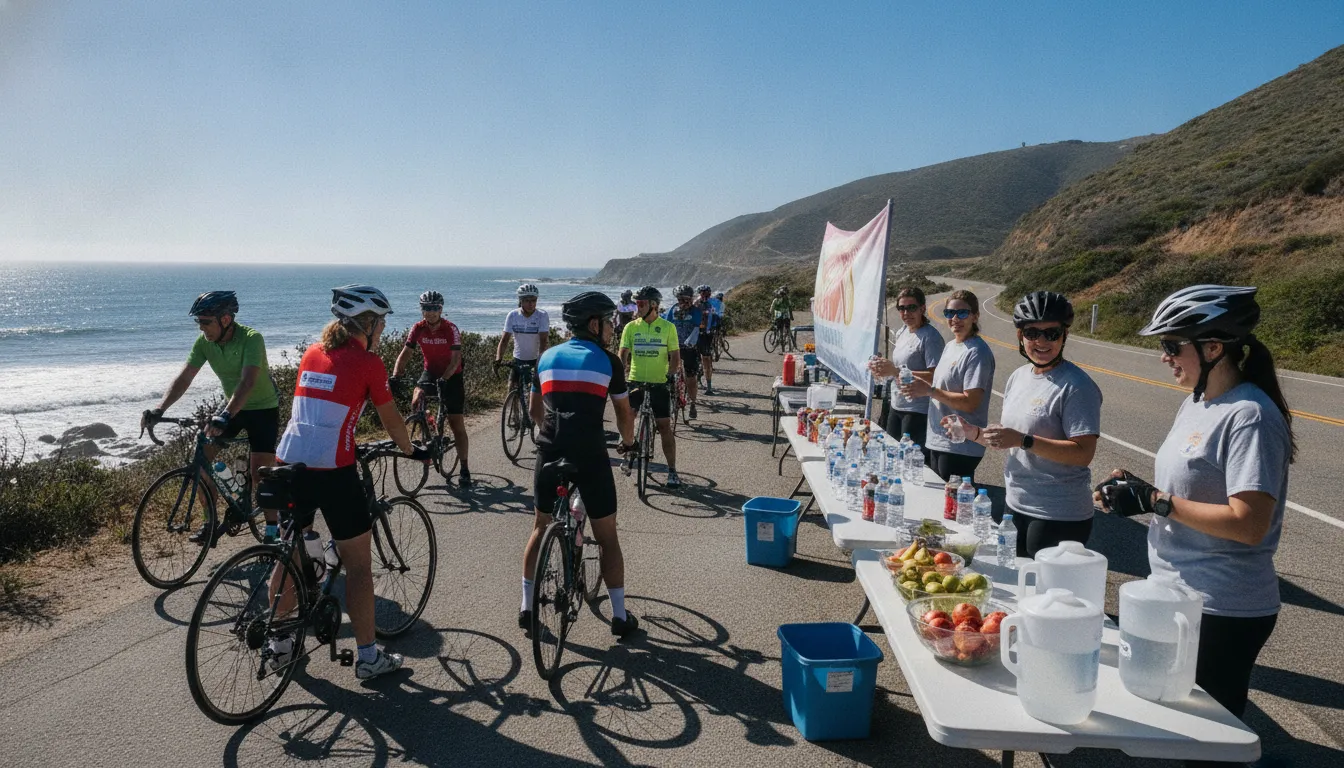
A rest stop is more than a place to grab a drink. It is a working checkpoint in the event support network, designed to help you assess your body, bike, and plan before you return to the course. Bike to the Beach places supported ride rest stops about every 15 miles, creating regular opportunities to pause, refuel, check in, and keep moving with confidence.
That spacing helps riders break a long route into manageable segments. Volunteers can share course information, monitor the flow of participants, and connect anyone who needs additional assistance with the right member of the support team. For a first-time rider, predictable support can make a demanding distance feel more approachable. For an experienced rider, it provides a reliable place to adjust pace and supplies.
| Support point | What it helps with | Rider action |
|---|---|---|
| Rest stop | Fluids, food, comfort, basic care | Refill, refuel, assess, and reset |
| Mechanic | Flats and common bike adjustments | Pull over safely and describe the issue |
| SAG vehicle | Rider or bike transport when continuing is unsafe | Request help early through event staff |
Rest stops also help the event account for riders and manage course flow. Staff can identify who has arrived, who needs help, and whether someone should connect with a SAG vehicle or medical support. That coordination works alongside route navigation and communication between the course team and command center.
The human element matters just as much. Volunteers offer encouragement, riders compare experiences, and groups reconnect after spreading out on the road. The stop supports the ride physically, logistically, and socially, helping each participant continue toward the beach while remaining part of a shared community effort.
What Can You Expect to Find at a Rest Stop?
On a Bike to the Beach ride, a rest stop typically offers water, electrolyte drinks, fruit, energy bars, and other snacks. You may also find first aid supplies, sunscreen, basic medications, shade, seating, restrooms, and volunteers who can answer questions or direct you to additional support. The exact inventory can vary by event and location, so use the published ride guidance as your planning reference.
How should you handle hydration?
Fill your bottle with water and consider an electrolyte drink if that fits your normal riding routine. The CDC and NIOSH explain why adequate fluid intake matters during physical activity. At the same time, do not treat a rest stop as a reason to force down a predetermined amount.
Mayo Clinic Sports Medicine advises athletes to drink to thirst and notes that overconsumption can also create problems. Follow the plan you practiced, pay attention to thirst and conditions, and ask a ride professional if you are unsure.
What food is available?
Food options may include bananas or other fruit, energy bars, pretzels, and simple snacks that are easy to eat between sections of the route. Choose what you have practiced during longer training rides instead of experimenting with a large serving of an unfamiliar food. A small snack paired with regular hydration can support the next stretch.
Dietary inclusion helps more participants fuel comfortably. When available, gluten-free, vegan, and other choices can be useful, but a planned menu is not a guarantee of every item on event day. If you have an allergy, medical dietary restriction, or specific fueling requirement, bring dependable food from home and confirm the event guidance before ride day.
How can you use the stop for comfort?
Step out of the sun, sit or stretch briefly, use the restroom, and reapply sunscreen. Basic first aid and volunteer assistance can help with common needs, but rest-stop resources are not a substitute for personal medication, clinical care, or emergency services. Tell a volunteer promptly if you feel unwell, overheated, confused, unusually weak, or unable to continue.
Before rolling out, check your bottles, food, and route information. A rest stop is both a service point and a community checkpoint, with volunteers and fellow riders helping one another keep moving toward the finish.
How Should You Use Rest Stops Without Losing Your Rhythm?
A rest stop should help you reset, not become an unplanned break from the ride. Give yourself enough time to make good decisions, then return to the course with a clear plan. A consistent routine also makes it easier to notice when your body or bike needs more support.
- Enter safely. Follow signs and volunteer directions as you approach. Reduce speed before turning off the route, watch for other riders, and move fully out of the traffic flow.
- Refill according to your needs. Top off your bottles and use available fluids without assuming every rider needs the same amount. Weather, effort, pace, and sweat rate all affect hydration.
- Eat familiar fuel. Choose foods you have practiced on longer rides. Carry a reliable backup if you have dietary restrictions or a highly specific nutrition plan.
- Assess your body and bike. Check for dizziness, worsening pain, confusion, nausea, or unusual bike behavior. Ask a volunteer, medical team member, or mechanic for help before a small issue becomes larger.
- Check the course. Review upcoming turns, remaining distance, and information from volunteers. Ride with GPS provides turn-by-turn navigation and offline map capability, so confirm your device has enough battery and the correct route is ready.
- Leave with a simple plan. Decide what you will focus on until the next support point, such as an easy first mile, steady cadence, or a planned bottle check. Thank the volunteers and merge carefully.
There is no prize for ignoring a genuine need to protect your average speed. The best use of charity bike ride rest stops is deliberate and flexible: address the issue in front of you, then continue when you are ready. For more preparation, review this cycling hydration guide for long charity rides.
How Does On-Course Mechanical Support Work?
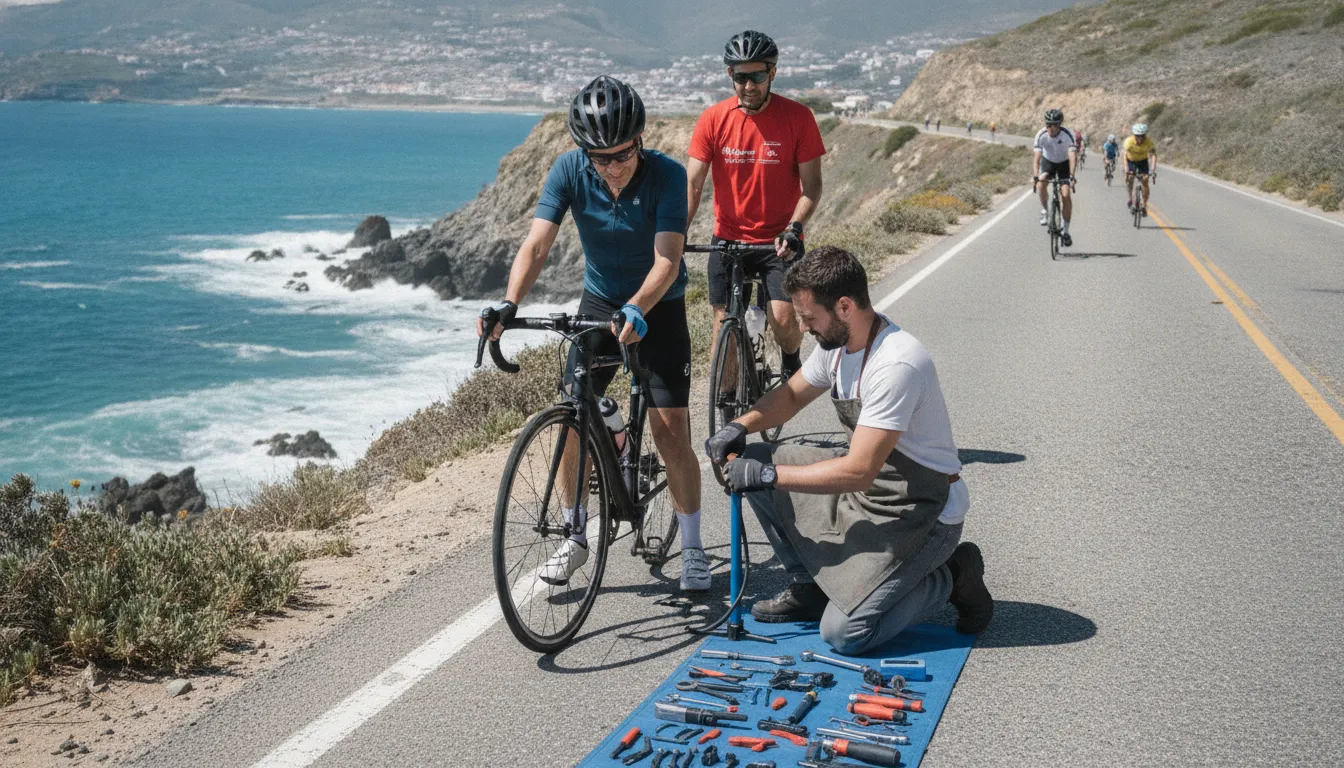
Professional mechanical support gives riders a practical safety net when a bike problem appears during a long ride. Bike to the Beach combines roving mechanic vehicles with stationary mechanics at major rest stops. Help can come to you on the course or be available when you pull into a support location.
What can a mechanic handle?
Many ride-day problems are minor and can be addressed with an adjustment or small replacement. A mechanic may help with a flat tire, make a brake adjustment, or correct an issue affecting shifting or general rideability. If your bike feels different, makes an unusual sound, or does not respond normally, stop and ask for an assessment rather than pushing through.
What if the problem is more serious?
Not every mechanical failure can be repaired on the shoulder. A major drivetrain, wheel, frame, or other issue may require transporting the rider and bike, or arranging a bike swap when that option is available. A mechanic or support lead may recommend stopping when a repair would compromise safety.
That decision is not a failure. Supported rides are designed for a range of experience levels, and accepting help is a responsible choice for yourself and the people sharing the road. Event support can address many common problems, but it cannot guarantee every repair or an immediate turnaround.
Why bring a personal flat kit?
Event mechanics are there to support you, but a personal flat kit helps you manage a simple problem while you wait or between staffed locations. Bring a spare tube that fits your tires, tire levers, a pump or compatible inflator, and a small multi-tool. Practice using these items before ride day. A quick pre-ride inspection should also check tire condition, brake response, chain lubrication, wheel security, and shifting.
These bike-fit essentials for a more comfortable long ride can also help reduce preventable discomfort and equipment issues.
How Do Charity Bike Ride Rest Stops Connect to SAG Support?
SAG stands for Support and Gear. SAG vehicles travel along the course with supplies and the ability to coordinate rider assistance when a person or bicycle cannot safely continue. Using SAG support is not a sign that you failed. It is a responsible ride-day decision that protects you, your teammates, and the volunteers working to account for everyone on the route.
When should you request a pickup?
A rider may need a pickup after a major mechanical problem, injury, illness, unusual fatigue, or another situation that makes continuing unsafe. You might also stop because conditions have changed, you can no longer maintain control, or your energy is not returning after rest and fuel. You do not need to wait until a problem becomes an emergency. Tell a volunteer, mechanic, or ride official as soon as you recognize that you need help.
How do rider and bike transport work together?
SAG support addresses the practical problem of getting both the rider and bicycle to an appropriate location. A vehicle may transport a rider who cannot finish and carry the bike as well. The response depends on the situation and the ride-day direction from the support team, so be clear about what happened and what you need.
How does course communication help?
SAG vehicles can carry backup supplies such as water, first-aid materials, spare tubes, and pumps. They communicate with the ride command center to coordinate assistance and maintain awareness of rider locations. When you request help, share your name, rider group if applicable, visible course landmark, and a concise description of the problem. Follow the event’s established instructions rather than relying on an unverified number.
The support system also includes a final sweep behind the last riders. For a closer look at this service, read about SAG support for cycling and rider assistance.
What Makes a Supported Ride Safe and Inclusive?
Strong on-course support helps riders make informed choices, ask for assistance without hesitation, and stay connected to the people around them. That matters whether you are experienced with endurance cycling or building confidence one mile at a time.
What medical support is available?
Bike to the Beach partners with Moto Medx for medical support, including EMT presence at strategic locations. You do not need to diagnose a problem or decide whether it is serious enough to ask for help. If you feel unwell, overheated, unusually weak, confused, or unsafe to continue, tell a volunteer or event team member promptly.
Research on mass gathering events supports the value of trained medical care where participants are gathered. This review of medical care at mass gatherings describes how on-site support can improve participant outcomes and reduce reliance on emergency services.
How do volunteers support different riders?
A welcoming ride does not assume every participant moves at the same pace, uses the same equipment, or feels comfortable asking for help in the same way. Volunteers can offer practical information, listen carefully, and treat each rider with respect. The goal is not to lower the challenge. It is to make the challenge more accessible and shared.
How can navigation reduce uncertainty?
Download the route and learn the basic navigation features before ride day. If you are unsure of your location or what comes next, ask for help rather than guessing. The event’s support network is strongest when riders communicate early.
What Should You Bring on Ride Day?
Support services make a ride more manageable, but your own preparation still matters. Pack the items you rely on, even when the event provides food, fluids, mechanics, and SAG assistance.
- A properly fitted, CPSC-approved helmet and a bike in safe working condition.
- Water bottles and familiar nutrition, including backup food for dietary needs.
- A spare tube, tire levers, pump or compatible inflator, and multi-tool.
- Phone, route access, portable battery, identification, and emergency contact information.
- Sunscreen, weather-appropriate layers, personal medication, and any accessibility supports you use.
Before the start, review the event instructions, route information, support procedures, and any updates from the ride team. This charity bike ride packing checklist can help you organize your gear. You can also use the beginner training plan for a charity century to build confidence before the event.
Bike to the Beach offers multiple regional rides, including the New England ride and other destination events. Read the charity bike ride route preview to see how scenic routes and beach finishes fit into the experience.
Every rest stop is one part of a larger system. Hydration, nutrition, mechanics, medical support, navigation, volunteers. And SAG vehicles work together so riders can focus on the challenge and the local autism and disability organizations that benefit from the ride.
Choose your Bike to the Beach ride and register for a supported course experience
Frequently Asked Questions
What should I bring if charity bike ride rest stops provide food and drinks?
Bring water bottles, familiar nutrition, and backup food that meets your dietary needs. Rest-stop menus and inventory can vary, so do not depend on an unfamiliar item or a single on-course option. Pack personal medication and any supplies you need throughout the day.
Can I get help if my bike has a mechanical problem during the ride?
Yes. Bike to the Beach supports riders with roving mechanic vehicles and stationary mechanics at major rest stops. They can often address flats and common adjustments. Pull over safely, describe the issue clearly, and follow the mechanic’s guidance if the problem affects braking, steering, wheels, or the frame.
What happens if I cannot finish the ride?
Tell a volunteer, mechanic, medical team member, or ride official as soon as you know you need help. SAG vehicles can coordinate rider and bike transport when continuing is not safe or practical. Requesting support early is a responsible decision, not a failure.
How much should I drink at a rest stop?
Your needs depend on weather, effort, pace, sweat rate, and the plan you practiced in training. Drink to thirst, use the available fluids that fit your routine, and avoid forcing down more than you need. Ask event staff or a medical professional if you are uncertain about your situation.
Ready to ride with rest stops, mechanics, and SAG support? Register for Bike to the Beach.