

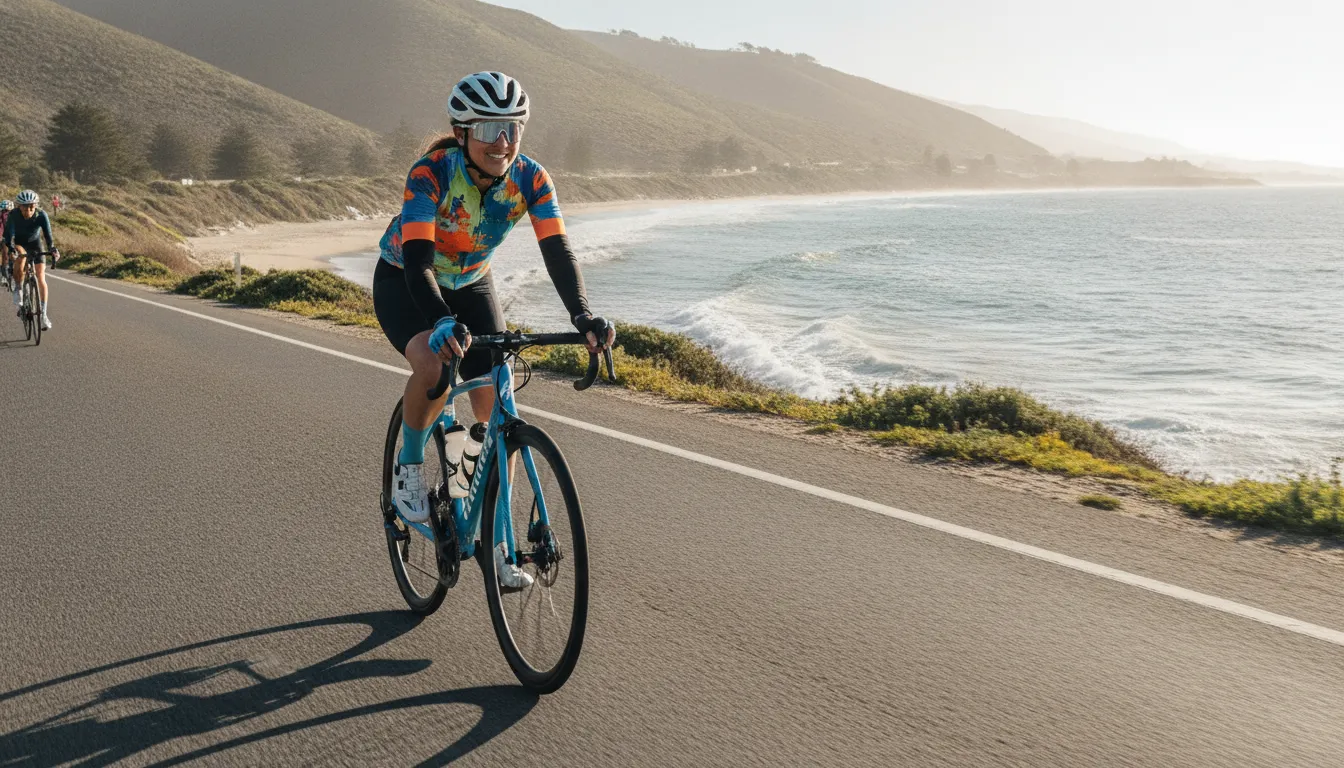
Road Bike Training Plan for a Charity Century
A beginner-friendly road bike training plan builds gearing, cadence, group skills, and a progressive mileage schedule for your first charity century ride.

A century ride is a big goal, but it does not require years of racing experience. With the right bike, steady practice, and a plan that builds distance gradually. Beginners can prepare for the demands of a long charity ride while gaining confidence on the road. If you have recently picked up a road bike, moved over from a hybrid. Or simply want a clearer way to train, you are already at the right starting line.
A road bike training plan combines regular shorter rides, one progressively longer ride each week, easy recovery days, and practice with gears, cadence, fueling, and group-riding skills. Start where you are, increase your distance in manageable steps, and leave time to make your bike comfortable before ride day.
Bike to the Beach rides offer distances from 25 to 100 miles, with rest stops every 15 miles and mechanical assistance available. That support helps, but your preparation still matters. Begin by understanding how consistent training turns a daunting distance into a series of achievable milestones. The goal is not to ride hard every day; it is to ride steadily, recover well, and let the miles add up until the event feels within reach.
Below you will find the pieces of a beginner-friendly approach: why a plan matters, the training principles that keep you progressing. The road-bike skills worth practicing, a progressive mileage schedule, and how to ride safely in a group. Whether your first charity ride is still months away or already on the calendar, this guide gives you a clear path from first miles to the starting line.
Register for a Bike to the Beach charity ride and build your training plan around a real goal.
Why a Road Bike Training Plan Matters for a Charity Century
A charity century is more than a long ride. It is a shared effort that asks your body to keep working for hours while your mind stays present for the people and communities the ride supports. A road bike training plan gives that effort a thoughtful shape. Instead of hoping one very long ride will prepare you, you build fitness gradually. Practice the skills that make road cycling comfortable, and arrive with confidence in what your body can do.
That structure also makes training easier to fit into real life. The Centers for Disease Control and Prevention recommends that adults get at least 150 minutes of moderate-intensity aerobic activity or 75 minutes of vigorous activity each week. Spreading that movement across the week can turn cycling into a sustainable routine rather than a last-minute test of willpower. You do not need to begin with marathon rides. A few consistent sessions can establish the habit, then a weekly longer ride can steadily extend your range.
Cycling can support cardiovascular fitness, too. A review of commuting-cycling research found consistent improvements in cardiovascular fitness among working-age adults in intervention studies. The PubMed review is not a promise of a particular result, but it reinforces the value of making cycling a regular part of your week.
Training with a charity ride in mind adds purpose to each step. Bike to the Beach rides raise funds and awareness for local autism and disability organizations. So every steady mile can connect your personal goal to a larger community effort. The event itself is designed to welcome different experience levels, with regional ride distances ranging from 25 to 100 miles. Century riders also have practical support along the route, including rest stops about every 15 miles and professional mechanical assistance.
That support does not replace preparation. It gives you room to learn without feeling that you have to know everything on day one. Start by making your position on the bike comfortable, then review these bike fit essentials before adding distance. A sensible plan helps you build endurance, protect your enjoyment, and share the road with the people riding beside you.
How the 80/20 Rule Shapes an Effective Road Bike Training Plan
What should most beginner rides feel like? Easier than you may expect. The 80/20 rule puts about 80% of training in low-intensity Zone 1-2 and about 20% in higher-intensity work. That balance gives you enough comfortable riding to build endurance while leaving room for focused efforts that develop speed and power.
Low intensity does not mean unproductive. Easy miles teach your body to keep working for longer, help you practice smooth cadence and gearing, and make time on the bike feel routine rather than intimidating. You should be able to speak in short sentences during much of this riding. If every session becomes a test, fatigue can accumulate faster than fitness. For a first road bike training plan, consistent easy base miles are more valuable than occasional heroic rides.
Where does the 75 rule fit?
The 75 rule offers a useful effort check for endurance riding: keep much of your work around 75% of your available capacity rather than chasing maximum effort every time. Think steady and repeatable. You should finish a moderate ride feeling that you could have continued a little longer, not emptied your tank before the halfway point.
That approach is especially helpful when you are building toward a long charity ride. A sustainable pace lets you accumulate distance, recover between sessions, and learn how your body responds. It also makes a demanding event feel more manageable because you have practiced holding back early and saving energy for later miles.
How should you use high-intensity work?
Keep the harder 20% purposeful and limited. One interval session might include short bursts of about 30 seconds followed by one to two minutes of easier recovery. A structure described by Mayo Clinic in its fitness training guidance: Mayo Clinic’s HIIT guidance. Beginners can start with only a few repetitions after a thorough warm-up, then return to easy riding.
The goal is not to prove how hard you can push. It is to complement your base miles with controlled challenges. Build the habit first, increase distance gradually, and let the easy rides do most of the work. With that foundation, the long charity ride becomes a series of achievable efforts rather than one overwhelming distance.
Gearing and Cadence Every New Road Rider Should Master
Road bikes give you several ways to manage the same hill, headwind, or stretch of open pavement. Your goal is not to stay in one gear or chase the biggest gear available. It is to choose a gear that lets you pedal smoothly, maintain control, and finish the ride with energy left.
Use easier gears before the climb gets steep
When the road tilts upward, shift into an easier gear early. A smaller front chainring or larger rear cog reduces the force required on each pedal stroke. That helps you keep turning the pedals instead of standing and pushing through a heavy gear until your legs stall. Hill training, even in small doses, builds the power and muscular endurance needed for changing terrain, but every hill does not need to become a maximal effort.
On a flat road, many new riders instinctively select a hard gear and mash slowly. Try the opposite approach. Aim for a cadence of roughly 80 to 90 revolutions per minute on flats, then adjust for comfort, wind, and terrain. Spinning at a steady cadence generally spreads the work across more pedal strokes and helps you avoid the sharp muscular fatigue that comes from forcing a gear that is too heavy.
- Shift early: Move to an easier gear as the incline begins, rather than waiting until you are already straining.
- Keep your cadence fluid: If each pedal stroke feels like a strength exercise, choose an easier gear.
- Practice small shifts: Change one or two gears at a time and notice how your breathing and legs respond.
- Use effort, not speed, as your guide: Wind and hills can change your speed, but a controlled effort is easier to sustain.
Comfort is part of your gearing strategy
A century can mean six to eight or more hours in the saddle, so comfort and fit are performance issues, not finishing touches. A proper fit can help prevent common problems such as knee pain and numbness. Review these bike fit essentials before adding distance, especially if discomfort appears repeatedly or lasts beyond a ride.
During training, test your preferred cadence and gearing on short climbs, rolling roads, and longer steady rides. The right setup should feel repeatable. You should be able to shift, settle into a sustainable rhythm, and keep moving toward your charity ride goal without turning every change in terrain into a sprint.
Your Progressive Road Bike Training Plan From First Ride to Century
A practical road bike training plan builds your ability to ride farther without turning every workout into a test. The goal is steady preparation for a 70- to 100-mile charity ride, with enough flexibility to adjust for your starting point, schedule, and recovery.
- Build base volume in weeks 1-4. Start with three to five sessions each week. Keep most rides easy enough that you can speak in complete sentences. Include two or three shorter rides during the week, plus a longer weekend ride that feels manageable. If your first long ride is 10 or 15 miles, repeat that distance until it feels controlled before adding more. Consistency matters more than a sudden high-mileage weekend.
- Extend the long ride through the middle phase. During roughly weeks 5-9, gradually add 1 to 2 hours to the weekend ride when your body is absorbing the current workload well. You do not need to add distance every week. A lighter week can help you consolidate progress. Gradual increases in volume are the foundation of endurance training and help reduce the risk of overuse injuries.
- Add hills and mid-week intensity. Once your base is established, use one mid-week session for short climbs, controlled intervals, or sustained efforts. Hill work develops power and muscular endurance for changing terrain. Keep the rest of the week easy enough to support the long ride. A useful structure is a long weekend ride, one focused intensity session, and easy recovery rides between them.
- Hold your volume and rehearse the event. In the final weeks before your taper, reach a comfortable peak long ride appropriate to your goal. Practice the pacing, fueling, clothing, and equipment you expect to use on event day. You can also break the route into smaller sections, such as the distance between rest stops, rather than treating 100 miles as one overwhelming effort.
- Taper for the final two weeks. Reduce training volume during the two weeks before the charity ride so your legs can arrive fresh. Keep a few short, easy rides and brief touches of intensity if they feel familiar, but avoid chasing new fitness. Rest, sleep, and reliable equipment now matter more than squeezing in one last epic ride.
This progression is a framework, not a deadline. If soreness or fatigue lingers, repeat a week or scale back. The strongest preparation is the one that gets you to the starting line healthy, confident, and ready to enjoy the ride with your community.
Group Riding Skills and Safety for Charity Rides
Riding in a charity-ride pack can make a long day feel more social and manageable, but a group has its own rhythm. Safe group riding depends on communication and spatial awareness: notice what is happening around you, give other riders time to react, and make your movements easy to predict.
Practice these habits on training rides before event day:
- Use clear hand signals. Point out turns, slowing traffic, potholes, and stopped riders. Pair a signal with a calm verbal cue such as “slowing,” “stopping,” or “hazard left” so the message travels through the group. Review this group ride safety guide before your first organized ride.
- Ride predictably. Hold your line, avoid sudden swerves, and brake smoothly whenever possible. If you need to move around an obstacle or pull over, look first, signal, and communicate your intention.
- Hold a steady line. Keep a comfortable, consistent position rather than repeatedly accelerating and slowing. Leave enough space to see the rider ahead and maintain a buffer for normal changes in speed.
- Learn drafting basics. Riding behind another cyclist can reduce wind resistance, but it requires attention. Stay far enough back to react, watch the rider’s shoulders and wheels, and do not overlap wheels. If the pace feels too fast, let the group go rather than taking a risk.
- Drink regularly. Do not wait until you feel depleted to hydrate. Carry what you need between support points and use the event’s rest stops to refill, eat, and reset your focus.
Your equipment choices matter just as much as your etiquette. A properly fitted helmet and visible clothing are non-negotiable for a group ride. Before rolling out, check tire pressure, confirm that your brakes shift and stop normally, and add chain lubricant as appropriate. Consistent maintenance helps prevent avoidable mechanical issues during the event.
Bike to the Beach also builds practical support into its rides, with rest stops every 15 miles and mechanical assistance available. That support is reassuring, but it does not replace preparation. Arrive with a practiced pace, a charged phone, basic supplies, and the confidence to communicate when you need help.
Recovery, Strength, and Fuel for the Long Haul
Your training improves between rides, not only during them. Schedule at least one full recovery day each week, especially after your longest ride. Rest gives your body time to repair muscle tissue and adapt to the training stimulus. So an easy day is a productive part of your road bike training plan, not a missed workout.
Strength work can be short and simple. Two focused sessions per week can support the muscles that keep you stable and efficient on a long day in the saddle. Prioritize controlled movements for your core, hips, glutes, and legs. Core and lower-body strength can improve pedaling efficiency while helping protect joints from the repeated stress of cycling. Stop short of training to exhaustion, particularly before a long ride.
- Core: Try planks, dead bugs, or bird dogs with steady, controlled form.
- Lower body: Add squats, step-ups, glute bridges, or split squats, adjusting the load to your experience.
- Mobility: Use gentle stretching after rides and mobility work on easier days.
Cross-training is another useful way to build a durable rider. Swimming can provide aerobic work without more time pedaling, while yoga can support flexibility, balance, and stability. Keep these sessions comfortable enough that they complement your riding rather than competing with it.
Finally, treat food and fluids as training skills. For a century, nutrition and hydration are as critical as your pedaling volume. Practice drinking regularly and eating the foods you plan to use on event day during your longer training rides. That gives you time to learn what sits well before the distance and effort increase. Our cycling hydration guide offers a deeper look at preparing for long charity rides.
A balanced week may include long riding, one or two strength sessions, easy movement, and a true rest day. Adjust the mix when soreness lingers or fatigue changes your form. Consistent, recoverable training will carry you farther than forcing one more hard workout.
A Sample 12-Week Road Bike Training Plan at a Glance
This road bike training plan uses a simple progression: establish a comfortable base, add time and terrain, practice the demands of a group charity ride, then arrive rested. The mileage ranges are starting points, not tests. Choose the lower end when you are new to riding, and progress only when your current workload feels manageable.
Keep most sessions easy enough to sustain a conversation. Aim for three to five sessions each week, combining the long ride with shorter easy or skill-focused rides. Gradual increases in long-ride distance give your body time to adapt and help reduce the risk of doing too much too soon.
| Phase | Focus and distance |
|---|---|
| Weeks 1-3: Base Building | Build consistency with easy rides about three times per week. Make the longest ride roughly 20-30 miles, focusing on comfortable cadence, relaxed handling, and time in the saddle. |
| Weeks 4-6: Volume Build | Extend the long ride by about one to two hours as fitness allows. Add manageable hills and keep the other rides easy enough to support recovery. Work toward a 30-50-mile longest ride. |
| Weeks 7-10: Holding and Hardening | Practice the event experience with a 50-70-mile long ride, selected efforts on hills, and a group-ride session. Rehearse pacing, communication, fueling, and equipment checks without turning every ride into a hard effort. |
| Weeks 11-12: Taper | Reduce overall volume during the final two weeks. Keep a few short, comfortable spins to maintain movement, but prioritize sleep, recovery, and confidence rather than adding more distance. |
Use the plan as a framework and adjust for weather, work, health, and your starting point. A shorter ride completed consistently is more useful than an ambitious distance that leaves you unable to train the following week.
Ready to put this road bike training plan to work? Register for a Bike to the Beach charity ride and start building toward your century today.
Frequently Asked Questions
How many days a week should a beginner train for a century ride?
Start with three to five sessions per week, depending on your current fitness, available time, and recovery needs. Make the weekend ride your primary endurance session, add one shorter ride with controlled intensity, and use the remaining sessions for easy spinning, strength work, or cross-training. Rest days matter because they give your body time to repair and adapt.
What should a road bike training plan include?
A useful plan combines progressively longer rides, easy recovery sessions, occasional intensity work, and practice with hills, fueling, hydration, and your riding position. It should also include basic bike maintenance and opportunities to practice group-riding communication. Increase distance gradually rather than trying to make up missed miles with one very long ride.
How far should my longest training ride be before a charity century?
Build your longest ride gradually and use it to practice the pace, food, fluids, clothing, and equipment you expect to use on event day. You do not need to prove the full distance in training. Focus on arriving healthy and comfortable, then taper your volume during the final two weeks so you can start the ride fresh.
How can I make a 100-mile ride feel more manageable?
Break the route into smaller sections and treat each rest stop as a checkpoint instead of focusing on the full distance at once. Ride at a sustainable effort, shift early on hills, and take regular opportunities to eat and drink. Bike to the Beach rides include rest stops every 15 miles and mechanical assistance, so use those support points as part of your event-day strategy.
Ready to Ride With a Community Behind You?
A steady road bike training plan can help you build confidence, manage longer miles, and enjoy the shared experience of a charity century. When you are ready to choose your ride and take the next step, register for a Bike to the Beach charity ride. Bring your goals, your training plan, and your enthusiasm. There is room for riders at every experience level.