

Volunteer with Special Needs: A Practical Guide
Get volunteer with special needs roles that respect every individual. Discover person-centered practices and meaningful Bike to the Beach opportunities today.
A charity bike ride becomes more welcoming when every volunteer sees the person before the diagnosis. That means listening, communicating clearly, respecting individual preferences, and offering support without taking over. For riders and community members with autism and disabilities, a thoughtful volunteer turns a busy event into a safe, predictable, and genuinely enjoyable experience.
One in every 36 children is affected by autism, and millions of adults live with intellectual and developmental disabilities. Yet many meaningful activities remain out of reach simply because the right support is missing. Volunteers who understand person-centered practices help close that gap. When you volunteer with special needs communities, you create the conditions for real participation, real connection, and real belonging.
To volunteer with special needs communities respectfully, focus on each participant’s strengths, follow their communication preferences, and help create a safe, predictable experience. At Bike to the Beach, trained volunteers support inclusive event roles while 100% of participant fundraising stays with local autism and disability partner organizations.
This approach makes volunteering a shared community experience, not a one-sided act of charity. It also helps remove barriers that can limit access to meaningful activities, including inaccessible opportunities and transportation challenges. Every ride, every rest stop, and every encouraging word helps build a community where everyone feels they belong.
In this guide, we break down what person-centered volunteering looks like in practice, the meaningful roles you can fill, and how to prepare for a rewarding first shift. Before choosing a role, it helps to understand why genuine participation matters and how person-centered support protects dignity.
Explore special needs volunteer opportunities with Bike to the Beach
Why Person-Centered Volunteering with Special Needs Communities Matters
Respectful volunteering begins with a simple idea: people with autism and disabilities are community members, not projects. A strong volunteer experience creates space for each person to participate, contribute, communicate, and build relationships in ways that reflect their interests and strengths. The goal is not to rescue anyone. It is to make belonging practical and visible.
That approach matters because community participation is a core part of social inclusion for people with disabilities. Research identifies volunteering, group involvement, and other community activities as meaningful forms of participation. These experiences can connect people with peers, expand social networks, and create opportunities to be recognized for what they bring. Read more about supporting autism nonprofits year-round through consistent local action.
Volunteering can also benefit the person offering support. A controlled study of an intervention that facilitated volunteer activity for people recovering from traumatic brain injuries evaluated well-being as an outcome. Its focus reinforces an important principle: when volunteering is accessible and meaningful, participation can support the well-being of everyone involved. The exchange is human and mutual, rather than one-sided.
Access, however, cannot be assumed. Young people with disabilities may encounter barriers such as a shortage of accessible opportunities, transportation difficulties, or negative attitudes from potential supervisors. These obstacles can prevent someone from participating before they ever arrive at an event. An inclusive organization plans for access by sharing clear expectations, offering appropriate support, and treating accommodations as part of good event design.
Person-centered volunteering puts dignity and equality into those plans. Instead of leading with a diagnosis, volunteers learn about the individual. What activities do they enjoy? How do they prefer to communicate? What role would allow them to contribute comfortably and meaningfully? The answers may shape a task, a schedule, the pace of interaction, or the amount of guidance offered.
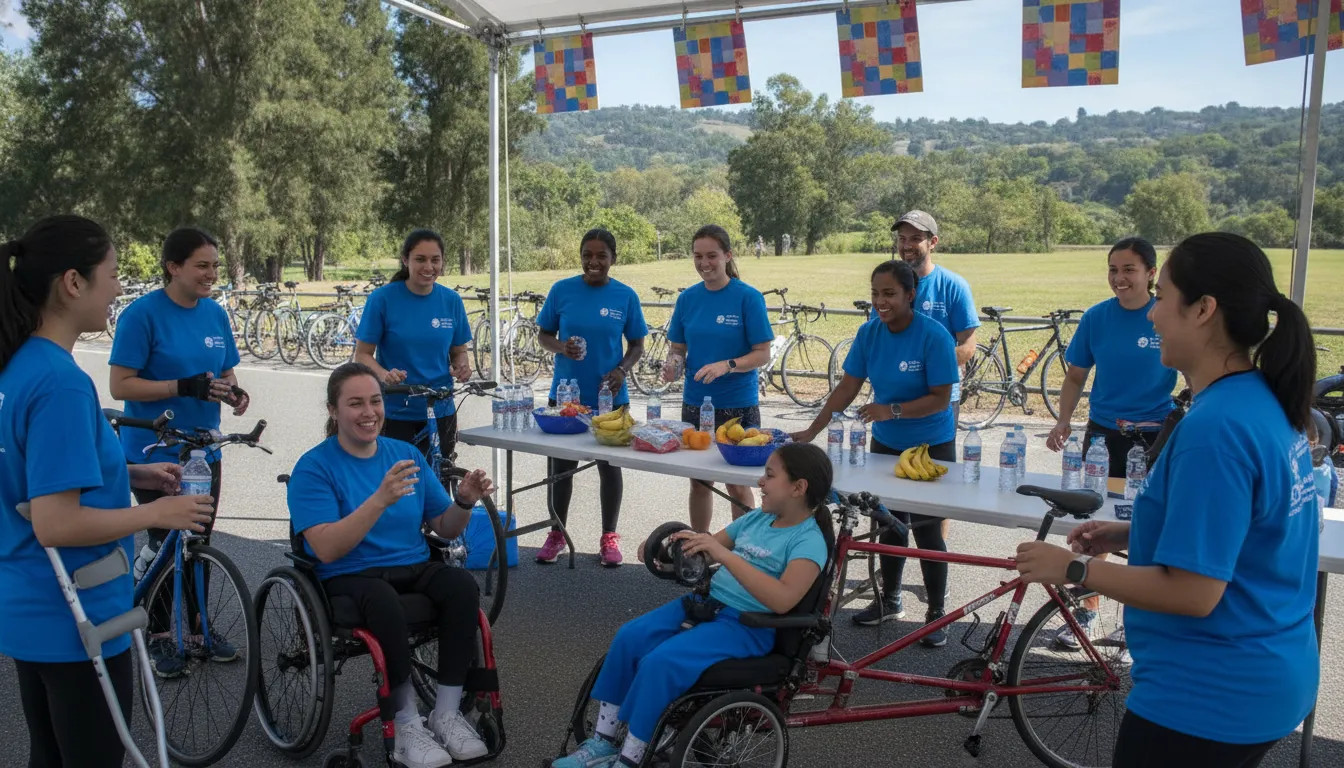
At a community ride, this can mean welcoming participants, helping at an aid station, supporting route logistics, or creating an encouraging cheer zone. Each role contributes to a shared experience. Clear communication and predictable structure can help people feel comfortable, while patience gives participants room to make choices and take part on their own terms.
When you volunteer with special needs communities in this way, impact is measured by connection and participation, not by being someone’s hero. You help build an environment where individuals with autism and disabilities are seen as active contributors. That is what makes volunteering a lasting part of an inclusive community.
What It Means to Volunteer with Special Needs Respectfully
Respectful volunteering starts with seeing the person before the diagnosis. A person-centered approach asks what an individual enjoys, does well, and wants to contribute. It does not assume that a disability defines someone’s interests, communication style, or capacity to participate.
At Bike to the Beach, that means building genuine relationships around shared work and shared interests. Volunteers are not there to rescue, fix, or feel sorry for anyone. They are part of a community working together to create an inclusive ride experience. The goal is collaboration, not charity directed at a passive recipient.
Use language that respects the individual
Person-first language can help keep the focus where it belongs: on the individual. Say “a person with autism” or “an individual with a disability,” unless that person has expressed a different preference. Avoid labels that reduce someone to a diagnosis, and never describe community members as patients in a volunteer setting.
Language is only one part of respect. Speak directly to the person, not only to a parent, caregiver, or support professional. Ask before helping. Give the person time to respond, and do not interpret a different communication style as disinterest or inability. A clear question and a patient pause can create more room for meaningful participation.
Support strengths instead of making assumptions
Person-centered volunteering focuses on an individual’s strengths and interests rather than the service being provided. Someone may prefer greeting riders, organizing supplies, helping with a creative activity, or contributing in a quieter role. Offer choices when possible, then follow the person’s lead.
This approach also means respecting boundaries. Do not touch a person, their equipment, or their belongings without permission. Do not speak for someone who can speak for themselves. Avoid unsolicited advice, exaggerated praise, or questions about a diagnosis. Treat each interaction as a relationship between equals.
Event volunteers receive training to maintain clear communication and structured environments for participants with autism. Predictable instructions, consistent expectations, and calm support can make it easier for people to engage confidently. Structure should create access, not control. Volunteers can explain what comes next, check understanding, and adjust their approach without taking over.
The most useful question is often simple: “How can I support you?” Listen to the answer. Respect the response, and recognize that support may look different from one person to another. That is how volunteering becomes a shared community experience rather than a performance of kindness.
Meaningful Volunteer Roles at Bike to the Beach
A meaningful volunteer role starts with the person, not a diagnosis. At Bike to the Beach events, volunteers help create a welcoming community where individuals with autism and disabilities can participate, connect, and contribute. The right role may involve direct interaction, practical event support, or behind-the-scenes preparation.
Social and recreational programs for youth and adults with disabilities show how shared activities can create connection and belonging. Charity bike rides offer that same opportunity in a lively, team-oriented setting. Volunteers can work alongside participants, support event staff, and help make the experience predictable and enjoyable. If a school group is planning a related event, the school bike fundraiser planning guide explains how to assign inclusive roles and responsibilities.
Some roles are especially suited to people who enjoy mentoring. An assistant or demonstrator can model an activity, explain a process, or encourage someone through a new task. The goal is partnership, not taking over. Volunteers should follow each participant’s preferences, communicate clearly, and ask before offering hands-on help.
| Role | What you do | Who it supports |
|---|---|---|
| Route support volunteer | Welcome riders, provide directions, and help keep route areas organized and encouraging. | Riders, families, and event staff who need clear guidance during the ride. |
| Aid station volunteer | Prepare supplies, offer refreshments, and keep the station calm, accessible, and easy to navigate. | Riders with different energy, communication, and mobility needs. |
| Cheer zone volunteer | Celebrate riders, use positive encouragement, and help create an upbeat community atmosphere. | Participants and supporters who benefit from visible recognition and connection. |
| Mentor or activity assistant | Demonstrate activities, offer patient encouragement, and collaborate with participants at an appropriate pace. | Individuals building confidence through new social, recreational, or event experiences. |
| Event operations volunteer | Support check-in, supplies, setup, or office tasks so the event team can serve participants effectively. | Participants, families, nonprofit partners, and staff who rely on organized events. |
These roles can also support independent living by reinforcing choice, communication, and practical participation. A volunteer might help someone locate a station, understand the next step, or complete a task while preserving that person’s control. Staff and event leaders should provide the appropriate level of support rather than assuming what someone needs.
Bike to the Beach volunteers are trained to use clear communication and structured environments at events supporting participants with autism. Before choosing a role, review the available volunteer opportunities and consider which setting matches your strengths. If you are volunteering and riding, the 100-mile ride checklist can help you prepare your gear. Whether you are organizing supplies or cheering from the route, your contribution helps build an event where everyone has a genuine place.
How to Prepare for Your First Special Needs Volunteer Shift
Your first shift will feel more comfortable when you replace assumptions with preparation. You do not need to arrive with every answer. You do need to be ready to listen, follow the event team’s guidance, and treat each person as an individual with their own interests, communication style, and preferences.
A few hours can make volunteering accessible even with a busy schedule. Some organizations describe a commitment of just a few hours each week as a low-barrier way to provide meaningful support through activities you already enjoy. That approach keeps volunteer service practical and sustainable.
- Review the orientation and training materials. Read any information the organization sends before your shift. Pay attention to the schedule, arrival location, accessibility details, safety procedures, and your assigned role. Training may explain how volunteers support participants with autism, including the value of clear communication and structured environments. If there is an orientation session, attend it rather than relying on a quick overview at check-in.
- Ask clarifying questions before the event begins. If you are unsure about a task, reporting line, schedule change, or safety procedure, ask the volunteer lead. You can also ask what support is appropriate during common situations, such as a participant needing a quieter space or extra time. Asking questions is responsible preparation, not an interruption. It helps the team respond consistently and respectfully.
- Learn the communication preferences you should follow. Listen for guidance about how to offer directions, explain transitions, and invite participation. Use direct, respectful language and allow time for a response. Do not assume that eye contact, speech, movement, or enthusiasm will look the same for every person. When you are unsure, speak with the staff member coordinating the shift instead of guessing.
- Arrive early enough to get oriented. Give yourself time to park, check in, locate restrooms and quiet areas, and meet the team. Early arrival also lets you understand the flow of the event before participants arrive. Put your phone away during active support, wear practical clothing, and bring any required water, identification, or weather-appropriate gear.
- Stay flexible while keeping your role clear. Community events can change quickly. A task may take longer, a route may shift, or the volunteer lead may ask you to help somewhere else. Follow the lead of trained staff, maintain agreed boundaries, and avoid taking over. Flexibility works best when it supports participant choice and the event’s accessibility plan.
- Focus on connection, not performance. A successful shift is not measured by how much you accomplish or how quickly you solve a problem. Notice the person’s interests, offer genuine encouragement, and participate alongside them when invited. Conversation, shared effort, and a calm presence can matter as much as the task itself. Let connection guide your support, while respecting each person’s independence.
After the shift, note what helped and what you would like to understand better. A brief conversation with the volunteer lead can improve your next assignment and help create a more welcoming experience for everyone.
Best Practices for Interactive Support at Charity Bike Rides
Interactive support starts with treating every participant as a person first. Before offering help, introduce yourself, explain your role, and ask what would be useful. Do not assume that a diagnosis tells you what someone needs. A person-centered approach focuses on individual interests and strengths, which helps volunteers build authentic connections.
At Bike to the Beach events, volunteers help create a welcoming experience through route support, cheer zones, and aid station logistics. Those roles are more effective when volunteers see participants as active members of the event community, not as people to manage. A friendly greeting, a calm explanation, or a shared moment of encouragement can make the ride feel more predictable and connected.
Communicate clearly and give people time
Use plain, direct language and explain one step at a time. Tell a participant what is happening before you act, especially if you are guiding them toward an aid station, restroom, rest area, or route change. Ask permission before providing physical assistance. If the answer is no, respect it and offer another option.
Allow extra time for a response. Some participants may communicate through speech, gestures, devices, or support people. Speak directly to the participant rather than addressing only a companion. Keep your tone natural and patient. Clear communication and patience are central to the training Bike to the Beach describes for volunteers supporting participants with autism.
Create a calm and structured environment
Charity rides can be busy, noisy, and full of unexpected movement. Volunteers can reduce stress by keeping instructions consistent and pointing out what comes next. Use visible landmarks, repeat directions when needed, and avoid crowding someone who appears overwhelmed. If a participant needs a quieter moment, help identify a calmer space and notify the appropriate ride leader.
Predictability does not mean removing choice. Offer simple options, such as taking a break now or walking to the next station. Let the participant decide whenever possible. These small choices support independence while preserving safety.
Make teamwork genuinely shared
Inclusive activities are strongest when neurotypical participants and participants with disabilities work alongside one another toward a shared goal. Research examples describe teams of special-needs and neurotypical performers building choreography and teamwork together, rather than separating people by ability. At a bike ride, that same principle can guide cheering, rest-stop activities, route support, and team assignments.
Focus on peer connection as well as completing tasks. Invite participants to join a conversation, celebrate progress, or help with an appropriate activity. Social support can matter as much as the practical service itself. For more ideas, explore inclusive and adaptive cycling and autism-friendly charity events.
Finally, review what to expect on ride day before your shift. Prepared volunteers communicate with confidence, notice individual needs, and help create a community where every participant can contribute.
Find your fit, and explore volunteer roles with Bike to the Beach
Frequently Asked Questions About Volunteering with Special Needs Communities
Can people with special needs volunteer?
Yes. Many organizations, including Bike to the Beach, create inclusive and adaptive volunteer roles designed around individual strengths and interests. Volunteering is a powerful way for people of all abilities to contribute to their communities, build skills, and make meaningful connections. If you or someone you support is interested, reach out to the organization to discuss accommodations and the best fit.
What does it mean to volunteer with special needs communities?
Volunteering with special needs communities means supporting individuals with autism and disabilities in a respectful, person-centered way. Instead of focusing on a diagnosis, you focus on each person’s strengths, interests, and goals. It is about working alongside community members as partners, not treating them as an object of charity. This approach builds trust, dignity, and genuine connection.
Do I need experience to volunteer with special needs?
No. Most programs welcome volunteers of every background and provide orientation and training before you begin. Volunteers are taught clear communication practices and how to create a structured, welcoming environment. Your willingness to learn and to show up with an open, respectful attitude matters far more than prior experience.
How do I find volunteer opportunities with special needs near me?
Start by checking local autism and disability organizations, including Bike to the Beach, for event and year-round volunteer roles. Look for groups that emphasize inclusive and person-centered practices. Many organizations, like the partners Bike to the Beach supports, depend on volunteers for events, mentoring, and administrative support. A quick search for “inclusive volunteering near me” is a good first step.
What kind of training supports inclusive volunteering?
Effective training covers respectful language, clear communication, and how to build structured and predictable environments for participants. Organizations may also share specific guidance for supporting individuals with autism or other disabilities. The goal is to help every volunteer feel confident, patient, and prepared to create a positive experience for everyone involved.
Why is person-centered language important when volunteering?
Person-centered language puts the individual first. It respects a person’s identity, strengths, and preferences instead of reducing them to a condition. Using respectful, person-first terms helps create an environment of dignity and equality, which is the foundation of meaningful and inclusive volunteering.
Ready to Volunteer with Special Needs Communities?
Bike to the Beach brings cyclists and community members together for charity rides that raise funds for local autism and disability organizations. As a volunteer, you help make every event welcoming, safe, and inclusive for riders of all abilities. Whether you support at a rest stop, cheer on participants, or help with setup, your presence makes a real difference.
Volunteering with special needs communities starts with one simple step. Join us and discover how rewarding it is to work alongside incredible community members.
Explore volunteer opportunities with Bike to the Beach
We are a community, not just an event. When you volunteer, you help deliver resources like sensory gyms, therapy programs, and recreational opportunities to the individuals who need them most.