

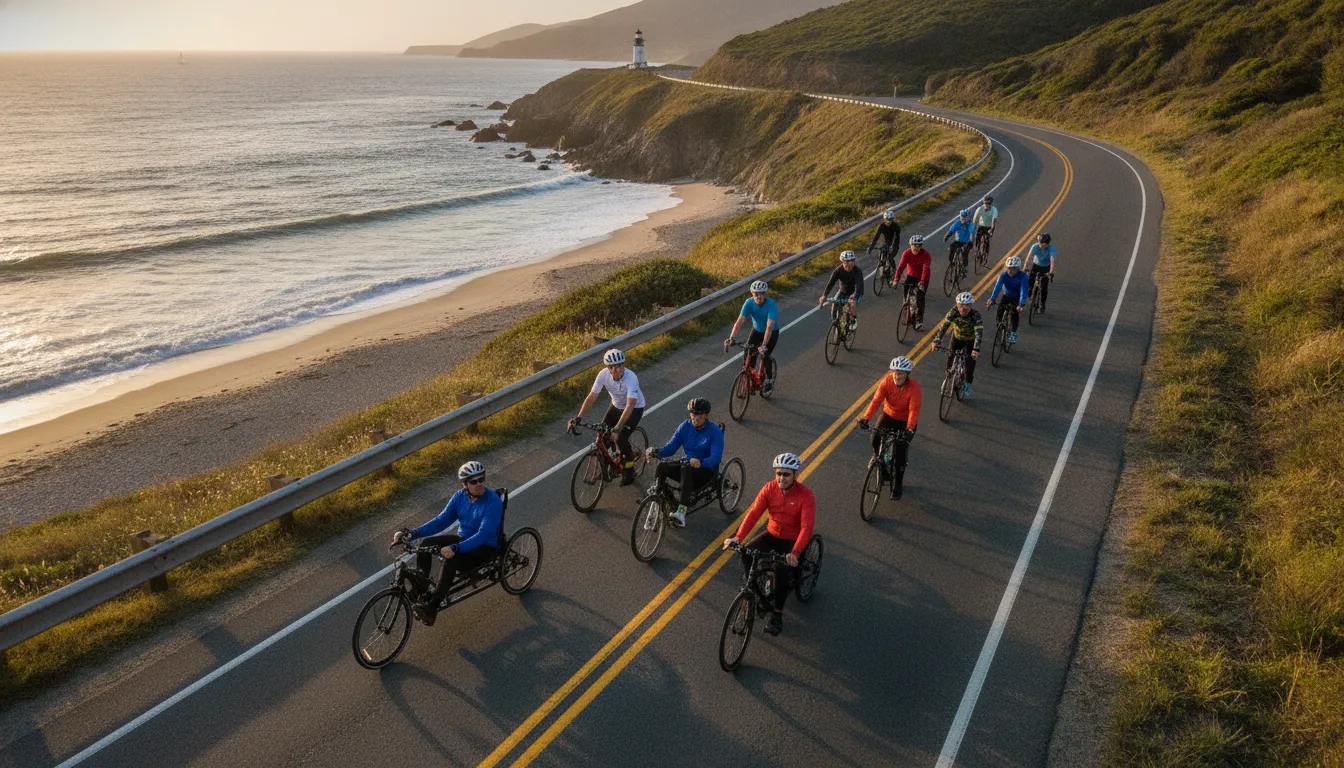
Inclusive Charity Bike Rides Adaptive Cycling for All
Get started with inclusive charity bike rides adaptive cycling. Explore adaptive equipment, route support, and flexible distance options for all abilities.

A charity ride should measure success by more than miles completed. It should make room for different bodies, bikes, pacing needs, and ways of taking part. So riders can focus on the experience and the cause rather than wondering whether they belong.
Inclusive charity bike rides adaptive cycling are becoming more welcoming through adaptive equipment, flexible distances, relay and virtual options, full route support, and trained staff. Bike to the Beach puts those choices alongside a fully supported ride experience that connects athletic goals with local autism and disability impact.
Accessibility is not a single feature added at registration. It is built into the route, support plan, communication, and participation choices from the beginning. That means looking closely at what riders may need before, during, and after the ride. Starting with the practical elements that turn an open invitation into a genuinely inclusive experience.
What Makes an Inclusive Charity Bike Ride With Adaptive Cycling Truly Welcoming?
An inclusive charity bike ride is designed around participation, not a single definition of what a cyclist looks like. It gives riders meaningful choices in distance, equipment, pacing, and support. People with different mobility needs, experience levels, and energy can take part in the same community event. Adaptive equipment, including handcycles and trikes, can expand participation for people with physical disabilities and make traditional cycling routes more accessible. Learn more about adaptive cycling equipment before choosing the setup that fits your needs.
Distance flexibility is another important part of inclusion. Bike to the Beach participation options range from 25 to 100 miles, allowing riders to select a challenge that matches their preparation and capacity. A shorter route is not a lesser contribution. It is one way an event can welcome first-time riders, adaptive cyclists, and participants who want to build confidence over time.
Relay teams create another path into the experience. Instead of asking one person to complete the entire distance, teammates can share the ride and the fundraising mission. This format can make a long event more manageable while preserving the camaraderie, purpose, and finish-line celebration that make charity rides memorable.
Support on the route matters just as much as the registration options. Bike to the Beach signature events provide rest stops, mechanical support, and SAG vehicles, giving riders practical help throughout the day. Those services can reduce uncertainty for cyclists who need more frequent breaks, encounter an equipment issue, or decide that they need transportation support before reaching the finish. The goal is not to lower expectations. It is to create the conditions for more people to meet a challenge on their own terms.
Ultimately, inclusion means planning for a broad range of abilities from the beginning, communicating options clearly, and treating every participant as part of the ride community. That approach reflects Bike to the Beach’s commitment to support for all abilities while connecting athletic goals with local impact.
Understanding Adaptive Cycling Equipment and Options
Adaptive cycling is not one specific type of bicycle. The right setup depends on how a rider moves, balances, sees, pedals, and feels most comfortable participating. Equipment should be selected with the rider, a qualified adaptive cycling program, and the event team.
| Equipment Type | Primary Use | Common Rider Needs |
|---|---|---|
| Handcycle (recumbent) | Arm-powered propulsion, low seated position | Limited lower-limb use, spinal cord injury, CP, MS, spina bifida, amputation |
| Recumbent foot trike | Three-wheel stability, supported seat | Balance concerns, TBI, CP, stroke, autism, limited motor skills |
| Tandem bicycle | Two riders sharing one bike | Visual impairment, need for navigation or pacing support |
| Standard upright bike (adapted) | Traditional cycling with modifications | Minor mobility or coordination needs, rider preference |
Handcycles for riders with limited lower-limb use
Handcycles use arm power instead of traditional leg-driven pedaling. Recumbent handcycles can support riders with no or limited lower-body use, including some people with spinal cord injuries, cerebral palsy, multiple sclerosis, spina bifida, or limb loss. The low seating position can also provide stability and a different center of gravity. Move United identifies handcycles as an option for people without the use of their lower limbs, but individual fit, propulsion, transfers, and route conditions still matter.
Recumbent trikes and foot cycles for balance and control
Recumbent trikes offer three-wheel stability and a supported seated position, which may help riders who need more balance support. Recumbent foot cycles can be useful for people with balance or coordination needs. Including some riders with traumatic brain injury, cerebral palsy, stroke, autism, or limited fine and gross motor skills. These designs can make cycling feel more predictable, but comfort and sensory preferences vary. A test ride is the best way to assess seating, steering, pedals, braking, and tolerance for vibration or road noise.
Tandems for shared navigation and pedaling
A tandem bike allows two riders to share one bicycle. It may support a rider with a visual impairment or someone who benefits from a cycling partner for navigation, pacing, or assistance with pedaling. The pair should agree on communication cues, who will lead, and how they will handle stops before joining a group ride.
Standard upright bikes remain an option
Some riders with disABILITIES use a standard upright bicycle without major modifications. Others may benefit from adaptations such as supportive seating, hand controls, pedal modifications, stabilizing accessories, or a different handlebar position. The goal is not to choose the most specialized equipment. It is to find a safe, comfortable setup that lets the rider participate with confidence.
In competitive para-cycling, classification considers both the equipment type, such as handcycle, tricycle, tandem, or upright bicycle, and the level and type of impairment. Community charity rides are not necessarily governed by those competition categories. But the framework reinforces an important principle: equipment and rider needs belong in the accessibility conversation from the start. Adaptive equipment such as handcycles and trikes can expand participation in inclusive charity bike rides and make shared routes more welcoming. Learn more about adaptive cycling equipment from Move United and review CAF’s adaptive cycling and classification resource.
Breaking Down Barriers to Inclusive Charity Ride Participation
Participation becomes more welcoming when event organizers plan for different needs from the beginning. The CDC identifies several common barriers to physical activity for people with disabilities. These include cost, limited awareness of available activities, concern about keeping up with other participants, and a lack of accessible services or trained staff. These challenges are practical, not personal shortcomings, and thoughtful ride design can address them directly.
Make participation easier to understand and afford
Clear information helps riders decide whether an event is right for them. Registration pages should explain distance options, support services, equipment expectations, fundraising requirements, and whom to contact with accessibility questions. Transparent details reduce uncertainty before a rider commits time or money. Organizers can also create different participation pathways, such as team-based roles or virtual options, when those formats are available. The goal is to make the first step clear rather than asking every rider to solve the logistics alone.
Build confidence into the ride experience
Fear of not keeping up can prevent someone from registering, even when they are interested in the cause and capable of completing a meaningful challenge. An inclusive event sets expectations around pace, support, rest, and communication so riders can choose a realistic level of participation. Volunteers and ride leaders can reinforce that a charity ride is a shared effort, not a test of athletic status. For people exploring inclusive charity bike rides adaptive cycling, confidence grows when the event makes room for different speeds, equipment, and ways to contribute.
Train the people who make access real
Accessible policies only matter when the team knows how to put them into practice. The CDC specifically notes the importance of accessible services and trained staff who can work effectively with people with disabilities. Before ride day, organizers should prepare staff and volunteers to communicate respectfully, understand support procedures, and respond consistently to questions or unexpected needs. That preparation helps create the kind of cycling environment where riders feel confident they can keep up and receive the support they need.
Bike to the Beach approaches inclusion as community planning in action. By inviting questions early, listening to riders and families, and coordinating support across the event team, charity rides can turn potential barriers into clear pathways for participation. Everyone should be able to focus on the shared experience: riding, connecting, and building local impact together.
The CDC’s guidance on accessible physical activity offers additional context for organizations working to make community programs more inclusive.
How Bike to the Beach Creates an Accessible Ride Experience for All
Accessibility starts with the ride-day experience. Bike to the Beach signature events are fully supported with rest stops, mechanical support, and SAG vehicles. That practical support helps riders manage the route with greater confidence, whether they are experienced cyclists. Returning to the bike after time away, or participating with an adaptive setup. It also means a mechanical issue or a difficult stretch does not have to end the day. Inclusive charity bike rides should make community participation feel possible, prepared, and welcoming from the start.
The event model also gives riders more than one way to take part. Individual riders can choose distances from 25 to 100 miles, matching the challenge to their preparation, energy, and goals. Relay teams can share the distance, creating an option for friends, families, coworkers, and participants whose needs make a full route impractical. For people who cannot attend an in-person ride day, the virtual challenge provides another way to participate and support the mission. These choices recognize that inclusion does not require every rider to follow the same path.
Support that connects riding with local impact
Bike to the Beach is designed around a community-first fundraising model. One hundred percent of fundraising goes to local nonprofit partners, and funds stay in the region where they are raised. That structure connects each mile to services and organizations serving local autism and disability communities. The need is broad: Bike to the Beach cites that 1 in 36 children is affected by autism. Riders are not simply completing a course for a distant cause. They are taking shared action alongside the communities and partners their fundraising supports.
Those relationships include local service providers and partners that understand the day-to-day needs of families and individuals. The Service Provider Partner program gives qualified organizations a way to build community visibility and connect with families through a paid sponsorship partnership. Together, route support, flexible participation, and local partnerships make Bike to the Beach one of the more practical accessible charity cycling events for people seeking meaningful participation at their own pace.
The Health and Social Benefits of Adaptive and Inclusive Cycling
Movement is one reason people join a ride, but connection is often what keeps them coming back. For people with disabilities, accessible cycling can create a practical path to more physical activity while making room for friendship, confidence, and shared purpose.
The need is significant. The CDC reports that people with disabilities, including people with intellectual and developmental disabilities. Tend to be less physically active and face higher risks of long-term conditions such as diabetes, heart disease, and cancer. Accessible cycling does not replace medical care, but it can make regular activity more achievable when equipment, routes, pacing, and support are designed with different abilities in mind. The CDC’s guidance on inclusive physical activity emphasizes the importance of reducing practical barriers and providing effective support.
Physical activity that meets riders where they are
Adaptive bikes, handcycles, trikes, tandem setups, and supportive event services can help more people find a comfortable way to participate. The goal is not for every rider to follow the same path or pace. It is to create a meaningful challenge that supports continued activity and personal progress. The CDC also notes that equity-minded bicycle infrastructure, planning, and programming can increase participation and help reduce disparities connected to physical inactivity.
Belonging strengthens the experience
Health benefits extend beyond the miles. Riding alongside teammates, family members, volunteers, nonprofit partners, and other participants can replace isolation with belonging. A shared route and shared purpose give people a reason to show up, encourage one another, and celebrate progress together. That social inclusion can be a powerful motivator, especially for riders who have not always felt that cycling spaces were built with them in mind.
Bike to the Beach brings these ideas together through a fully supported community experience that raises funds and awareness for autism and other disABILITIES. The ride is not about proving that everyone can participate in the same way. It is about creating more ways to move, connect, and take meaningful action together.
Tips for First-Time Adaptive and Inclusive Charity Riders
Your first charity ride should feel like a meaningful challenge, not a test of whether you can match someone else’s pace. A little planning helps you choose the right format, ask useful questions, and build confidence before ride day.
-
Choose a distance that fits your starting point
Begin with the distance you can approach consistently and comfortably. Bike to the Beach offers individual ride options from 25 to 100 miles. So a 25-mile route can be a strong first goal without making the event feel out of reach. Consider your current endurance, mobility, recovery needs, terrain experience, and how much time you have to prepare. The right distance is the one that gives you room to enjoy the community and finish feeling ready for your next challenge.
-
Ask about equipment and access before registering
If you use a handcycle, trike, tandem, recumbent, or another adaptive setup, contact the ride team early. Ask about route surfaces, loading and transport, rest-stop access, mechanical support, and whether adaptive equipment is available through the event or a community partner. Adaptive cycling equipment, including handcycles and trikes, can expand participation for people with physical disabilities, but each rider’s setup and support needs are different. Clear answers ahead of time make planning safer and more comfortable.
-
Connect with trained support staff
Ask who will be available on the route and how support works if you need assistance. Trained staff and accessible services matter because lack of effective support can keep people with disabilities from participating in physical activity. Knowing where to find ride leaders, medical personnel, mechanical help, or SAG support can replace uncertainty with confidence that you can keep moving at your own pace.
-
Train gradually and use a plan that respects your pace
Build time on the bike in manageable increments, and include practice with the equipment, positioning, nutrition, and rest schedule you expect to use on ride day. If you are preparing for a longer goal, use this training and fundraising dual-purpose plan as a planning resource, then adapt it to your body and available support. Consistency matters more than forcing a fast progression.
-
Share the distance with a relay team
Relay options let a team divide the total distance among several riders. That can make participation more manageable while preserving the shared accomplishment, fundraising purpose, and finish-line energy. Talk with teammates about each person’s preferred distance, handoff logistics, transportation, and recovery time before the event.
-
Consider a virtual challenge as your first step
If travel, scheduling, health, sensory, or route concerns make an in-person event difficult, a virtual challenge can offer a lower-barrier way to participate. You can choose a familiar setting and build experience while still joining the broader mission. It is not a lesser version of the ride; it is another way for riders of different abilities and circumstances to take part.
Reach out to the event team with specific questions. Inclusive participation works best when riders and organizers plan together.
Frequently Asked Questions
What makes a charity bike ride accessible for riders with different abilities?
Accessibility starts with planning for varied needs instead of treating accommodations as an afterthought. Look for flexible distances, relay options, clear route information, trained support staff, rest stops, mechanical assistance, and SAG vehicles. A virtual option can also give people who cannot attend in person a meaningful way to participate.
What types of adaptive bikes can be used in a charity ride?
Adaptive cycling may include handcycles, recumbent trikes, tandems, and other modified bicycles. Handcycles can support riders who use their arms for propulsion, while trikes may offer additional stability. Tandems can help some riders participate with a cycling partner. Equipment needs vary, so confirm route conditions, bike requirements, and event support with the organizer before registering. Move United’s cycling guidance provides additional context on adaptive equipment.
Can I participate if I am not ready to ride the full distance?
Yes. Ask whether the event offers shorter routes, relay teams, or virtual participation. Bike to the Beach lists individual ride options from 25 to 100 miles, along with relay teams and virtual challenges, so participants can choose an appropriate challenge. Source: Bike to the Beach.
What should I ask an organizer before signing up?
Ask about accessible parking and restrooms, route surface and elevation, distance options, support vehicle procedures, mechanical assistance, rest-stop access, equipment compatibility, and who to contact with accommodation questions. Share your needs early, because specific details can vary by route and event. A responsive organizer should explain how its team supports riders throughout the experience.
Ready to Take Part in Inclusive Cycling?
Whether you want to register for a Bike to the Beach ride, start a team. Or support inclusive cycling through a donation, your next step can help build a more welcoming community for riders of all abilities. Visit Bike to the Beach to learn more about regional rides and choose the way you would like to participate.