

Volunteer at Charity Bike Ride What to Expect on Ride Day
Ready to give back on ride day? Volunteer at charity bike ride what to expect: roles, timeline, what to bring, and sign up with Bike to the Beach.
Ride day starts before most cyclists reach the course. Volunteers help turn a route, rest stop, parking area, or finish line into a welcoming, well-supported experience, then stay engaged as riders make their way to the beach. The work is practical, social, and closely connected to the mission of supporting local autism and disability nonprofits.
Sign up as a Bike to the Beach volunteer and help create the ride your community counts on.
If you are wondering about volunteer at charity bike ride what to expect, plan for an early start, clear instructions, an active shift, and teamwork that may include checking in participants. Guiding riders, supporting rest stops, assisting with logistics, or celebrating finishers. You do not need to be an experienced cyclist to make a meaningful contribution.
Every role helps create the safe, encouraging atmosphere riders count on. Here is how the day typically unfolds, from your first assignment through the moments when the final riders arrive.
What to Expect When You Volunteer at a Charity Bike Ride
Volunteering at a Bike to the Beach ride feels part logistics operation, part neighborhood welcome, and part finish-line celebration. You may arrive while the sky is still dim, help the event site come to life. And spend the day moving between practical tasks and encouraging conversations with riders, families, and fellow volunteers. You do not need to be an experienced cyclist to contribute. The most important qualities are reliability, attention, and a willingness to help people feel supported.
The day can include several kinds of work. Some volunteers welcome participants at registration and check-in, organize packets, answer questions, and help the morning flow smoothly. Others support rest stops, direct riders at key points, monitor the route, or assist with parking and traffic. At the beach, finish-line volunteers help set up the celebration, cheer riders across the line, distribute medals or awards, and help restore the space afterward. These roles serve different strengths, so a volunteer coordinator can help match your assignment to your comfort level and availability.
What makes a fully supported ride different
On an unsupported ride, riders and their companions may need to manage navigation, refreshments, mechanical problems, and unexpected setbacks largely on their own. A fully supported charity ride builds those needs into the event plan. Volunteers help create the network that lets riders concentrate on the road while the team manages the details behind the scenes. Research from the University of Texas Health Science Center at San Antonio similarly describes volunteers handling check-in, route guidance, rest stops, communications, and finish-line duties: see how volunteer roles support a charity ride.
That support is not invisible. A clear answer at check-in can settle a rider’s nerves. A well-run station can provide a needed drink and a few encouraging words. A route volunteer can help someone make a safe turn. Together, these moments make the ride feel organized, welcoming, and possible.
Most of all, volunteers are the backbone of the experience. Your shift connects the athletic challenge to the community purpose behind it, including the impact of your volunteer time beyond ride day. Whether you are handing out packets, watching the route, or celebrating at the beach. Your work helps turn a long day on the bike into a shared local effort.
Meet the Volunteers Who Power Ride Day
Every smooth ride experience depends on people working behind the scenes and alongside participants. Volunteer roles are practical, visible, and connected: one team helps riders check in. Another keeps rest stops supplied, and others watch the route or welcome cyclists at the beach. Together, they create the fully supported environment that lets riders focus on the road and the cause.
Registration and check-in: the first welcome
Registration volunteers are often the first point of contact riders meet on event morning. They help participants check in, distribute packets, call out bib numbers for packet pickup, and answer basic event questions. A calm, organized welcome can make a busy start feel manageable, especially for first-time charity ride participants.
Rest stops: fuel, water, and encouragement
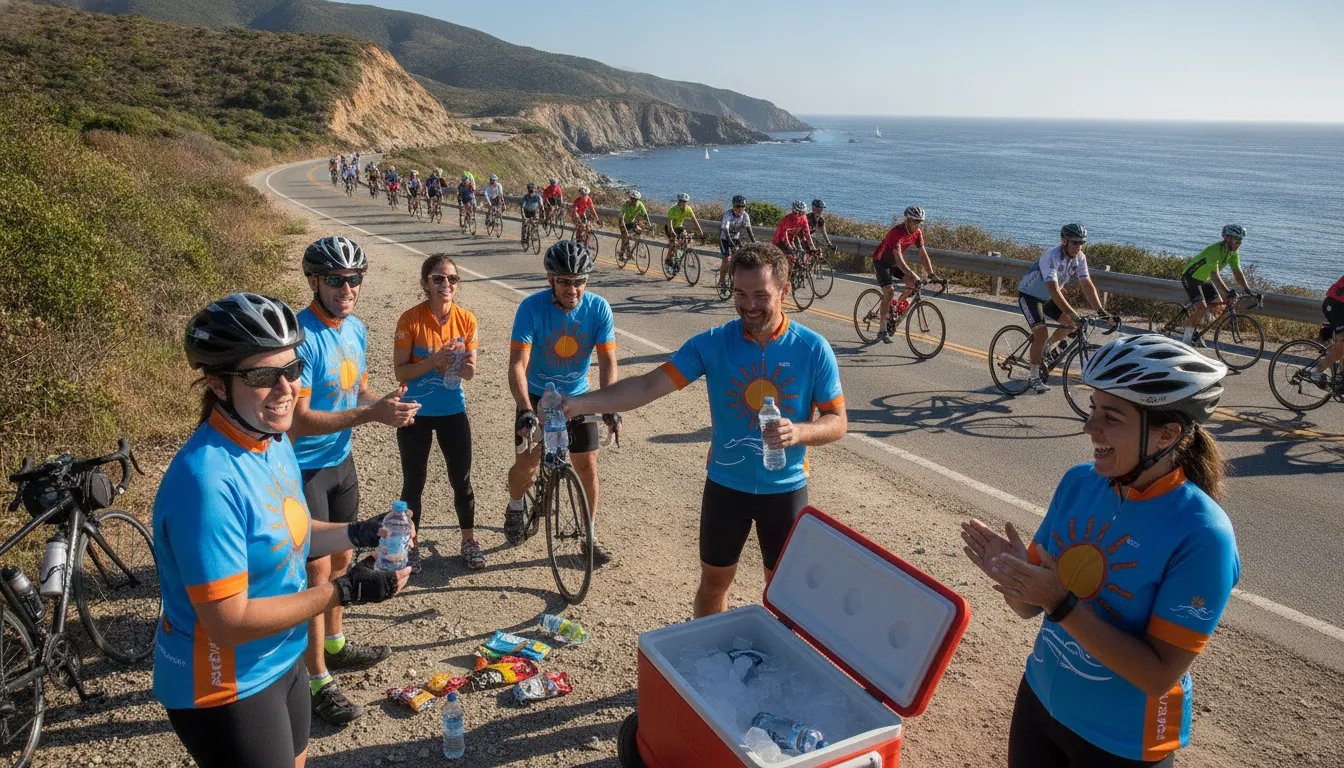
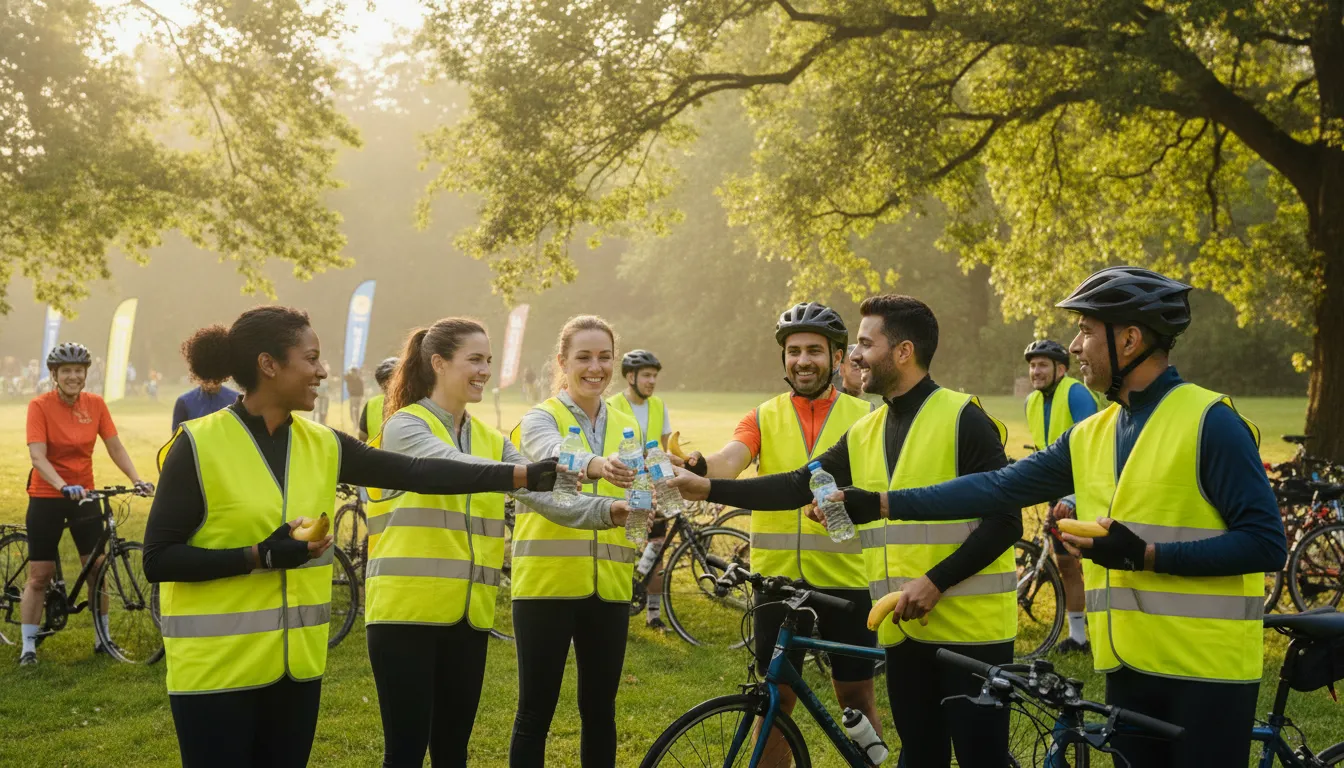
Rest stop and aid station crews keep riders moving safely through the course. Volunteers set out water and snacks, refresh supplies, and offer a friendly word when a rider needs a moment to regroup. The work can be fast during busy stretches, but it is also personal: noticing who needs a refill. Directions, or simple encouragement is part of supporting the whole community.
SAG vehicles: support when plans change
SAG, or Support and Gear, volunteers monitor the route and assist riders who have fallen behind or need help. If someone cannot continue because of fatigue, injury, or a mechanical failure. A SAG vehicle can transport the rider and bike to a rest stop or the finish line. Review the details of on-route support and SAG roles to see how this essential safety function works.
Route marshals: clear directions and safer intersections
Route marshals stand at key intersections and course points to direct riders, confirm they are following the correct route, and watch for safety concerns. Their presence gives cyclists confidence at turns and helps the event move predictably for riders, drivers, and neighbors.
Finish line crew: celebrate and reset
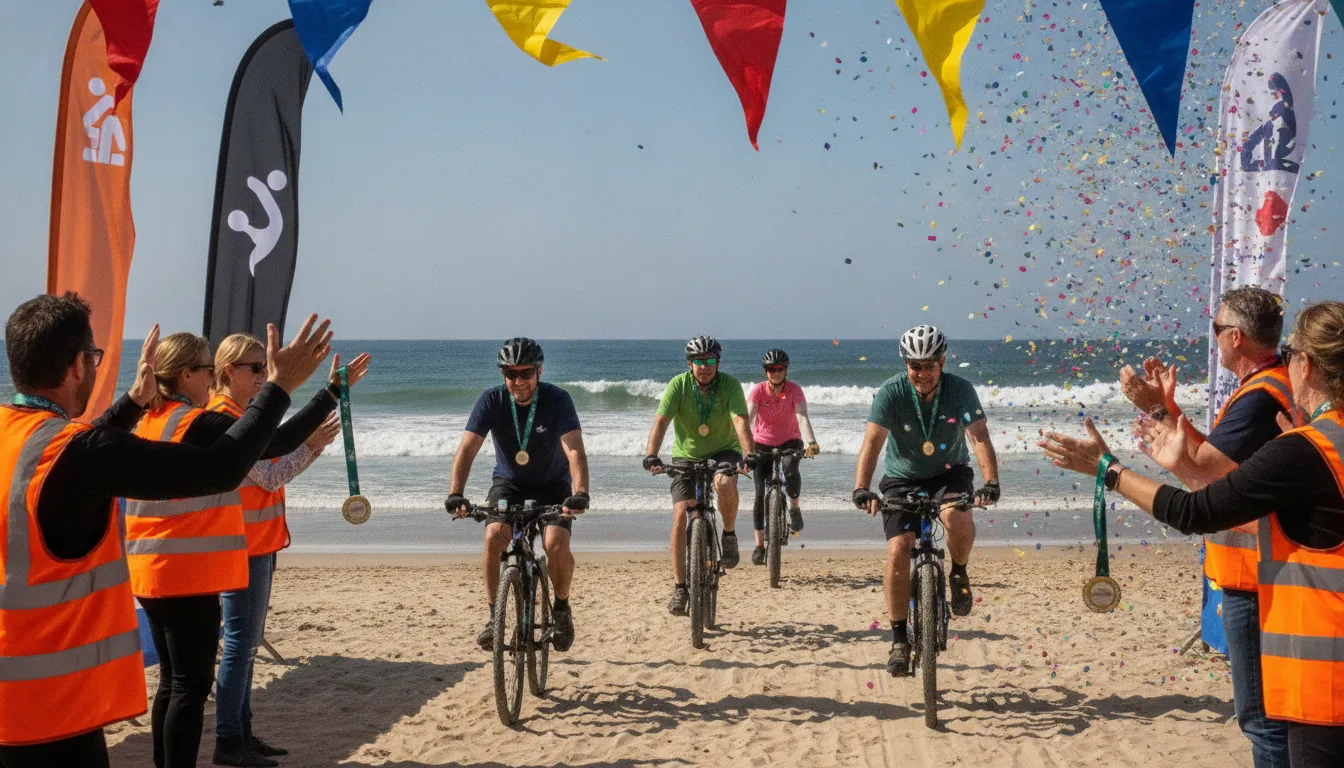
At the destination, finish line volunteers help set up the welcome area, cheer riders across the line, hand out medals or awards, and support post-event cleanup. The celebration matters because it recognizes every rider’s effort. The cleanup matters because caring for the event space is part of caring for the community that hosts it.
| Volunteer role | Main responsibilities | Where you serve |
|---|---|---|
| Registration and check-in. | Greet riders, distribute packets, answer questions. | Start site, early morning. |
| Rest stop crew. | Set out water and snacks, offer encouragement. | Along the route, midday. |
| SAG vehicle support. | Monitor the course, transport riders who cannot continue. | Route, during the ride. |
| Route marshal. | Direct riders at turns, watch for safety. | Intersections and key points. |
| Finish line crew. | Set up the finish, cheer, hand out medals, cleanup. | Beach finish, afternoon. |
These roles may look different, but each one helps make ride day safer, more welcoming, and more connected. For the specific responsibilities and source role descriptions behind these common charity ride duties, see the University of Texas Health Science Center volunteer guide.
A Typical Charity Ride Volunteer Day, Hour by Hour
-
The day before: make the route easy to follow. Volunteer work can begin before riders arrive. Teams place wayfinding signs along the course so participants can navigate turns and key locations with confidence. This behind-the-scenes step is easy to overlook, but clear signs reduce confusion when the ride is underway. A route communications plan, which may include radio support, also helps event leaders share updates across the course. Volunteer ride teams commonly support signage and route communications as part of event preparation.
-
Pre-dawn: prepare the start area. Before the first rider rolls out, setup crews arrange supplies, confirm stations, and help the start site come to life. Parking and traffic volunteers direct arriving vehicles, keep movement orderly, and help riders and families reach the right area safely. This is often the busiest window for practical problem-solving, so expect clear instructions, changing priorities, and plenty of teamwork.
-
Early morning: welcome riders and support each wave. Registration and check-in volunteers are often the first point of contact. They help riders check in, distribute packets or event information, and keep the flow moving as groups prepare to start. Route teams then take their positions while communication volunteers relay updates. If you are stationed near the course, knowing basic ride safety and hand signals can make communication with cyclists clearer.
-
Late morning to midday: keep riders supported on the route. Rest stop volunteers manage water and snack stations, offer encouragement, and watch for riders who need assistance. Route support and SAG teams monitor the course and help participants who are dealing with fatigue, an injury, or a mechanical problem. These teams help create the fully supported experience that lets riders focus on riding while volunteers handle the logistics around them.
-
Afternoon: welcome the finishers. At the beach finish, volunteers help create the moment riders have worked toward. Duties may include cheering, handing out medals or awards, guiding people through the finish area, and helping families find their groups. Learn more about supporting riders at the beach finish and the community celebration that follows.
-
After the last rider: restore the site. The day ends with teardown, equipment collection, traffic support, and cleanup. Finish-line volunteers help prepare the area for departure, while communications teams confirm that route operations are complete. The work may be less visible than the cheering, but it closes the loop and leaves the event space ready for the community.
The schedule and assignment details can vary by region and role. What stays consistent is the shared effort: volunteers turn many moving parts into a safe, welcoming ride day.
What Should I Bring to My Volunteer Shift?
The best volunteer preparation is practical. You do not need specialized event experience to be useful, but arriving ready for changing conditions helps you stay focused on riders and fellow volunteers throughout the day.
Pack for the conditions
Check the forecast before you leave, then dress in layers that can adjust as the morning warms up. Outdoor roles may involve standing, walking, or moving between locations, so choose comfortable closed-toe shoes with reliable support. Avoid bringing anything you would not want exposed to dust, grass, light rain, or spilled drinks.
- Light layers or a weather-resistant outer layer.
- Comfortable closed-toe shoes and socks suitable for standing.
- Hat, sunglasses, sunscreen, and other sun protection.
- A refillable water bottle and easy-to-carry snacks.
- A fully charged phone, plus a portable battery if you have one.
Follow the pre-event instructions
Read the event email or volunteer instructions carefully. They should tell you where to report, when to arrive, where to park, and what to expect at check-in. Arrival times can vary by role. Setup and route-support assignments may begin early, while other positions may start later in the morning. Build in extra time so you can check in without rushing and hear any last-minute updates.
Your phone can help you stay reachable, but keep it secure and follow the event team’s communication process. If your role includes a radio, traffic direction, or another specific responsibility, ask questions before riders arrive rather than guessing during a busy moment.
Communicate what you need
Let the volunteer coordinator know about physical limits, mobility needs, medical considerations, or anything else that could affect your assignment. This is not a problem to hide. Clear communication helps organizers match you with a role where you can contribute safely and confidently. Whether that means checking in participants, supporting a rest stop, helping with setup, or assisting at the finish.
How Volunteers Create a Safe, Community-First Ride
A fully supported ride depends on more than bicycles, routes, and a beach finish. Volunteers are the backbone of the experience, creating the practical support that helps riders feel prepared, encouraged, and safe from the first check-in through the final celebration. Every role matters, whether you are helping with event logistics, sharing route communications, supporting a rest stop, or welcoming riders across the finish line.
That support gives cyclists room to focus on the ride itself. At large cycling events, teams of hundreds can manage the logistics while thousands of participants concentrate on pedaling, according to event support research. At Bike to the Beach, volunteers help turn that same principle into a community-first experience. Route communications help keep teams coordinated, while on-site volunteers respond to changing needs and make sure riders know where to go for assistance.
Safety is built through many small, attentive actions. A volunteer who offers clear directions, checks in with a tired rider. Keeps a support area organized, or communicates an update can make the day more comfortable for everyone. The goal is not to take over the experience. It is to create the dependable conditions that let riders participate with confidence and connect with the people around them.
Your time also supports a mission that continues after ride day. Bike to the Beach keeps funds in the regions where they are raised. Supporting local autism and disABILITY nonprofits and programs such as sensory gyms, therapy services, family support, recreation, and community inclusion. Volunteering adds another layer of local impact by helping bring those fundraising efforts to life in a welcoming, well-run event. Learn more about the impact of your volunteer time beyond ride day.
Whether you are directing riders, answering questions, or cheering at the finish, you are helping build a day where shared effort moves the whole community forward.
How Do I Sign Up as a Bike to the Beach Volunteer?
Ready to take part in ride day from the other side of the route? Signing up is straightforward. Start by choosing the Bike to the Beach ride closest to you: Florida, DC/MD/VA, New England, or New York. Each region offers its own route, community, and event-day needs, so select the ride that fits your location and availability.
Next, review the volunteer roles and consider how you would like to contribute. You might enjoy welcoming riders at registration, helping at a rest stop, supporting route logistics, or cheering participants across the finish line. If you are volunteering with a group, you can also coordinate a shared assignment and make the experience a meaningful team activity.
When you are ready, sign up to volunteer at a charity bike ride through the online form. Share your preferred ride and role, then watch for follow-up details about your shift, arrival time, and event-day instructions. Whether you volunteer for a few hours or stay through the finish, your time helps create a safe. Fully supported ride for cyclists and strengthens local support for people with autism and other disABILITIES.
Volunteer for your local Bike to the Beach ride and play a key role on ride day.
Frequently Asked Questions
How long is a charity bike ride volunteer shift?
Shift length depends on the assignment, start time, and event schedule. Setup and registration roles may begin before riders arrive, while finish-line support continues into the afternoon. Check your volunteer confirmation for the exact arrival time, expected end time, meeting location, and coordinator contact.
What are common volunteer roles at a charity bike ride?
Common assignments include registration and packet pickup, rest-stop support, route marshalling, parking and traffic flow, SAG support, and finish-line celebration. Registration volunteers help riders check in and find event information, while rest-stop teams manage water and snacks. Route marshals help riders follow the course safely, and finish crews may cheer riders, distribute medals, and help with cleanup. These responsibilities are consistent with the role descriptions published by UT Health San Antonio (volunteer role guidance).
What should I bring to my volunteer shift?
Bring the items listed in your event instructions, along with weather-appropriate layers, comfortable shoes, sun protection, water, and any required identification. Because roles differ, confirm whether meals, snacks, drinks, shirts, radios, or other equipment will be provided rather than assuming they are included. Arrive early enough to check in and receive your assignment.
What does a SAG driver do at a charity bike ride?
A SAG driver monitors the route and assists riders who need help because of fatigue, injury, or a mechanical problem. Depending on the situation, the vehicle may transport the rider and bicycle to a rest stop or the finish. This is a safety and support role, so follow the event’s driver requirements, communication procedures, and instructions from the ride operations team.
Will I help at the finish line?
Some volunteers are assigned to the finish area, where they may help prepare the space, welcome riders, hand out medals or awards, encourage participants, and support post-event cleanup. If your role is on the route or at a rest stop, you may finish before the beach celebration. Ask the volunteer coordinator whether your assignment includes finish-line coverage.
Ready to Volunteer on Ride Day?
Whether you help riders get started, support a rest stop, guide the route, or celebrate at the beach finish, your time builds a safe, fully supported ride. It is a practical way to take shared action and support Bike to the Beach’s mission.
Sign up as a Bike to the Beach volunteer today and play an important part in your local ride.