

How Long Does It Take to Bike 100 Miles? A Complete Guide
How long does it take to bike 100 miles? Most recreational riders finish in 6 to 10 hours. Adjust for pace, terrain, and supported ride day support.

A 100-mile bike ride is a serious endurance goal, but the clock is not determined by distance alone. Your pace, elevation, wind, stops, and the group you ride with can shift the finish time by hours. Knowing what drives those hours is the difference between a plan you can trust and a vague guess that leaves you stressed before the start line.
For most recreational cyclists, how long does it take to bike 100 miles? Plan on roughly 6 to 8 hours of moving time, or about 6 to 10 hours total once rest and fueling stops are included. Beginners may need 8 to 12 hours or more, while experienced riders on favorable terrain can finish in under 7 hours. Those ranges matter, because a century is less about speed than about finishing a long day feeling strong and safe.
Register for a supported Bike to the Beach charity ride and make your century part of a community effort where rest stops, mechanical support, and fellow riders help carry you across the line.
The most useful estimate starts with your sustainable pace, then accounts for the conditions and support that shape the day. Here is how those factors change the timing math.
How Long Does It Take to Bike 100 Miles?
Most recreational cyclists can expect to spend about 6 to 8 hours riding 100 miles. Once you add rest stops, food, mechanical checks, and time to regroup, the total ride-day window is often closer to 6 to 10 hours. A 100-mile ride is commonly called a century ride, and finishing one is a meaningful endurance milestone at almost any experience level.
Your average speed gives you a useful starting estimate, but it is not a promise. Terrain, wind resistance, and the number and length of your stops are usually the biggest variables. The same rider may finish a flat, calm century much faster than a hilly route into a strong headwind.
| Rider pace | Average speed | Estimated riding time | What it may look like |
|---|---|---|---|
| Beginner or casual | 10 to 12 mph | About 8.5 to 10 hours | Steady effort with more frequent recovery |
| Recreational or endurance | 12 to 14 mph | About 7 to 8 hours | Consistent pace over a long day |
| Fast or experienced | 15 to 18+ mph | About 5.5 to 6.5 hours | Strong sustained pace, often with efficient stops |
These ranges reflect moving time rather than the full time between starting and finishing. The pace estimates align with the 100-mile ride breakdown from BRAG, but use them as planning ranges instead of performance requirements. A newer cyclist may ride comfortably at the lower end of the table and still have an excellent century experience.
For a more realistic schedule, estimate your moving time, then add the stops your route requires. For example, a rider averaging 12 to 14 mph may spend 7 to 8 hours on the bike, plus additional time for hydration, fueling, bathroom breaks, and assistance. Building those pauses into your plan helps you arrive prepared rather than feeling behind before the ride is halfway done.
What Is a Good Time for a 100-Mile Ride by Experience Level?
There is no single finish time that defines a successful century. A good time depends on your experience, the course, the weather, your rest stops, and what you want from the ride. For a first century or a charity ride, finishing feeling strong is a more useful goal than chasing a fast clock.
As a broad benchmark, Cycling Level places a good 100-mile time at about 6 hours and 44 minutes. Its reported averages are approximately 6 hours and 27 minutes for men and 7 hours and 47 minutes for women. These figures are reference points, not requirements, and they do not account for every rider’s terrain, fitness, stops, or event conditions. Cycling Level’s century-time benchmarks are best used to add context, not pressure.
What to expect at different experience levels
- First-time century riders: Completion is the win. Your moving pace may be modest, and your total time will include breaks for food, fluids, mechanical checks, and recovery. Plan around staying comfortable for the full distance rather than matching someone else’s average.
- Recreational and charity riders: A steady endurance pace often produces a finish somewhere around the middle of the broad century range. You may ride faster on smooth, flat sections and slow down on climbs or into headwinds. The goal is to keep the effort controlled enough that you can continue for hours.
- Experienced endurance riders: Riders with substantial long-distance experience may target a faster moving time, especially on a familiar or relatively flat course. Even then, pacing, fueling, and efficient stops usually matter as much as raw speed.
- Competitive riders: A race-oriented goal requires a different level of preparation and intensity. A competitive time is not the right comparison for a rider completing a first charity century or riding for the community experience.
Use conversation pace as your first benchmark
For most riders, the most dependable starting point is an endurance pace where you can comfortably hold a conversation for much of the ride. That effort may feel almost too easy during the opening miles, but restraint early helps preserve energy for the final third. If you cannot speak in short, comfortable sentences, back off before fatigue turns into a problem.
Break the route into manageable segments instead of treating 100 miles as one enormous effort. A century ride training plan can help you build the pacing and endurance needed to choose a realistic finish goal for your own ride.
How Terrain, Wind, and Weather Change the Time Math
Your moving pace is only one part of the answer to how long does it take to bike 100 miles. The course itself can change the effort, and that difference becomes more noticeable as the miles add up. Terrain, wind resistance, and the number of stops are among the largest variables in your total century time, according to this century ride time guide.
A flat route with steady pavement may let you hold a consistent endurance pace. A rolling route asks you to spend more time climbing, then recover on descents and flatter stretches. A hilly course can turn a six-hour flat ride into an effort lasting eight hours or more, even when the distance is exactly the same. Descents may improve your average speed, but they do not always erase the energy and time spent climbing.
- Flat route: Plan around your sustainable pace, while allowing extra time for traffic, intersections, fueling, and rest stops.
- Rolling route: Expect your speed to vary. Judge the day by steady effort rather than trying to force the same speed on every hill.
- Hilly route: Build a larger time buffer. Repeated climbs can slow the ride and increase fatigue late in the course.
- Windy route: A headwind increases resistance and can make a familiar pace feel much harder. A tailwind may help one direction, but do not count on it balancing the entire course.
Weather can affect both your pace and your stop strategy. Heat, humidity, and your personal sweat rate change hydration needs, so adjust your drinking plan to the conditions instead of waiting until you feel thirsty. Bike to the Beach’s hydration guide for long charity rides recommends a consistent approach that accounts for the environment and your effort level.
Before registering, look beyond the mileage on the event page. Review the course map and elevation profile, noting total climbing, the length of major climbs, and whether the route is exposed to prevailing wind. Then set a realistic arrival and finish window. If you usually ride six hours on flat roads, a rolling or hilly century deserves more than a six-hour expectation. That buffer gives you room to ride sustainably, take necessary breaks, and finish with energy rather than chasing a number the course was never designed to support.
Why Group Riding and Drafting Make the Distance Feel Faster
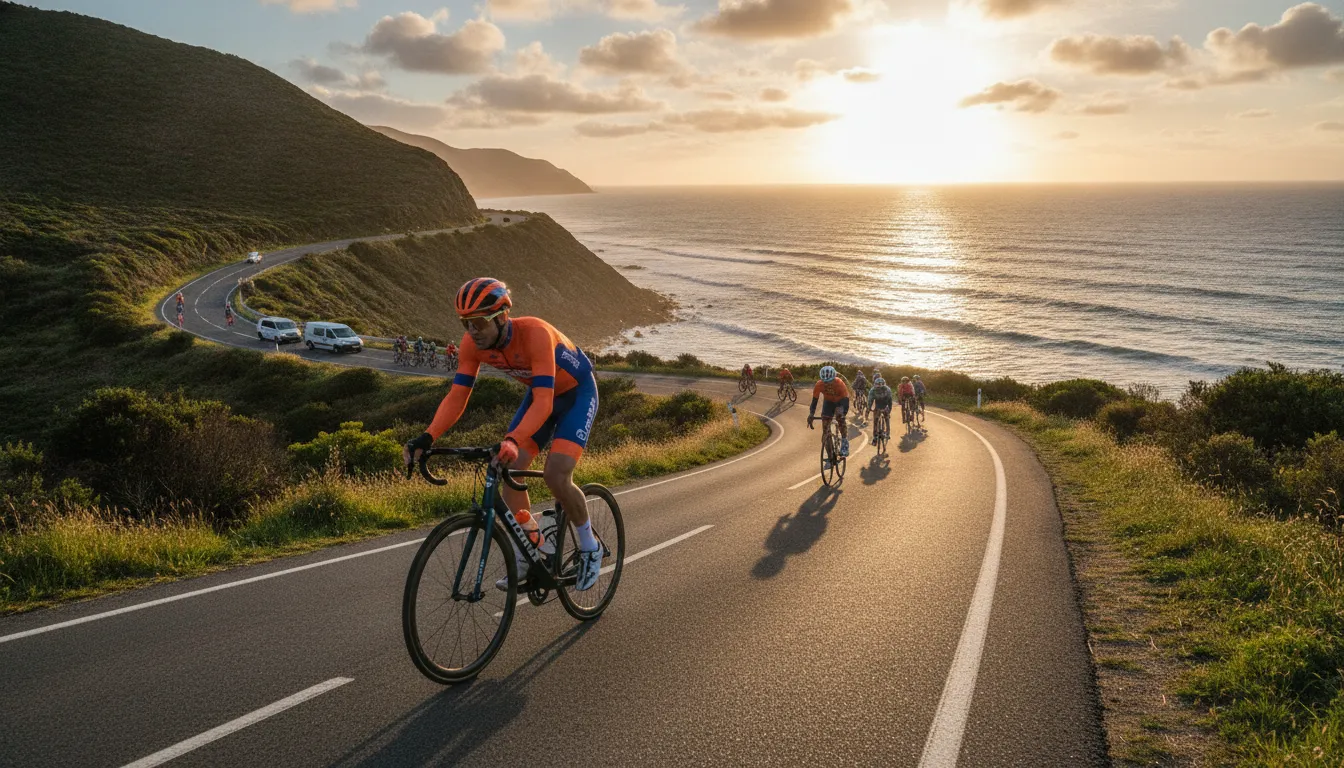
A 100-mile ride can feel very different when you are surrounded by other riders. A group does not erase the distance, but it can make the work feel more manageable, especially when the road is open and the pace is steady.
The biggest physical advantage is drafting. When you ride behind or slightly to the side of another cyclist, that rider takes on much of the air resistance at the front. You still need to pedal and pay attention, but you may spend less energy pushing directly into the wind. Research from ROUVY notes that riding in a group can share the workload, reduce wind resistance, and make a long-distance ride more efficient.
How drafting helps over 100 miles
Small energy savings can matter more as the miles accumulate. A rider who constantly faces the wind may use valuable energy early, then struggle to maintain a comfortable pace later. In a well-organized group, riders can take turns near the front while others follow in the protected air behind them. That shared effort can help the group hold a sustainable rhythm without asking every rider to do the same amount of work all day.
For a group ride to be comfortable and safe, keep your movements predictable. Hold your line, leave enough space to react, signal before slowing or changing direction, and communicate about hazards. If the pace feels too fast, move to a different group or let the group go. The best draft is one that supports your effort, not one that forces you beyond your endurance pace.
- Choose a group riding at a pace you can sustain while speaking in short sentences.
- Stay alert for potholes, parked cars, turns, and changes in speed.
- Ask experienced riders about group etiquette before the start.
- Use the group for encouragement, but make pacing decisions based on your own comfort and energy.
Shared motivation matters, too
The benefit is not only aerodynamic. At a charity ride start line, riders bring different experience levels, stories, and reasons for showing up. That shared purpose can make a demanding day feel less solitary. Bike to the Beach describes charity rides as both a physical challenge and a meaningful cause, giving riders motivation beyond exercise alone. Conversations at rest stops, encouragement on a difficult stretch, and the simple presence of people working toward the same finish can help you keep moving.
So when you wonder how long does it take to bike 100 miles, remember that the clock reflects more than speed. A steady group, smart drafting, and shared motivation can make the distance feel more approachable while helping you use your energy wisely.
How Bike to the Beach Ride Day Support Changes the Equation
When you ask, “how long does it take to bike 100 miles,” the answer is not only about your average speed. It also depends on how much time you spend solving problems along the route. Finding water, locating food, fixing a mechanical issue, or figuring out how to get help can turn a manageable day into a stressful one.
A supported Bike to the Beach ride gives you a clearer structure for the day. Signature ride distances include 25, 50, 62, 70, and 100 miles, so riders can choose a challenge that fits their experience and goals. For those taking on the full century, the support system helps make the distance feel like a series of achievable sections rather than one uninterrupted test.
- Rest stops about every 15 miles: Stops are stocked with hydration and fuel, giving you regular opportunities to refill, eat, take a breath, and check in with your body. That dependable rhythm can make it easier to pace yourself instead of carrying every possible supply from the start.
- Professional mechanical support: If your bike needs attention, trained support can help address the problem on the route. You do not have to approach every unusual sound or shifting issue as a reason to abandon the day.
- SAG vehicles: Support and gear vehicles are available if you need help continuing. Knowing that assistance is part of the event can reduce the anxiety that often comes with being far from home or several hours into a long ride.
These services do not replace training, and they do not make a 100-mile ride effortless. They remove many of the logistical time sinks that riders face when planning and completing the distance independently. Instead of spending the day managing every detail, you can devote more attention to holding a sustainable pace, fueling consistently, and noticing how you feel.
That focus matters because a century is usually an endurance effort, not a short-distance race. A conversational pace, steady effort, and sensible breaks will serve most riders better than pushing hard early. With the practical details supported, you have more room to ride with your group, enjoy the route, and stay present for the people around you.
For a closer look at what riders can expect at the stops and how they support a long day in the saddle, read about Bike to the Beach charity ride support. The combination of preparation, dependable resources, and a welcoming community can make the goal feel more accessible while keeping the accomplishment fully yours.
How to Prepare for Your First 100-Mile Charity Ride
Preparing for a first century ride is less about finding the perfect pace and more about building the ability to stay comfortable, fueled, and focused for several hours. A steady plan gives your body time to adapt while leaving room for recovery, work, family, and the occasional imperfect week. Use these steps as a practical framework, then adjust them to your current fitness, health, and schedule.
- Give yourself 8 to 12 weeks to build gradually. Start with a realistic weekly routine and increase your riding in manageable steps rather than trying to make up for lost time with one very long weekend. A structured 8- to 12-week preparation period allows progressive adaptation before the event. Your goal is to make riding a regular part of the week, not to prove your fitness in a single workout. If your schedule is tight, learn how to train for a charity bike ride while protecting the longer ride that builds endurance.
- Prioritize consistency and time in the saddle over speed. For a first 100-mile ride, comfort over several hours matters more than an impressive short-distance average. Ride at an effort you can sustain, and let your body become familiar with the contact points, posture, hills, and routine of a long day. Consistent weekly riding is a stronger foundation than occasional heroic efforts. Include rest and easier days so training stress can turn into fitness instead of lingering fatigue.
- Complete one peak ride of 75 to 80 miles. By the peak of your preparation, aim to ride 75 to 80 miles at least once before event day. This does not need to be a race or a test of maximum speed. Use it to practice your pace, clothing, bottles, snacks, equipment, and response to rest stops. Finishing that ride with energy left is more useful than chasing a personal record. For a fuller schedule and pacing guidance, follow this century ride training plan as a companion resource.
- Get your bike fit checked early. Small fit problems become much harder to ignore as the miles accumulate. A professional adjustment can help address positioning that contributes to overuse discomfort in the knees, back, or neck. Do not wait until the week before the event to make major changes. Test any fit adjustment on several shorter rides, then build distance gradually. These bike-fit essentials can help you ride 100 miles pain-free.
- Practice a hydration and fueling routine. On rides lasting more than four hours, sip fluids consistently instead of waiting until you are already thirsty. Your needs will vary with temperature, humidity, effort, and sweat rate, so practice in conditions that resemble your event. Long-distance cycling also relies heavily on carbohydrates for readily available fuel. Carry foods or drinks you have already tolerated during training, and take small, regular amounts rather than waiting for a sudden energy crash. Use this hydration plan for a long charity ride to refine your approach.
- Break event day into manageable segments. Thinking about all 100 miles at once can make the goal feel heavier than it is. Focus on reaching the next rest stop or completing the next 20- or 30-mile segment. At each pause, check your fluids, food, posture, and effort before continuing. This approach keeps the day practical and gives you frequent opportunities to reset without fixating on the finish line from the opening miles.
Preparation should leave you confident in your process, not exhausted before the start. Arrive with a tested bike, a sustainable effort, familiar fuel, and a plan for taking the ride one segment at a time.
Register for a Bike to the Beach charity ride and let ride-day support, rest stops, and a welcoming community carry you through a supported 100-mile day.
Frequently Asked Questions
How long does it take to road bike 100 miles?
Most recreational cyclists need about 6 to 8 hours of moving time for 100 miles. Beginners riding at a more relaxed pace may need 8.5 to 10 hours, before adding rest stops. Your pace, route, wind, and time off the bike determine the final clock time.
What is a good time for a 100-mile century ride?
A good time depends on your experience, training, and course. Many recreational riders view a finish under 7 hours as a strong benchmark, but a steady, comfortable finish is a meaningful achievement for a first century. Aim for an endurance pace that lets you hold a conversation, rather than chasing a number throughout the day.
How does terrain affect your century ride time?
Elevation, hills, headwinds, heat, and changing weather can add substantial time compared with a flat route. A ride that takes about 6 hours on a flat course may become an 8-hour or longer effort on a demanding course. Review the route profile and plan your effort around the climbs instead of judging your pace by flat-road miles alone.
What factors impact total completion time for a charity century ride?
Fitness, terrain, weather, group pace, and the length of rest stops all affect the total. On Bike to the Beach rides, supported rest stops provide hydration and nutrition, while ride-day support helps reduce logistical barriers. Stops add time to the clock, but they can help you refuel, reset, and keep moving safely toward the finish.
Ready to Ride Your First 100 Miles With Support?
You now know the honest math: a 100-mile day usually takes most recreational cyclists between six and eight hours of riding. And closer to six to ten hours once rest stops and breaks are factored in. What sets a supported charity ride apart is that you do not manage that long day alone. Rest stops, mechanical support, and SAG vehicles keep you hydrated, fueled, and safe. So your only job is to turn the pedals and enjoy the ride for a cause that matters.
Register for a Bike to the Beach charity ride and find the distance that fits you, from a supported 100-mile route to a shorter ride that builds toward it. Fundraising support, training resources, and an encouraging community are all part of the day.