

How to Volunteer at Charity Bike Ride Events
Learn how to volunteer at a charity bike ride, choose a role, prepare for event day, and support local autism and disability nonprofits.
How to Volunteer at a Charity Bike Ride for Autism
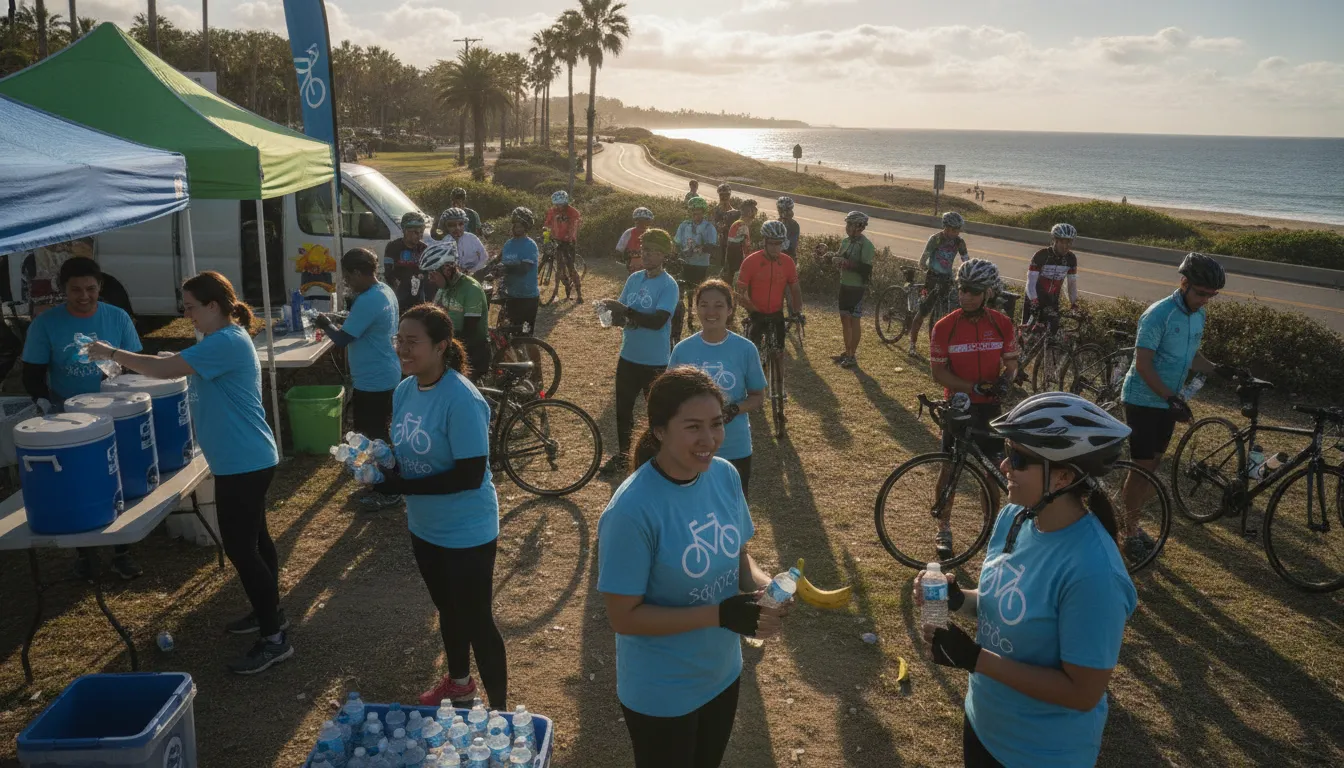
Want to volunteer at a charity bike ride but do not ride a bike? You can still help create a safe, welcoming event and advance a meaningful local mission. Volunteers welcome participants, organize rest stops, support event communications, celebrate riders at the finish, and connect the ride with its surrounding community. At Bike to the Beach, that support strengthens a fully supported cycling experience that raises funds and awareness for local autism and disability nonprofit partners.
Ask Bike to the Beach about volunteer opportunities near you.
This guide explains common charity bike ride volunteer roles, how to choose one that fits your strengths, and what to expect before, during, and after your shift.
Why volunteer at a charity bike ride?
A charity ride brings together experienced cyclists, first-time riders, families, businesses, nonprofit partners, and neighbors around a shared purpose. Riders may be the most visible participants on the route, but volunteers are essential to the experience. They turn a long ride into an organized community event where each participant can feel supported.
Bike to the Beach is more than a cycling event. It is a community-first fundraising platform supporting local autism and disability organizations in the regions where funds are raised. By volunteering, you help create the environment that allows riders, donors, and partners to focus on that local impact.
Volunteering can be a particularly good fit if you want to:
- Support autism and disability nonprofits through hands-on service.
- Contribute to an athletic event without riding.
- Meet community-minded people and local organizations.
- Volunteer with family members, coworkers, a school, or a civic group.
- Use practical skills such as hospitality, organization, communication, or logistics.

Common charity bike ride volunteer roles
Volunteer opportunities vary by event and location. Some take place before the ride, others happen along the route, and many are concentrated at the start or finish. Ask the organizer about current needs, shift times, physical requirements, training, and the volunteer lead for each assignment before committing.
| Role | What you may do | A good fit if you enjoy |
|---|---|---|
| Check-in and welcome | Greet participants, help with check-in flow, and direct people to the right area. | Hospitality, organization, and meeting people |
| Rest-stop support | Help organize supplies, welcome riders, and keep the stop orderly. | Teamwork, encouragement, and a lively atmosphere |
| Route support | Assist at designated locations, share organizer-approved directions, or communicate issues to the event team. | Clear communication and attention to detail |
| Finish-line support | Welcome riders, guide arrivals, help organize the celebration area, and recognize each participant’s effort. | High energy and celebrating others |
| Fundraising help | Share campaign information, help a team organize outreach, or encourage donations before the ride. | Storytelling, digital outreach, or community engagement |
| Local community outreach | Help spread the word, connect community groups with the event, and invite others to participate. | Networking and building local relationships |
Check-in and welcome
The first interaction can shape a participant’s day. Check-in volunteers help riders and guests feel oriented from the moment they arrive. You may answer basic questions, point people toward the correct area, or help maintain an orderly flow. This role suits calm, friendly people who communicate clearly and know when to bring a question to the event lead.
Rest-stop support
Rest stops give riders a place to pause and reconnect with the support team. Bike to the Beach plans rest stops at regular points along supported routes, with hydration, nutrition, and other resources available to riders. Volunteers can help organize supplies, keep the area orderly, encourage participants, and alert event leaders when something needs attention.
A rest-stop volunteer does not replace trained medical or mechanical support. If a rider reports pain, illness, a damaged bike, or an urgent route concern, contact the appropriate event lead promptly. Clear handoffs help the event’s established support system work as intended.

Route and finish-line support
Route-support assignments may require volunteers to be at a specific place and time, so reliability matters. Follow only organizer-approved instructions and communicate unexpected issues rather than improvising. At the finish, volunteers help bring the experience home by welcoming riders, guiding arrivals, and keeping the celebration area organized. If you enjoy an energetic setting, finish-line support may be a strong match.
Fundraising and community outreach
Some of the most valuable work happens before event day. Volunteers can help riders share their fundraising pages, introduce the event to a civic group, or invite a local business to participate. This role is ideal for people who enjoy building relationships and explaining how a community-first event benefits local organizations.
How to volunteer at a charity bike ride
- Choose a region. Start with the event closest to you. Bike to the Beach hosts ride communities in Florida, DC/MD/VA, New England, and New York.
- Contact the organizer. Ask which roles and shifts are available, what each assignment involves, and whether an orientation is required.
- Share useful details. Tell the team about your availability, transportation, group size, relevant skills, accessibility needs, and physical limitations.
- Confirm the assignment. Record the date, arrival time, location, contact person, responsibilities, expected end time, and what to bring.
- Prepare in advance. Review event communications, plan your route, dress for the weather, and ask questions before event day.
- Arrive ready to help. Check in with your volunteer lead, follow instructions, and communicate promptly if a situation changes.
If a role is not clearly advertised, do not assume there is no need. Contact the Bike to the Beach team, explain how you would like to help, and ask where your time can make the greatest difference.
Contact the team early to find a role, location, and shift that fit.
Can you help if you are not a cyclist?
Yes. Most event-day volunteer roles do not require cycling experience. A volunteer does not need to understand bike mechanics or complete a long ride to be useful. Hospitality, organization, dependable communication, community outreach, and simple encouragement all contribute to a supported event.
Non-cyclists can be especially effective in roles such as:
- Welcoming and directing participants at check-in.
- Organizing a rest-stop area.
- Supporting the finish-line celebration.
- Sharing event information with local groups.
- Helping a rider or team with fundraising outreach.
- Connecting a company, school, or civic organization with volunteer opportunities.
Be honest about what you know and what you do not. If a rider needs mechanical, medical, or route assistance beyond your assignment, contact the appropriate event lead rather than improvising. Good volunteering is not about doing everything. It is about doing your role reliably and helping the support system work.
Choose a role that fits your strengths
The right assignment should match both the event’s needs and your comfort level. Before signing up, consider how much time you have, whether you prefer a busy or quieter environment, whether you can stand or lift supplies, and what kind of work feels most natural.
If you like meeting people
Check-in, welcome, community outreach, and finish-line roles put you in direct contact with participants and supporters. Bring a friendly attitude, listen carefully, and use organizer-approved information when answering questions.
If you prefer behind-the-scenes work
Ask about setup, organizing supplies, administrative help, fundraising support, or pre-event outreach. These roles may be less visible, but they can make the participant-facing experience run more smoothly.
If you want to volunteer as a group
Families, schools, civic groups, and corporate teams may be able to take on a shared assignment. Contact the event team early and provide an accurate group size. Ask about age guidance, supervision, accessibility, scheduling, and whether the role can accommodate the whole group.
What to expect on volunteer day
Every event is different, so the organizer’s instructions should always come first. A few practical habits can help you arrive prepared:
- Confirm your arrival time, meeting location, parking or transportation plan, and volunteer contact.
- Review the weather and wear comfortable, event-appropriate clothing.
- Bring water, sun protection, and personal items you may need, unless the organizer provides different guidance.
- Ask in advance about accessibility, seating, lifting, standing, or mobility expectations.
- Keep the volunteer lead informed if you are delayed or unable to attend.
- Follow established safety, privacy, and communication procedures.
During your shift, stay present and flexible. Event needs can change, but volunteers should only take on reassigned duties after checking with their lead. Afterward, share constructive feedback. Your observations may help improve the next ride.

Support the mission beyond event day
Event-day service is only one way to contribute. You can help a participant share a fundraising campaign, invite others to volunteer, donate, or connect a local organization with Bike to the Beach. You can also read Why We Bike stories to understand the people and local impact behind the ride.
Businesses can explore sponsorship opportunities that bring employees and the community together. Health, wellness, therapy, education, and family-support organizations can learn about becoming a service provider partner. Each path creates another connection between the ride and the local autism and disability community.
The most helpful next step is one you can follow through on. One dependable shift, one outreach connection, or one well-supported fundraising effort can strengthen the larger community effort.
Frequently asked questions
Do I need cycling experience to volunteer?
No. Many roles, including check-in, rest-stop organization, finish-line support, fundraising help, and outreach, do not require riding experience. Tell the organizer about your strengths so they can help identify an appropriate assignment.
Can I volunteer with my family, school, or company?
Group opportunities may be available. Contact the organizer early with your group size, availability, and any age, supervision, or accessibility considerations. They can explain which assignments can accommodate your group.
What should I bring to a charity bike ride volunteer shift?
Follow the event’s instructions. In general, confirm the weather, dress comfortably, bring personal essentials, and have the volunteer lead’s contact information available. Ask before the event if the role involves standing, lifting, travel, or special equipment.
How much time does volunteering take?
Shift lengths and schedules depend on the role and event. Ask about arrival time, expected end time, setup or cleanup needs, and whether the assignment requires travel between locations before you commit.
Are there volunteer opportunities before the ride?
Possibly. Fundraising support, local outreach, group coordination, and event preparation can happen before ride day. Contact the team and describe your availability and skills.
Ready to help create a supported ride?
You do not need to be a cyclist to help move the mission forward. Whether you welcome riders, support a rest stop, organize coworkers, or connect the event with your community, you can help create a memorable experience and support local autism and disability nonprofit partners.
Contact Bike to the Beach to ask about volunteer opportunities near you.