
New England Family Sensory Plan
Build a New England family sensory plan for the Sept. 19 ride: start window, a quieter spot, and a short Newport finish visit.
A New England family sensory plan is a short card for September 19, 2026. It names the start you will use, where you will stand, how long you will stay, and who can leave with a child or adult who needs a break. Bike to the Beach’s New England ride runs from the Boston area to Newport and raises money for local autism and disability programs. The morning can be busy. The card keeps the visit usable.
Call (202) 860-3211 if you need help matching a start window to your family before ride day.
Register for the New England charity ride once the card names a start, a backup adult, and a leave time.
What a New England family sensory plan covers
This plan is only for the New England ride day. It is not a guide to planning every community event, and it is not a list of adaptive bikes. Those topics already live on other Bike to the Beach pages. Here, the job is smaller: help a family use one start, one quieter pause, and one finish visit without guessing.
The official ride uses three starts. The 100-mile group leaves Boston University’s Nickerson Field at 5:00 a.m. The 60-mile group leaves Rivers Edge in Woonsocket at 8:00 a.m. The 30-mile group leaves Roger Williams University in Bristol at 10:00 a.m. Everyone finishes at King Park in Newport. Confirm those times on the New England ride details page the week of the event. If a time changes, update the card. Do not keep the old one.
The card is a family tool, not a new rule for riders. Bike to the Beach already posts start times, parking, packet pickup, rest stops, and the finish. Your job is to choose how your household will use those facts. A rider can still roll out at 5:00 a.m. while the family meets them later in Bristol or only at the harbor. Write that split down so the rider is not scanning the crowd for people who planned to arrive hours later.
Keep the language on the card concrete. “We will try to stay if it feels okay” is hard to use when a loudspeaker cuts in. “We leave when the riders roll” is easy. If more than one person has a limit, write the stricter one. The adult who gets overwhelmed by crowds needs the same clear exit as a child who covers their ears.
Write four lines and stop:
- Which start, and the clock time you will arrive.
- Where the family stands, a few steps off the main cluster.
- The first sign that means it is time to step away.
- The name of the adult who can leave, and where the car is parked.
A plan this short is easier to follow when the start gets loud. You can add a note about headphones, a snack, or a hoodie. You do not need a full schedule for the whole day.
The Boston to Newport ride guide explains the route and the local cause. Use it for the ride story. Use this card for the family’s hour on site.
Pick the start window before you pack
The start you choose is the biggest sensory choice of the day. A 5:00 a.m. Boston start is dark, cold, and early. A 10:00 a.m. Bristol start is later and shorter for anyone meeting the rider. Neither is better for every family. Match the window to the person who has the least slack that morning.
Use this order when you choose:
- Name the person the plan is for: a child, a sibling, an autistic adult, or a parent who needs a quiet exit.
- Cross off any start that begins before that person can reasonably be in the car.
- Prefer the later start if the only goal is a hello and a photo, not a long wait.
- Write the drive time, then add 20 minutes so you are not rushing into the crowd.
- Put the backup start on the card in case traffic or a bad night changes the plan.
Families who only want the finish can skip the start. King Park has harbor views, shade, a playground, and a gazebo. That can be the whole visit. Say so on the card so nobody feels they missed a required stop.
Talk through the drive the night before, not in the parking lot. Boston’s early start means a dark highway and a cold wait. Woonsocket sits in the middle of the morning. Bristol is the latest of the three. If the person the plan is for sleeps badly before big days, do not force the Boston alarm. A rested 10:00 a.m. hello is a better memory than a 4:00 a.m. struggle in the car.
Tell the rider which window you picked. A text the night before is enough: “We will be at the Bristol edge at 9:40, and we will leave when you roll.” Riders spend the start checking bikes, finding teammates, and listening for instructions. They should not also have to invent the family plan while they pin on a bib.
If a rider is also deciding distance, the family charity bike ride guide covers how families share a ride. Keep that choice separate from the sensory card. A shorter route does not, by itself, make the start calm.
Where to stand at Boston, Woonsocket, or Bristol
| Start | Posted start | Family move |
|---|---|---|
| Boston, Nickerson Field | 5:00 a.m. | Arrive before the cluster tightens. Stand off Harry Agganis Way, not in the roll-out lane. Leave when the riders roll. |
| Woonsocket, Rivers Edge | 8:00 a.m. | Use on-site parking. Pick a spot beside the lot, not inside the rider briefing. Step back when speakers start. |
| Bristol, Roger Williams University | 10:00 a.m. | Best default for a short hello. Stay near the car so a five-minute visit can end without a long walk back. |
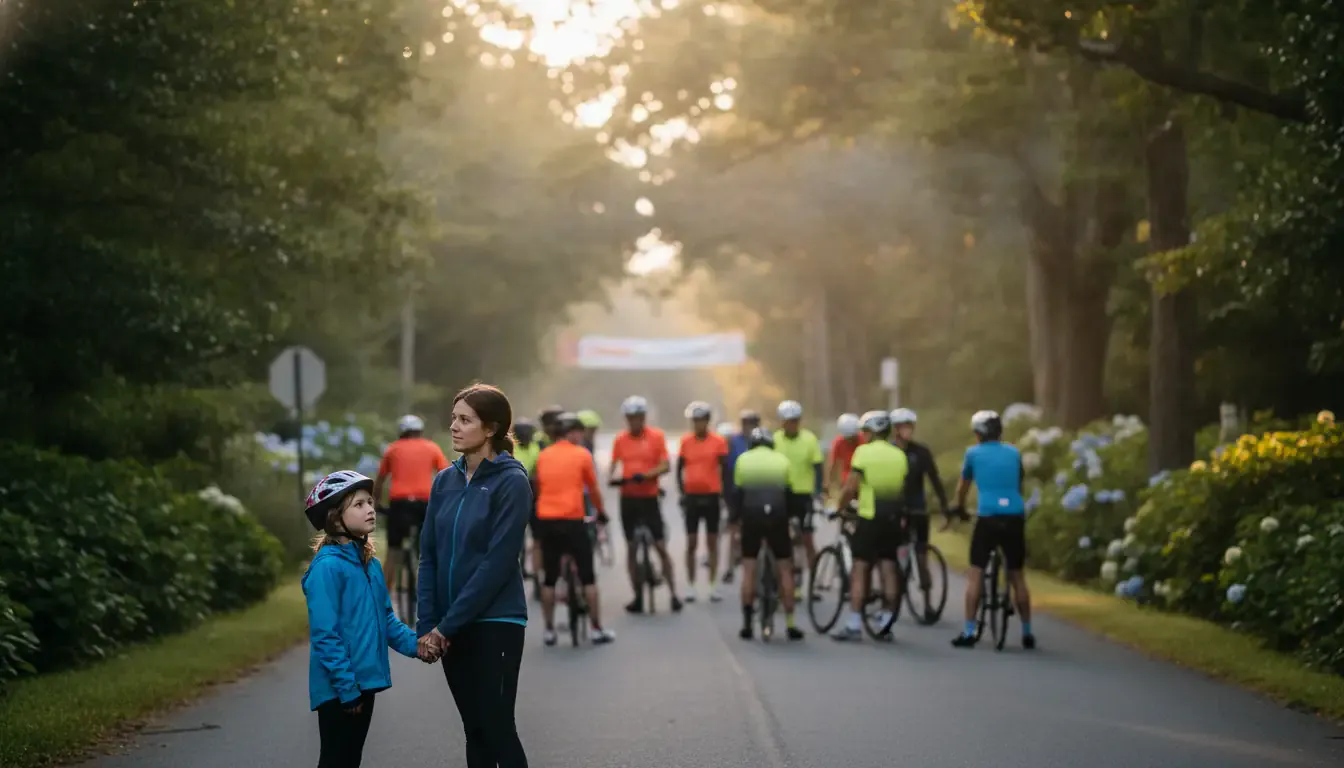
Do not treat a start line as a place the family must occupy until the rider is gone. A two-minute wave from the edge still counts. If the person you came with covers their ears, turns away, or asks to go, that is the cue on the card. Follow it the first time.
Parking differs by start. Boston riders are directed to park at 131 Drummer Street in Brookline, not in the roll-out itself. Woonsocket and Bristol list on-site parking. Recheck the ride details page before you leave home. A wrong lot adds walking, and extra walking is often what makes the morning too long.
The U.S. Access Board’s 2010 ADA Standards for Accessible Design set rules for accessible routes and places people gather. A charity ride start on a public road is not a building you can rebuild that morning. What you can do is choose a standing spot with a clear path back to the car, and not block the way riders and volunteers need to move.
Use a rest stop or the finish as a short visit
Rest stops on this ride are for riders. They are about every 15 miles and can be busy with water, snacks, and mechanical help. A family can meet a rider at one stop if you agree on it ahead of time. Keep the visit short. Step away from the food table and the bike line. If the stop is louder than you expected, do not wait it out. The next hello can be at King Park.
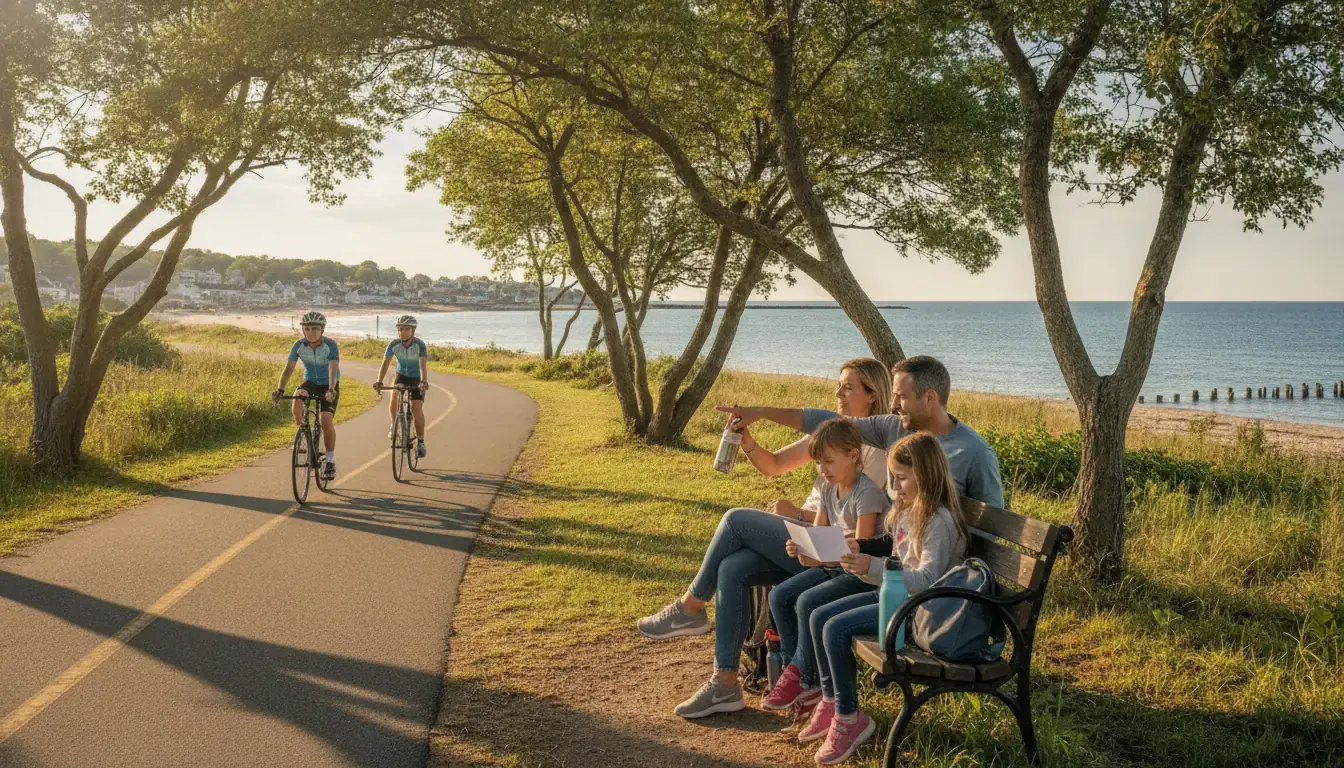
King Park, at 125 Wellington Avenue in Newport, is the planned finish. Shade, a playground, and open harbor space give you more room than a start line. Lunch is for participants. Families are welcome to cheer. You do not have to stay for awards or music. Put a leave time on the card, such as “after the photo” or “20 minutes after our rider arrives.”
If you drive to a rest stop, treat the address as a maybe. The ride page says stop locations can change before event day. Check the list that week, then pick one stop that is easy to leave, not the one with the biggest crowd. Park so you can pull out without crossing the riders. Five calm minutes beat a half hour beside a speaker and a food line.
Newport can be its own trip. Some families skip the morning starts, get lunch near the harbor, and watch the finish from the edge of King Park. That is still part of the ride day. Write the arrival time and the leave time so the park does not turn into an open-ended afternoon. Playgrounds help some children and overwhelm others. Walk past it first. You can come back for ten minutes if it looks right.
Weather changes the sensory load. Wind off the harbor, a sudden shower, or a cold 5:00 a.m. start can be as hard as noise. The New England fall weather prep guide is for riders. Families can borrow one idea from it: pack one warm layer and one dry layer, then stop adding gear. A lighter bag is easier to carry back to the car.
Some people in a ride-day crowd need less noise, less waiting, or a clear way out. That is a reason to keep an exit, not a reason to skip the ride. Many families do well with a planned short stay. Others do better with no start-line visit at all. Both are valid on this card.
Make the exit card before Saturday
Write the card on paper or in a phone note the night before. Read it once with every adult who is coming. The person who may need the break should hear the plan too. Use a short sentence, a picture of the car, or the order “hello, photo, car.”
Include these fields:
- Rider name and start city.
- Family arrival time and the spot you will stand.
- One signal that means leave now.
- Backup adult, car location, and the drive home.
- Whether you will also go to King Park, and the latest you will stay.
Packet pickup is separate. For this ride it is Friday, September 18, from 4:00 to 6:30 p.m. at Nickerson Field. A family does not need to attend pickup for the sensory plan to work. If pickup itself is hard, one adult can go alone. Confirm the window on the ride details page in case it moves.
What you carry can stay small. The charity ride packing checklist is written for the person on the bike. A family spectator usually needs headphones or a hat, a snack, water, the card, and a way to reach the rider. Leave the rest in the car.
If someone in your group wants a job instead of a long wait, look at what to expect when you volunteer and the New England volunteer page. A volunteer shift is not the same as a family sensory plan. Do not assign the exit adult to a shift they cannot leave.
How this ride day stays tied to local programs
The point of the day is still the cause. Rider fundraising for this event stays with New England groups that serve people with autism and other disabilities. A short family visit does not shrink that. It lets more of the household be part of the morning without forcing a long stay.
Read why we bike if you want the mission in plain language before you explain it to a relative. For how inclusive ride design works across regions, the autism-friendly charity ride overview is the broader page. This article does not repeat that design guide. It only sequences one New England Saturday.
After the ride, keep what worked. If Bristol was easier than Boston, write that down for next year. If the finish was enough and the start was too much, that is useful information, not a failed visit. Share one sentence with your rider so next year’s card starts from a real morning, not a blank page.
Teams can use the same card without turning it into a group schedule. One household may need the Bristol edge. Another may only want King Park. Ask each family to bring their own leave time instead of holding everyone until the last photo. A team tent is optional. If the tent has a speaker, stand outside it. The goal is a shared cause, not a shared noise level.
Parents sometimes worry that a short stay looks unsupportive. It does not. The rider still has a supported route, rest stops, and a beach finish. The family still showed up on purpose. If you want a way to help that is not standing in a crowd, fundraising for a local program or a defined volunteer shift both count. Choose the one you can finish, and leave the other off the card.
Call (202) 860-3211 to ask which New England start fits a short family visit.
Frequently asked questions
What is a New England family sensory plan?
It is a one-page card for the September 19, 2026 Bike to the Beach New England ride. It names the start you will use, where you will stand, the cue to leave, and whether you will also visit the Newport finish.
Which start is calmest for a short hello?
Many families do better at the 10:00 a.m. Bristol start because it is later and the car can stay close. The 5:00 a.m. Boston start is a real roll-out, not a quiet meetup. Pick the window your group can leave, not the longest route.
Do we have to stay through the start or the finish?
No. A wave from the edge is enough. You can also skip the start and meet at King Park. Put the leave time on the card before you arrive so the decision is not made in the crowd.
Can we meet our rider at a rest stop?
Yes, if you agree on the stop ahead of time and keep the visit short. Rest stops are rider support, about every 15 miles, and they can be busy. If the stop is too loud, go to the finish instead of waiting.
Where do we confirm times?
Use the New England ride details page the week of the event for start times, parking, packet pickup, and the King Park finish. If a posted time changes, change the card. Do not rely on a screenshot from earlier in the summer.
Ready to set the card?
Call (202) 860-3211 and then register for the New England ride with the start, the backup adult, and the leave time already chosen.