

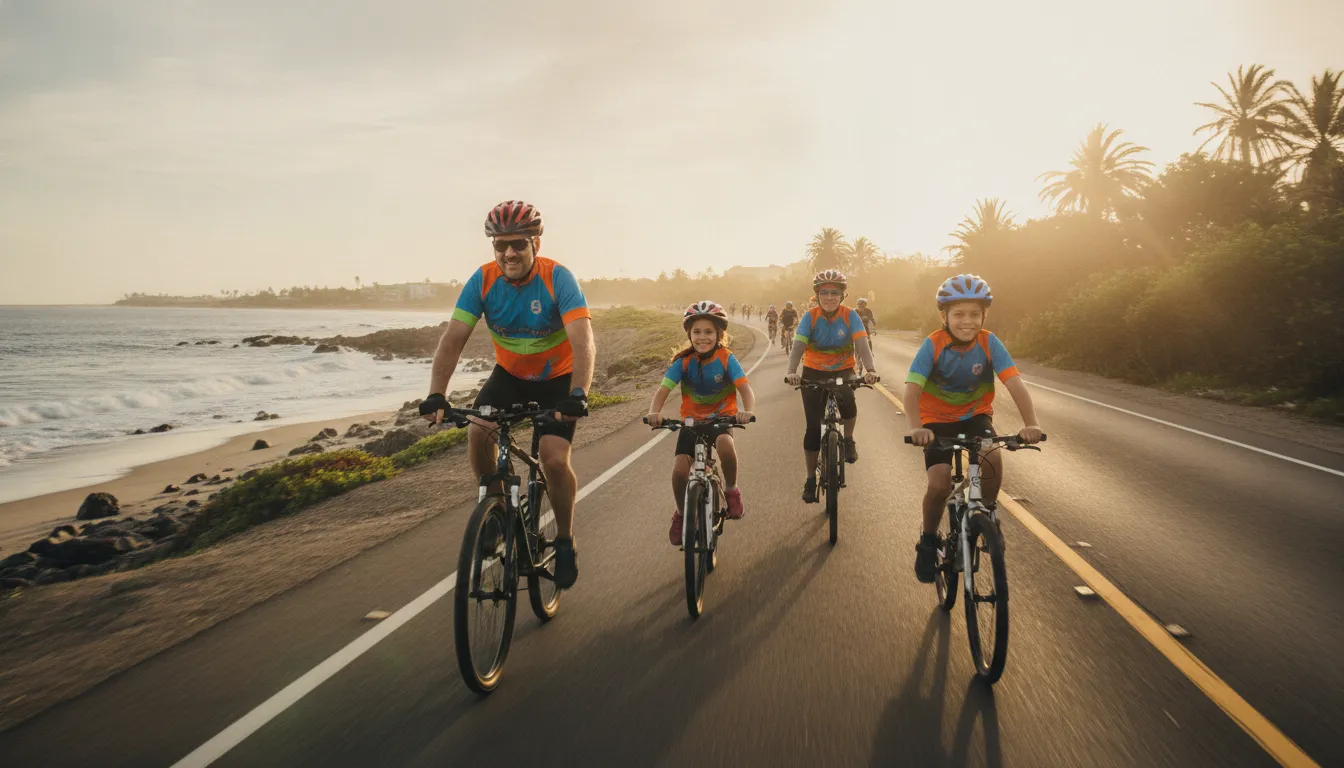
The Family Charity Bike Ride Guide for Every Rider
Ready to plan a family charity bike ride that fits your whole household? Learn how to pick a distance, train as a unit, and fundraise together on a Bike to...
A charity ride can become a family tradition when everyone has a meaningful role, from choosing the route to cheering at the finish. The goal is not to make every rider cover the same miles or move at the same pace. It is to prepare together, stay connected, and build an experience where each person can contribute.
A family charity bike ride works best when you choose a distance that fits the least experienced rider. Practice basic group-safety habits, and share the fundraising goal at home. Bike to the Beach offers 25- to 100-mile options, plus relay, individual, and virtual formats, so families can participate in ways that match their abilities.
With the right plan, children can learn road awareness, adults can support the group without taking over. And every rider can see how their effort supports local autism and disability organizations. Start by looking at what makes riding together memorable, then build your family plan from there.
Why a Family Charity Bike Ride Is a Ride to Remember
A family charity bike ride gives everyone a role in the same story. One rider may be building endurance, another may be learning how to pace themselves. And a child may be discovering that their effort can help people beyond the household. The miles matter, but the shared challenge is what makes the day memorable.
Riding together creates natural opportunities to practice perseverance, patience, and encouragement. Parents can model the habits that make a group ride work: preparing carefully. Following safety rules, listening to one another, and adjusting the pace when someone needs a break. Children see that progress does not require everyone to perform at the same level. It requires a team that stays connected and keeps moving forward. Family cycling can also create meaningful quality time in a busy schedule, giving parents and kids an active experience to look forward to together. Research on children and cycling identifies quality time together and positive active habits among the benefits for families.
The charitable purpose gives that effort a wider meaning. As children help prepare, train, or talk with friends and relatives about the ride. They begin to understand that a personal goal can contribute to a larger community goal. A family can choose a manageable fundraising target, celebrate each contribution, and explain why the ride matters to them. That turns fundraising and training into practical lessons in goal-setting, discipline, and helping others, rather than a one-day activity that ends at the finish line.
Bike to the Beach directs funds raised through its regional rides to local autism and disability organizations in Florida. The DC, Maryland, and Virginia area, New England, and New York. This local focus helps families connect their participation to communities they know or want to support. The purpose is not to position riders as rescuers. It is to build relationships, increase opportunity, and show how many individual efforts can strengthen organizations doing important work every day.
That community connection is one reason a family ride can become a tradition. You share the early preparation, the hard moments, the conversations at rest stops, and the satisfaction of reaching the finish together. Every family member can contribute in a different way, and every contribution counts.
Sign up for the New England ride and make your next family challenge count.
How Families Choose the Right Distance for a Charity Bike Ride
The best distance is the one that lets everyone participate with confidence, not the one that looks most impressive on paper. Before registering, talk honestly about each rider’s experience, comfort on the bike, and time available for training. For a family, the least experienced rider should help set the distance. Choosing a route they feel ready to complete gives the whole group a better chance to enjoy the day together.
| Option | Best for | Considerations |
|---|---|---|
| 25-mile ride | Younger riders and families new to organized rides | A practical first-time distance with a comfortable pace |
| 50-mile ride | Families with some riding experience | Needs a few weeks of steady training and hydration planning |
| 100-mile ride | Confident, well-trained households | Requires long rides in training and careful fueling |
| Relay or team format | Groups with varied experience or abilities | Lets family members divide the distance and share the effort |
Bike to the Beach offers ride options from 25 to 100 miles, so families can choose a challenge that matches their abilities and goals. A 25-mile route may be a practical starting point for younger riders or families new to organized rides. More experienced households may be ready for a longer route, provided everyone has time to prepare. The right choice should feel challenging enough to be meaningful while still leaving room for steady progress and a positive ride-day experience.
Look beyond the mileage
Distance is only one part of the decision. Research the route’s terrain before signing up. A shorter ride with sustained hills, rough surfaces, or heavy traffic may demand more than a longer route on a smoother, flatter course. USA Cycling recommends understanding the terrain and preparing for the conditions of the charity ride so the route aligns with the group’s ability levels: review the terrain and prepare for your charity ride.
Also account for the pace of the youngest or newest rider, along with time for water, food, bathroom breaks, and encouragement. A family ride is not a race. Build in enough margin that no one feels rushed. And agree ahead of time that the group will stay together or use planned meeting points if riders need different pacing.
Choose a format that includes everyone
Families do not have to approach participation in exactly the same way. Depending on the event, relay and team formats can allow relatives to divide the distance, while individual options let each person select a suitable challenge. Virtual participation can also give someone a way to join the shared mission when travel, health, equipment, or scheduling makes an in-person ride difficult. Bike to the Beach highlights relay, individual, and virtual formats as ways for people with different abilities to take part together. Explore inclusive riding options when planning a group with varied needs.
Finally, remember that support can make a longer distance feel more manageable. Bike to the Beach events offer rest stops approximately every 15 miles, along with professional mechanical support and SAG vehicles. Those resources do not replace preparation, but they can give families reassurance as they take on a shared challenge. Pick the distance that supports your family’s confidence, then make the training and ride-day plan fit that choice.
How Families Prepare for a Long Charity Ride Together
Training as a family is less about matching everyone to the same pace and more about building habits that help the group ride safely and enjoyably. Give each rider a role, make practice feel manageable, and treat preparation as shared time rather than another obligation. These steps create a reliable foundation for a family charity bike ride.
- Start with safe, road-ready bikes. Schedule a basic inspection for every bike before training gets serious. Check tire pressure, brakes, chains, gears, and the fit of each helmet, especially as children grow quickly. A well-fitted helmet is an essential safety measure for every cyclist, and the NHTSA recommends proper fit so it can provide the protection it is designed to offer: bicycle safety guidance from NHTSA. Repair loose parts or worn tires before your first longer practice ride, rather than waiting for a problem on event day.
- Practice group communication and handling. Use quiet streets, a parking area, or a path to rehearse stopping, starting, signaling, and checking behind you without drifting. Children should practice looking over a shoulder, braking smoothly, and holding a straight line before attempting a long-distance ride. Review hand signals and road rules together, too. Cyclists riding on the roadway generally follow the same rules and responsibilities as motorists, according to NHTSA. During each outing, the most experienced rider should lead and set a calm pace, while another adult rides at the back to watch the group. Agree on simple calls such as “stopping,” “slowing,” and “car back,” along with a meeting point if the group becomes separated.
- Build endurance gradually over eight weeks. Begin with short rides that leave everyone feeling successful, then add time or distance in small increments. Include easy weeks and rest days so younger riders can recover. An 8-week beginner training plan for family riders can help you organize that progression around your chosen distance. Let the least experienced rider shape the pace and distance. The goal is consistent participation, not proving who can ride the farthest during practice.
- Practice hydration and fueling before ride day. Carry water and a familiar snack for every rider, including children who may not recognize early signs of fatigue or hunger. Take regular drink and food breaks during training so the family learns what works and when to use it. Consistent hydration and nutrition help keep energy steady during a long charity ride. Add time for bathroom breaks, photos, and rest when you estimate how long a family ride will take.
- Finish with a full-group rehearsal. Before the event, complete one ride that resembles the expected terrain and includes the clothing, bottles, snacks, lights, and small repair supplies everyone will use. Review the route, rest strategy, emergency contacts, and the plan for regrouping. Keep the conversation encouraging and specific: praise safe choices, steady effort, and good communication. A prepared family can focus less on managing surprises and more on riding together for a meaningful cause.
How to Make a Charity Bike Ride Inclusive for Every Ability
Inclusion starts with treating every rider as an essential part of the group. A family does not have to share the same speed, experience level, or cycling equipment to share the same purpose. Before registering, talk together about what will make the ride comfortable and enjoyable for each person, then choose a participation format that reflects those needs.
Bike to the Beach supports adaptive cycling and other ways for people of different abilities to participate in charity events. Adaptive bikes and equipment can help riders find a setup that works for their movement, balance, strength, or comfort. Some families may ride the route together, while others may combine different formats so everyone contributes to the same team goal. Explore these inclusive riding options before making your plan.
Choose a format that lets everyone contribute
A relay or team format can divide the distance among family members without separating anyone from the experience. One rider might complete a longer segment, while another takes a shorter portion that matches their energy and confidence. Individual and virtual options can also give family members meaningful ways to participate when a full route is not the right fit. The goal is shared participation, not identical mileage.
For families riding the course together, select the distance based on the rider who needs the most support or has the least experience. This is not a limitation. It is a practical way to protect the group from turning the day into a race against the clock. A shorter distance completed with confidence can create a better experience than a longer distance that leaves one person overwhelmed. Bike to the Beach offers ride distances from 25 to 100 miles, giving families room to choose a challenge that fits their group.
Plan support before ride day
Ask event organizers about route surfaces, elevation, rest areas, equipment compatibility, transfers, and available support. Share any access or communication needs early so the team can provide useful guidance. On the day, set a pace that allows conversation, schedule check-ins, and make room for breaks without treating them as disruptions. Rest stops approximately every 15 miles, professional mechanical support, and SAG vehicles can give families additional confidence as they ride.
Most importantly, let each rider define what a successful day looks like. Finishing the route, completing one relay segment, riding with a family member, or showing up for the team can all be meaningful achievements. When the plan makes room for different strengths and ways of participating, a family charity bike ride becomes a genuine shared experience where everyone has a place.
Fundraising as a Household: One Goal, Everyone Pitches In
Fundraising feels more manageable when it becomes a shared family project instead of one person’s responsibility. Start by choosing a goal that is meaningful and achievable for your household. A clear target gives everyone something to work toward, while a realistic number helps children see progress instead of feeling overwhelmed.
Make the goal visible in a simple way. You might track donations on a kitchen whiteboard, add a sticker for each milestone, or set aside a few minutes each week to check your progress. The point is not to turn giving into a competition. It is to help every family member understand how small efforts add up to a larger community impact.
Then divide the outreach. Each person can contact their own network, using the method that feels most natural to them:
- Parents can email coworkers, relatives, neighbors, and longtime friends.
- Older children can write a short message to classmates, teammates, or family friends with a parent’s guidance.
- Younger children can help draw a thank-you card, record a brief video, or explain the ride when a trusted adult shares the family appeal.
Every message becomes stronger when it includes your family’s reason for riding. Explain what brought you to the event, why the cause matters to your household, and what you hope your children take away from the experience. A personal “why” gives friends and relatives a reason to connect with the ride beyond a generic request for a donation. Keep the message honest and specific, whether your family is motivated by community, inclusion, personal experience, or the chance to take on a challenge together.
Children can also participate in the follow-through. Let them help thank donors, share a training update, or celebrate each milestone. They learn that community impact is built through consistent actions, not just one big gesture. The ride itself becomes a lesson in setting a goal, staying committed, and helping others through a shared challenge.
For practical ideas and ready-to-adapt language, use these fundraising as a family resources. With one household goal and a role for everyone, your family can turn fundraising into another meaningful part of the ride.
What to Expect on Ride Day with Kids Along for the Ride
Ride morning feels easier when your family has a simple plan. Give yourselves more time than you think you need, especially if this is your first family charity bike ride. Kids may need an extra bathroom stop, a snack, a photo, or a few minutes to settle into the pace. Building that buffer into your schedule keeps the day enjoyable instead of turning every pause into a race against the clock.
Start with a quick family safety check
Before leaving home, check every bike, tire, and helmet. A well-fitted helmet is the most important safety measure for every cyclist, and especially for children. The NHTSA’s bicycle safety guidance recommends checking that the helmet fits properly before riding. Pack water, snacks, identification, and emergency contacts for each child. If the ride begins early, add front and rear bike lights so your group is visible to other road users.
- Confirm each helmet fits snugly and sits level.
- Fill water bottles and pack familiar snacks.
- Carry identification and a list of emergency contacts.
- Check brakes, tires, and seat adjustments.
- Bring lights, even if you expect to finish after sunrise.
Use the support built into the route
Bike to the Beach events provide rest stops approximately every 15 miles, giving your family regular opportunities to refill bottles, eat, use the bathroom, and reset. Professional mechanical support and SAG vehicles are also provided, so a flat tire or a rider who needs a lift does not have to become a family crisis. Medical support is coordinated through a medical partnership, and bike rental coordination is available through Unlimited Biking. Review the event details ahead of time so you know where to find these services.
Agree on a group pace before you start. The strongest road rider can lead while another adult stays toward the back, but no one should feel pressured to keep up beyond their comfort level. Choose a few pre-planned meeting points and make regular check-ins part of the ride. If someone gets separated, everyone should know where to stop and reconnect rather than continuing to search while moving.
Finally, remember that helping the event run smoothly can be part of your family experience. If one family member would rather support riders than ride the full route, participating or volunteering offers another meaningful way to be part of the community. The goal is a safe, connected day that gives every family member a reason to feel proud.
Ready to ride together? Register your family for the New England ride today.
Frequently Asked Questions
What distance is best for a family charity bike ride?
Choose the distance that the least experienced rider can complete comfortably, then account for hills, terrain, weather, and extra time for breaks. Bike to the Beach offers distances from 25 to 100 miles, so families can select a route that fits their combined experience and goals. A relay or another team format can also let family members contribute different amounts of riding.
How can we keep children safe while riding together?
Practice braking, looking over a shoulder, riding in a straight line, and using hand signals before event day. Establish who leads and who rides at the back, with adults helping the group maintain a steady pace. Everyone should wear a properly fitted helmet, and cyclists on the roadway should follow the same rules and responsibilities as motorists. According to the National Highway Traffic Safety Administration: https://www.nhtsa.gov/road-safety/bicycle-safety.
How should a family prepare for the ride?
Check every bike, practice as a group, and plan water, snacks, identification, emergency contacts, and clothing before ride morning. Bike to the Beach events include rest stops approximately every 15 miles. Along with professional mechanical support and SAG vehicles, but each rider should still arrive prepared for the chosen distance.
Can family members with different abilities participate together?
Yes. Talk with the event team about adaptive equipment, route details, and available participation formats before registering. Relay, individual, virtual, and other team options can help households participate in ways that respect each rider’s needs. The goal is to create a shared experience where every family member has a meaningful role. Whether riding the full route, contributing part of the distance, or supporting the team.
Ready to Ride as a Family?
A family charity bike ride gives everyone a shared goal, from choosing a comfortable distance to celebrating each mile together. When you are ready to turn your plans into a day of riding, connection, and community impact, sign up for a Bike to the Beach New England ride with your family. Choose the approach that fits your household, prepare together, and make the ride your own.