

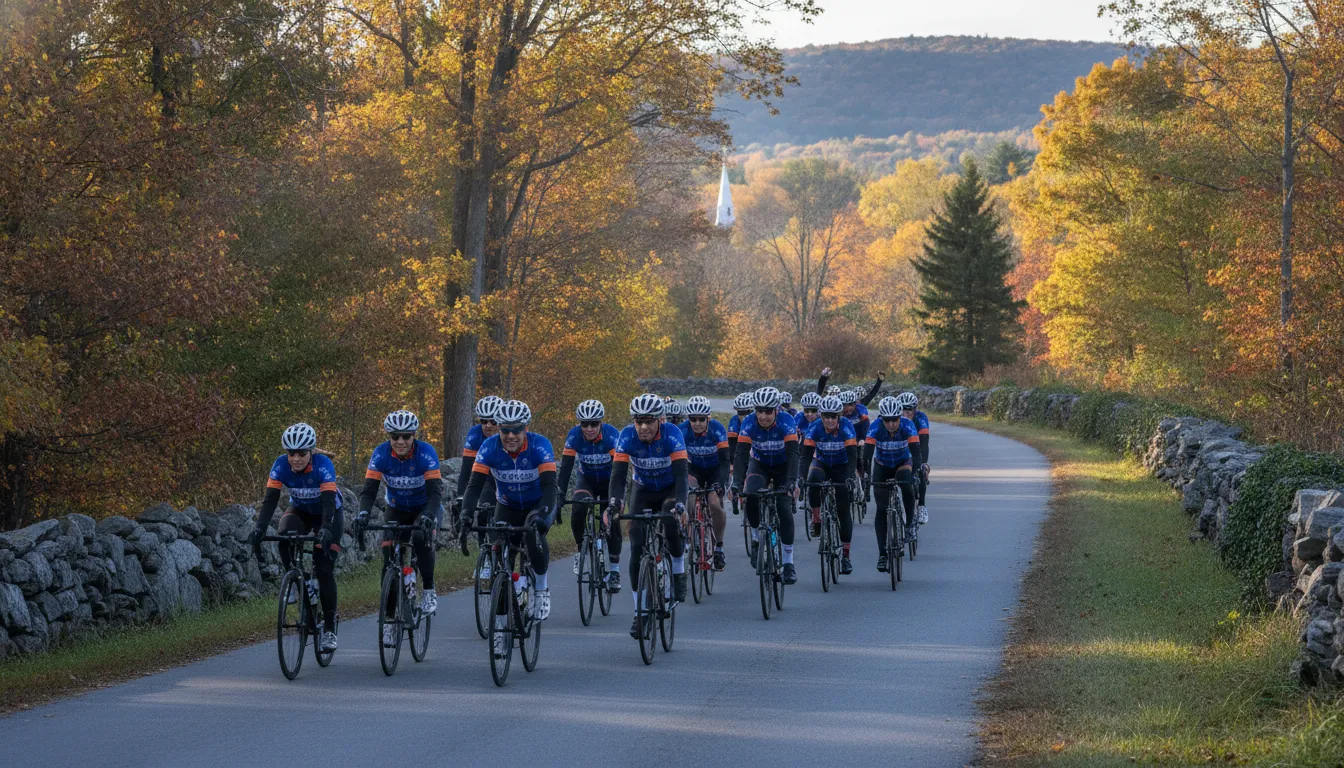
Fall Charity Bike Ride New England: Weather Prep
Prepare for a fall charity bike ride New England with practical advice on temperatures, layers, rain, visibility, packing, and ride-day comfort.

Fall cycling in New England rewards preparation more than prediction. A morning that feels crisp in Boston can turn windy, wet, or noticeably colder as the ride unfolds. This is especially true when you’re outside for several hours. The goal isn’t to pack for every possibility. It’s to build a simple plan that keeps you warm, dry, visible, and comfortable enough to enjoy the miles and the community around you.
For a fall charity bike ride New England, riders should check the forecast close to departure. Wear removable layers, and carry rain protection plus a dry backup. Use lights and visible or reflective gear for early starts or poor conditions. Plan personal clothing and comfort items separately from organizer support, such as rest stops, hydration, nutrition, and mechanical assistance.
Register for the Bike to the Beach New England ride
With that foundation in place, your clothing and gear choices can respond to the region’s changing temperatures, moisture, wind, and long route-day hours.
What Makes a Fall Charity Bike Ride in New England Different?
Fall riding in New England rewards preparation that can adapt as the day changes. A ride may begin with a cool, dark departure and continue into warmer sunshine, stronger wind, damp roads, or fading daylight. Instead of planning around one expected temperature, build a conditions plan that lets you adjust your clothing, pace, visibility, and comfort throughout the day.
Plan for a wide range of conditions
The Centers for Disease Control and Prevention recommends considering proper clothing and equipment when preparing for temperature exposure. It also notes that wide temperature fluctuations can create both heat and cold risks. That makes removable layers more useful than one heavy outfit. Start with enough protection for the first miles, then create a simple plan for storing or adding layers as your body warms.
Before leaving, check the forecast and consider more than the temperature alone. Wind, moisture, and the amount of time you will spend outside can change how conditions feel. The Mayo Clinic’s outdoor exercise guidance recommends weighing those factors together. For a long charity ride, that means reviewing conditions close to departure and making choices that can be revisited at stops.
Moisture deserves special attention. Rain, mist, or damp clothing can make a cool ride feel considerably less comfortable, while wind can increase exposure on open stretches. Pack rain protection that you can put on before you are soaked, and keep personal dry layers in a protected bag. These are rider-provided comfort items, separate from the event’s support operations.
Match the plan to your start option
Bike to the Beach’s New England ride is scheduled for Saturday, September 19, 2026, and travels from Boston to Newport, Rhode Island. The official page lists 100-mile, 60-mile, and 30-mile choices, along with relay options. It also lists varied starts: Boston at 5 AM, Woonsocket at 8 AM, and Bristol at 10 AM. Those options mean riders can choose a format that fits their goals. Plan for the conditions associated with your own departure time, rather than assuming every participant will experience the same day.
Early starters should account for limited daylight and make visibility part of the conditions plan. Lights and visible or reflective gear can help other road users notice riders, especially when rain or mist affects what drivers can see. Keep checking current event communications as the ride approaches, since official operations include weather monitoring and communication. The goal is not to predict a perfect fall day. It is to arrive ready to adjust while riding as part of an inclusive community from Boston, Rhode Island, and across New England.
How Should You Dress for a Fall Charity Bike Ride in New England?

Build your ride-day outfit so it can change with the conditions. A removable-layer system is more useful than one heavy jacket, especially when the morning feels different from the afternoon or when wind and moisture shift along the route.
Start with a flexible base
Choose a moisture-managing cycling jersey or base layer that sits comfortably against your skin. Add a light insulating layer, such as a vest or packable fleece, over it. The goal is to begin comfortably without trapping so much heat that you cannot adjust after the first climb or sustained effort.
Keep a wind or rain shell within easy reach, ideally in a jersey pocket or small saddle bag. A shell can help when wind picks up or a shower moves through, but it should be easy to remove and stow when you no longer need it. Wet clothing can increase vulnerability to cold, and cold rain carries additional risk, so review the forecast rather than assuming a fall day will stay dry. Mayo Clinic guidance recommends considering temperature, wind, moisture, and the amount of time you will spend outside: check the forecast and plan your outdoor clothing accordingly.
Protect the parts that cool quickly
Light gloves can make a major difference in comfort and control. Add a neck gaiter or buff for exposed skin, and consider ear coverage if the start is chilly or windy. Arm warmers and leg warmers are practical because they roll down or come off without requiring a full outfit change. Full-length tights or cycling pants may be more comfortable than shorts when conditions call for more coverage. Pack the pieces you may need, but do not treat any single combination as a mandatory uniform.
The CDC notes that temperature exposure can involve both heat and cold risks, particularly when conditions fluctuate, and recommends preparing with appropriate clothing and equipment: review the CDC’s guidance on temperature exposure. Pay attention to exposed skin when wind and cold combine, as Mayo Clinic also highlights. If you have a health concern that affects your response to cold, heat, or exertion, ask a qualified professional for advice before the ride.
Test the system before event day
Wear the complete setup on a training ride that starts early and lasts long enough to expose comfort problems. Practice removing a vest, opening a shell, rolling down arm warmers, and storing each item while stopped safely. Check that gloves do not interfere with braking, layers do not bunch under your helmet, and pockets remain accessible. Adjust based on what you actually experience, not what looks right in the forecast.
Bring and manage your personal clothing, layers, gloves, and rain protection. The event’s support operations are separate from your gear plan, so confirm current official communications for ride logistics and support details. Arriving with a tested, adjustable system lets you focus less on the temperature and more on the community riding alongside you.
| Condition to watch | Practical response |
|---|---|
| Cool early start | Begin with a removable insulating layer and gloves. |
| Wind or exposed roads | Keep a wind shell easy to reach and protect exposed skin. |
| Rain or damp roads | Use a waterproof shell, dry backup, and smoother braking. |
| Warming afternoon | Open or remove layers and store them securely. |
What Should You Pack for Rain and a Long Ride?
Pack for the weather you have, the weather you might meet, and the hours your gear will spend on the bike. A forecast can change between departure and the afternoon, especially when a ride moves from an urban start toward the coast. Check temperature, wind, moisture, and time outside before you leave. Mayo Clinic notes that waterproof gear matters in rain or snow, because getting wet increases vulnerability to cold. Read Mayo Clinic’s guidance on exercising outdoors in cold and wet conditions.
- Waterproof shell: Bring a lightweight rain jacket that fits over your riding layers and has enough room for comfortable movement. If rain is possible, pack it where you can reach it without unpacking your entire bag.
- Dry backup: Add a spare pair of socks, gloves, and a base layer or shirt in a sealed plastic bag. A dry change can make a long day feel much better after a passing shower or a soaked stop.
- Bag protection: Use waterproof bags or liners inside your saddle bag, handlebar bag, or jersey pockets. Protect the items that matter most, rather than assuming an outer bag will stay fully dry for hours.
- Phone protection: Place your phone, battery bank, route information, and emergency contacts in a waterproof pouch. Test that you can still access the phone if the pouch makes the screen or buttons harder to use.
- Small comfort items: Pack lip balm, sunscreen, tissues, hand sanitizer, personal snacks, and any items you know help you stay comfortable. Keep personal medications in their original, protected container and follow your own care plan.
Plan for wet roads, not just wet clothing
Rain changes the riding surface as well as your comfort. Wet leaves and metal surfaces can become especially slick, and wet conditions can reduce tire traction and make rim brakes less effective. Slow down before turns, cross slick surfaces as smoothly as possible, leave extra space, and avoid abrupt braking. Give your bike a quick pre-ride check, including tire condition, brake response, lights, and the security of anything attached to the frame.
Make the plan flexible
Don’t wait until you’re cold to decide what happens next. Know where your shell and dry layers are, identify a place to stop and adjust, and keep an eye on official event communications as the ride approaches. Bike to the Beach monitors weather and communicates operational updates, but personal rain gear and comfort layers are still each rider’s responsibility. Pack light enough to ride comfortably, while giving yourself practical options if conditions shift.
Choose your New England ride option and register today.
A quick rain-readiness sequence
- Check the forecast for the full time you expect to be outdoors.
- Put your shell, dry backup, and phone protection where you can reach them safely.
- Test your brakes, tires, lights, and bag closures before rolling out.
- At a safe stop, add or remove layers before discomfort becomes a distraction.
How Can You Stay Visible and Safe on an Early Start?

Early miles can feel quiet and energizing, but low light, traffic, damp pavement, and a large group require deliberate preparation. Before leaving, wear a CPSC-approved helmet and confirm that your bike is in safe working condition. Check tire pressure, brakes, the chain, quick releases, and any bags or bottles that could shift. If you are unsure about a repair, ask a qualified mechanic rather than discovering the problem several miles into the ride.
Front and rear lights are especially important for a pre-dawn departure. Add bright or reflective clothing, ankle bands, or other reflective details that help define your movement from multiple angles. Mirrors are recommended for early starts, and they can help you monitor approaching riders or vehicles without repeatedly turning your head. In rain or mist, visibility can be harder for everyone on the road, so slow down. Increase following distance, and use extra care around wet leaves, painted markings, and metal surfaces.
Research supports treating visibility as one part of a broader safety plan, not as a guarantee. The peer-reviewed Taupo Bicycle Study followed 2,590 adult cyclists and examined physical conspicuity factors such as fluorescent colors, lights, reflective materials, and clothing or bike colors. Its findings can inform your choices, but visibility aids cannot eliminate crash risk or replace attentive riding.
Make group awareness part of your gear
Before rolling out, learn the event’s riding expectations and communicate clearly with the people around you. Hold your line, signal turns and hazards early, call out potholes or slowing traffic, and avoid overlapping wheels. Leave enough space to react, especially when the road is wet or the group is transitioning between light and dark conditions. If you need to stop, move predictably and get fully off the travel line when possible.
Prepare your navigation and information sources
Set up Ride with GPS before the start. The event’s navigation system provides turn-by-turn directions and offline map capability for areas with cell dead zones. Charge your phone, confirm that the route is downloaded, and add emergency contacts before you leave. Keep your phone accessible without relying on it while riding. Finally, follow official event communications for weather monitoring, route changes, timing updates, and safety instructions. For a broader checklist, review these charity bike ride safety tips before ride day.
How Do You Plan Comfort Around Stops, Fuel, and Support?
Support is there to make a long ride more manageable, but it works best when you use it before a small problem becomes a major one. On the New England ride, rest stops are positioned about every 15 miles. They offer water, sports drinks, electrolytes, fruit, energy bars, snacks, first aid, sunscreen, and basic mechanical supplies. That gives you dependable opportunities to reset your body and your bike while keeping your personal comfort plan in your own hands.
Think of each stop as a check-in, not a mandatory long break. Before you roll out, decide what you will monitor: thirst, hunger, hand or saddle discomfort, clothing temperature, and the condition of your tires and brakes. If you are already noticeably thirsty or depleted, you may have waited too long. Stop early, drink, eat something familiar, and take a few minutes to address discomfort. A short adjustment can protect your energy for the next stretch.
Bring a personal plan for hydration and fuel
Organizer-provided food and drinks can support your ride, but they should not be your only plan. Carry the bottles, snacks, medication, comfort items, and other personal gear you know you need. Pack foods you have already used during training rather than experimenting on event day. Riders with dietary restrictions should confirm current event details and bring reliable alternatives when needed.
Use the spacing between stops to pace yourself. Drink consistently instead of trying to catch up at the next station, and eat before you feel completely empty. A slower, steady effort is usually more comfortable than pushing hard, then taking an extended recovery break. If you are riding with a group, communicate when you need to stop rather than silently trying to match someone else’s pace.
Know when to use mechanical, medical, and SAG support
Roving mechanics and stationary mechanics at major rest stops can help with issues such as flats and brake problems. Bike swaps and transportation are available for major mechanical problems. Pull over safely and ask for help when a repair is beyond your tools or experience. Continuing on a compromised bike can turn a manageable issue into a safety problem.
SAG vehicles can transport riders and bikes, communicate with the command center, and support sweep operations when someone cannot finish. Using SAG is not a failure. It is one of the systems designed to help people make a sound decision when fatigue, weather, injury, or equipment trouble changes the plan. Review the fully supported ride preparation guide and the charity bike ride safety tips before you go. For current event information, check the New England ride details and follow organizer communications.
Register for the New England ride and prepare for a supported fall cycling experience.
Frequently Asked Questions
What should I wear for a fall charity bike ride in New England?
Dress in removable layers so you can adjust as the morning warms or conditions change. Start with a comfortable base layer, add a cycling jersey or insulating layer, and carry a wind- or rain-resistant outer layer. Protect exposed hands, ears, and feet, and check the forecast for temperature, wind, moisture, and time outside before you leave.
How should I prepare for rain on ride day?
Pack a lightweight rain shell, a waterproof way to protect your phone, and a dry change of essentials if your bag has room. Wet clothing can increase cold exposure, so do not rely on event support for personal rain gear. Check current event communications for weather updates and any operational changes.
What do I need for an early morning start?
Bring a CPSC-approved helmet and arrive with a bike in safe working condition. Front and rear lights, reflective or bright clothing, and a mirror are especially useful when visibility is limited. Lights and visibility aids improve your chances of being seen, but they cannot eliminate crash risk, so ride attentively and follow official route guidance.
Do I need to carry all my food and water?
Carry enough for your personal needs between stops, then use the ride’s support as planned. New England rest stops are located about every 15 miles and offer water, sports drinks, electrolytes, fruit, energy bars, and snacks. Keep monitoring your comfort, eat and drink before you feel depleted, and ask event staff for help if a mechanical or safety issue develops.
Where can I find the current New England ride details?
Use the official New England ride page and current event communications for the latest start information, route guidance, weather updates, and operational instructions. Details can change when conditions require a route modification or other contingency, so review those messages close to ride day.
Ready to Join the New England Ride?
With your layers, rain plan, and safety essentials ready, you can focus on the best part of the day: riding alongside a community gathered for a shared purpose. Whether this is your first charity ride or another meaningful mile in the saddle, taking the next step helps turn preparation into participation.