

Nonprofit Storytelling for a Charity Bike Ride
Learn nonprofit storytelling for charity bike rides with consent, dignity, local outcomes, and practical story structures that recruit riders and build trust.

Nonprofit storytelling helps people understand more than what an organization does. It shows who is part of the community, what support makes possible, and how people can take part with respect. For a charity bike ride, the strongest story connects a rider’s effort to a local outcome while protecting the voice, privacy, and dignity of the people closest to the mission.
See how Bike to the Beach connects community partners with local impact and find a meaningful way to take part.
What is nonprofit storytelling for a charity bike ride?
Nonprofit storytelling for a charity bike ride is the practice of sharing a true, specific account of community need, participation, and local progress. It gives riders and donors context without reducing a person to a diagnosis or a fundraising target. The best story invites action and leaves the person at its center.
A ride story can follow a nonprofit partner preparing for the event, a volunteer welcoming riders, a family using a local program, or a team learning why the cause matters. It does not need to be dramatic. A clear moment, a real voice, and a concrete outcome are often more compelling than a broad appeal filled with abstract language.
Think of the story as a bridge:
- Community need: What local need does the partner understand every day?
- Shared effort: How do riders, donors, volunteers, and partners contribute?
- Local outcome: What service, space, resource, or opportunity can support make possible?
- Next step: How can a reader participate without being pressured or misled?
Why should a charity ride story begin with the local partner?
A local nonprofit partner can explain the community context more accurately than a campaign team speaking from a distance. Starting with the partner keeps the story grounded in real work, existing relationships, and the outcomes that matter locally. It also helps riders see that their miles support people and programs in a specific region.
Before asking a rider to share or a donor to give, ask the partner:
- What does your organization provide, and who is it designed to serve?
- What challenge or opportunity is the program addressing?
- What would additional fundraising help you strengthen, expand, or sustain?
- Which details can be shared publicly, and which should remain private?
- Who should review the story before publication?
That last question matters. A partner attribution is more than placing a logo on a page. It means naming the organization accurately, linking to its live website when appropriate, and describing its work in language the organization recognizes. If a company, school, or service provider contributes to the ride, tag or hyperlink that partner instead of mentioning it without context.
How can nonprofit partners protect consent and dignity?
Ethical nonprofit storytelling begins before the interview, photo, or quote. Consent should be informed, specific, and voluntary. People should understand where their words or images may appear, who may see them, and whether they can review or withdraw permission. A story can be effective without exposing private details that are not necessary to explain the local impact.
Use this consent checklist before collecting a story:
- Explain the purpose. Say why the story is being collected and how it connects to the charity bike ride.
- Name the channels. Identify whether the story may appear on the website, social media, email, printed materials, or a fundraising page.
- Offer a real choice. Make clear that declining will not affect access to services, relationships, or participation.
- Ask what should stay private. Do not assume a person wants their name, location, diagnosis, school, or family details published.
- Use the person’s own language. Ask how they describe themselves, their experience, and the support they receive.
- Provide a review path. Let the interviewee or authorized partner representative check accuracy before publication.
The Ethical Storytelling community promotes a constituent-first approach, which is a useful reminder for every ride campaign: the person represented by the story is not merely evidence for a donor appeal. Their perspective, boundaries, and agency should shape the final piece.

What makes a local impact story specific?
A specific local impact story names the work, the place, the people involved, and the next useful outcome. It replaces vague promises such as “changing lives” with details a reader can understand and verify. Specificity builds trust because it helps supporters see what their participation is connected to without overstating what one ride can accomplish.
Compare these two approaches:
- Broad: “Your miles will make a difference for families in our community.”
- Specific: “Funds raised through the regional ride will help our partner expand adaptive recreation opportunities for local participants. We will report what was funded and what we learn after the event.”
The second version still avoids making a promise that has not been confirmed. If the final allocation is not known, say what the organization is working toward rather than presenting a projection as a completed result. If participant totals, dollars, or program outcomes are used, confirm the figures with the nonprofit partner and label estimates clearly.
How do you connect rider effort to a local outcome?
Make the connection visible in three steps: describe the partner’s work, explain what the ride helps fund or strengthen, and invite supporters to follow the outcome. The story should show a line from action to purpose, but it should not imply that a single rider is personally responsible for solving a complex community need.
| Story element | What to collect | How to use it |
|---|---|---|
| Partner perspective | A verified description of the program and the community it serves | Open with context and name the partner’s role |
| Rider motivation | Why a rider, family, or team chose to participate | Show how people join the mission without making the rider the hero of someone else’s experience |
| Fundraising purpose | The confirmed need, project, or flexible support goal | Explain what support may help sustain or build |
| Follow-up evidence | A later update, partner quote, photo, or verified result | Close the loop after the ride and show accountability |
For more ideas about turning a ride into sustained community support, see Bike to the Beach’s guide to supporting local autism nonprofits year-round. The story should not end at the finish line. A follow-up can explain what the partner learned, what was delivered, and what supporters can do next.
What story structure works for a charity bike ride?
A simple before, during, and after structure gives a charity bike ride story a clear arc. It keeps the focus on the partner and community while giving riders a practical role. Each section should answer one reader question: why does this matter, how can I participate, and what happened because people showed up?
Before the ride: establish the need and invitation
Introduce the partner’s work and the local context. Share one person-centered detail only with permission, then explain the ride’s role. A rider recruitment story might end with an invitation to form a team, choose a distance, volunteer, or learn more. Avoid presenting participation as a test of moral worth.
During the ride: show shared action
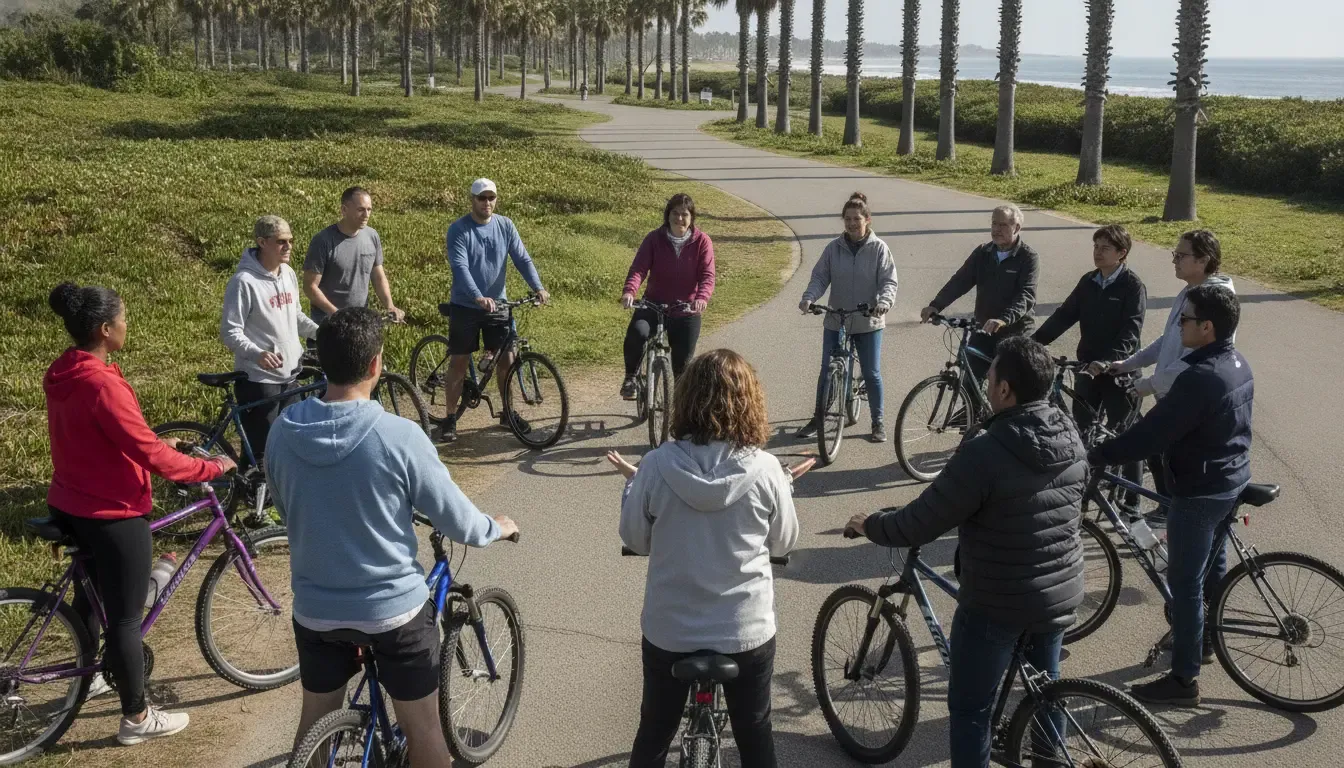
Use short observations from the event: a volunteer welcoming a team, a partner speaking with riders, or a group checking in at a rest stop. These details show that the event is a community effort. Ask people what they noticed, learned, or appreciated rather than prompting them to perform emotion for the camera.
After the ride: report back with care
Thank supporters, share confirmed fundraising or participation information, and explain what happens next. If the final outcome is still being finalized, say so and provide a reasonable update point. A post-ride story is an opportunity to build trust through follow-through, not a reason to inflate a result.
Which story formats help recruit riders and raise funds?
Different audiences need different entry points, so build a small story set instead of repeating one long article everywhere. The central facts should stay consistent, while the format changes to fit the reader’s decision.
- Partner spotlight: Introduce the organization, its local work, and the reason the ride matters.
- Rider and partner conversation: Pair a participant’s motivation with the partner’s perspective on community needs.
- Ride-day dispatch: Share a short, timely moment that shows volunteers, riders, and partners working together.
- Outcome update: Explain what fundraising supported, using only verified details and approved photos.
- Team recruitment post: Give a company, school, civic group, or family a clear reason to join and a respectful way to invite others.
- Short video or audio story: Let the speaker use their own voice, add captions, and include a transcript or text summary for accessibility.
Bike to the Beach also offers a practical charity bike ride social media calendar that can help a partner plan a steady stream of updates. Every post should still pass the same consent and accuracy check. A faster format does not lower the responsibility to tell the story well.
How can a nonprofit publish a story responsibly?
Use a final review that checks both the story and the way it will be used. The goal is not to remove every difficult truth. It is to make sure the story is accurate, necessary, respectful, and connected to a meaningful action.
- Confirm consent and attribution. Check names, images, quotes, partner links, and publication channels.
- Check the balance. Include agency, strengths, relationships, and ordinary life, not only barriers or need.
- Verify every outcome. Confirm figures, program descriptions, funding language, and time frames with the partner.
- Remove unnecessary details. If a detail does not help the reader understand the mission or next step, it may not belong.
- Make the action clear. Tell readers whether to ride, form a team, volunteer, donate, share, or learn more.
- Plan the follow-up. Record who will update supporters and when the next impact communication is expected.
The Bike to the Beach nonprofit fundraising event guide explains how local partners can use a supported ride to engage riders, donors, volunteers, and businesses. Use that operational context as a foundation, then let the partner’s own voice and verified outcomes guide the story.
Explore a community partnership with Bike to the Beach and connect a charity ride with the local work your organization leads.
Nonprofit storytelling FAQs
What is the most important rule of nonprofit storytelling?
Put the person and community represented by the story before the fundraising goal. Use informed consent, accurate language, and specific outcomes. Give people a meaningful choice about participation and avoid sharing private details simply because they make an appeal more emotional.
How can a charity bike ride story avoid pity-based language?
Describe people as active participants in their lives and communities, not as problems to be fixed. Focus on agency, relationships, access, and opportunity. Explain what the nonprofit partner does and how riders can support that work without framing participation as rescue.
Should a nonprofit include fundraising numbers in a story?
Yes, when the numbers are verified and clearly explained. State whether a figure is a goal, estimate, amount raised, or amount distributed. Pair the number with context about the partner’s work and follow up when the final allocation or result is known.
How do nonprofit partners get permission to use a story?
Ask for informed, voluntary consent before publishing. Explain the story’s purpose, audience, channels, identifying details, and review process. Keep a record of the permission and honor a person’s decision not to participate or to limit what can be shared.
What should a partner share after a charity bike ride?
Share a timely thank-you, confirmed participation or fundraising information, a specific update about the partner’s work, and the next way supporters can stay involved. If an outcome is still being finalized, be transparent and provide an update when the information is ready.
Connect your local impact story with a Bike to the Beach charity ride to help more people understand, join, and sustain the work happening in your community.