
Nonprofit Fundraising Event for Local Impact
Start a nonprofit fundraising event with Bike to the Beach and help local autism and disability partners turn community support into impact.

A strong nonprofit fundraising event should do more than collect donations. For autism and disability organizations, the right event can help families, riders, sponsors, and volunteers see the mission in motion. Bike to the Beach gives local nonprofit partners a fully supported ride platform that turns community energy into funds, awareness, and long-term regional relationships.
A nonprofit fundraising event works best when it gives supporters a clear, active role. Bike to the Beach does that through destination charity bike rides where riders fundraise, donors give locally, volunteers support the route, and partners gain visibility for autism and disability services in their own region.
This guide explains how the partner model works, which organizations are a strong fit, and why a ride-based platform can be easier to scale than building a new event from the ground up.
What makes Bike to the Beach a nonprofit fundraising event?
Bike to the Beach is a nonprofit fundraising event because it gives people a direct way to raise money and awareness for local autism and disability organizations. The ride is the shared experience, but the deeper value is the network it builds around each partner.
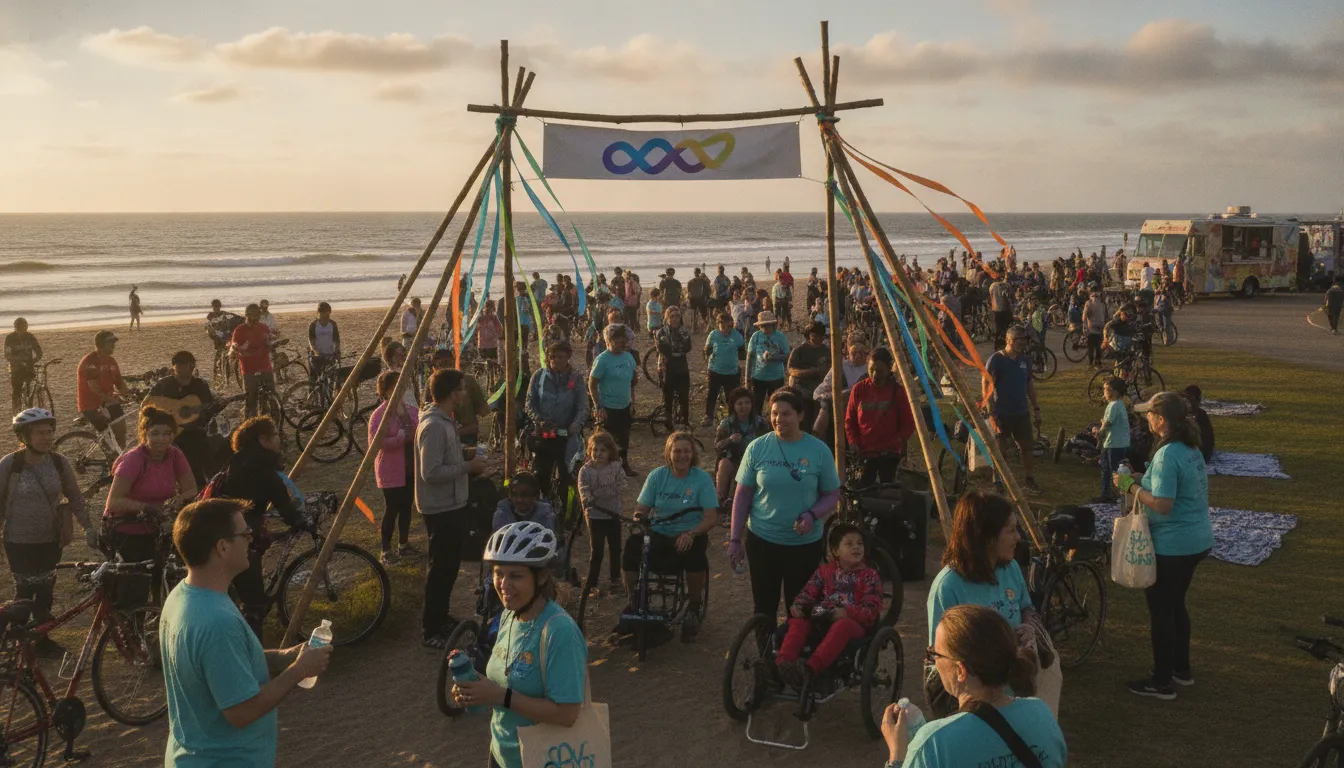
The organization manages multi-regional destination rides that connect athletic effort with community impact. Riders train, fundraise, and finish at the beach. Donors support people they know. Volunteers, sponsors, and service provider partners help turn one event into a broader local campaign.
Local funds and local services
The partner model is built around regional impact. Bike to the Beach positions its fundraising around local autism and disability organizations rather than sending rider fundraising into a distant national pool. That matters for donors who want to understand where their gifts go and for partners that need visible community support.
Funds can help local organizations support services such as sensory gyms, therapy programs, recreation, educational support, family resources, and community inclusion. That practical link between the ride and local services gives partners a clear story to share before, during, and after the event.
A supported event, not a planning burden
Many nonprofits want the visibility of a major event but do not have the staff, vendor network, route-planning capacity, or safety infrastructure to produce one alone. Bike to the Beach removes much of that burden by operating the ride platform.
- Regional ride routes with flexible distance options.
- Rest stops with food, water, and rider support.
- SAG vehicles for riders who need assistance.
- Mechanical support for common bike issues.
- Volunteer and sponsor opportunities tied to a clear mission.
That structure lets partners focus on storytelling, outreach, and community relationships while the ride team manages the operational details that make participants feel supported.
Why autism and disability nonprofits use a ride-based platform
A ride-based nonprofit fundraising event gives autism and disability organizations a public, active, and inclusive way to invite people into the mission. It is not only about cyclists. It gives donors, families, local companies, and volunteers practical ways to participate.
This approach fits organizations that need both revenue and awareness. A gala can work well for major donors, and a digital campaign can reach people quickly. A charity ride adds something different: a visible local challenge with a memorable finish and a built-in community story.
It expands the circle of supporters
Partners can start with their existing community: staff, board members, families, volunteers, and current donors. When those people ride or support a rider, they bring new people into the mission through personal fundraising pages, social sharing, and workplace conversations.
That peer-to-peer effect is powerful because it feels personal. A donor may first give because a friend is riding, then learn about the local organization the ride supports. Over time, that introduction can become a volunteer relationship, sponsorship conversation, or recurring gift.
It keeps the tone active and respectful
Bike to the Beach content and event messaging should avoid pity-based or savior language. The ride model helps because it centers shared action. Participants are not rescuers. They are community members using their time, networks, and effort to support people and organizations already doing meaningful work.
That makes the platform a natural fit for autism and disability organizations that want to build awareness in a positive, empowering way. The story becomes: here is what our community can build together.
How partners mobilize riders, donors, volunteers, and sponsors
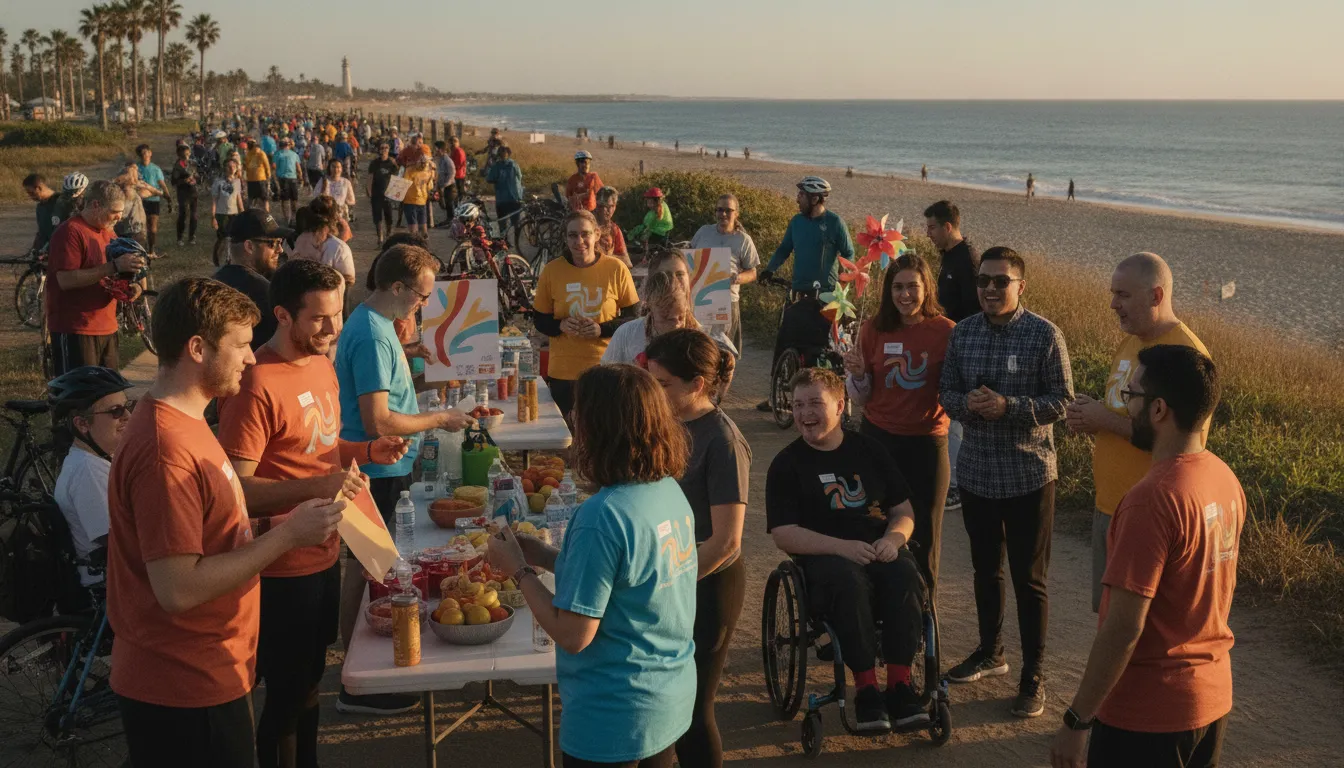
Partners use Bike to the Beach by turning their existing community into an active fundraising team. The platform gives each audience a role, which makes the event easier to promote and easier to explain.
Riders become mission ambassadors
Riders are often the first visible champions. They may be experienced cyclists, casual riders, first-time charity riders, staff members, family members, or corporate team participants. Flexible distances make the event more approachable, while the beach finish gives each rider a clear goal.
As riders train and fundraise, they share why the partner organization matters. That personal outreach can introduce the mission to friends, coworkers, neighbors, and local businesses that may not have known the organization before.
Donors see a clear local reason to give
Donors are more likely to act when they understand the connection between the event and the outcome. A ride-based campaign gives partners a simple message: support this rider, and help local autism and disability services grow in this region.
That message is especially useful for partners that can name the programs, equipment, or services fundraising will support. Specific examples, such as therapy resources, recreation programs, family support, or sensory-friendly spaces, make the impact easier to understand.
Sponsors and corporate teams gain community visibility
Local businesses often look for credible ways to support community health, employee engagement, and inclusion. Bike to the Beach creates a natural sponsorship path because companies can support the ride, form a team, volunteer together, or connect their brand to a local cause.
Organizations interested in corporate involvement can review the Bike to the Beach sponsor page for partnership options. For nonprofit partners, sponsor outreach can become a year-round relationship rather than a one-time ask.
What support does Bike to the Beach provide for fundraising partners?
Bike to the Beach supports partners by providing the event structure, ride operations, fundraising framework, and community platform that make a large charity cycling event possible. Partners bring the local mission and relationships. Bike to the Beach brings the ride system.
Ride operations and participant support
A major reason partners choose an established platform is operational confidence. Bike to the Beach rides are designed as fully supported experiences, with route support, rest stops, SAG vehicles, and mechanical help. That support lowers the barrier for riders who care about the mission but may be new to long-distance charity cycling.
Operational support also protects partner staff time. Instead of building routes, managing rider logistics, and coordinating road support alone, partners can focus on recruiting participants and explaining the local impact of the campaign.
Fundraising visibility and partner storytelling
Bike to the Beach gives partners a reason to tell their story repeatedly across the campaign cycle. Before the ride, partners can introduce the mission and invite people to join. During training, riders can share progress and fundraising goals. On ride day, volunteers and sponsors help make the mission visible. After the finish, partners can report what the community made possible.
That rhythm supports more than a single donation push. It creates a campaign arc that can keep supporters engaged beyond the event date.
Practical paths for different partner roles
Some partners may recruit riders. Others may focus on volunteer teams, local sponsors, family outreach, or awareness. The model is flexible enough to meet organizations at different stages of capacity.
Groups exploring the service provider route can start with the service provider partner page. Organizations that want a rider-first path can also learn about starting an autism nonprofit fundraising event.
How to decide whether your organization is a strong fit
A strong fit is usually an autism or disability organization with a local mission, a clear community presence, and enough internal champions to invite riders, donors, volunteers, or sponsors into the campaign. The organization does not need to be a cycling expert.
Use this checklist before starting a partnership conversation:
- Confirm mission alignment. Your work should support individuals with autism, disabilities, families, inclusion, therapy, education, recreation, or related local services.
- Identify your region. Bike to the Beach prioritizes ride communities in South Florida, DC/MD/VA, New England, and New York.
- Name the impact. Be ready to explain how funds could support real programs, services, or community needs.
- Find internal champions. A few motivated staff, board members, families, or volunteers can help recruit the first riders and donors.
- Map sponsor relationships. Local businesses, employers, therapy providers, schools, and civic groups can become valuable partners.
- Plan follow-up. Decide how you will thank supporters and report impact after the ride.
If your organization can answer those questions, Bike to the Beach may be a useful platform for building both funding and awareness.
Bike to the Beach vs. traditional nonprofit fundraising events
Traditional nonprofit fundraising events still have value, but each format serves a different purpose. Bike to the Beach is strongest when a partner wants broad participation, public visibility, and a mission-centered challenge that people can share with their networks.
| Event type | Best use | Community reach | Planning burden |
|---|---|---|---|
| Charity bike ride | Peer fundraising, visibility, team building | High, riders bring donors and sponsors | Lower with an established platform |
| Gala or dinner | Major gifts and donor stewardship | Moderate, often invite-based | High, venue and vendor heavy |
| Digital campaign | Fast awareness and easy giving | High online reach | Lower, but less in-person energy |
| Local walk | Family-friendly participation | Strong local feel | Moderate, depending on logistics |
The difference is not that one format is always better. The difference is fit. Bike to the Beach works well when partners want an event that combines local fundraising, physical challenge, sponsor engagement, volunteer roles, and a memorable finish.
Turning event visibility into long-term local impact
The best nonprofit fundraising event does not end when participants cross the finish line. For partner organizations, the ride should become a starting point for deeper relationships with riders, donors, volunteers, and sponsors.
After the event, partners can share impact updates, thank supporters, invite volunteers into future programs, and continue sponsor conversations. That follow-up helps the ride become part of a larger community-building strategy.
Bike to the Beach is built for that kind of year-round connection. The organization describes itself as a community, not just an event. For autism and disability partners, that distinction matters. A ride can raise money, but a strong partner model can also create visibility, trust, and shared ownership around local services.
Frequently Asked Questions
What is a nonprofit fundraising event?
A nonprofit fundraising event is a planned activity that raises money and awareness for a mission. Bike to the Beach uses a fully supported charity ride format so local autism and disability organizations can engage riders, donors, volunteers, and sponsors around regional impact.
How does Bike to the Beach support autism and disability nonprofit partners?
Bike to the Beach supports partners with ride operations, fundraising structure, route support, rest stops, SAG vehicles, mechanical help, sponsor opportunities, and community visibility. That support helps partners focus on mission outreach instead of building a major cycling event alone.
Do funds raised through Bike to the Beach stay local?
Yes. Bike to the Beach emphasizes local fundraising for local partner organizations in the ride regions where supporters participate. This helps donors understand how their gifts support nearby autism and disability services.
Who is a good fit to become a service provider partner?
A strong fit is usually an autism or disability organization with a local mission, community relationships, and interest in activating riders, donors, volunteers, or sponsors. The service provider partner page is the best next step for organizations that want to explore the model.
Ready to build a nonprofit fundraising event with Bike to the Beach?
If your organization serves people with autism or other disABILITIES and wants a community-first fundraising platform, Bike to the Beach can help you turn local support into action. Contact Bike to the Beach about becoming a service provider partner, or explore bike fundraising events to see how the model works for riders, donors, volunteers, and sponsors.