
New York Autism Fundraiser Team Page
Build a New York autism fundraiser team page donors can trust, with one public goal and weekly updates before October 3, 2026.
A New York autism fundraiser team page is the one public place donors should land when your group asks for support. It is not a group chat, a flyer, or a pile of personal posts. It is the page that names the team, states the goal, explains the October 3, 2026 ride from Manhattan to Smith Point, and shows where gifts support local autism and disability programs. If that page is vague, people hesitate. If it is clear, they can give, share, and come back.
Call Bike to the Beach at 202-860-3211 if your team needs help before you publish the page. You can also register for the New York ride.
What a New York autism fundraiser team page has to do
Donors do not need a history of every autism fundraiser. They need to know who is riding, why this team exists, and what their gift supports. Bike to the Beach riders raise money for local New York nonprofit organizations that serve people with autism and other disabilities. Put that in the first screen, in plain words.
MedlinePlus describes autism spectrum disorder as a neurological and developmental disorder that begins early in childhood and lasts throughout a person’s life. It affects how a person acts, interacts, communicates, and learns. People on the spectrum have a range of strengths and support needs. Your page should respect that range. Name a person only with permission, and never use pity, a cure claim, or a guess about what a gift will “fix.”
Keep the page tied to this ride. The New York ride is Saturday, October 3, 2026, with 100-mile, 50-mile, and 25-mile options plus relay choices. Riders can go solo, tandem, relay, or virtual. The public registration fee starts at $100 early and rises by date, and the fundraising minimum is separate. Confirm the current fee on the registration page before you publish a number.
One page, one job
Give the team one public URL. Personal rider pages can still exist, but every email, text, and social post from the captain should point to the team page first. A donor who gets three links will pick none of them.
Write the story before you ask
Open with the team, not the organization chart. Two or three sentences are enough: who is riding, which distance you chose, and the local reason you are doing it. A school club, a family, and a workplace group can all use the same shape. The details change. The promise does not.
Use the person’s own words when you have permission. Riding with Jordan is a stronger line than riding for people like Jordan. If a rider does not want to be named, say the team is riding with neighbors who use local services.
Do not invent a diagnosis, a family story, or a partner relationship.
Then say what the money supports in the rider’s own region. Link to why Bike to the Beach rides instead of restating the whole mission. If you mention a partner organization, link its name to the live site the organization actually uses. Do not call a partner “vetted” unless that organization has said so in public.
Set a goal people can see
Pick one team goal and show it. A hidden goal makes every update sound like a guess. A public goal lets a donor see the gap and decide how to help.
The ride-details page lists public fundraising perks you can mention without inventing prices. Raising $250 is tied to the finisher medal and post-ride lunch. Raising $500 adds the blue event jersey and official event t-shirt. Higher marks at $1,000 and $1,500 add the listed champion and yellow-jersey perks. Those are rider milestones, not a promise about what a partner program will buy. Say “our team goal is $2,500” only after the captain and riders agree. Do not publish a dollar figure you cannot explain.
Use the table as a filter before you publish. If a line is not in the left column, it does not belong on the public page.
| Put on the page | Leave off the page |
|---|---|
| Team name, captain, and approved rider first names. | Private diagnoses, school records, or an unapproved story. |
| The October 3, 2026 date and the distance or relay plan. | A copied start-line schedule that can change. |
| One team goal and the current public total. | Guesses about matching gifts or future totals. |
| A plain note that gifts support local autism and disability programs. | Any claim that Bike to the Beach gives grants. |
| One ask, one share line, and the registration link. | Several competing links to personal pages. |
Decide who can edit
A team page fails when everyone can change it and nobody does. Name one editor and one backup. The editor posts updates. The backup covers vacation and race week. Everyone else sends notes to those two people.
Agree on three rules before the first ask:
- No rider, student, or family member is named without a clear yes.
- Dollar totals come from the fundraising dashboard, not from memory.
- Updates go up on the same day each week until October 3.
Captains who want the wider kickoff, roles, and first meeting can use the separate team-fundraising guide. This page stays narrower: the public story, the goal, and the updates. The team fundraising guide covers captain duties. Do not paste that whole guide into the team page.
Build the page in one sitting
Block 45 minutes. Open the registration tools, the ride page, and a shared note. Write in this order so you do not stall on the photo.
- Write the team name and a one-sentence reason.
- Add the date, the distance or relay plan, and the team goal.
- Add two or three rider notes that each person approved.
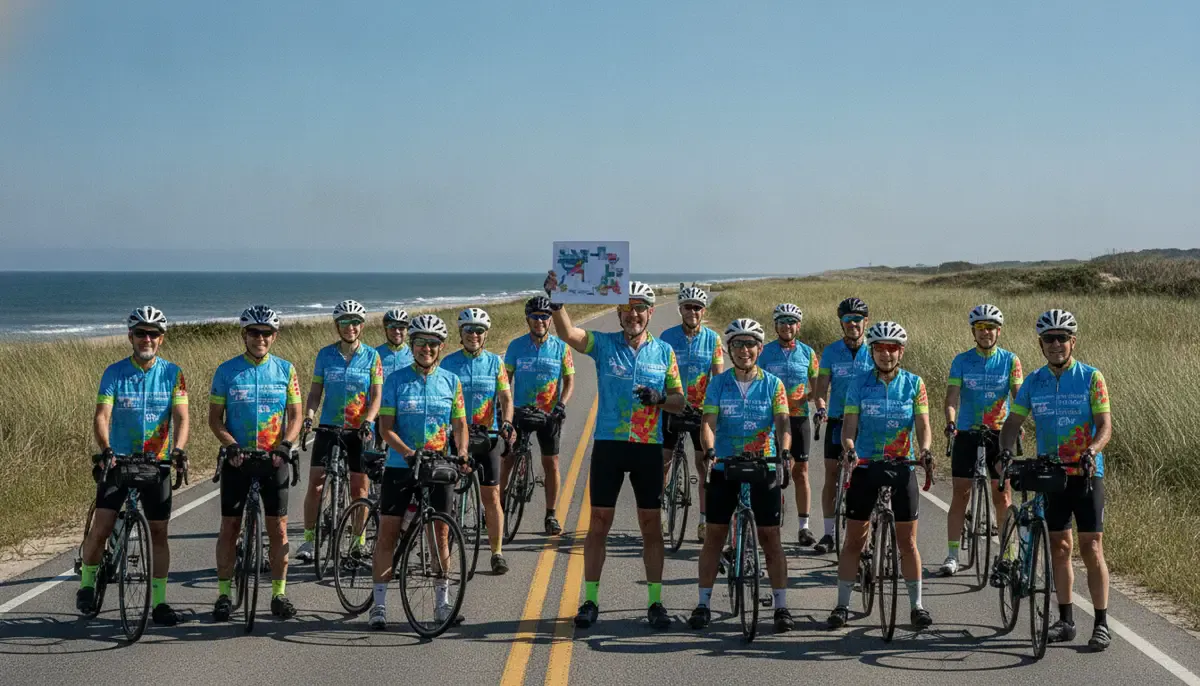
- Add one photo of the group, the bikes, or the meeting. Skip a photo that implies a person is riding if they are not.
- Add the registration link and a contact for the captain.
- Read it aloud. Cut any sentence a donor would have to decode.
Relay teams should say how the miles are split in one line, such as “four of us will share the 50 miles.” The ride-details page says relay teams coordinate their own exchanges and chase vehicle. Your page does not need the full exchange plan. Donors only need to see that the team has a plan.
Virtual riders can use the same page. Say that a virtual rider covers the chosen distance during the seven-day challenge and still supports the same local programs. Do not make virtual riders sound like a backup. They are part of the team.
Ask from the page, not around it
Every ask should be short enough to paste. Use the same three lines in email, text, and social posts:
- We are riding October 3 from Manhattan toward Smith Point.
- Our team page shows the goal and the riders.
- A gift supports local autism and disability programs.
Send the first ask to people who already know a rider. Then ask those donors to share the page, not to rewrite the story. A workplace team can post it in the employee group. A school team should follow school rules before students share it. A family can send it to the relatives who asked how to help.
If a company offers a match, check the employer’s current program before you announce it. The matching donations page is the right next step for that question. Do not put an unverified match on the team page.
First-time riders who need the signup path, distances, and what the day feels like should read the New York first-timer guide. Link it once. Do not turn the team page into that guide.
Update the page on a schedule
A quiet page looks abandoned. Pick Tuesday or Sunday and post one update, even when the total moved only a little. Donors return when they can see motion.
Use a simple rhythm:
- Four weeks out: publish the story, the goal, and the roster.
- Three weeks out: add a training or team-meeting note and thank the first donors by first name if they agreed.
- Two weeks out: show the gap to the goal and one specific way to help, such as sharing the page or covering a remaining $50.
- Race week: confirm who is riding, who is volunteering, and where to follow finish-line news.
- The week after: thank donors and say the ride happened. Do not invent a program outcome.
Keep ride-day logistics on the official page. Start times, parking, and packet pickup belong on the New York ride details. If you mention a start, say “see ride details for the current time” rather than copying a clock time that staff may change.
People who want to help off the bike can use the volunteer guide. A team page can invite volunteers, but it should not rewrite the shift rules.
Keep the tone respectful
Read the draft once for dignity. Remove “suffers from,” “confined to,” and any line that treats a rider as inspiration for donors. Describe the ride as a community event with people who ride, volunteer, and give. The inclusive events guide is useful if your team is also planning how guests will move through a meetup. It is not a substitute for the fundraising page.
Do not promise a therapy slot, a sensory gym, or a grant. Bike to the Beach is a ride community, not a grantmaker. Say that fundraising supports local programs, then let the partner speak for its own services.
Register your New York ride team once the page has a story, a goal, and an editor.
FAQ: New York autism fundraiser team page
Can each rider keep a personal page?
Yes. Personal pages still help when a rider asks their own friends. The captain’s public link should stay the team page so the group has one story and one total.
What if we do not have a photo yet?
Publish the words first. Add a photo after the first team ride or meeting. A real photo of your group is better than a generic image that does not show your riders.
Should the page list the fundraising minimum?
You can say the event has a fundraising minimum and that the team set its own goal above that. Check the live registration page before you quote the fee, because early, priority, standard, late, and last-week prices are different.
How often should we change the story?
Keep the core story stable. Update the total, the roster, and one fresh note each week. Rewriting the reason every week makes donors wonder if the team has settled on one.
Where do donors go if they have a receipt question?
Send receipt and registration questions through the contact page or the phone number on the ride site. Do not ask a donor to email a student’s personal account.
Use the page through finish weekend
When the page is live, pin it in the team chat and in the captain’s email signature. Bring a short link or QR code to any pre-ride meetup. On October 3, post one finish note the same day if you can, then the thank-you the next week.
That is the whole job of a New York autism fundraiser team page: one true story, one goal, one editor, and a link donors can use without a scavenger hunt.
After the thank-you, keep the page useful
Leave the page up after October 3. Donors who gave late, relatives who missed the email, and riders who want a record of the team will look for it. Change the ask from “please give” to “thank you” once the ride is over. Keep the goal, the final total, and the rider list if everyone still agrees to be named.
Add one short note about what the team actually did. “Twelve of us rode or volunteered on October 3” is enough. Skip a claim about how many families a program served unless that program published the number. A future captain can copy the page next season and change the date, the roster, and the goal.
If your group wants another public place for year-round community, point people to the community page. Keep the team page itself about this ride and this roster. Two jobs on one URL make the next update harder.
Store the login for the page with the captain and the backup editor. Write down where the photo came from and who approved each name. Next year’s team should not have to guess which lines they are allowed to reuse.
Call 202-860-3211 with a team-page question, or register for the New York ride and publish the page this week.