
Massachusetts Charity Ride Support Crew
Plan a Massachusetts charity ride support crew for the Boston start: meeting points, handoffs, and how to help without blocking official support.
A Massachusetts charity ride support crew is the small group that helps one rider get to the Boston start, stay supplied between official stops, and reconnect in Newport. On Bike to the Beach’s New England ride, that job is different from riding and different from staffing an official rest stop. The public ride page lists Saturday, September 19, 2026, with a Boston start for the 100-mile route at 5:00 AM, a Woonsocket start at 8:00 AM, and a Bristol start at 10:00 AM. Your crew plans around those published times. It does not invent a parallel course.
Call (202) 860-3211 to ask about the New England ride, or register for the Boston-to-Newport charity ride before you lock the crew plan.
What a support crew does on the Boston start
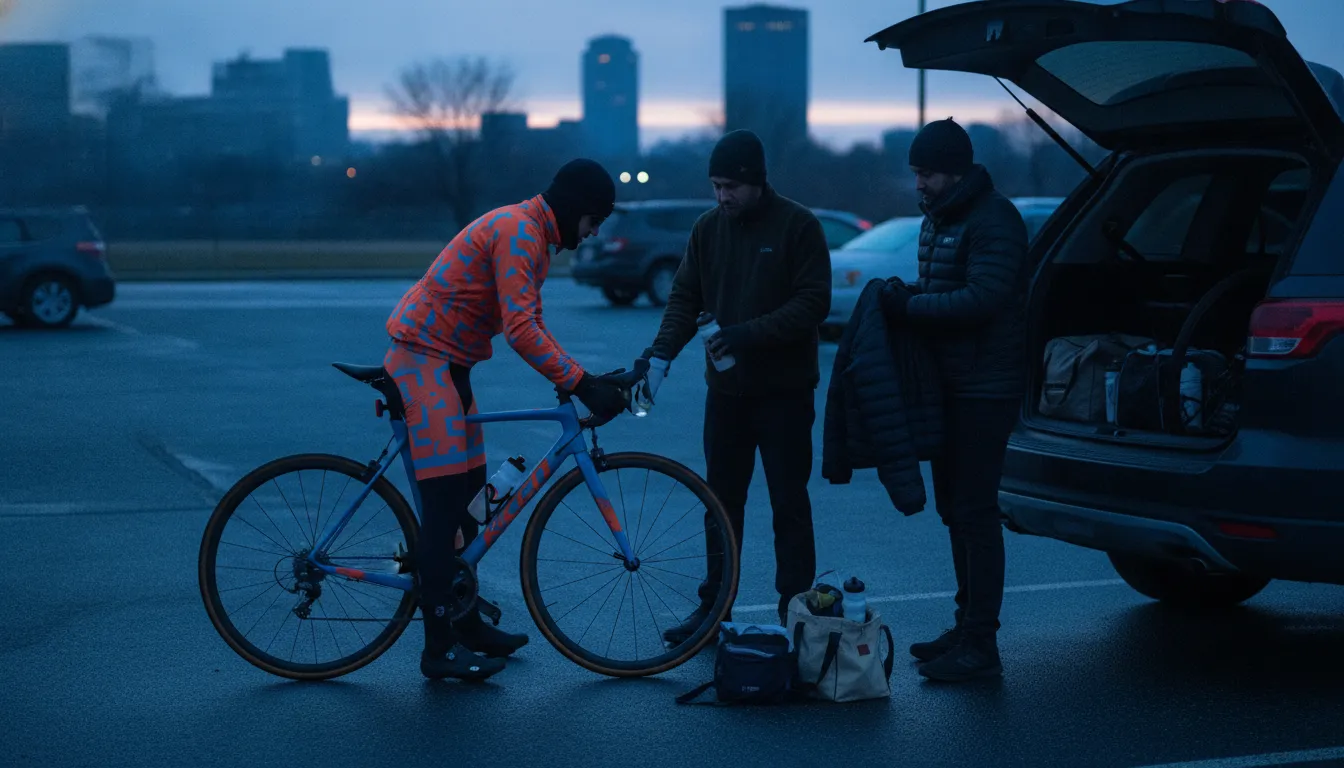
The Boston start is the long option. Riders leave at 5:00 AM, and a crew that arrives at 5:10 has already missed the handoff that matters most. A useful crew does four jobs: get the rider and bike to the start, confirm the plan before the group rolls, meet only at agreed points, and be easy to find at the Newport finish.
That is not the same job as the event’s own support. The Boston to Newport ride guide describes a fully supported course, mechanic help, and rest stops along the route. The live New England page also lists mechanic support, bike rentals, stocked rest stops, and buses back to the start. A private car does not replace that system. If a rider needs a pickup, the crew calls the event contact on the rider’s number card instead of circling the course.
One rider, one plan
Pick one rider as the person the crew is supporting. A group chat with three riders and four drivers turns into three different finish times. Write the rider’s name, start city, distance, and phone on one page. If a second teammate wants the same help, give that teammate a separate plan.
What the crew should not do
- Do not drive beside the rider or stop in a travel lane for a handoff.
- Do not block a rest-stop entrance or park in a volunteer loading zone.
- Do not hand out food or water to riders you do not know. Official stops already stock that.
- Do not promise a spectator that Bike to the Beach provides a personal chase car. It does not.
Build the crew around the published start times
Use the live New England page as the source of truth, then recheck it the week of the ride. The page currently lists three clocks: Boston at 5:00 AM for 100 miles, Woonsocket at 8:00 AM for 60 miles, and Bristol at 10:00 AM for 30 miles. The same page also describes distance choices as 100, 62, or 25 miles in the intro. Treat the named start-time list as the plan you will drive, and tell the rider to confirm the live route if those two descriptions still disagree on ride morning.
| Crew job | Boston, 100 miles, 5:00 AM | Woonsocket, 60 miles, 8:00 AM | Bristol, 30 miles, 10:00 AM |
|---|---|---|---|
| Arrival target. | Be parked by 4:15 AM at the Boston start. | Be parked by 7:20 AM at the Woonsocket start. | Be parked by 9:20 AM at the Bristol start. |
| Before the roll-out. | Lights on, bottles full, phone charged, and the number card readable. | Run the same check, plus a clear plan for the later Newport arrival. | Run the same check, with a shorter wait before the finish party. |
| Mid-ride contact. | Send one text after the first official stop, then stay quiet unless needed. | Send one check-in after the rider passes the agreed town. | Skip the mid-ride meet and go straight to Newport. |
| Finish role. | Hold dry clothes and a real meal plan. | Meet at the published beach celebration. | Arrive early enough to watch the rider finish. |
A 5:00 AM Boston departure punishes a vague night. The driver who is bringing the rider should sleep close enough to leave without a predawn highway gamble. Put the address, parking note, and backup driver in the same message the night before. Do not store the plan only in someone else’s head.
Massachusetts charity ride support crew checklist
Use this order. Skip a step only after someone on the crew has actually done it.
- Name the rider, the start city, and the distance from the live New England page.
- Name one crew lead. That person answers the phone. Everyone else does not freelance a new meeting spot.
- Write the start address, the 4:15 AM Boston arrival if that is the route, and where the car will park.
- Pack the rider’s spare tube, multi-tool, lights, charged phone, ID, and a layer for the pre-dawn start. Keep a second layer in the car for Newport.
- Agree on one mid-route text: “through the first stop” or “need a call.” No rolling commentary.
- Save the event contact from the rider’s number card. Melissa Parsons and Ben Dalley are the public New England contacts on the ride page. Use the number the rider was given for course help.
- Drive to Newport on public roads. Do not try to shadow the bike route.
- At the finish, find the rider before you start a second errand. Dry clothes and a calm pickup beat a scenic detour.
If the rider is using a rental bike, confirm that the night before. The New England page says the ride can help with a rental. A crew that brings the wrong pedals, or assumes the rider’s own bike is on the car, creates a start-line problem no one can fix at 4:50 AM.
Where to meet without getting in the way
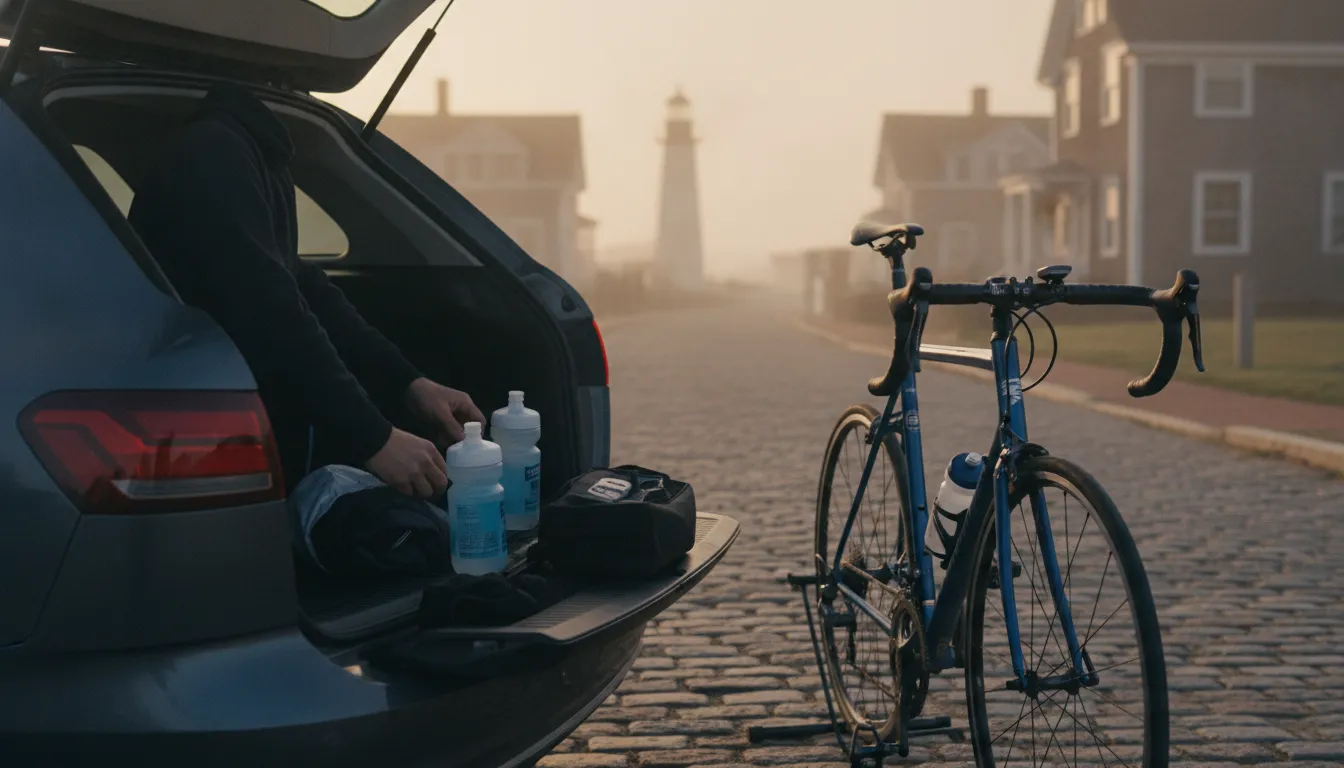
Meet at the start and at the Newport finish unless the rider has named one extra stop. The Boston start is crowded and early. A crew that spreads across the parking area will not find the rider again. Choose a landmark you can say in one sentence, such as a named sign or the volunteer check-in tent, and stand there.
Mid-route meetings fail when the crew picks a shoulder with no legal parking. Massachusetts and Rhode Island towns along this ride are not built for a surprise car meetup. If you cannot name a public lot on a map the day before, do not invent one on ride morning. Send the rider through the official rest stop and meet in Newport.
A simple handoff
At the start, the handoff is physical: bike off the car, bottles filled, lights checked, jacket decision made. At the finish, the handoff is the reverse: bike on the car or onto the return bus, rider changed, and one person confirmed to drive. The New England page lists buses back to the start. If the rider is taking that bus, the crew’s job may be the Newport greeting, not the drive home. Decide which one it is before Saturday.
What to carry, and what to leave to the ride
Carry what the rider cannot get from a rest stop without leaving the plan. That is usually a phone charger, a dry top, any personal medication the rider already uses, and the tool that fits this bike. Leave the bulk food, the extra water jugs, and the repair stand to the event. Stocked rest stops and mechanic support are part of the published ride. Duplicating them from a hatchback adds a car to a course that already has support.
Label the bag with the rider’s name and mobile number. A crew of coworkers from a company charity ride team can still lose a bag in a beach parking lot. The name on the bag is the fix.
Weather and the early Boston hour
September 19 can be cool at 5:00 AM and warm by the Newport finish. Pack both. Do not make the rider keep a jacket they will not want after the first hour. Take it back to the car. If the forecast is wet, put the dry clothes in a closed bag and keep them in the crew car, not in a pocket on the bike.
How a crew supports the mission without taking over
Bike to the Beach’s New England ride raises money for local organizations that serve people with autism and other disabilities. The reason the crew is standing in a dark parking lot is that local work, not a photo at the water. The Why We Bike page is the short way to explain that to a friend who came only to drive.
The National Institute of Mental Health cites the CDC monitoring network. Across those sites in 2022, an average of 1 in 31 8-year-old children were estimated to have autism spectrum disorder. That figure is not a count of riders on this course. It is a plain reason local services matter. You are helping one rider show up for a fundraiser that stays in New England.
Keep the rider’s own story in the rider’s words. A support crew can share the fundraising page. It should not invent a diagnosis, a therapy outcome, or a partner’s program. If a coworker asks where the money goes, use the language on the live ride page and the community page.
Ride-day communication that stays short
Agree on three messages and stop there.
- Parked: the crew lead has the car in the planned spot.
- Rolling: the rider has started, or has decided not to start.
- Newport: the crew is at the finish landmark, or the rider has finished and is ready for pickup.
Anything else waits unless someone is stopped, lost, or hurt. A stream of “you good?” texts is not support. It is a distraction on a bike. If the rider does not answer, wait for the next agreed window, then use the event contact instead of driving the course to look for them.
Turn on location sharing only if the rider asked for it. A coworker does not need a live dot for an eight-hour ride. One shared note with the start, the finish landmark, and the crew lead’s phone is enough.
After the finish
The beach celebration is part of the day, and it is also when crews lose people. Pick the landmark again. Get the rider food and a dry layer before anyone starts a group photo. If the bike is going back on the car, load it before the crowd thickens. If the rider is taking the bus back toward Boston, walk them to that line and do not leave until they are on it.
Then close the loop the same day. Thank the crew, note anything that failed, and send the rider’s fundraising page one more time while the story is fresh. A friend who wants the ride itself, not the crew role, can start with how a charity bike ride works. This checklist stays with the people who are not on the bike.
Friends who want an official role, rather than a private crew slot, should read what to expect when you volunteer and sign up through the event. Do not turn a personal crew into an unofficial rest stop.
Register for the New England ride before you set the crew plan
Frequently asked questions
Does Bike to the Beach assign a personal support crew?
No. The ride publishes its own support, including mechanic help, rest stops, and buses back to the start. A Massachusetts charity ride support crew is a private plan for one rider’s friends or coworkers.
What time should a Boston crew arrive?
The live page lists a 5:00 AM Boston start for the 100-mile route. Plan to be parked by 4:15 AM so the rider is not rushing bottles, lights, and a jacket decision.
Can the crew meet the rider at every rest stop?
No. Meet at the start, once only if you already have a legal public lot, and at the Newport finish. Chasing every stop puts cars where volunteers are working.
What if the rider needs a ride off the course?
Use the event contact on the rider’s number card. Do not search the route in a personal car. The published ride includes support for that situation.
Can people who do not ride still be part of the day?
Yes. Driving to the start, holding the dry clothes, and meeting in Newport are real help. People who want a staffed role should volunteer instead of shadowing the course.
Which distance should the crew plan around?
Plan around the start the rider actually registered for. Recheck the live New England page, because the intro distances and the start-time list do not use the same mile numbers.
Ready to set the crew plan?
Call (202) 860-3211 or register for the New England charity ride so the crew is planning around a real start time.