
Corporate Charity Bike Ride: Start Your Company Team
Contact Bike to the Beach to build a corporate charity bike ride team that supports wellness, employee connection, and local impact across your region.

A strong workplace team starts long before riders reach the starting line. Clear choices on region, distance, and purpose turn event-day energy into lasting local impact.
Contact Bike to the Beach to start your corporate ride team.
Corporate charity bike ride planning starts with one captain, a regional Bike to the Beach event, and a clear invitation for employees of every cycling level. Choose distance options that welcome beginners and experienced riders, then set a team fundraising goal above the $250 minimum required for every participant. Build momentum through training rides, leadership support, progress updates, and stories showing how funds strengthen local autism and disability services. The result links employee wellness, team connection, and community engagement; the CDC notes that workplace physical activity can also improve morale and productivity. Keep every update practical and specific so riders know the next milestone, understand their local impact, and invite colleagues to join.
Companies often know why a ride matters but need a practical order for turning interest into participation. Corporate charity bike ride: start with the right regional event is the first decision, because location and support shape every choice that follows. Here is how.
Corporate charity bike ride: start with the right regional event
Choose the Bike to the Beach region that best matches your employees, offices, and local community goals. The right regional event reduces travel friction, makes fundraising more personal, and gives teammates a clear story about how their ride supports autism and disability nonprofit partners near home.
The best regional event is the one that makes joining simple and connects the team to a community it knows. Start with employee locations, then map nearby clients, nonprofit partners, and offices. A close event can ease travel planning and make local impact easier to explain.
Match the route to your team
Bike to the Beach offers events in Florida, DC/MD/VA, New England, and New York. Each route pairs a shared cycling goal with a beach finish. Choose the market where the largest group can train together, attend team events, and invite local supporters.
Florida runs from Deerfield Beach to Jupiter, while the DC/MD/VA event finishes in Dewey Beach. New England connects the Boston area with Newport. New York brings the metro ride community from Manhattan to Smith Point Beach.
- Compare each office’s likely rider count and travel time.
- Note where your company already supports autism and disability organizations.
- Ask local leaders which event can draw clients, volunteers, and families.
- Pick the route that gives employees a clear, shared reason to participate.
Put local impact at the center
A corporate charity bike ride works best when employees can see who their effort supports. Bike to the Beach keeps fundraising within the ride’s region. That local model lets a company connect participation with nearby autism and disABILITY services, family support, recreation, and community inclusion.
Before selecting a region, speak with community partners and employee resource groups in that market. Their input can reveal where a team will have the strongest ties. It also helps captains share a clear impact story during recruitment and fundraising.
Check access before committing
Review more than the route map. Compare distance options, start and finish access, travel needs, rest stops, SAG vehicles, and mechanical support. These details help new riders and experienced cyclists decide whether the event fits.
Then test interest with a short employee survey and name a local captain. The CDC suggests team competitions as one way to help staff meet physical activity goals. A captain can turn that interest into training dates, fundraising plans, and a welcoming DC/MD/VA ride team.
If employees are spread across several markets, start with one anchor event rather than splitting the launch. Use the first team’s process to guide later regions. Bike to the Beach’s New England Bike to the Beach ride guide can help leaders frame the shared experience.
Build a small planning team before you recruit riders
A corporate team needs one captain and a small planning group before broad recruitment begins. Assign ownership for leadership approval, internal communications, rider questions, fundraising milestones, and Bike to the Beach coordination so employees receive clear answers from the first invitation.
A corporate charity bike ride needs a clear owner before the invitation reaches employees. Start with a small planning group that can make choices, gain approval, and keep the work moving.
Include people from human resources, corporate social responsibility, wellness, and internal communications when possible. A focused group can set one clear plan while leaving room for employees of different skill levels.
The seven-step setup process
-
Choose one team captain. Give this person authority to manage the timeline, answer rider questions, and work with Bike to the Beach. Name a backup captain so progress does not stop during busy weeks.
-
Gain leadership approval. Present the ride as a defined employee and community program. Ask an executive sponsor to confirm the budget, approve staff time, and support the effort in company messages. The CDC encourages managers to support workplace physical activity efforts.
-
Pick the right ride market. Choose Florida, DC/MD/VA, New England, or New York based on employee location and travel needs. Review distance choices, route support, rest stops, and transport details before making the choice.
-
Set a workable timeline. Work backward from ride day and mark dates for approval, registration, team launch, training, and fundraising check-ins. Allow enough lead time for new riders to prepare without pressure.
-
Align the ride with company goals. Decide how the event supports wellness, employee connection, and local community impact. Keep the goals simple enough to explain in one short message and measure after the ride.
-
Plan internal communications. Assign one person to manage email, intranet posts, meetings, and progress updates. Agree on a steady schedule, key messages, and a single place where employees can find current details.
-
Contact Bike to the Beach. Share your chosen market, likely team size, goals, and questions. Review options for a service provider partner community, sponsorship, volunteering, and event support before recruitment begins.
A plan built for participation
The planning team should remove barriers, not create a long approval chain. Define who decides, who communicates, and who handles rider support. Then write those roles into a one-page plan that everyone can use.
Keep the first plan practical. It should cover budget, travel, training, fundraising, and accessibility questions. It can also link the ride to an existing New York Bike to the Beach ride program or wellness calendar.
Support before recruitment
Meet once more before inviting riders. Confirm that leaders, the captain, and communications staff share the same dates and expectations. This final check gives employees clear answers from the first announcement and helps the captain focus on building an inclusive team.
How do you recruit employees for a corporate bike team?
Recruit employees by pairing purpose with practical options. Invite riders, volunteers, donors, and advocates, then explain distance choices, training support, fundraising expectations, and local impact. Personal invitations from leaders and teammates usually work better than one general company email.
Recruit a broad team by offering several clear ways to take part. Invite experienced cyclists, casual riders, first-time participants, volunteers, and donors from the start. This approach makes a corporate charity bike ride feel like a shared company effort, not a club for regular cyclists.
Lead with purpose and practical details
Start each invitation with the local impact. Explain how the team will help autism and disability organizations in the region where employees live and work. Then connect that purpose to wellness and team building, so staff can see both the community goal and their role.
Remove doubts before they stop someone from joining. Share the route options, training plan, fundraising expectations, and event-day schedule. Explain that Bike to the Beach rides include rest stops, route support, SAG vehicles, and mechanical help. These details can reassure new riders without lowering the challenge for experienced cyclists.
- Ask experienced cyclists to serve as ride mentors or training leaders.
- Invite casual and first-time riders to beginner-paced training sessions.
- Offer volunteer roles at rest stops and event start or finish areas.
- Give non-riders simple ways to donate, fundraise, or promote the team.
- Share one contact for questions about training, gear, or participation.
Use leaders and team goals
Ask an executive or respected team leader to join early and send the first invitation. Visible manager support shows that training and event participation are welcome. The CDC recommends manager support and team competitions as ways to encourage workplace physical activity.
Set one shared recruitment goal, then give each department a small role in reaching it. For example, teams can recruit riders, staff a volunteer shift, or raise funds together. Friendly progress updates can build momentum while keeping the focus on community impact.
Make every invitation personal
Use more than one company-wide email. Ask current riders to invite colleagues directly, and hold a short lunch session for questions. Feature the route, support services, local nonprofit partners, and options for people who do not want to ride.
Keep follow-up messages specific. Share a beginner training date, a volunteer need, or a team fundraising milestone instead of sending a general reminder. A page about the Why We Bike stories can help employees understand the shared experience before they commit.
End each message with one easy next step, such as joining the team list or attending an information session. Track common questions and answer them in the next update. Clear, steady communication helps employees choose the role that fits them.
Choose distances and roles that make participation inclusive
Inclusive participation means offering more than one way to contribute. Experienced cyclists can ride longer distances, newer riders can choose shorter options, volunteers can support rest stops or logistics, and donors can help the team reach its fundraising goal.
Build a team with more than one way to join
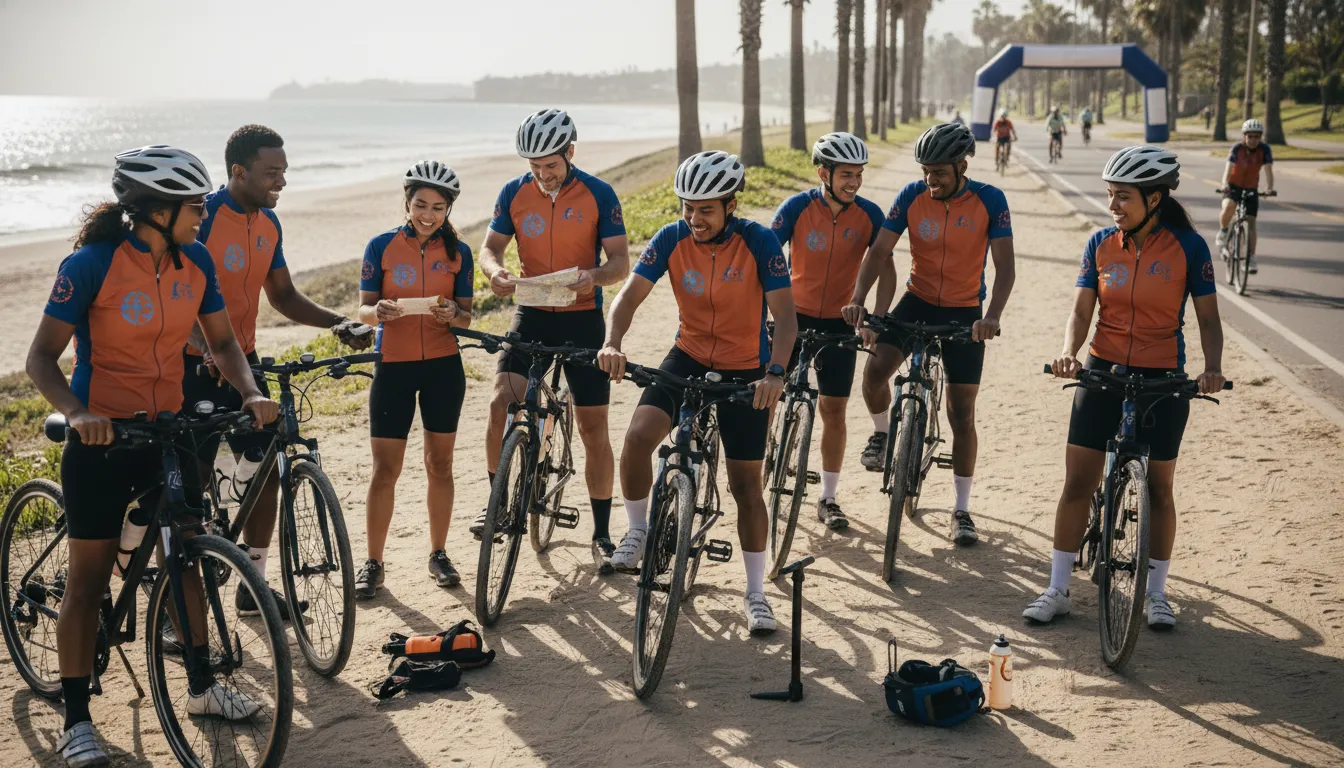
A corporate charity bike ride can bring together experienced cyclists, first-time riders, volunteers, donors, and sponsors. Start by asking people how they want to take part. This open approach keeps the team focused on shared action, not athletic skill alone.
Managers can help by joining a ride, taking a volunteer shift, or sharing the fundraiser. The CDC recommends manager support for workplace physical activity efforts. Visible support also shows that every team role matters.
Match each person with the right fit
Offer ride distances that suit different comfort levels and training goals. Before teammates commit, explain the route, rest stops, mechanical help, and available rider support. A shorter option can welcome a new cyclist, while a longer route can challenge a seasoned rider.
| Participant type. | Best fit. | How they contribute. |
|---|---|---|
| Experienced rider. | Longer distance or ride mentor. | Trains with teammates and shares route tips. |
| New or casual rider. | Shorter distance with group support. | Builds confidence and adds team energy. |
| Volunteer. | Rest stop, start, or finish role. | Helps riders and supports event flow. |
| Donor or advocate. | Fundraising and outreach. | Shares the cause and gives to the team. |
| Company sponsor. | Funding or event support. | Expands company participation and local impact. |
Not every employee needs to ride. Some may prefer hands-on event work, while others can lead fundraising or company outreach. Bike to the Beach gives a Florida Bike to the Beach ride ways to combine riding, volunteering, and sponsorship.
Plan for access and choice
Ask what each teammate needs before assigning a role. Share clear details about time, travel, training, physical demands, and event-day duties. Let people choose their level of involvement without pressure or assumptions about ability.
Keep communication respectful and practical. Use one team calendar for training rides, volunteer shifts, fundraising dates, and event updates. Pair new riders with willing mentors. Give non-riding teammates equal space in meetings and team recognition.
This mix makes participation easier to sustain. It also gives colleagues several ways to support local autism and disability organizations as fellow community members. The goal is a connected team in which each person can make a clear, useful contribution.
Set fundraising goals and show the local impact
Set one team fundraising goal, add individual rider targets, and show progress every week. Connect each milestone to local autism and disability programs so employees understand that their outreach supports services in the same region as the ride.
A clear fundraising goal gives a corporate charity bike ride team one shared result to pursue. Start with a team target, then give each rider a personal goal that feels within reach. Track both so riders can see how their own outreach moves the whole team forward.
A layered fundraising goal
Build the team target from expected rider fundraising, employer support, and possible company sponsorship. Then set a stretch goal that the group can pursue after reaching its first mark. This approach keeps the early goal clear while leaving room for more impact.
Ask the company whether it offers matching gifts before the campaign starts. Share the match rules, deadline, and submission steps with every rider. A match can also give employees a timely reason to ask colleagues and leaders for support.
- Set a clear goal for the full team and each rider.
- Confirm whether employee donations qualify for a company match.
- Ask leaders about direct sponsorship or added support at key milestones.
- Choose a simple way to share progress each week.
Friendly challenges can keep the goal visible without making fundraising feel forced. The CDC recommends team competitions to help employees work toward shared activity goals. Team captains can use a similar structure for outreach, with small milestones and group recognition.
Peer-to-peer outreach
Give riders a short message they can adapt for email, social posts, and direct asks. The message should explain why they are riding, what the team hopes to raise, and where support goes. Personal notes often make the request clearer than a broad company post.
Provide a few outreach prompts, but let each rider use their own voice. Riders might share a training update, mark a team milestone, or explain their link to the cause. Leaders can widen the effort by sharing team updates with clients, vendors, and staff.
Company support can go beyond a match. A business may sponsor a charity bike ride, support team costs, or invite business partners to donate. Keep these requests separate from rider outreach so each audience receives a clear ask.
Local impact updates
Progress reports should connect dollars raised with the people and programs the ride supports. Explain that funds support local autism and disability nonprofit partners in the ride region. Then name practical service areas, such as sensory gyms, therapy programs, education, recreation, family support, and community inclusion.
Use the same impact language in team emails, leader updates, and fundraising posts. Pair each milestone with one local service example, rather than only sharing a total. Companies that want a deeper role can explore options for a workplace team, volunteering, or sponsorship.
How can companies turn ride day into a wellness and CSR event?
Turn ride day into a wellness and CSR event by building activity, volunteering, fundraising, and storytelling into one shared program. Training rides support employee wellness, team roles strengthen connection, and local impact updates keep the purpose clear before and after the event.
A corporate charity bike ride can connect employee wellness, team building, volunteering, and local impact. Treat ride day as one milestone in a wider program, not a one-day checkbox. Give people several ways to take part, then keep sharing the team’s progress and community impact.
Build wellness into the lead-up
Start several weeks before the ride with a simple training calendar for a range of fitness levels. The CDC recommends team competitions that encourage staff to meet personal or group activity goals. Managers can join sessions and make time for staff to train together.
Use short weekly rides, indoor cycling sessions, or lunchtime walks to create steady momentum. Pair each activity with useful support, such as bike safety tips, route details, and equipment checks. This approach helps first-time riders prepare while giving experienced cyclists a clear role as peer guides.
- Invite staff to set personal movement or training goals.
- Offer options for riders, volunteers, donors, and supporters.
- Share team milestones without ranking people by fitness level.
- Schedule an info session for questions about training and ride-day support.
Make participation broad and meaningful
Not every employee needs to ride. Colleagues can volunteer at rest stops, help with team outreach, support fundraising, or welcome riders at the finish. A workplace team can give each person a clear role tied to the same local cause.
Connect those roles to the company’s CSR goals. Explain which local autism and disability groups the ride supports and how the team’s work helps. Invite a community partner to speak before ride day, and let employees ask direct questions about its programs.
Keep team building natural by giving small groups shared tasks. One group might plan training sessions, while another handles volunteer shifts or staff updates. These practical roles help colleagues work across teams before they ever reach the start line.
Communicate before and after ride day
Before the event, send brief updates through channels employees already use. Share registration steps, training dates, fundraising progress, volunteer needs, and one clear action in each message. Feature different people and roles so the story reflects the full team, not only the fastest riders.
After the ride, report what the team did and what comes next. Share photos with permission, thank riders and volunteers, and explain the local programs supported. A recap can also direct staff to ideas for a future corporate team building bike ride.
- Ask employees what made participation easy or hard.
- Share community partner updates during the year.
- Keep optional group rides or wellness sessions on the calendar.
- Use staff feedback to improve the next event plan.
What should your corporate Bike to the Beach checklist include?
A strong checklist should cover leadership approval, route selection, captain responsibilities, registration, fundraising, training, communications, accessibility questions, volunteer roles, sponsor opportunities, and post-ride follow-up. Use it to keep every employee on the same timeline.
Start planning your corporate charity bike ride eight to twelve weeks before ride day. A clear timeline gives riders time to train, fundraise, and solve travel needs without a last-minute rush.
Choose the ride and team lead
First, confirm the region that works for most employees and name one team captain. That person can track sign-ups, answer questions, and keep each part of the plan moving.
-
Confirm the region and register the team. Pick the best ride location, check its route details, and register early. Name the captain and one backup who can share updates.
-
Recruit riders and volunteers. Invite people across teams, offices, and cycling skill levels. Offer volunteer roles for colleagues who prefer to help at rest stops or the finish.
-
Set the fundraising plan. Choose a shared team goal, then give each rider a clear target. Ask the company to set up matching gifts and explain how employees can request a match.
-
Share the local impact. Give employees simple messages about the autism and disability programs their work supports. Use team meetings, email, and internal channels to share progress and thank donors.
-
Plan training and ride logistics. Schedule a few group rides and include beginner-friendly options. Confirm transport, bikes, clothing, food, lodging, and the ride-day meeting point.
-
Celebrate and report back. Plan a team photo and a beach-finish gathering. After the ride, share results, recognize riders and volunteers, thank donors, and note ideas for next year.
Build training into the work plan
Group training rides help people prepare while building team ties. The CDC recommends team competitions and clubs that help employees meet personal or group activity goals.
Keep training open to beginners, and ask experienced riders to help with pacing and basic bike checks. A planned corporate team building bike ride can also help colleagues connect before the main event.
Keep progress visible
Send one short update each week with sign-ups, fundraising progress, training dates, and open volunteer roles. Give managers a ready-to-share message so they can invite their teams without creating extra work.
After the beach finish, share photos, fundraising results, and thanks across the company. Capture feedback from riders and volunteers while details are fresh, then save the checklist for the next team captain.
Explore sponsorship and corporate team options with Bike to the Beach.
Frequently Asked Questions
How do companies start a corporate Bike to the Beach team?
Choose a regional ride, name a team captain, and confirm leadership support for registration, fundraising, and employee communications. Then invite employees, share distance options, and schedule group training rides. Companies can also plan volunteer roles for colleagues who do not want to cycle. Contact Bike to the Beach early to discuss team setup, sponsorship options, and event logistics.
How should companies choose a charity bike ride for their team?
Start with the region where most employees live, then compare dates, distance choices, fundraising requirements, and travel needs. Ask whether the event provides rest stops, route support, SAG vehicles, and mechanical help. These services can make participation easier for riders with different experience levels. Bike to the Beach offers regional rides in Florida, DC/MD/VA, New England, and New York.
How do you set fundraising goals for a corporate bike ride team?
Build the team goal from the event’s per-rider minimum, expected team size, and any company matching commitment. Set a reachable baseline, then add a shared stretch goal that gives employees something to pursue together. Track both individual and team progress. Regular updates should celebrate milestones, recognize donors, and explain how funds support local autism and disability organizations.
How can a company communicate the impact of its bike ride participation?
Share clear updates before, during, and after the ride through internal newsletters, meetings, and company social channels. Report funds raised, participation, volunteer hours, and the local programs supported. Connect contributions to tangible services such as therapy, recreation, education, family support, and community inclusion. Use respectful language that presents employees as community partners, not rescuers.
Can beginners participate in a corporate charity bike ride?
Yes. Beginners can participate when they choose a suitable distance, follow a gradual training plan, and understand the event’s support services. Team captains should clearly explain route support, rest stops, mechanical help, and SAG vehicles before registration. Group training rides can also build confidence and connection. The CDC recommends team competitions and group activities that help employees meet physical activity goals.
Ready to Start Your Corporate Ride Team?
Waiting to organize your corporate team can reduce recruiting time, limit training options, and make fundraising feel rushed for employees and team leaders. Starting now gives coworkers room to select comfortable distances, build steady training habits, and connect their efforts with meaningful local community impact. An early plan also helps your company coordinate wellness activities, volunteer roles, communications, and sponsorship choices before competing priorities fill the calendar.
Ready to start planning with clear next steps for your workplace? A quick conversation can help you identify a regional ride, participation approach, and practical timeline for launching employee outreach. Contact Bike to the Beach to request guidance on starting a corporate team or choosing a sponsorship option that fits your company.