

Cycling Nutrition for Long Rides: A Fueling Guide
Build a cycling nutrition plan for long rides with practical guidance for eating, hydration, electrolytes, recovery, and training-day testing.
Good cycling nutrition for long rides is not about finding one perfect energy gel or eating a giant meal the night before. It is about starting fueled, taking in food and fluids before energy fades, and using training rides to learn what works for your body. A simple, tested plan can help you stay steady from the first mile to the beach finish.
Choose the Bike to the Beach distance that fits your next goal, then use this guide to build your fueling plan.
This guide covers practical starting points for 25-, 50-, and 100-mile rides. Your exact needs will depend on ride time, intensity, weather, body size, sweat rate, and health. If you have a medical condition, food allergy, or specific performance goal, ask a qualified sports dietitian or healthcare professional for personal guidance.
Why Does Cycling Nutrition Matter on Long Rides?
Cycling nutrition matters on long rides because your stored carbohydrate and fluids are limited. Eating and drinking at regular intervals helps support a steady effort, reduces the risk of an energy crash, and gives you a repeatable plan when fatigue makes decisions harder.
Your body stores carbohydrate as glycogen in your muscles and liver. That stored energy helps power the pedals, but the supply is limited. As a ride gets longer, eating carbohydrate along the way helps support a steady effort and reduces the chance of a sudden energy crash, often called a bonk.
Fluids matter too. Sweating helps cool the body, but it also means losing water and electrolytes, including sodium. Hot weather, a hard pace, and a high personal sweat rate can raise those losses. The goal is not to replace every calorie or every drop of sweat while riding. The goal is to take in enough, at a rate your stomach can handle, to keep moving comfortably.
Distance is useful for planning, but time is the better guide for fueling. A relaxed 25-mile ride may take one cyclist longer than a fast 50-mile ride takes another. Estimate how many hours you expect to be on the bike, then build your food and fluid plan around that estimate.
The Simple Cycling Nutrition for Long Rides Framework
A simple long-ride fueling framework covers four moments: before, during, hydration, and after. Base the plan on expected ride time, choose familiar foods, start fueling before hunger appears, and test every part during training. The best plan is one you can follow comfortably for the entire route.
For most riders, a workable plan has four parts:
- Before: Eat a familiar, carbohydrate-focused meal with enough time to digest.
- During: Start eating early and continue at regular intervals instead of waiting for hunger.
- Hydration: Drink according to conditions and thirst, and include electrolytes when the ride, heat, or your sweat rate calls for them.
- After: Eat carbohydrate and protein, drink fluids, and give your body time to recover.
Many endurance-sport guidelines use roughly 30 to 60 grams of carbohydrate per hour as a starting range during rides lasting more than an hour. Experienced riders doing long, demanding efforts may train their gut to handle more. More is not automatically better, though. Start conservatively, follow product serving information, and adjust during training.
What to Eat Before a Long Bike Ride
Before a long bike ride, eat a familiar, carbohydrate-focused meal about two to four hours before the start. Add moderate protein, drink normally, and limit heavy fat, very high fiber, and unfamiliar foods if they upset your stomach. The goal is to begin energized without feeling overfull.
Your pre-ride meal should leave you energized, not overfull. Eat a familiar meal about two to four hours before your start when possible. Make carbohydrate the main part of the meal, add a moderate amount of protein, and keep heavy fat, very high fiber, and unfamiliar foods limited if they tend to upset your stomach.
Practical pre-ride meals include:
- Oatmeal with banana, honey, and yogurt
- Toast or a bagel with eggs and fruit
- Rice with eggs or another familiar lean protein
- A smoothie with fruit, oats, milk or a dairy-free alternative, plus toast
If you have an early event start, prepare breakfast the night before. Riders who cannot manage a full meal early may do better with a smaller breakfast and a familiar snack closer to the start. Test that approach before event day.
Drink normally in the hours before the ride. Pale yellow urine can be a useful general sign that you are hydrated, while perfectly clear urine all day may mean you are drinking more than needed. Avoid forcing down large amounts of water right before you roll out.
What to Eat During 25-, 50-, and 100-Mile Rides
What you eat during a long ride should become more structured as your expected ride time increases. A 25-mile ride may need one or two snacks, a 50-mile ride benefits from planned portions, and a 100-mile ride requires a tested all-day schedule with regular refills.
| Ride distance | Practical fueling approach | Hydration approach |
|---|---|---|
| 25 miles | Bring one or two familiar carbohydrate snacks, especially for rides over 90 minutes. | Carry water; consider electrolytes in heat or with heavy sweating. |
| 50 miles | Begin eating within the first hour and use small portions every 20 to 30 minutes. | Plan each refill and adjust electrolytes for conditions and sweat loss. |
| 100 miles | Follow a rehearsed hourly plan with varied foods and reliable backup fuel. | Refill regularly and adjust for temperature changes throughout the day. |
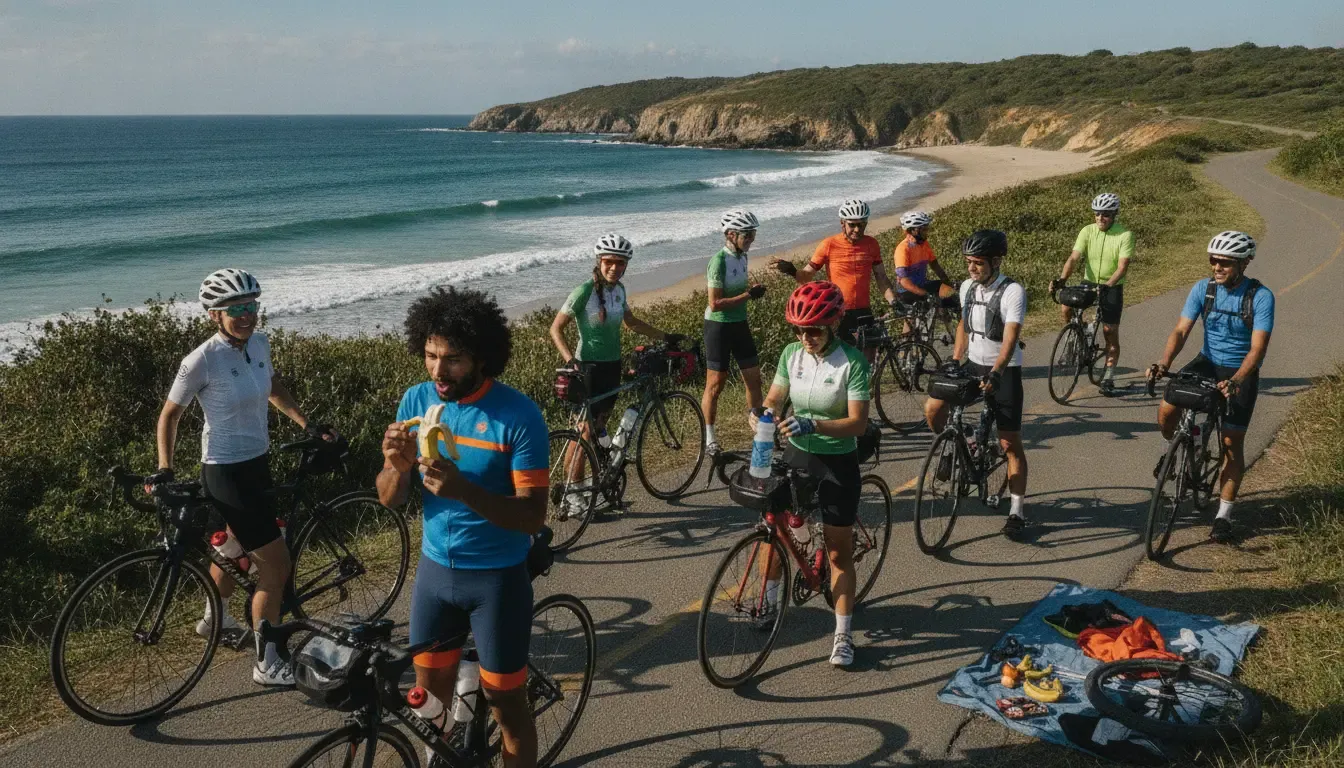
The right plan gets more structured as your expected ride time increases. Use the examples below as starting points, not strict prescriptions.
Fueling a 25-Mile Ride
A 25-mile ride may take about two hours for many recreational riders, though terrain and pace change that estimate. Eat a solid pre-ride meal. Bring water and at least one easy-to-eat carbohydrate snack, especially if the ride will last longer than 90 minutes.
- Before: Familiar breakfast or meal two to four hours before riding
- During: One or two snacks such as a banana, energy bar, chews, dates, or a small sandwich
- Drink: Water may be enough in mild conditions; consider an electrolyte drink in heat or if you sweat heavily
Keep a backup snack in your jersey pocket. Even if you do not need it, you will learn how much food makes you feel best.
Fueling a 50-Mile Ride
A 50-mile ride usually calls for planned eating. Begin within the first hour and continue every 20 to 30 minutes. Small, frequent portions are often easier to tolerate than a full bar or sandwich eaten all at once.
- Before: Carbohydrate-focused meal, plus a small snack near the start if needed
- During: Build toward a tested hourly carbohydrate target, often within the 30-to-60-gram range
- Drink: Carry enough to reach the next refill point and use electrolytes based on duration, temperature, and sweat loss
Mix textures and flavors so eating stays appealing. A bottle of sports drink plus half an energy bar may be easier than relying only on gels. If this is your first 50-miler, pair your nutrition practice with the Bike to the Beach 50-mile training guide.
Make fueling part of every long training ride. Review the long bike ride checklist before you leave so your food, bottles, and backup supplies are ready.
Fueling a 100-Mile Ride
A century ride requires an all-day plan. You will need enough food to support many hours of pedaling, but you also need to protect your stomach. Begin early, eat consistently, and use planned stops to refill bottles and collect food before supplies run low.
- Before: Familiar carbohydrate-rich dinner and breakfast, without turning either meal into an eating contest
- During: Follow an hourly plan you have already tested on long rides; include a mix of drinks, portable snacks, and more substantial food if your stomach prefers it
- Drink: Refill regularly and adjust for changing temperatures throughout the day
- Late ride: Keep foods that remain easy to eat when you are tired, and continue fueling even if the finish feels close
A century is not the day to try a new supplement, an aggressive carbohydrate target, or food you have never eaten on the bike. Use the century ride training plan to build both fitness and fueling confidence, and review the 100-mile ride guide as event day approaches.
Easy Foods to Carry on a Long Ride
The best foods to carry on a long ride are portable, familiar, easy to open, and easy to digest. Mix sweet and savory choices, check the carbohydrate per serving, and divide your food into portions you can eat every 20 to 30 minutes without losing control of the bike.
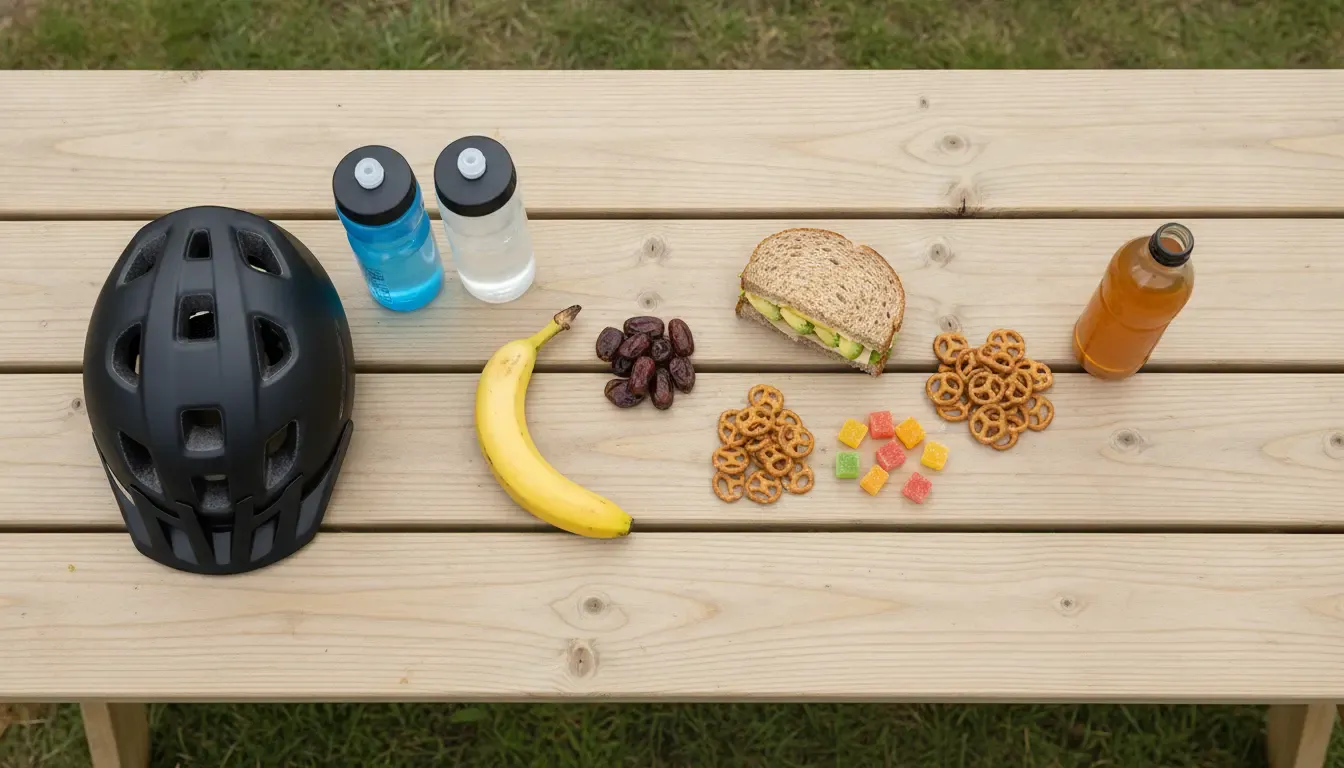
Options include:
- Bananas, dates, or dried fruit
- Energy bars, chews, gels, or waffles
- Small rice cakes or simple sandwiches
- Pretzels, crackers, or other salty snacks
- Sports drink or carbohydrate drink mix
- Small boiled potatoes with salt, packed securely
Check the nutrition label so you know how much carbohydrate each serving provides. Then translate your hourly target into real food. For example, your plan might call for portions every 25 minutes instead of trying to remember a total for the whole hour.
Practice opening wrappers, carrying food, and eating safely. Pull over at a safe spot if eating on the move feels distracting. Never trade bike control for a bite of food.
Hydration and Electrolytes Without the Guesswork
A practical cycling hydration plan matches your drinking and electrolyte choices to ride duration, weather, and personal sweat rate. Drink regularly and respond to thirst rather than forcing a fixed amount. Use training rides to confirm where you can refill and which products your stomach tolerates.
There is no single bottle-per-hour rule that fits every rider. A cool spring ride and a humid summer century create different demands. Drink regularly, respond to thirst, and make sure your plan includes refill opportunities. Avoid both falling far behind and forcing excessive fluid intake.
Electrolytes can be helpful on longer rides, in hot or humid weather, or for riders who lose a lot of salt in sweat. Signs of a salty sweater can include white salt marks on clothing or a gritty feeling on the skin after a ride. Follow the directions on your chosen drink or electrolyte product rather than combining several products without tracking the total.
A simple way to learn about your fluid needs is to compare body weight before and after a training ride, while also noting how much you drank and whether you used the bathroom. Treat the result as one data point. Weather, intensity, clothing, and route can all change your needs.
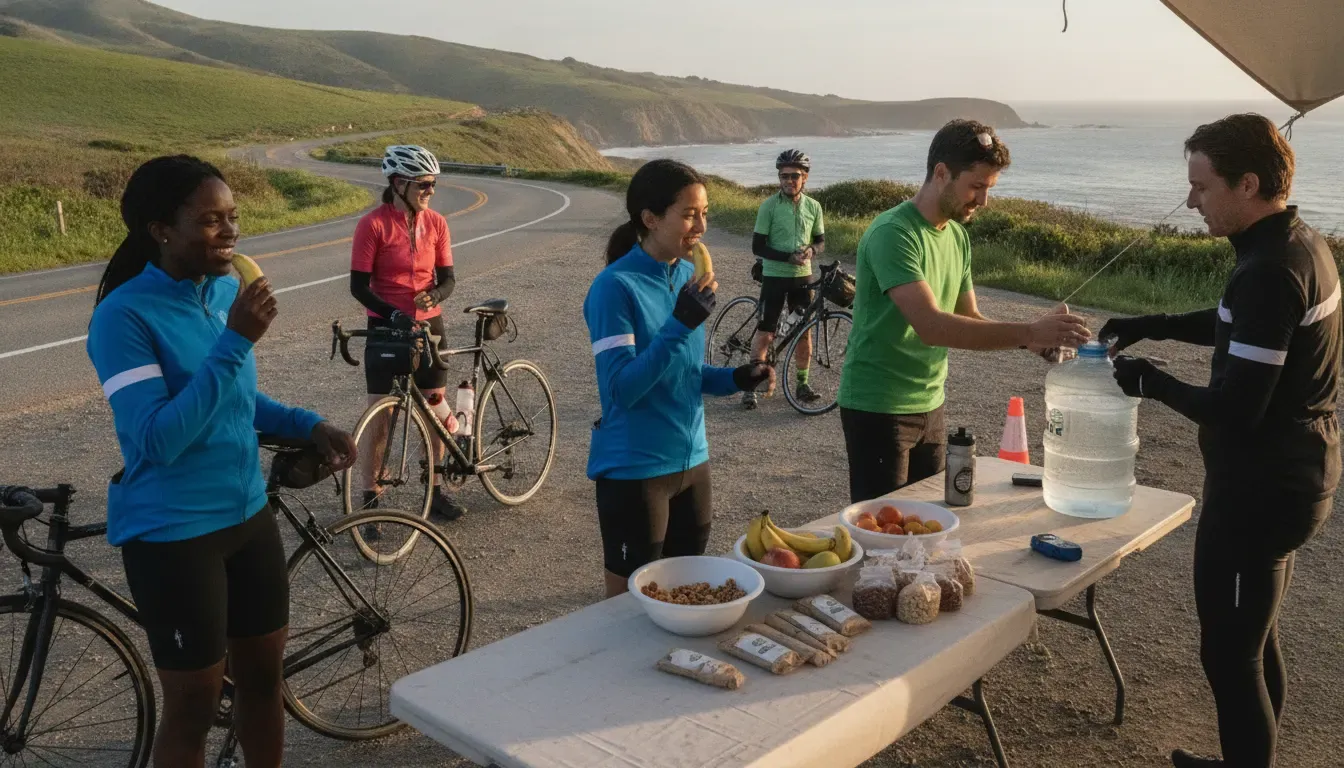
Bike to the Beach rides are fully supported, with rest stops that provide food and hydration along the route. Still, carry what you need to reach the next stop and bring any product your stomach already knows. Support stations make refilling easier, but your tested plan remains your responsibility.
How to Test Your Fueling Plan During Training
Test your fueling plan during training by rehearsing your expected start time, breakfast, hourly carbohydrate target, hydration, and carried supplies. Keep short notes about energy, stomach comfort, weather, and refills, then change one variable at a time. Event-day nutrition should feel familiar rather than experimental.
Your gut can be trained alongside your legs. Testing turns a general nutrition idea into a plan you can trust on event day.
- Estimate ride time. Plan from expected hours, not distance alone.
- Choose an initial hourly target. Start with an amount you can tolerate, then divide it into small portions.
- Rehearse event timing. Eat breakfast and start your ride at roughly the time you expect on event day.
- Use the same products. Test the drink mix, snacks, and electrolytes you intend to carry.
- Keep short notes. Record food, fluids, weather, energy, stomach comfort, and what you would change.
- Adjust one variable at a time. Changing every part of the plan makes it hard to learn what helped.
Do at least one dress-rehearsal ride with your planned bottles, storage, and food. Confirm that everything fits, wrappers open easily, and your portions still appeal after several hours. Your nutrition plan should feel almost boring by event day. Familiar is a performance advantage.
What to Eat After a Long Ride
After a long ride, eat a convenient meal or snack with carbohydrate, protein, and fluids. Carbohydrate helps replenish energy stores, protein supports muscle repair, and fluids support rehydration. Salty foods or an electrolyte drink may also help after a hot ride or heavy sweat loss.
Recovery begins with a normal meal or snack that includes carbohydrate, protein, and fluids. Carbohydrate helps replenish energy stores, while protein supports muscle repair. You do not need a complicated recovery product if a convenient meal works for you.
Practical options include:
- Rice or potatoes with vegetables and chicken, fish, tofu, or beans
- A turkey, egg, or hummus sandwich with fruit
- Yogurt with granola and fruit
- Chocolate milk or a smoothie, followed by a meal when you are ready
Continue drinking after the ride, especially if it was hot. Include salty foods or an electrolyte drink if you had heavy sweat losses. Then prioritize sleep and an easy next day when your training schedule allows.
Common Long-Ride Nutrition Mistakes
Common long-ride nutrition mistakes include waiting for hunger, trying new products on event day, forgetting to eat, relying on one flavor, ignoring hot weather, and making the plan too complicated. Avoid them by starting early, setting reminders, carrying varied familiar foods, and practicing a simple schedule.
- Waiting until you feel empty: Energy can be difficult to restore once you fall behind. Start eating early.
- Trying something new on event day: A popular product is not useful if your stomach dislikes it.
- Carrying food but forgetting to eat: Set a watch alert or use route landmarks as reminders.
- Relying on one flavor: Sweet-food fatigue is common on long rides. Pack some savory choices.
- Ignoring the weather: Heat can raise fluid needs and reduce appetite. Adjust pace, drink, and food choices.
- Overcomplicating the plan: A repeatable schedule with familiar foods is more useful than a perfect spreadsheet you cannot follow.
Cycling Nutrition for Long Rides FAQ
Long-ride nutrition questions usually come down to timing, carbohydrate, hydration, and food choice. The answers below offer practical starting points, but your tested plan should reflect your ride time, weather, sweat rate, stomach comfort, health, and the products available along your route.
How often should I eat during a long bike ride?
Start eating within the first hour and use small portions every 20 to 30 minutes. Eating early and consistently is usually easier than trying to recover after energy drops. Test the timing during training and adjust it to your stomach comfort and expected ride duration.
How many carbohydrates do I need per hour of cycling?
Many endurance guidelines use roughly 30 to 60 grams of carbohydrate per hour as a starting range for rides lasting more than an hour. More is not automatically better. Begin conservatively, check product serving information, and train your gut before attempting a higher target.
Do I need electrolytes for a 25-mile ride?
Water may be enough for a 25-mile ride in mild conditions, but electrolytes can help in heat, humidity, or when you sweat heavily. Consider your expected ride time rather than distance alone, and test your chosen drink during training instead of introducing it on event day.
What should I eat the night before a long bike ride?
Eat a familiar, balanced dinner with carbohydrate, protein, and foods you know you digest well. There is no need to turn dinner into an eating contest. Avoid experimenting with unusually rich, high-fiber, or unfamiliar meals before an important ride.
Can I rely on rest stops for all my food and water?
Bike to the Beach rides provide supported rest stops with food and hydration, but carry enough to reach the next stop and bring products your stomach already knows. A personal backup snack and clear refill plan help you stay on schedule if your needs change.
Build a Plan That Carries You to the Beach
A strong fueling strategy is personal, practiced, and simple enough to follow when the miles get hard. Start the ride with energy on board, eat before hunger takes over, drink according to the day, and recover with a balanced meal. Each training ride gives you another chance to refine the details.
Bike to the Beach offers fully supported rides with flexible distance options and a community working together to raise funds and awareness for individuals with autism and other disABILITIES. Your ride can challenge you while helping local nonprofit partners support families and build more inclusive communities.
Ready to put your plan into action? Explore the New York ride, choose a New England distance, or use the charity ride distance guide to find your next goal.