

Charity Bike Ride Distance Guide
Compare Bike to the Beach charity bike ride distances from 25 to 100 miles and choose the route that fits your fitness, time, and goals.

A charity bike ride should feel challenging, realistic, and meaningful. Whether you are considering 25 miles or a full century, the best Bike to the Beach distance should fit your current fitness and training calendar. It should also fit your team goals and the reason you want to ride.
Choose your Bike to the Beach route and register for the distance that fits your season.
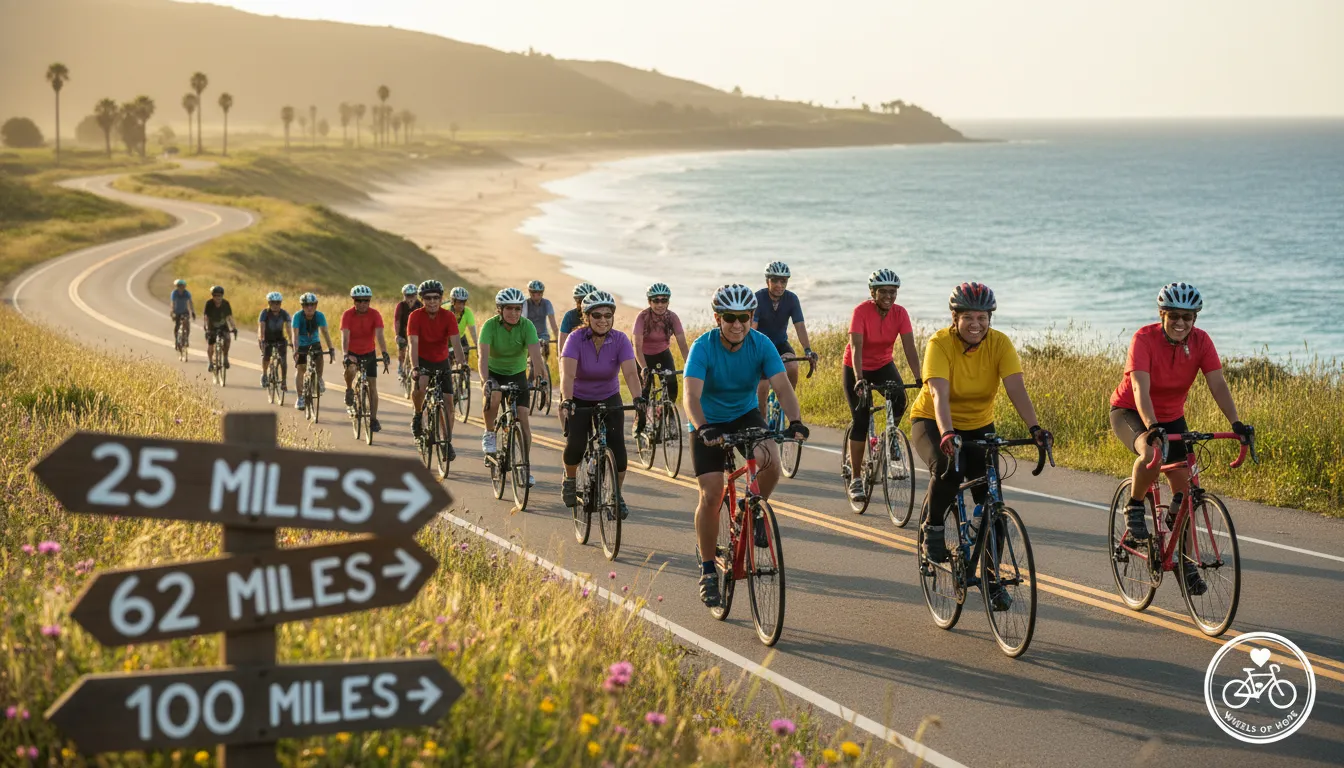
Bike to the Beach offers route options from 25 to 100 miles, giving riders a practical way to match distance with experience. First-time participants often look at 25 or 30/32 miles. Riders with a stronger base may consider 50, 62, or 70 miles. Experienced cyclists who want a major endurance goal may choose 100 miles. Before registering, verify the current distance options on the regional ride page because availability can vary by location.
The goal is not to pick the longest route. The goal is to choose a distance that helps you train with purpose, fundraise with confidence, and enjoy the community moving toward the same finish line.
Charity bike ride distance options at a glance
A route for each kind of rider
Bike to the Beach gives riders several ways to participate, from approachable first-event distances to century ride challenges. That flexibility matters because a charity ride brings together people with different cycling backgrounds. Some riders are training for a personal milestone. Others are joining a team, supporting a local partner, or using the event as a motivating reason to get back on the bike.
Use the table below as a starting point, then confirm current details on the regional event page before registering.
| Distance | Best fit | Planning focus |
|---|---|---|
| 25 miles | Newer riders, casual cyclists, and first-time charity ride participants | Build comfort, confidence, and steady time in the saddle |
| 30 or 32 miles | Riders ready for a longer first goal | Check which mileage is offered by your regional event |
| 50 miles | Riders with a consistent base who want a mid-distance challenge | Practice weekend rides, pacing, and simple fueling |
| 62 miles | Riders aiming for a metric-century style endurance goal | Build longer rides and test hydration habits |
| 70 miles | Stronger riders who want a longer supported event day | Plan recovery, nutrition, and team logistics |
| 100 miles | Experienced cyclists pursuing a century ride | Follow a structured training plan and pace the full day |
Regional distance checks
Not every distance is offered in every market. Review the current Florida ride details, DMV ride details, New England ride details, or New York ride details before you commit. That extra check keeps your training plan aligned with the real event options.
How do you choose a route distance by fitness level?
Start with your current riding base
Choose the distance for the rider you are today, then build from there. Look at your recent cycling volume, your longest comfortable ride, and how you felt the next day. If you are returning to exercise or starting from a low base, a shorter route can still be a strong and worthwhile goal.
The CDC notes that adults can gain health benefits from regular physical activity, and people who are not active can work up gradually. That same principle applies here. A successful ride starts with a goal that lets you train steadily instead of rushing into mileage your body is not ready to handle.
Use a simple distance check
Think beyond the number of miles. Consider road comfort, group riding, pacing, fueling, and recovery. A rider who can handle 30 miles on a quiet path may still need practice with turns, hills, traffic patterns, and riding near other cyclists.
- 25 to 30/32 miles: A practical choice for newer riders who want a supported event and a clear training goal.
- 50 to 62 miles: A useful target for riders who already ride consistently and can add longer weekend efforts.
- 70 to 100 miles: A demanding endurance goal for riders who can commit to longer training, pacing, and recovery.
Do not choose a longer route only because it sounds impressive. Choose the route that gives you enough challenge to stay motivated and enough time to prepare well.
Match your distance to your training time
Training time changes the right choice
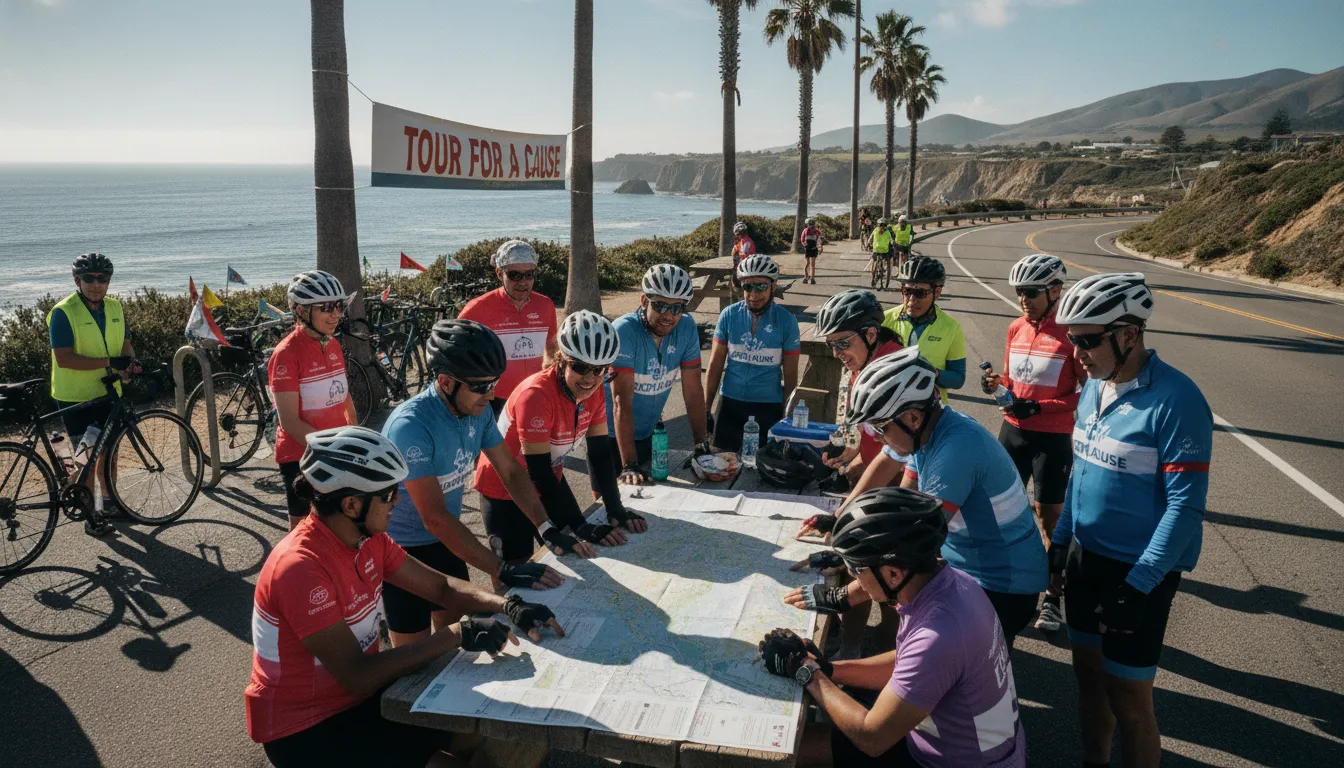
A route that looks perfect today still needs to fit your calendar. Count the weeks between registration and ride day. Then look honestly at how many rides you can complete each week. A busy work schedule, family commitments, travel, or weather can make a shorter distance the smarter option.
Bike to the Beach provides structured training plans to help riders build toward event day. Use those plans to test whether your preferred distance is realistic. If the plan requires more time than you can give, choose a shorter route and arrive confident.
When a century ride training plan makes sense
A 100-mile ride is a milestone. It is also a long day that asks for more than fitness. Century riders need practice with pacing, food, hydration, bike fit, and staying mentally steady over several hours. That preparation usually works best when you already ride regularly and can protect time for longer weekend rides.
If you are drawn to the century but unsure about the commitment, step back and consider 50, 62, or 70 miles. Those distances still offer a meaningful endurance challenge while leaving more flexibility for riders with limited training time.
What role do team goals and fundraising play?
A distance the group can own
Team goals can change the best route choice. A team may include experienced cyclists, newer riders, coworkers, family members, and supporters who are motivated by the mission but still building fitness. The right distance gives every rider a clear role without making the day feel like a test of who can ride farthest.
Start with honest conversations about training time and comfort. Some riders may want the full route. Others may prefer a shorter distance or a relay-style role. When the group names those needs early, the team can train together and fundraise around a shared challenge.
Fundraising motivation matters
A charity bike ride is also a story you invite people to support. Distance helps make that story clear. A first-time rider choosing 25 miles can talk about taking on a new challenge. A team choosing 62 or 70 miles can describe the preparation behind the effort. A century rider can frame the 100-mile goal as a major personal commitment.
Bike to the Beach connects cycling with support for autism and disability communities through local partners. Keep the message positive and community-first. Tell supporters what you are doing, why it matters to you, and how their contribution helps move the effort forward.
A simple step-by-step route selection plan
If you are stuck between two distances, use a short decision process instead of guessing. This keeps the choice practical and gives your training a clear starting point.
- Check your current base. Write down your longest recent ride and your typical weekly mileage. If those numbers are low, start with a shorter option and build gradually.
- Review the regional page. Confirm which route distances are currently offered for Florida, DMV, New England, or New York.
- Count your training weeks. Match your available time to the training plan. If your schedule is tight, do not force a longer route.
- Talk with your team. Ask each rider what distance feels challenging, realistic, and motivating.
- Choose the route and commit. Once you pick a distance, register and begin training around that goal.
This process works because it separates excitement from logistics. You can still aim high, but the route should fit the training you can actually complete.
Support, safety, and ride-day comfort matter too
Supported does not mean unprepared
Bike to the Beach in-person rides are designed to support participants on the road, with rest stops, mechanical help, and SAG vehicles. That support can make a first charity bike ride feel more approachable, especially for riders who have never completed an organized cycling event.
Still, support is not a substitute for preparation. Riders should train for the selected distance, make sure their bike is in good working order, and practice basic event-day habits. The Mayo Clinic recommends simple cycling safety steps such as wearing a helmet, checking equipment, and riding with awareness.
Comfort helps you enjoy the purpose
The better your route fits, the more energy you can bring to the community around the ride. You will have more bandwidth to connect with teammates, thank supporters, and enjoy the finish instead of fighting through a distance that was never realistic.
Choose a challenge that stretches you without overwhelming the day. That balance is what turns mileage into momentum.
Where can you verify current route options?
Use Bike to the Beach’s regional ride pages as the source of truth before registering. Event details can change, and the current page will give you the most reliable view of available distances, registration links, and logistics.
- Florida Bike to the Beach ride details
- DMV Bike to the Beach ride details
- New England Bike to the Beach ride details
- New York Bike to the Beach ride details
After you choose the right regional page, review registration steps, training resources, and any team information. Then share the distance with your supporters so your fundraising message has a clear goal.
Frequently Asked Questions
How do fitness levels impact my charity bike ride route choice?
Fitness level affects both comfort and safety. Newer riders often start with 25 or 30/32 miles because those routes create a clear challenge without requiring a full endurance build. Riders with more consistent training may consider 50, 62, 70, or 100 miles. Match the route to recent riding, not just ambition.
What is the difference between a 25-mile and 100-mile charity bike ride?
A 25-mile route is a more approachable first event and usually requires less time on the bike. A 100-mile century is a major endurance goal for experienced riders who can train for longer hours, pacing, fueling, and recovery. Both can support the same mission.
How do I set a fundraising goal for my bike ride?
Set a goal that reflects your route challenge, your outreach plan, and your reason for riding. Explain the distance you chose and why it matters to you. Teams can also set a shared goal while each rider works toward an individual contribution target.
Can I ride on a team for a charity bike ride?
Yes. A team can help riders stay motivated, train together, and choose distances that fit different ability levels. If your group includes mixed experience levels, talk through route choices early so each person has a clear and realistic role.
What support is available during a Bike to the Beach charity bike ride?
Bike to the Beach in-person rides include organized support such as rest stops, mechanical help, and SAG vehicles. Riders should still prepare for their selected distance, train consistently, check their bikes before event day, and review current regional details before registering.
Ready to choose your Bike to the Beach distance?
Your distance gives your training plan a start date and your fundraising story a clear shape. Compare the current regional options, choose the route that fits your fitness and schedule, and invite your team or supporters into the goal.
Choose your ride distance and register for an upcoming Bike to the Beach event.
The right route is not only a mileage number. It is the challenge that helps you show up prepared, connected, and ready to ride with purpose.