

Charity Bike Ride Relay Team Tips: Plan a Smooth Ride
Plan a charity bike ride relay with clear roles, realistic handoffs, shared training and a backup plan so your team can ride together with confidence.
Good charity bike ride relay team tips start with one shared plan: agree on the distance, divide the work around each rider’s abilities, and decide exactly how teammates will communicate and hand off the ride. A relay can make a long event feel more approachable, but it still takes coordination before ride day. Use the steps below to build a plan that is clear, flexible and welcoming to every teammate.
Explore a Bike to the Beach ride
What makes a charity bike ride relay team work well?
A strong relay team is not simply a group of riders who each cover a portion of a route. It is a group that has agreed on the format, knows what to expect from one another, and has a plan for changes. The team should be able to answer four basic questions before the event:
- Who is riding, and what does each person feel comfortable taking on?
- How will you divide the distance and handle the handoff?
- Where will the off-bike teammates wait, and how will you stay in touch?
- What will you do if a rider needs more time, equipment help or a change of plan?
Start with those decisions instead of assuming everyone has the same experience or pace. Some teammates may ride often. Others may be returning to cycling or choosing a charity event as their first big goal. A useful plan makes room for both. It should help the team participate together without turning an ambitious distance into pressure to ride beyond anyone’s comfort.
Bike to the Beach offers rides with different distance options and relay participation, so teams can begin by reviewing the event information and asking what format is available for their chosen ride. The charity bike ride overview is a helpful place to understand the organization’s ride context, while the About page shares more about the community behind the events.
How should you choose a relay format?
There is no single best relay structure. Choose one that fits the event’s rules, the route and the people on your team. First confirm with the event organizer that the planned relay format is permitted. Then compare options based on fairness, logistics and how much time each rider wants to spend cycling.
| Relay approach | How it works | Best fit | Plan ahead for |
|---|---|---|---|
| Equal-distance turns | Riders cover similar portions of the route. | Teams with riders who have roughly similar comfort and availability. | Route access, handoff locations and differences in pace or terrain. |
| Ability-based segments | Each rider takes a segment suited to their experience and preference. | Teams with a mix of cycling backgrounds or different time constraints. | Agreeing on a fair contribution that is not measured only in miles. |
| Small rotating group | Two or more riders share turns, with the others supporting between segments. | Teams that want more flexibility and companionship on the route. | Where riders can regroup, how bikes and people move, and how timing changes. |
| Flexible team plan | Riders set an initial order but can adjust after checking in during the event. | Teams that want a backup option if a rider’s needs change. | Who can approve a change and how the revised plan reaches everyone. |
The table is a planning aid, not a substitute for event rules. A route may have specific start points, timing requirements or restrictions on how a team can take part. Check the event’s current ride details before promising a particular handoff arrangement. If you are considering a Bike to the Beach event, visit the relevant New England ride page or use the event information for your selected region.
How can you divide the distance fairly?
Fair does not always mean equal miles. One rider might be comfortable covering a longer segment, while another might contribute by taking a shorter turn, helping coordinate the team, or supporting fundraising and communication. Ask each person what feels achievable rather than assigning segments based on assumptions.
- Ask about experience and comfort. Invite riders to share what they have done recently, what they want to try and what would make the day manageable. Make it easy to say that a shorter segment is preferable.
- Look at the whole route. If the route includes different terrain or conditions, do not divide it by distance alone. Ask the event team what route information is available and consider how those sections may affect effort.
- Set a first draft, then review it together. List rider names, proposed segments, estimated start windows and handoff points. Give everyone a chance to raise concerns.
- Leave room for adjustment. Build in a way to change the order or segment length if someone is tired, delayed or more comfortable doing less than planned.
- Agree on what counts as a successful contribution. Celebrate preparation, support, fundraising and encouragement—not only the number of miles completed.
Clear expectations can prevent a common source of tension: one person thinks the plan is fixed, while another expects it to change on the day. Write down the tentative plan, label it as flexible where needed, and agree on who will make the final call if conditions shift.
For example, imagine a four-person team with two frequent riders, one newer cyclist and one teammate who has limited time on event day. The team could give the experienced riders longer segments, offer the newer rider a shorter section that fits their preparation, and ask the time-limited teammate to take an early or late segment that fits their schedule. This is only a starting point; route rules and individual preferences still come first. Review the proposed split as a group and ask each rider whether the segment feels both meaningful and manageable.
It also helps to discuss non-riding contributions before they become invisible. A teammate who coordinates rides to the start, keeps the shared schedule current or handles supporter updates is contributing to the team’s success. Agreeing on this up front can make a flexible distance split feel fairer and reduce the pressure to compare miles.
What should you agree on before ride day?
Keep the team plan in one message or shared document everyone can access. Include the details below, and update it when anything changes.
- Event basics: event name, date, official instructions, check-in details and any team-specific requirements.
- Rider order: who starts, who follows and whether a teammate can swap into a segment.
- Handoff plan: agreed locations or instructions for confirming a handoff. Do not assume a particular location is permitted without checking event guidance.
- Contact plan: a primary group chat, one backup way to reach the team and a point person who can relay updates.
- Transportation and belongings: how teammates will get to the start, reach any planned meeting points and reunite at the finish, based on the event’s available arrangements.
- Equipment responsibilities: who brings what, how each rider checks their own bicycle, and what to do if a mechanical issue occurs.
- Fundraising roles: who will share updates, answer questions and remind supporters about the team’s charitable purpose.
Bike to the Beach describes full ride support, mechanical support and SAG vehicles among its event support offerings. Confirm what applies to the specific ride you are entering, and do not treat event support as a replacement for communicating with your teammates. The ride navigation information can also help teams learn about route navigation options.
How can relay teammates prepare together?
Training does not need to look identical for every rider. The team’s goal is to help each person arrive feeling prepared for their own planned segment. Start by choosing a realistic segment for each teammate, then leave enough time for that person to ride consistently and become familiar with their bicycle and gear.
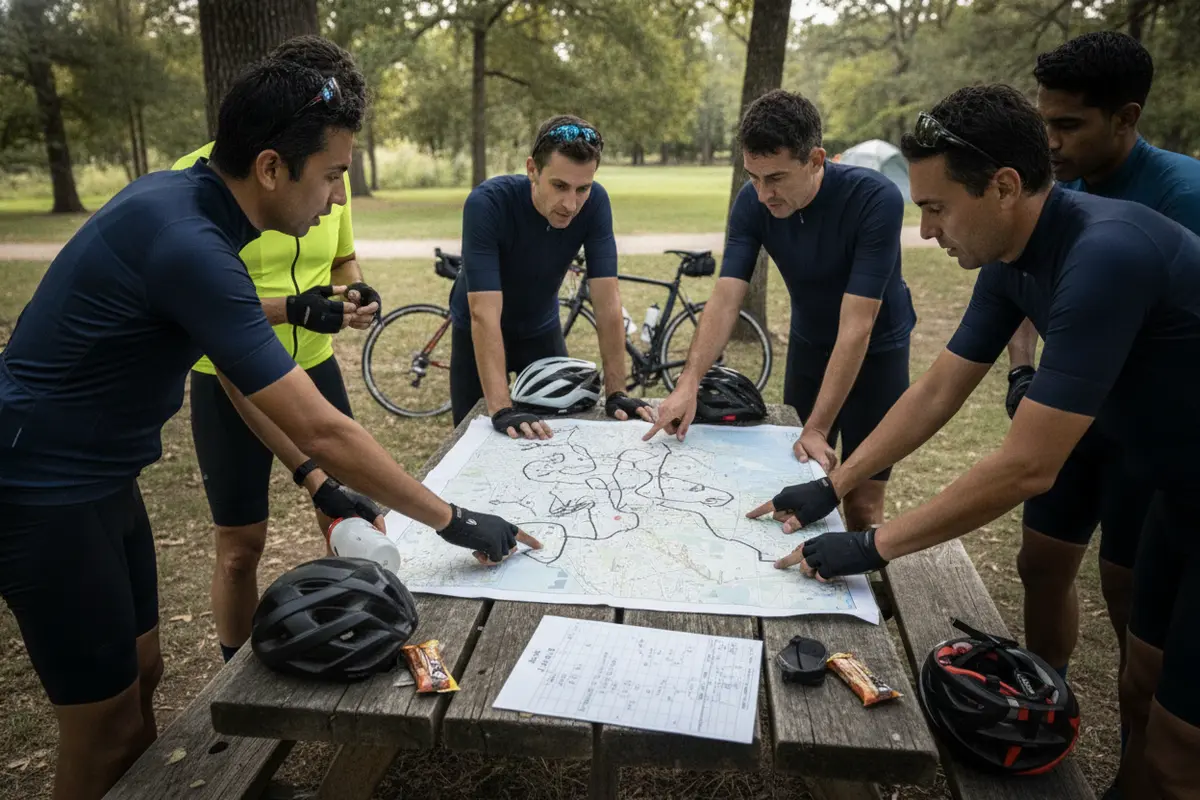
Schedule one planning conversation well before the event. Review the route information, the team’s draft order and the event-day instructions. If possible, plan a group ride or meet-up that lets teammates get comfortable riding together. A group ride can also uncover practical questions early: how people communicate while moving, how they prefer to regroup, and what pace feels comfortable.
Each rider should check that their bicycle is a suitable fit for them and that they know how to use its basic features. If someone is renting a bicycle, review the organization’s guide to renting a bike for a long ride as a starting point, while confirming the rental details that apply to their event. For a rider working toward a first longer distance, the first 50-mile cycle guide offers another resource to discuss as part of an individual preparation plan.
Keep the tone supportive. Avoid comparing teammates’ training or pushing someone to increase distance just to make the relay math look tidy. If a segment no longer feels appropriate, adjust it. A team is better served by a clear, safe revision than by sticking rigidly to an old plan.
A simple preparation timeline helps turn good intentions into specific tasks. Several weeks out, confirm the relay rules and have each rider choose a realistic segment. Next, share route and event-day information, check bikes and agree on how teammates will travel between any approved meeting points. In the final days, reconfirm the rider order, contact details and weather-appropriate gear, and make sure everyone knows where official updates will appear. Keep the timeline adaptable to the event’s schedule and each person’s needs; it is a reminder list, not a training prescription.
After a practice ride or planning meeting, ask each teammate one practical question: what still feels uncertain? One rider might need to understand the handoff sequence, while another may be unsure about transportation or where to find event instructions. Collecting these questions gives the team time to get accurate answers instead of discovering the gaps during the event.
How should your team handle handoffs?
A handoff is a people-and-logistics task as well as a riding task. Before the event, confirm what the organizer allows and identify how your team will know that the next rider is ready. Do not assume riders can transfer a bicycle or join the route at any point. Follow the event’s specific instructions.
Agree on simple steps: the outgoing rider checks in with the point person, the next rider confirms they are ready, and the team updates its status in the agreed channel. If the handoff depends on timing, set expectations that estimates may change. Traffic, a slower segment or a rest can shift arrival times, so the team should avoid treating a rough estimate as an exact appointment.
Have a fallback. Decide what happens if someone cannot be reached, arrives late or needs to stop. The backup might be to wait at an approved meeting location, move a later rider forward if event rules allow it, or contact event support for guidance. The right option depends on the ride, so clarify it before the start.
Make the handoff plan usable in real conditions. Write the approved meeting point in the team document, note who is responsible for checking messages and agree on a short update such as “arrived,” “ready” or “need help.” A brief, consistent message is easier to understand than a long explanation when riders are busy. Tell everyone what to do if there is no reply after the agreed check-in window; the response should be to follow the event’s directions and seek support, not to improvise a new route.
What can go wrong, and how can the team respond?
A plan is useful when it helps people respond calmly to changes. Consider common scenarios in advance without assuming they will happen.
- A rider is delayed: use the agreed check-in channel, give the rider time to respond, and follow the event’s instructions rather than sending teammates onto an unapproved route.
- A rider feels unwell or too tired to continue: put their wellbeing first, stop or seek event support as appropriate, and revise the relay plan only within the event’s rules.
- A bicycle needs attention: follow the event’s mechanical-support guidance and let the team point person know that the schedule may change.
- A phone battery runs low: identify a backup contact method or a designated teammate who can pass along updates.
- The route or conditions differ from expectations: follow official directions, and do not improvise a shortcut or change that could affect safety or event participation.
These are planning prompts, not medical or mechanical instructions. For questions about route rules, event support or a particular rider’s readiness, contact the event organizer or an appropriate professional before ride day.
How can you make the experience welcoming for everyone?
Teams work best when people feel included in decisions. Share information in a format teammates can use, check whether the timing and travel arrangements work for everyone, and ask what support would help each rider take part. Make it normal to request a change to a segment or to ask a question.
Not every contribution happens on the bicycle. A teammate may help organize the schedule, encourage supporters, share the team’s story or keep everyone informed. Recognize those contributions alongside the riding. This community-first approach fits the spirit of Bike to the Beach, which describes itself as a community that extends beyond a single ride day. Learn more about the organization’s local mission through Why We Bike and its community impact stories.
If your team is riding to support autism and disability organizations, explain that purpose in language that is respectful and specific. Avoid speaking for people or families whose experiences are not yours. You can direct curious supporters to the organization’s guide to supporting an autism bike ride to learn more about the cause and ways to participate.
Inclusion is also practical. Ask whether meeting times, transportation plans and team communications are workable for everyone, rather than assuming that a single arrangement suits the whole group. Share key instructions in writing as well as during a conversation, and give teammates time to ask follow-up questions. If someone needs a different role or a change in their riding segment, treat that request as part of planning the team—not as a problem to be solved at the last minute.
How can a relay team connect riding and fundraising?
Make the fundraising message part of the team’s shared story, not an afterthought. Tell supporters why the group chose to ride, what each person is taking on and how people can follow along. Keep messages honest and consistent. If teammates are sharing separate fundraising pages or communications, agree on basic language so supporters understand that you are working toward one shared effort.
Give different teammates manageable roles. One person might draft a team update; another could share it with their network; another could thank supporters and post a ride-day note. Ask before sharing someone else’s story or photo. If your group includes a workplace or community team, decide together which channels feel appropriate and respect anyone who prefers not to fundraise publicly.
For a team considering a Bike to the Beach event, the bike fundraising events guide can help connect ride participation with fundraising. Focus on clear communication, personal invitations and gratitude rather than treating every conversation as a pitch.
One Cycling UK forum discussion, “Bike advice for charity event,” describes a rider preparing for a 50-mile charity ride and thinking about a bike for training. It is a useful reminder that teammates may be at different stages of preparation; use your event’s own guidance and each rider’s needs to shape the plan.
Find a Bike to the Beach ride that fits your team
Frequently Asked Questions
Can beginners join a charity bike ride relay team?
That depends on the event’s participation rules and the distance a rider plans to cover. A relay can let teammates share a longer route, but each person should choose a segment that feels realistic and prepare for it. Review the event details and ask the organizer about questions that affect eligibility or logistics.
How many riders should be on a relay team?
There is no universal team size. Use the event’s rules, your team’s availability and the route plan to decide. A smaller team may mean longer turns for each rider, while a larger team may need more coordination and transportation planning. Confirm any team-size requirements with the event organizer.
Should all relay teammates train together?
No. Riders may have different schedules, experience and planned distances. Individual preparation should match each rider’s segment. A shared ride or planning meet-up can help teammates practice communication and get familiar with the group, but it should not replace preparation suited to each person.
What should a relay team do if its plan changes on ride day?
Follow official event directions first. Use the team’s agreed contact method, check in with the event organizer or support team when needed, and make only changes allowed by the event. Put a rider’s wellbeing ahead of preserving the original schedule.
Ready to plan your team ride?
A relay plan does not need to be complicated. Make the format clear, agree on fair segments, prepare for handoffs and leave room to adapt. Then let each person contribute in a way that makes the shared effort feel like a team achievement.
Explore the New England ride and start planning together
With a thoughtful plan and open communication, your team can focus on riding together and supporting the cause that brought you to the start line.