

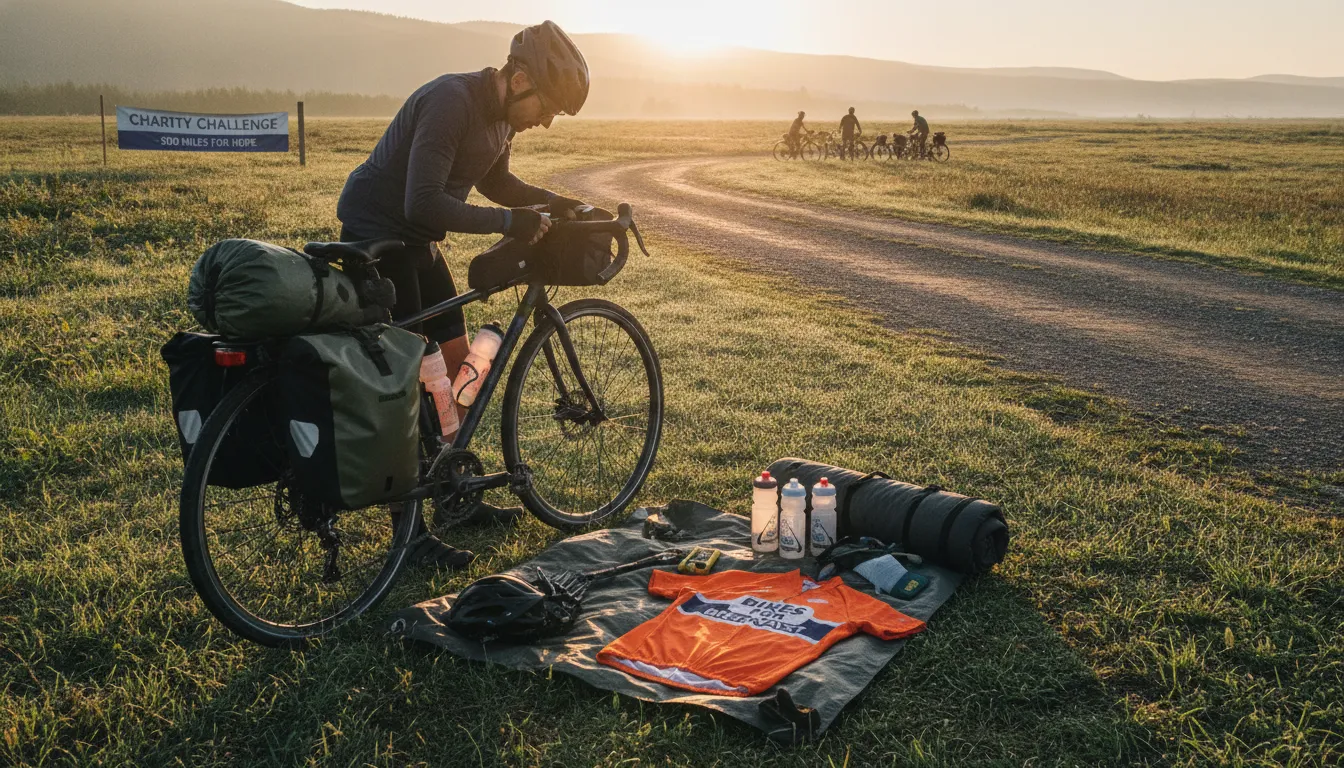
What to Pack for a Charity Bike Ride: Day-of Checklist
Start packing today with our charity ride essentials checklist. Get guidance on clothing, nutrition, tools, safety, and fundraising gear for your event.
Crossing a beach finish line requires stamina, not a bicycle packed with heavy tools. Most riders pack far more gear than they actually need on ride day.
What to pack for a charity bike ride includes moisture-wicking cycling clothes, a compact repair kit, a personal ID, and mandatory safety gear. Because fully supported rides provide rest stops with food and water every fifteen miles, you do not need to carry heavy food packs. Instead, focus on packing light clothing layers to handle changing afternoon weather, a spare tube, and tire levers for simple roadside fixes. Keeping your bicycle gear light allows you to enjoy the scenic route, make new friends, and stay safe during the ride. Carrying only these vital supplies keeps you comfortable while raising funds for local disability programs.
Ready to ride? Register for your event today and start training with confidence.
What Your Charity Ride Provides (So You Pack Lighter)
When planning what to pack for a charity bike ride, you might feel the urge to pack your whole garage. But one of the best parts of a supported ride is how much gear the event carries for you. Knowing what the event gives you helps you pack light.
Fully stocked rest stops appear about every 15 miles along the route with water, sports drinks, and snacks. Roving mechanics drive the course and can help with minor repairs or even fast bike swaps. The event also provides a required blue safety band and turn-by-turn maps through the Ride with GPS app. Use the table below to plan what stays home and what comes with you:
| What the Event Provides | What You Still Bring Yourself |
|---|---|
| Water and sports drinks at rest stops every 15 miles | Two water bottles (refilled at each stop) |
| Snacks and nutrition at rest stops | Your preferred energy bars and gels |
| Roving mechanics and bike swaps | Spare tube, tire levers, mini pump, multi-tool |
| GPS route via Ride with GPS app | Fully charged phone with the app installed |
| Gear bag transport to the finish line | Post-ride change of clothes in a dry bag |
| Basic first aid at rest stops | Personal medications and sunscreen |
Cycling Clothing and Weather Layers
Your clothes are key to comfort on a long ride. Pack padded cycling shorts to prevent chafing, a moisture-wicking jersey to stay dry, and cycling gloves to protect your hands from road vibration. Avoid cotton, which traps sweat and makes you cold.
Weather can shift quickly during an all-day event. Start with arm and leg warmers for cool morning temperatures and peel them off as the day warms. Pack a lightweight wind or rain jacket that fits in a jersey pocket in case of a sudden storm. A light mesh cycling cap under your helmet shields your eyes from rain or sun. For more gear recommendations, check our long bike ride checklist.
If your ride falls on a hot day, choose loose, lightweight, and light-colored clothing. The CDC advises athletes to wear light colors to reflect sunlight and stay cool during outdoor events. Apply sunscreen before the start and reapply at rest stops.
Nutrition and Hydration on the Route
A long ride burns significant fuel. Plan to drink one water bottle per hour and refill at every rest stop. Adding electrolyte tablets to one bottle replaces salt lost through sweat. Do not wait until you feel thirsty, especially in high heat.
Eat a carbohydrate-rich meal the night before and a light breakfast you know works for your stomach on ride morning. During the ride, pack easy-to-digest snacks such as bananas, fruit chews, and energy bars. Rest stops provide water, sports drinks, and snacks every 15 miles, but always carry backup fuel in your jersey pockets in case a mechanical issue keeps you on the road longer than expected.
Bike Repair Kit and Personal Safety Gear
Even with roving support, carry a small repair kit under your saddle. A basic flat kit includes a spare tube that fits your wheels, two or three tire levers, a mini pump or CO2 inflator, and a bike multi-tool. Practice using these tools before ride day so a flat does not catch you off guard.
Before you head out, inspect your bike with the ABC Quick Check: Air (inflate tires to the sidewall pressure), Brakes (levers should not pull closer than two finger-widths from the bar), Cranks and chain (check for rust or gunk), Quick releases (closed and pointed toward the back), and a final visual Check.
Carry your driver’s license or ID, a health insurance card, and a credit card or cash. Wear the safety bracelet provided at check-in and download the Ride with GPS app on your fully charged phone. A small seat pack keeps tools accessible, while a handlebar bag stores snacks and items you need to reach fast.
Fundraising Materials and Team Spirit
Most fundraising happens online before event day, but carry a few day-of items. Bring a small notepad and pen to record any last-minute pledges and keep it in a waterproof bag to protect against sweat or rain. A paper list of your donors can provide motivation during tough stretches of the ride.
If you ride with a team, keep gear light. Wear matching jerseys for visibility and team photos. Pack small items such as a light banner for finish-line photos or branded stickers to share with other riders. Heavy extras can travel in the gear bag to the finish. For pledge sheets, trackers, and email guides, visit the fundraising resources page.
What Should You Do the Night Before a Charity Ride?
Preparation starts the evening before. Lay out all your gear using a checklist so nothing is forgotten in the morning. Charge your phone and any bike lights. Eat a balanced meal with complex carbohydrates for sustained energy. Review the route map and note the location of rest stops. Confirm your start time and check the weather forecast to decide on layers. A calm, organized evening makes ride morning smooth and stress-free.
Frequently Asked Questions
What should I pack for a charity bike ride?
Pack moisture-wicking cycling clothes, a helmet, a spare tube, tire levers, a mini pump, a multi-tool, two water bottles, energy snacks, sunscreen, your ID, a health insurance card, a credit card, and a fully charged phone. Let the event provide food, water, and mechanical support along the route.
How much water should I pack for a bike ride?
Carry two water bottles on your frame. Refill both at every rest stop (about every 15 miles). Plan to drink roughly one bottle per hour of riding and increase that amount in hot weather. Adding electrolyte tablets to one bottle helps replace lost salt.
What clothing is best for a charity bike ride?
Padded cycling shorts, a moisture-wicking jersey, cycling gloves, and a CPSC-approved helmet are essential. Dress in layers with arm and leg warmers for cool starts and a lightweight rain jacket for unexpected weather. Choose light colors on hot days to reflect the sun, and always wear sunscreen.
Do I need to bring my own repair tools?
Yes, carry a minimal flat kit under your saddle: a spare tube, two or three tire levers, a mini pump, and a bike multi-tool. While roving mechanics cover the route, having your own tools lets you fix a flat in minutes without waiting for support.
Ready to Ride? Register Today
Packing for a charity bike ride does not have to be complicated. When you know what the event provides and what to bring yourself, you can travel light and focus on the ride and the cause. Bike to the Beach handles the route support, rest stops, and mechanical backup so you can enjoy every mile.
Ready to get started? Contact us on our sponsorship page or register for your ride today.