
Nonprofit Board Fundraising Through a Charity Bike Ride
Learn nonprofit board fundraising through a charity bike ride with clear roles, warm introductions, inclusive participation, and a local-impact plan.
A charity bike ride can give a nonprofit board a clear, shared way to turn relationships into meaningful support. The strongest effort does not depend on every board member becoming a salesperson or endurance cyclist. It starts with a thoughtful plan for how each person can contribute, from making introductions and sharing the mission to welcoming teammates and thanking donors.
Nonprofit board fundraising around a charity bike ride means organizing the board as a team of relationship-builders: define practical roles. Invite peers into a specific mission-led opportunity, track commitments with care, and offer meaningful ways to participate beyond riding or making a direct ask.
That approach respects individual strengths while giving the whole board enough structure to move together. It also makes the ride more than a one-day event, connecting shared effort with local autism and disability organizations. Start by clarifying what board activation should look like for your organization and how it differs from simply recruiting riders.
Explore a Bike to the Beach ride for your board or team and choose a participation path that fits your community.
What does nonprofit board fundraising look like around a charity bike ride?
Nonprofit board fundraising around a charity bike ride is more than asking each board member to recruit a few riders or share a donation link. It is a coordinated way for board members to use their relationships, credibility, and knowledge of the mission to invite broader participation. One person may ride, another may introduce a potential sponsor, and another may help tell the organization’s story to a workplace or community group. The goal is shared ownership, not identical assignments.
That distinction matters because a ride can become a convenient container for several kinds of support. Bike to the Beach combines cycling, fitness, charitable giving, and community events, so a board can connect people to the part of the experience that fits their interests. A board member who is not a cyclist can still open a door, thank donors, coordinate a team, or help a local partner be represented accurately. This makes the campaign more welcoming and gives the organization more than one path to engagement.
Board activation is different from generic team fundraising
Generic team fundraising often begins with a roster and a goal: recruit participants, share the page, and encourage everyone to raise money. Board activation starts earlier with role clarity. The board agrees on why the ride matters, which relationships each member can responsibly develop, and how staff will support those efforts. The board then turns its collective network into warm introductions, thoughtful invitations, employer conversations, and ongoing stewardship.
That structure also prevents a common problem in nonprofit board fundraising: uncertainty about where volunteer leadership ends and staff responsibility begins. Staff can provide the campaign materials, answer operational questions, coordinate the event, and protect the accuracy of impact stories. Board members can lend trust, context, and access to their networks. A simple written plan should identify who owns each next step so that enthusiasm does not become duplicated outreach or an unanswered handoff.
Connect the ride to local impact
The strongest invitation is specific without becoming emotional pressure. Bike to the Beach raises funds and awareness for local autism and disability organizations. Funds raised stay within the region where they are collected and support vetted local partners. A board member can explain that model plainly, then invite someone to learn more, join a team, make an introduction, or choose another way to contribute. For more context, readers can explore how Bike to the Beach works with local partners.
This approach reflects the organization’s larger identity: it is a community, not just an event. The ride may create the immediate reason to gather, but the board’s work is to build relationships that continue before, during, and after ride day. Measure progress by the quality of those relationships and the range of people welcomed into the mission, not only by the number of riders recruited.
How should a board define roles before the ride?
Start by assigning responsibilities, not by asking everyone to do everything. A clear structure helps board members choose a useful contribution and gives staff a dependable point of contact. It also makes it easier to welcome people with different schedules, abilities, and comfort levels. Participation may include individual riding, a corporate team, a relay team, or a virtual challenge. The board’s role is to connect those options to relationships and mission without turning fundraising into pressure.
| Board role. | Primary contribution. | Staff handoff. |
|---|---|---|
| Ride captain. | Coordinate commitments and next steps. | Confirm timeline and open questions. |
| Relationship lead. | Share approved mission context. | Protect story accuracy and consent. |
| Peer outreach lead. | Invite contacts through warm introductions. | Provide resources and follow-up. |
| Participation lead. | Surface access and format questions. | Confirm event support and options. |
- Choose a ride captain. This person keeps the board’s plan moving. The ride captain confirms the event timeline, shares registration and fundraising resources, checks that each role has an owner, and brings open questions to the staff partner. The captain does not need to be the strongest cyclist or the person who makes every donor ask. Their job is coordination and follow-through. After each board check-in, they should summarize decisions, next actions, and any handoff that needs attention.
- Appoint a story and relationship lead. This lead gathers approved language about the cause, the ride, and the local autism and disability organizations supported by participant fundraising. They help board members explain why the event matters in a personal, accurate way. They also protect the dignity and privacy of people represented in those stories. When someone expresses interest, the lead hands that contact to the appropriate person rather than keeping every conversation centralized.
- Assign an employer and sponsor connector. Look for board members who understand local businesses, workplace giving, or corporate partnerships. Their first responsibility is to identify a warm introduction and clarify whether the organization may be interested in forming a team. Supporting an event element, or sponsoring the ride. The connector then passes qualified conversations to the staff partner, who can provide official details and handle next steps.
- Give peer outreach its own owner. This lead makes it easy for board members to invite friends, colleagues, and community contacts. They can provide a short message, a team-page link, and a choice of ways to participate. The handoff is simple: the board member asks permission to connect, the outreach lead follows up with useful information. And the contact can decide whether to ride, join a relay, try a virtual challenge, or decline.
- Name an accessibility and participation lead. This person listens for barriers before they become last-minute problems. They can collect questions about distance options, relay participation, virtual involvement, transportation, rest stops. Mechanical support, SAG vehicles, medical partnership, or rental coordination, then bring those questions to event staff. They should never promise an accommodation they cannot confirm. Their role is to make options visible and ensure that non-riding support is treated as meaningful participation.
- Pair the board with a staff partner. Staff should provide the approved fundraising materials, event information, partner context, and escalation path. The board owns relationship-building and agreed outreach; staff owns operational accuracy and follow-up. Set one shared place to record introductions, questions, commitments, and completed thank-yous. A short recurring check-in is enough if each role reports what moved, what is waiting, and who owns the next handoff.
Before outreach begins, review the role map together and invite members to claim roles that fit their strengths. That small step turns a broad fundraising expectation into a practical, shared plan.
How can board members make introductions without pressuring people?
The strongest board-led introductions begin with curiosity, not a request for money. A board member’s job is to notice where a relationship, mission, or shared interest may make a Bike to the Beach ride relevant, then offer a clear invitation. This approach respects the other person’s autonomy while giving them enough context to decide whether they want to learn more.
Start by asking permission before making the connection. A simple script can be: “I know you care about community health and inclusive opportunities. Our organization is connecting people with a supported charity bike ride that raises awareness and funds for local autism and disability organizations. Would you be open to a short introduction to our team. Or would you prefer that I send you information first?” The question gives the person two low-pressure ways to say yes, and an easy way to decline.
Use a warm introduction, not a surprise solicitation
If the person agrees, explain what will happen next. Ask whether they prefer an email introduction, a group conversation, or a direct link they can review privately. Then tell the staff or ride lead what the person is interested in, without overstating their commitment. For example: “Jordan is interested in the local impact and may want to understand team options. Please share the basics and let them decide if it is a fit.” That framing prevents the follow-up from becoming an unexpected donation appeal.
When writing the introduction, keep it short and donor-centered:
- State why you thought of the person, based on a real connection.
- Explain the opportunity in plain language, including whether you are inviting them to ride, join a team, volunteer, sponsor, or simply learn more.
- Share one accurate mission point, such as the event’s connection to local autism and disability organizations.
- Make the next step optional and specific.
A board member might write: “Alex, I would like to introduce you to Priya, who helps lead our Bike to the Beach team. I thought of you because you have supported inclusive recreation in the region. Priya can answer questions about the ride and non-riding ways to participate. No pressure at all; if this is not relevant right now, feel free to pass.” Once the introduction is made, let the recipient choose the pace. Do not send repeated reminders unless they ask for follow-up.
Make the opt-out part of the culture
Peer outreach works best when a decline does not damage the relationship. Board leaders can model this by thanking people for considering the invitation, recording a “not now” respectfully, and avoiding assumptions about future giving. Not every board member needs to make a direct ask. Some may open doors, share a mission story, thank donors, connect staff with a company, or help someone find a participation option that fits.
For additional planning context, review this nonprofit fundraising event guide, then tailor each introduction to the person’s interests and choice of involvement.
What accountability system keeps board fundraising supportive?
Accountability works best when it makes the next helpful action visible, not when it turns fundraising into a public ranking of board members. Around a charity bike ride, the board can create a shared rhythm that combines clear commitments, practical support, and genuine appreciation. That approach gives people room to contribute according to their relationships, skills, time, and comfort level.
Start by agreeing on what the board is responsible for and what staff will provide. Unclear division of responsibility between board members and paid staff is a recognized fundraising challenge. While a clear structure can show who is responsible for each part of the plan. Board fundraising guidance also emphasizes that members may contribute through a range of roles, not only by making direct asks.
Use a simple check-in cadence
At the launch meeting, each board member can choose a concrete commitment for the next check-in. One person might introduce the ride to a workplace leader. Another might invite a few peers to learn about the mission. Someone else might review a team page, thank donors, coordinate a relay conversation, or help identify an accessible way to participate. Record the commitment and the support needed, without attaching an invented dollar target or implying that every person must take the same path.
Between regular board meetings, a brief staff or ride-captain update can ask three useful questions: What action did you take? What response did you receive? What would help you move forward? The goal is to surface obstacles early. If a board member feels uncertain about language, staff can provide a short script, a story grounded in local impact, or a chance to practice the conversation. Training, scripts, and role-play can build confidence without asking anyone to perform as a professional fundraiser.
Make progress visible and gratitude specific
A shared tracker can record introductions made, conversations started, team members welcomed, employer connections explored, and donor thank-yous completed. These indicators recognize relationship-building and stewardship alongside gifts. They also give the board a fuller picture of momentum than a leaderboard alone. Peer accountability is most constructive when members encourage one another, share what is working, and offer help rather than compare personal capacity.
Close each check-in by naming contributions specifically. Thank the person who opened a door, the person who followed up thoughtfully, and the person who made participation more welcoming. After the ride, report back on what the board learned and how funds raised in the region support vetted local autism and disability partners. A supportive system keeps people connected to purpose, gives staff and volunteer leaders a shared plan, and makes the next invitation easier to accept.
How can boards make participation more inclusive?
Inclusive participation starts with a simple principle: no single format should be treated as the test of commitment. Some board members may want to ride the full route. Others may prefer a relay, a virtual challenge, a volunteer role, or a conversation that opens a door to a workplace partner. Each option can strengthen the board’s shared effort when expectations are clear and people are invited rather than pressured.
Begin by offering a menu of roles before asking anyone to sign up. Bike to the Beach supports individual riders, corporate teams, relay teams, and virtual participation. Regional rides also offer multiple distance options. A board can discuss different levels of time, preparation, and physical demand without labeling one choice as more meaningful than another.
Make room for different ways to show up
- Ride individually or with a team: A board member who enjoys cycling can participate directly. A corporate or nonprofit team can make the experience more social and share the work of fundraising.
- Choose a relay: Relay participation can let several people contribute to the same event without requiring one person to complete the entire route.
- Join virtually: A virtual challenge can give people who cannot attend in person a flexible way to participate. It can also include board members who live outside the ride region or have schedule constraints.
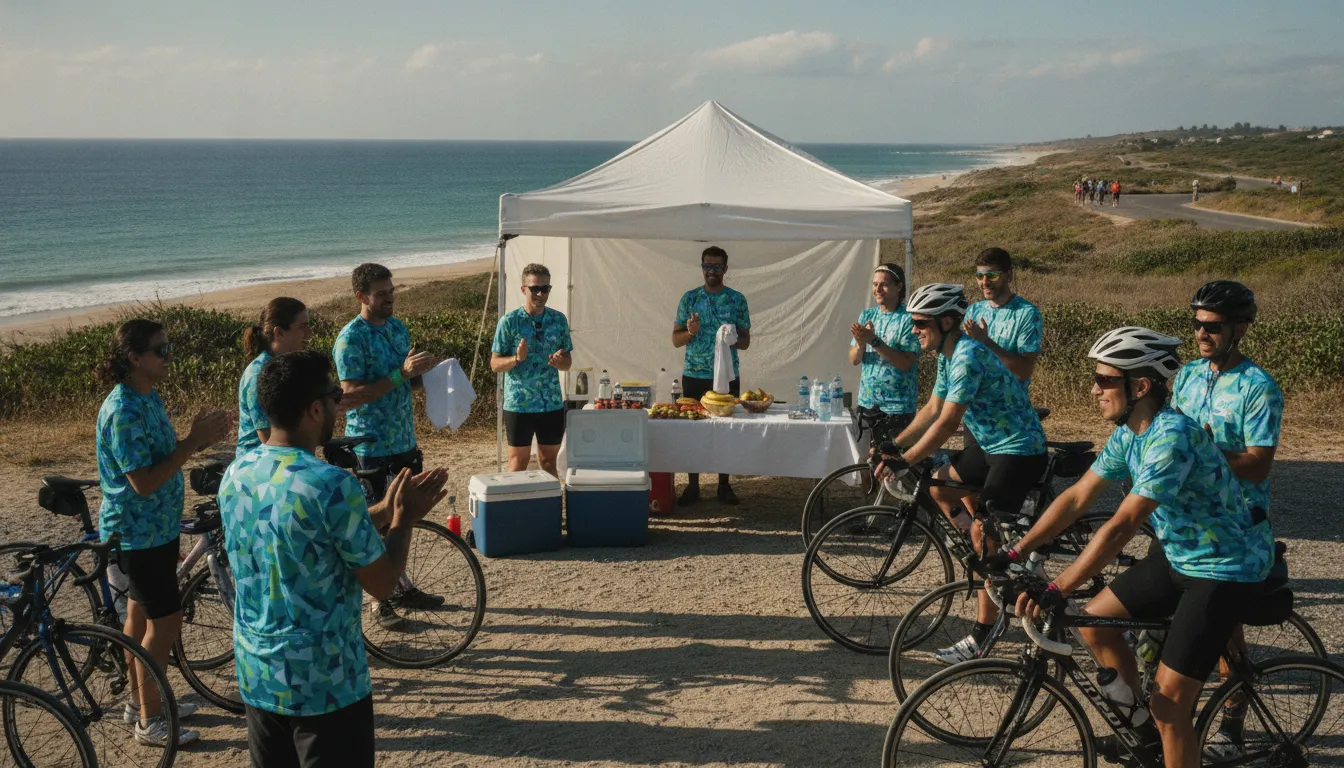
- Volunteer: Non-riding support matters. Board members can help at rest stops, welcome participants, support logistics, or volunteer at a charity bike ride.
- Make introductions: Someone who cannot ride may connect the organization with a colleague, family member, community group, or prospective employer partner.
- Invite employer support: A board member might explore team participation, sponsorship, employee matching, or another workplace contribution. For organizations ready to go further, review Bike to the Beach sponsorship options.
Ask about access before the event
Accessibility should be part of planning, not an afterthought. Ask each participant what would make the experience workable, then direct detailed questions to the event team. Topics might include route distance, transportation, rest stops, medical support, mechanical support, equipment, communication, and the needs of relay or virtual participants. Bike to the Beach event support includes rest stops, mechanical support, SAG vehicles, medical partnership, rental coordination. And transportation, but a board should still confirm which resources apply to its specific ride and role.
Use language that preserves choice: “Which option feels realistic and meaningful for you?” and “What support would help you participate?” Do not ask people to disclose more personal information than necessary. And do not assume that disability, caregiving, age, fitness, or schedule determines what someone can contribute. An inclusive board makes room for different forms of leadership, recognizes each contribution, and keeps the focus on building a welcoming community around local autism and disability impact.
How does a board connect fundraising to local impact?
Fundraising feels more meaningful when people can understand where their support goes without turning anyone’s story into a marketing prop. Before the board starts outreach, ask the nonprofit and its local partners which needs they are prepared to discuss publicly. What language they prefer, and whether a participant story has been shared with informed consent. The goal is not to present a simplified story of rescue. It is to help prospective supporters understand the work, the people involved, and the choices their contribution can help sustain.
That standard is especially important when a ride supports autism and disability organizations. Use identity-respecting, strengths-based language, and let people describe their own experiences whenever possible. Avoid implying that a donation “fixes” a person or that one event solves a complex community need. A board member can say, “This ride helps raise funds and awareness for local organizations providing services and support,” then direct the listener to the partner’s own information. That is more honest, and it gives the partner appropriate ownership of its mission.
Bike to the Beach offers a clear regional frame for this conversation. The organization combines cycling, fitness, charitable giving, and community events, with participant fundraising directed to vetted local partners in the region where it is collected. Those partners may provide services such as therapy, education, adaptive recreation, family support, sensory gyms, or social inclusion programs. Board members should use only the examples and descriptions the organization has confirmed for the relevant ride. If the board serves a regional nonprofit, explain that connection plainly rather than borrowing a national statistic or promising a specific outcome.
A short impact brief can keep every conversation consistent. Include the partner names, the type of work they do, the region served, approved language for sharing stories, and a link to learn more. The organization’s About page explains how Bike to the Beach works with local partners and can give supporters useful context before they decide whether to ride, give, volunteer, or introduce someone else.
Follow-up completes the connection. After the ride, thank donors and participants for the action they took. Share verified updates when partners make them available, and acknowledge what the board learned about the community’s needs. Do not manufacture a dramatic result to make the campaign feel successful. Track the quality of engagement as well as dollars: meaningful introductions, thoughtful questions, new volunteers, employer interest, and stronger relationships with local partners. That approach makes nonprofit board fundraising a continuing practice of stewardship, not a one-time appeal.
What should the board do in the final weeks and after the ride?
The final stretch is less about adding pressure and more about making participation feel organized, supported, and worthwhile. A board can help staff and riders finish well by confirming who owns each conversation, sharing timely reminders, and keeping the mission visible without overstating results.
Use the final weeks to remove friction
- Confirm roles. Revisit the ride captain, outreach, employer or sponsor, accessibility, and staff-partner assignments. Make sure every open question has a named owner and a clear handoff.
- Support personal outreach. Board members can make warm introductions, share approved messages, or follow up with people who already expressed interest. Invite rather than pressure, and make it clear that riding is not the only way to participate.
- Coordinate with staff. Ask what information is current before sharing logistics, fundraising guidance, or impact language. Staff can provide the approved facts, answer questions, and flag needs that the board should not try to solve independently.
- Prepare for an inclusive ride experience. Confirm that participants know about available options and event support. Depending on the ride, that may include team or relay participation, virtual participation, volunteering, or other ways to contribute.
A brief board check-in can focus on three questions: What is complete? Who needs help? What should supporters hear next? This keeps accountability practical while giving people room to contribute according to their role, schedule, and comfort.
Make ride day about welcome and stewardship
On the day itself, board members should be visible relationship-builders. Welcome riders and volunteers, connect people to staff, help recognize sponsors and partners, and make introductions when they are useful. If a board member is not riding, they might support a rest stop, volunteer, encourage participants, or help document approved stories and moments. The goal is to strengthen the community around the event, not to turn every interaction into another ask.
Close the loop after the ride
Thank participants, donors, volunteers, staff, and partners promptly. Share only verified fundraising and program information, then explain what the support makes possible through local partners. A charity ride impact report can help the board organize the results, open questions, and next steps in one clear update.
Finally, hold a short debrief while details are fresh. Record what helped people participate, where communication broke down, which roles were unclear, and what should change next time. Invite feedback from staff, riders, volunteers, and people who chose not to ride. Then offer a relevant next step, such as staying involved with the year-round community or exploring a Bike to the Beach ride. That follow-through turns a single event into a stronger foundation for future nonprofit board fundraising.
Explore registration options for your nonprofit board or team and choose a role that makes participation welcoming.
Frequently Asked Questions
What does a board member do in nonprofit board fundraising?
A board member can choose a role that fits their strengths. They might serve as ride captain, make introductions, thank donors, connect the organization with an employer or sponsor, or coordinate an accessible participation option. The board’s job is shared leadership, while staff partners provide event details, tools, and follow-through.
Does every board member have to ride in the charity bike event?
No. A strong board plan offers choices rather than treating cycling as the only meaningful contribution. Members can ride individually, join a relay, participate virtually, volunteer, support a team, make introductions, or help with employer and sponsor outreach. Ask each person to select a specific role they can fulfill consistently.
How can board members ask peers to support the ride without creating pressure?
Start with a personal, transparent invitation. Explain why the mission matters, describe the ride and available ways to participate, and ask whether the person would like more information. Give them room to decline. Avoid repeated asks after a clear no. Offer options such as joining a team, volunteering, or sharing the campaign instead of requesting a donation immediately.
How should a board measure success beyond the amount raised?
Track the commitments that make the campaign healthier: defined roles, completed introductions, follow-up conversations. New team or relay participation, inclusive options used, donor thanks, and lessons captured after the ride. Review both fundraising results and relationship quality, including whether participants understood the mission and felt respected throughout the experience.
What support should staff provide to the board?
Staff should clarify expectations, provide approved messages and fundraising tools, explain participation and accessibility options, coordinate event logistics, and keep the board informed of progress. A shared cadence for updates and coaching helps members act confidently without requiring them to become event or fundraising professionals.
Ready to explore a Bike to the Beach ride?
A charity bike ride can give your board a practical way to share responsibility, build relationships, and support local autism and disability organizations. Choose the participation path that fits your team, whether that means riding, joining a relay, taking part virtually, or helping behind the scenes. Explore a Bike to the Beach ride and get started with a plan your board can own together.