

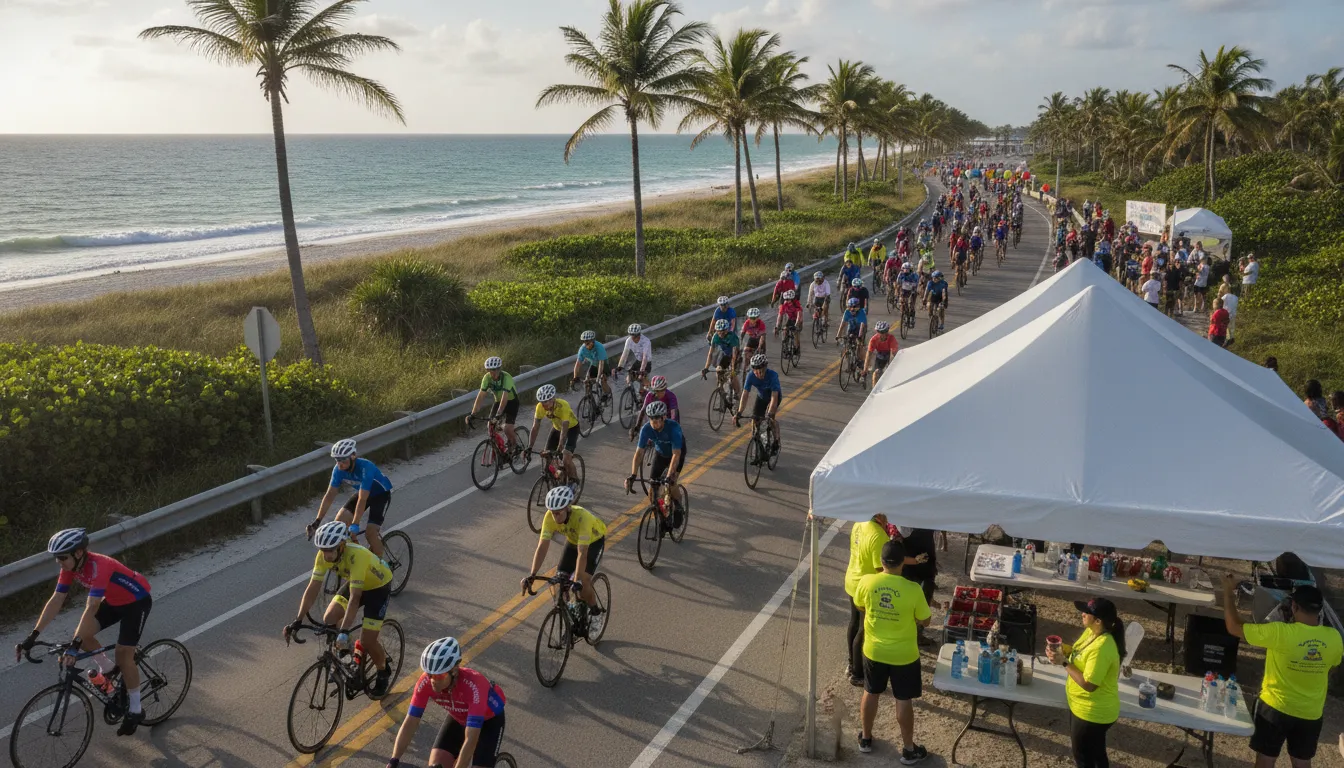
Florida Charity Bike Ride Guide
Get the Florida charity bike ride guide for routes, fundraising, rider support, and local impact. Register, donate, volunteer, or sponsor the Florida ride.

A Florida charity bike ride should give riders more than a route. Bike to the Beach Florida connects a supported South Florida cycling experience with local fundraising for autism and other disABILITIES programs. It gives riders, donors, volunteers, and sponsors a practical way to turn one day on the road into community impact.
Register for the Bike to the Beach Florida ride
Bike to the Beach Florida is a fully supported charity cycling event from Deerfield Beach toward Jupiter. Riders can choose 32, 62, or 100 mile options, commit to a fundraising minimum, and receive route support, rest stops, SAG vehicles, mechanical help, food, hydration, and community encouragement. Funds raised through the Florida ride support local nonprofit partners serving people with autism and other disABILITIES across South Florida.
This guide explains how the ride works, what makes it different from a standard cycling event, and how to get involved even if you are not planning to ride. For dates, pricing, and registration deadlines, always use the official Bike to the Beach Florida event page as the source of truth.
Florida charity bike ride: what makes this event different?
Bike to the Beach Florida stands out because the ride is built around local purpose, not just mileage. The event brings cyclists and supporters together to raise funds and awareness for autism and disABILITIES nonprofit partners that serve the region.
That local model matters. Many riders want their effort to connect to people, services, and organizations close to home. Bike to the Beach gives them a clear path: choose a distance, fundraise, ride with support, and help strengthen programs that serve families and individuals in the same community where the ride happens.
Local impact is the central story
The Florida ride is part athletic challenge, part fundraising platform, and part community gathering. Riders are not framed as rescuers. They are community members using a shared event to support inclusion, services, recreation, education, therapy, family support, and other local resources.
That tone is important for an autism bike ride. The goal is not pity. The goal is participation, visibility, and practical support for people with autism and other disABILITIES. Bike to the Beach keeps that mission visible while still making the event approachable for people who simply want a meaningful reason to train and ride.
A supported ride lowers the barrier to entry
Long rides can feel intimidating for new cyclists. Bike to the Beach helps by making the Florida event fully supported. Riders can expect planned rest stops, route guidance, hydration, food, mechanical support, and SAG vehicles. That structure gives casual riders and experienced cyclists more confidence before they commit.
The event also welcomes different roles. A supporter can ride, donate, volunteer, sponsor, start a team, or connect as a service provider partner. That makes the Florida charity bike ride useful for individuals, families, schools, employers, civic groups, and local organizations.
What route and distance options are available?
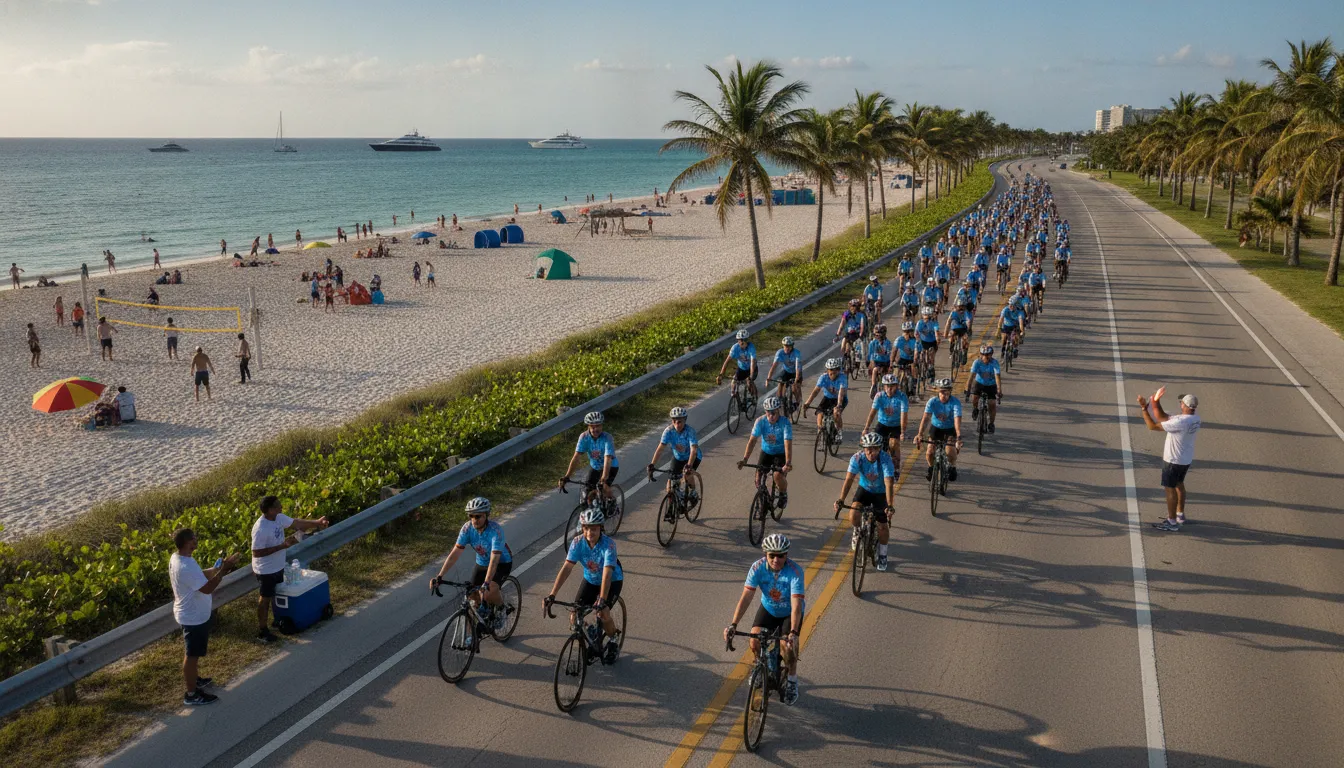
Bike to the Beach Florida offers multiple ways to ride South Florida. The current event information lists a Deerfield Beach to Jupiter route context, with 32, 62, and 100 mile options for different comfort levels and training goals.
Those choices make the event more inclusive. A century rider can take on a full day challenge. A metric century rider can still experience a serious endurance event. A shorter-distance rider can take part without needing the same training load as a 100 mile route.
| Distance. | Best fit. | What to expect. |
|---|---|---|
| 32 miles. | Newer charity ride participants or riders building confidence. | A meaningful South Florida ride with support and community energy. |
| 62 miles. | Riders ready for a metric century style challenge. | A longer endurance ride with rest stops, route support, and fundraising purpose. |
| 100 miles. | Experienced cyclists and century riders. | A full-day challenge from Deerfield Beach toward Jupiter with event support. |
Before choosing a distance, review the latest Florida ride details. Event dates, start times, lodging notes, route updates, and logistics can change as planning is finalized.
How to choose your distance
- Start with your current base. Choose the distance that matches the rides you can complete safely in training, not the distance that only sounds impressive.
- Consider your fundraising timeline. Longer rides often become easier to promote because supporters can follow your training story over several weeks.
- Think about your team. If you are riding with friends, coworkers, or family, choose a distance that keeps the group engaged and realistic.
- Check the official page. Use the live Florida event page for current start times, route notes, and registration information.
How is the ride supported from start to finish?
A fully supported Florida charity bike ride gives riders help before, during, and after the event. Bike to the Beach is designed so participants can focus on riding safely, connecting with the mission, and reaching the finish with the support they need.
Support is especially valuable in South Florida, where heat, humidity, traffic awareness, and hydration planning can all affect the ride experience. A strong event plan helps riders pace themselves and gives volunteers clear roles throughout the day.
Support riders can expect
- Rest stops. Planned stops give riders places to refill bottles, eat, regroup, and reset before continuing.
- SAG vehicles. Support and gear vehicles help riders who need assistance along the route.
- Mechanical support. Basic repair help can reduce the stress of flats, adjustments, and common bike issues.
- Route guidance. Marked routes and event communications help riders stay on track.
- Food and hydration. Event support helps riders manage energy, especially during longer distances.
This level of support makes the event more welcoming for first-time charity cycling participants. You do not need to be a professional cyclist to take part. You do need to choose an appropriate distance, prepare honestly, and follow the event safety plan.
Support also includes community energy
Rest stops and finish areas are not only logistics points. They are part of the culture of the ride. Volunteers, families, sponsors, and nonprofit partners help create the encouragement that makes a charity cycling event feel different from a solo training ride.
That is one reason supporters who do not ride are still essential. A volunteer handing out water or helping at check-in contributes to the rider experience and the fundraising mission. The event works because many roles come together.
What should riders know about fundraising?
Fundraising is part of participation in the Florida charity bike ride. Bike to the Beach lists a $250 rider fundraising minimum, separate from the registration fee. Riders should always confirm current fees, deadlines, and minimums on the official registration page.
The fundraising requirement can feel like a hurdle at first, but it is also what turns the ride into local impact. Every rider has a story to share: why they are riding, who they are supporting, and what the funds can help local partners do.
Simple fundraising plan for riders
- Set your timeline. Start early enough to make smaller, steady asks instead of one rushed push near ride day.
- Tell your reason for riding. A personal message usually works better than a generic donation request.
- Use your rider page. Share the official fundraising link so donors know the gift is connected to the event.
- Ask in layers. Start with close friends and family, then add coworkers, neighbors, teams, alumni groups, and local businesses.
- Thank donors publicly. Recognition keeps momentum going and helps others understand why the ride matters.
The Florida fundraising page is the best place to review current fundraising tools, minimums, and event-specific guidance.
Teams can make fundraising easier
Teams give riders a shared goal and a stronger story. A workplace team can connect the ride to employee engagement. A family team can honor a personal connection. A civic or school group can connect service with healthy activity.
Team fundraising also makes promotion easier. Members can share updates, celebrate milestones, and invite more supporters into the mission. That shared accountability helps riders stay active before event day.
How does a Florida charity bike ride create local impact?
A Florida charity bike ride creates impact when the dollars raised support local organizations and services. Bike to the Beach emphasizes that funds stay connected to the region where they are raised, helping local autism and disABILITIES nonprofit partners serve their communities.
That local focus is one of the clearest reasons to choose Bike to the Beach over a generic endurance event. The miles are memorable, but the purpose is what keeps riders, donors, and volunteers coming back.
What local support can make possible
- Family resources. Local organizations can use fundraising support to strengthen outreach, education, and navigation help.
- Therapy and wellness programs. Partner organizations may support services that help people build skills, confidence, and independence.
- Recreation and inclusion. Community programs can create more chances for people with autism and other disABILITIES to participate fully.
- Education and advocacy. Funds and visibility can help local partners reach more families, schools, employers, and community groups.
Specific partner programs can vary by region and year. The safe takeaway is that the Florida ride is designed to connect fundraising with local nonprofit work, not to send the story far away from the community that made it possible.
Why donors respond to ride-based fundraising
Donors often want a clear reason to give. A rider training for a specific distance provides that reason. The event date creates urgency. The route creates a visible challenge. The mission gives the gift meaning beyond the miles.
That combination makes a charity cycling event powerful for awareness. Each rider becomes a messenger for local autism and disability support, and each donor becomes part of the larger community effort.
Ways to get involved beyond riding
Bike to the Beach Florida is not only for cyclists. The event needs volunteers, donors, sponsors, service providers, nonprofit partners, and community advocates. If riding is not the right fit, there are still useful ways to help.
That flexibility is important for an inclusive community event. Some people have time. Some have professional skills. Some have business networks. Some can give financially. Some can show up on event day and help riders feel welcomed.
Options for supporters
- Donate to a rider or team. A gift helps participants reach their fundraising goals and supports the mission.
- Volunteer on event day. Volunteers can help with rest stops, check-in, route support, finish activities, and rider encouragement.
- Sponsor the event. Businesses can support the ride while connecting with a community-first cause.
- Start a corporate team. Employers can use the ride for wellness, CSR, team building, and local engagement.
- Become a service provider partner. Local organizations can build visibility and trust within the autism and disABILITIES community.
Supporters can begin with the main sponsorship page, the volunteer page, or the service provider partner page, depending on the role they want to play.
How should you prepare for ride day?
Good ride-day preparation starts weeks before the Florida charity bike ride. Build steady habits, check your bike, learn the route plan, and practice the nutrition and hydration you expect to use during the event.
South Florida conditions deserve respect. Heat and humidity can affect pacing, hydration, and comfort, especially for riders taking on longer distances. Training should include realistic rides, not only short indoor workouts.
Practical preparation checklist
- Train consistently. Add mileage gradually so your body has time to adapt.
- Practice hydration. Test water, electrolytes, and snacks before event day.
- Service your bike. Check tires, brakes, drivetrain, chain, and fit well before the ride.
- Review route details. Know your distance, start time, support plan, and rest stop expectations.
- Pack for comfort. Bring sunscreen, identification, flat repair basics, and any required event items.
- Fundraise early. Do not wait until the final week to ask for support.
Preparation is not only about performance. It also helps you enjoy the day and stay present for the community around you. A rider who arrives ready can focus on the mission, the route, and the people who made the event possible.
Choose your Florida ride distance and start your registration
Frequently Asked Questions
How do I sign up for the Bike to the Beach Florida charity bike ride?
Visit the Bike to the Beach Florida event page, review the current event details, and choose the registration option that fits your plans. Riders can join individually, start or join a team, or support the event in another role.
What distances are offered for the Florida ride?
Bike to the Beach Florida lists 32, 62, and 100 mile distance options. These routes help newer participants, metric century riders, and experienced century riders find a challenge that fits their training level.
Where does the Florida ride start and finish?
The Florida ride is described as a South Florida route from Deerfield Beach toward Jupiter. Current event information names the Wyndham Deerfield Beach Resort as the start and finish hub, but riders should verify details on the official event page before making plans.
Is there a fundraising minimum?
Yes. Bike to the Beach lists a $250 fundraising minimum for riders, separate from the registration fee. Because event requirements can change, confirm the current minimum, fee, and deadline on the live registration page.
Can I help if I do not ride?
Yes. You can donate, volunteer, sponsor, start a corporate team, become a service provider partner, or help promote the ride. Bike to the Beach Florida is designed for community participation, not only cycling.
Ready to take part in the South Florida ride?
Bike to the Beach Florida gives South Florida riders and supporters a clear way to move for local autism and disABILITIES impact. Whether you ride 32, 62, or 100 miles, volunteer at a rest stop, donate to a team, or sponsor the event, your role helps create a stronger community around the mission.
Register, donate, volunteer, or sponsor the Bike to the Beach Florida ride