

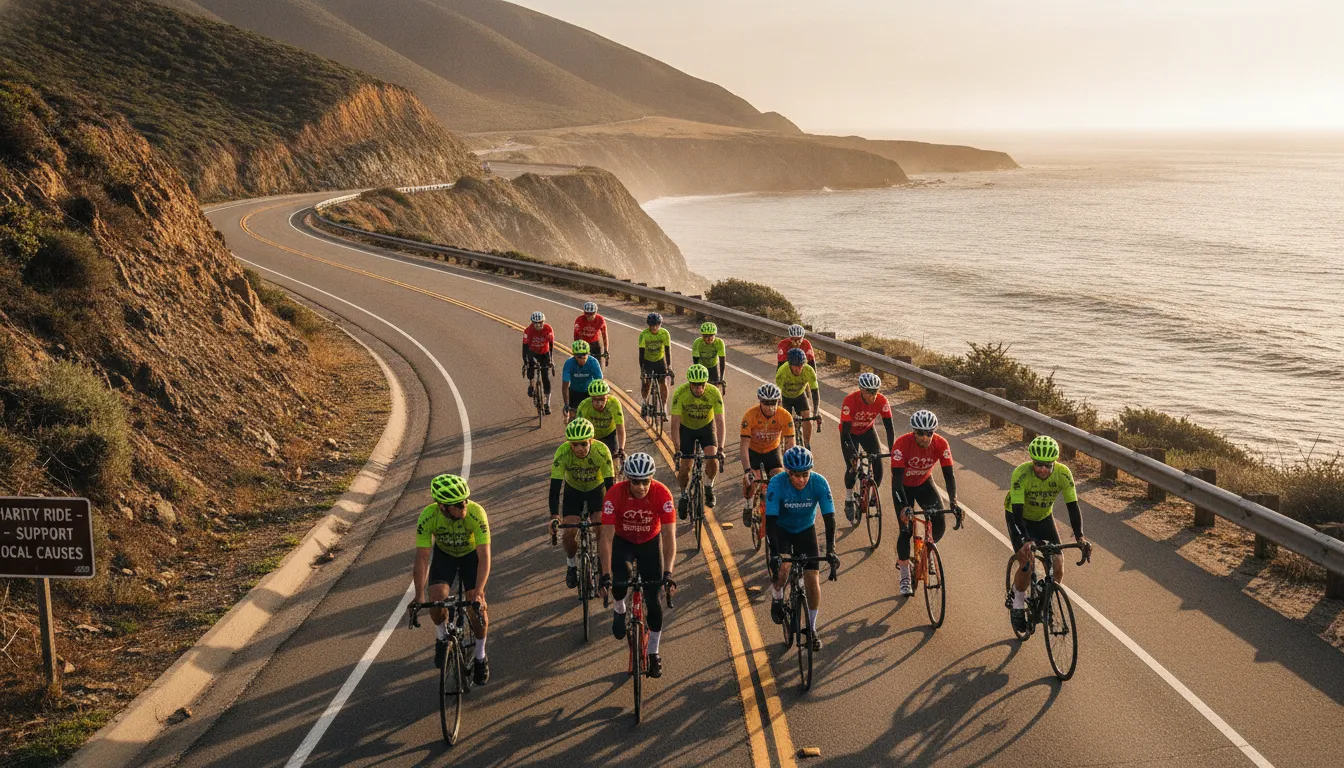
Charity Bike Ride Safety Tips: Essential Guide for First-Time Riders
Start today with these charity bike ride safety tips for first-time riders. Learn pre-ride checks, group etiquette, and hydration strategies for a safe event.
Focusing on safety lets you enjoy the ride and the impact you make for others. Crossing the finish line at a charity bike ride starts with a clear focus on your gear and your surroundings.
Smart charity bike ride safety tips begin with a snug CPSC-approved helmet and a well-serviced bicycle. While events like Bike to the Beach provide SAG vehicles and rest stops every 15 miles, your own planning is still your first line of defense.
You must master group riding rules, such as signaling turns and passing on the left, to protect yourself and your friends. The CDC notes that helmets are the best way to reduce head and brain injuries during a crash. Drinking enough water and following road rules lets you focus on the ride and the cause you support. These habits turn a hard physical task into a safe and great time for every beginner.
You may feel eager to clip in and start your trip toward the beach. However, your safest ride starts long before you reach the starting line with a few key gear checks. Mastering the Pre-Ride Safety Checks Every First-Timer Should Know will give you the peace of mind to enjoy every mile. This key planning begins with:
Charity Bike Ride Safety Tips: Pre-Ride Safety Checks Every First-Timer Should Know
Your first big ride is a major milestone. Staying safe on the road starts long before you cross the start line. Following key charity bike ride safety tips helps you avoid mechanical issues and keep your focus on the cause. A few minutes of prep can save you from a long walk back or a call for help. You should start with a basic look at your gear to make sure everything is in top shape for the miles ahead.
The ABC Quick Check
The ABC check is the simplest way to find small problems before they become big risks. First, check your air. Squeeze your tires to make sure they are firm and have no cracks or cuts. Next, test your brakes by pulling the levers. They should stop the wheels fast without touching the handlebars. Finally, look at your chain. It should be clean and move smoothly when you spin the pedals. These small steps are a core part of how you prepare for your charity ride safely each morning.
Many riders also use a quick test ride to check for odd sounds or loose parts. If your gears skip or your brakes squeak, it is best to fix them before the group sets off. A smooth bike is a safe bike, and a clean chain helps you ride well. If you are new to long rides, follow a 50-mile training guide to learn more about bike care. Taking care of these basics keeps the ride fun for everyone in the pack.
Proper Helmet Fit and Safety
A good helmet is your most vital piece of safety gear. Bicycle helmets reduce the risk of head and brain injuries during a crash. To get the best protection, you must use a helmet that meets safety standards. Look for a CPSC sticker inside to be sure it is a safe choice. A helmet that fits well will not move if you shake your head. It must sit flat on your head and not tilt back or too far forward.
You must also check how your helmet sits on your face. A helmet should sit right above your eyebrows and stay tightly buckled while you ride. If the straps are loose, the helmet can slide off in a fall. Make sure the side straps form a V-shape under your ears. The chin strap should be snug enough that you can only fit one or two fingers under it. These steps ensure your gear works just as it should when you need it most.
Essential Gear to Pack
Even with the best prep, flats and minor issues can still happen. You should carry a small kit with a spare tube, tire levers, and a mini-pump to fix a flat on the go. Most riders put these items in a small bag under the seat. Having your own tools means you can get back on the road fast without waiting for a support van. It is also wise to pack a small first-aid kit for scrapes or cuts. Being ready for these small snags is a key part of your safety plan.
Do not forget to bring your ID and a cell phone for any needs. You should also carry a bit of cash or a card in case you need to buy extra snacks or a drink. A fully charged phone is helpful for finding your way or calling for support if your bike has a major break. While events like Bike to the Beach offer great support, having your own gear builds confidence. Packing the right items helps you stay safe and enjoy the local impact of your ride.
Mastering Group Riding Etiquette and Communication
Riding in a pack is one of the best parts of a large event. It allows you to save energy and meet new people. However, moving in a group requires a high level of trust and clear talk. When you ride close to others, your actions can affect the safety of everyone around you.
You must stay steady and make sure those behind you know what is coming. Following the “9 Best Practices for Group Rides” from USA Cycling helps riders act for the good of the whole group. This simple code ensures that every person stays safe from the start line to the beach finish.
Use standard hand signals
Hand signals are the main way to talk to other cyclists and drivers. You must use them before you make any move. Using these signs well before a turn gives people enough time to react. The most common signals include:
- Left turn: Extend your left arm straight out to the side.
- Right turn: Bend your left arm up at the elbow or point your right arm out.
- Slowing: Place your left hand behind your back with your palm facing down.
| Signal | Arm Position | What It Means |
|---|---|---|
| Left turn | Left arm straight out | Turning left or moving left |
| Right turn | Left arm bent up at elbow | Turning right or moving right |
| Slowing / stopping | Left arm down, palm back | Reducing speed or stopping |
| Hazard | Point toward hazard | Obstacle in the road ahead |
If you are coming to a full stop, you can also shout “stopping” to warn the pack. These charity bike ride safety tips for beginners are vital for preventing rear-end crashes in a tight line of riders. Keeping the pack informed is a key part of charity bike ride safety tips.
Point out road hazards
Riders at the front of the pack are the eyes for everyone else. They have the best view of the path ahead. If you are leading, you have a job to do. You must point out risks like holes in the road, loose rocks, or glass. If you see a hole on the right, point your right hand toward the ground in that spot.
Short shouts help as well. Yelling “hole,” “sand,” or “tracks” makes sure that even riders a few rows back hear the warning. Being alert for these dangers is vital because many crashes occur away from big crossroads. In fact, bicycle safety data shows that a large share of fatal crashes happen on open road sections. By calling out risks early, you give your fellow riders the space they need to steer clear safely.
Respect the rules of the pack
Good habits make the ride better for all. Here is the code every charity rider should follow:
- Pass on the left. Before you move past another rider, call out “on your left.” This prevents them from swerving into your path.
- Avoid overlapping wheels. Keep your front wheel behind the rider in front. If you overlap and they dodge a hazard, you will crash.
- Hold your line. Ride in a straight, steady path. Sudden left-right movements cause chain-reaction crashes behind you.
- Communicate everything. Call out “car back,” “hole,” “sand,” and “stopping.” The pack moves safely when everyone knows what is ahead.
- Pull at the front, then drift back. Take your turn leading, then ease off and let the next rider take over. Do not surge or slow down abruptly.
By staying steady and following these simple steps, you help the whole group enjoy a safe and fun ride. When everyone follows the code, the ride is smoother and more fun for everyone involved. This sense of shared duty is what makes charity rides special.
Hydration and Nutrition Strategies for Long Charity Rides
Safe cycling starts with fueling your body. On a long charity ride, you need a steady stream of energy and fluids to stay sharp. Poor fueling can lead to “bonking.” This is when your energy drops and your focus fades. This creates risks for you and those near you. Following a simple plan for eating and drinking helps you stay safe and strong until you reach the finish line.
Master a steady drink plan
One of the best charity bike ride safety tips for beginners is to drink before you feel thirsty. If you wait until you are parched, you are likely already low on fluids. Being dry leads to tired legs and slow reaction times. Most riders should carry two water bottles and aim to sip every 10 to 15 minutes. This habit keeps your body steady and your mind clear on the road.
Weather plays a huge role in your fluid needs. According to the CDC, heat can quickly drain your energy. High heat affects how you ride and stay safe. Proper hydration, including the use of electrolytes, is vital to prevent cramping during long rides in hot weather. These minerals help your muscles work well. They keep you from locking up when the sun is high. You should refill your bottles often to stay safe.
Refuel at every rest stop
Bike to the Beach makes fueling easy by placing rest stops every 15 miles along the course. These stops provide hydration, food, and even bike help. Aim to stop and eat a small snack at each one. Foods like bananas, bread, or energy bars give you the fuel you need. They are easy on the stomach. Eating small bits often prevents sudden energy crashes. This helps you avoid wobbles or mistakes in a group.
Avoid the dreaded bonk
A “bonk” happens when your body runs out of fuel. When this occurs, you may feel dizzy, weak, or confused. This is a major safety concern when you prepare for your charity ride safely. To avoid it, eat a mix of carbs and protein all day. Do not try new gels or foods on the day of the ride. Stick to what worked during your training. This keeps your energy high for the full ride.
How SAG Support and Mechanical Assistance Keep You Safe
One of the top charity bike ride safety tips for new riders is to know your support team. You do not have to fix every bike issue on your own. At Bike to the Beach, we use a fully supported bike ride safety features system. This includes SAG vehicles and bike pros who help you on the road. This care lets you focus on the ride and the cause.
The role of SAG vehicles
SAG stands for Support and Gear. These vans and trucks patrol the whole route to keep you safe. They carry radio gear so they can move fast when a rider needs help. If you feel too tired to finish or have a big bike problem, a SAG vehicle will give you a lift. The Centers for Disease Control and Prevention notes that a plan for road issues helps prevent crashes. Our SAG teams act as your safety net from the start line to the beach.
Each rider gets a blue emergency bracelet. This band has contact info that helps teams find you fast. We also use the Ride with GPS app. It gives you turn-by-turn paths so you stay on the right road. If you get lost or stuck, the SAG team is just a radio call away. They are ready to help with gear, water, or a ride to the next stop.
Help for bike problems
Bike issues can happen to anyone. Our teams provide three levels of help for your gear. First, we help with small tasks like seat height or loose bolts. Second, we fix mid-level problems like a flat tire. If you have a flat, move to the side of the road and signal for help. It is vital to move away from cars to stay safe. Most bike deaths on the road happen away from corners where cars go fast.
For big problems, we offer major support. This can include a bike swap or moving your bike to the finish line. We have bike pros at every rest stop. These stops are about every 15 miles along the path. They have the tools and parts needed to get you back on your wheels. Knowing this help is near makes the ride much less stress for a first-timer.
When to use support
You should use SAG support if you feel pain or very weak. Do not push through a hard injury. It is better to take a ride in a van than to risk a fall. Our goal is to make sure every rider reaches the beach finish in a safe way. The support team is there for you, so do not be shy about asking for a hand. They want to see you win and help the community too.
Road Awareness and Visibility: Sharing the Road Safely
Safe riding starts with being easy to see. When you share the road with cars, you want drivers to spot you right away. Each year, nearly 1,000 riders die in the US from crashes involving cars. You can lower your risk by using bright gear and lights. These small steps make a big change in how drivers act around you.
Visibility day and night
Lights are not just for night rides. Using a white light on your front and a red light on your back helps you stand out in the sun too. Bold colors help drivers see your form from far away. When you use lights and bright shirts, you tell drivers exactly where you are on the road. This helps everyone stay safe during a long ride.
- Use a flashing red light on the back of your bike.
- Wear a neon vest or shirt to stand out in traffic.
- Check that your lights are charged before you start.
- Put strips that shine back on your shoes or pedals.
Our charity bike ride safety tips for beginners cover all the gear you need to feel ready. Good gear lets you focus on the cause and the group around you. These items are key if you start your ride early or finish late in the day.
Constant focus and road laws
Many people think that most bike crashes happen at big turns. But facts show that about 59% of bike deaths happen on roads away from intersections. On straight roads, cars may move at high speeds. Lower speed limits help give both you and drivers more time to act according to US safety reports. Always stay sharp, even when the road looks clear and easy.
Each year, about 120,000 people go to the hospital for bike crash injuries. To stay safe, you must follow all road laws. This means you should stop at red lights and stay in your lane. Riding in a straight, steady line makes it easy for drivers to know what you will do next. This clear path keeps the whole group safe as you head toward the finish line.
Safety in the door zone
When you ride past parked cars, watch out for the “door zone.” This is the space where a car door might swing open without warning. If you ride too close, you could hit a door and fall into the road. Try to keep a few feet of space between your bike and the line of cars. Look ahead and check the windows of parked cars to see if anyone is inside.
Being alert for small signs can save you from a bad fall. Look for tail lights that just turned on or smoke from a tail pipe. These signs tell you that a car is about to move or someone is about to get out. Staying aware of these details is a key part of road safety. It helps you keep your mind on your goal while you stay out of harm’s way.
Essential Safety Tips for First-Time Charity Riders
Your first charity bike ride is a big step. It is normal to feel some nerves before you start. But you are not alone on the road. These events focus on community and shared impact. When you follow basic charity bike ride safety tips for beginners, you can focus on the cause instead of your gear.
Ride at your own pace
One common mistake is trying to keep up with faster riders. Some cyclists go at a high speed, but you should stick to a pace that feels safe. Riding too fast can lead to tired legs and poor choices. Join a group that matches your skill level to stay safe. This helps you save energy for the later miles. It also keeps the road predictable for everyone else.
Use tools and support
You do not have to find your own way. Most rides use tools like Ride with GPS to give you clear directions. Trust the route signs and stay on the path. If you have a flat tire or feel too tired to go on, look for help. Bike to the Beach uses fully supported bike ride safety features like SAG vehicles. These SAG (Support and Gear) vehicles patrol the route to give you a lift or fix your bike if needed.
Safety on the road
Clear talk is the best way to avoid a crash. Point to road hazards like glass or holes. Use hand signals for every turn and stop. Every rider at our events gets a blue emergency contact bracelet. Wear this at all times so staff can help you in a crisis. This small step makes sure you get the right care fast. Remember that bicycle helmets reduce the risk of head injuries if you do fall.
Frequently Asked Questions
How often should I stop for water and rest during a charity ride?
On a ride like Bike to the Beach, rest stops are usually every 15 miles. These stops give you water, sports drinks, and snacks to keep your energy high. You should drink before you feel thirsty and fill your bottles at every stop. According to Bike to the Beach, using electrolytes can help prevent muscle cramps on hot days. Staying on top of your fluids is the best way to finish strong.
What should I do if my bike breaks down during the ride?
If you get a flat tire or have another bike problem, signal to others and move to the side of the road. You can use your own tools or wait for a Support and Gear (SAG) vehicle to help. As stated by Bike to the Beach, support teams can handle small fixes or even give you a new bike if yours cannot be fixed. This ensures every rider can safely reach the finish line.
How do I make sure my bike helmet fits the right way?
You must wear a helmet that is approved by the CPSC. To fit it right, make sure it sits flat on your head just above your eyebrows. It should be buckled tight so it does not move while you ride. According to the CDC, a good helmet helps a lot to lower the risk of head and brain injuries if you have a crash.
What does 2 fingers down mean to bikers?
When a cyclist points to the ground with two fingers, they are warning those behind them of a hazard on the road. This signal usually points out things like potholes, gravel, or glass that could cause a fall. By giving this quick warning, riders help the whole group move safely around danger without needing to stop. It is a vital part of the unwritten code that keeps everyone safe during a big group ride.
What is the 75 rule for long distance cycling?
The 75 rule tells riders to keep their heart rate below 75 percent of their max on long rides. This plan helps you keep a steady pace so you do not run out of breath or energy too fast. By staying in this zone, you can finish the whole ride and still have energy for the party at the end. This is a great tip for new riders trying to finish their first long trip.
Ready to join a fully supported Bike to the Beach charity ride?
Waiting until the last minute to learn these key safety tips can lead to high stress or injury when you are finally out on the road. Starting your preparation today gives you the time you need to practice your hand signals and build the stamina to finish your first long ride. By acting now, you ensure that your event is about the joy of the ride and the local impact you make for the autism community. Our team provides full route support and rest stops to help you feel safe and confident during every mile of your journey.
Ready to join? Contact our team today to join a fully supported Bike to the Beach charity ride and support individuals with autism.