
Charity Event Sponsorship Proposal for a Local Ride Partner
Build a charity event sponsorship proposal for a Bike to the Beach ride, with a local role, clear deliverables, and a simple way to review results.
A charity event sponsorship proposal works best when it starts with a real ride and a real local reason to join. At Bike to the Beach, that reason is a fully supported charity bike ride from a major city toward the beach. Riders, workplace teams, volunteers, and local autism and disability partners share the same community. The proposal should help a company or service organization decide how to take part, not just where a logo goes.
Call Bike to the Beach at 202-860-3211 to talk through a local sponsorship role.
What a charity event sponsorship proposal should help a partner decide
A useful proposal answers four questions before it asks for a yes. Does this ride fit the people we serve or employ? What can we contribute? What will we actually do? How will both sides know the plan happened?
Bike to the Beach already names the paths a partner can choose. The public sponsorship options for employee engagement include sponsorship, in-kind donations, matching gifts, underwriting, and volunteering. A workplace team can fundraise and train together, create company T-shirts, ride together or on its own, and invite employees to volunteer, donate, or support matching gifts.
That list is the decision, not a menu of promises. A neighborhood employer may want a team that trains and rides. A food or service business may want an in-kind role. A school, clinic, or therapy program may fit the service provider partner path for an autism charity event better than a logo package. Ask which path fits, then write only that path.
The rides are regional. Florida, DC/MD/VA, New England, and New York each have their own event, and funds raised in a region stay with nonprofit partners serving that community. A proposal for a Boston-area company should talk about the New England ride. A proposal for a company in the capital region should talk about DC/MD/VA. Do not paste a national pitch onto a local partner.
Start with the ride, the team, and the local mission
Open the proposal with facts a partner can check. Bike to the Beach is a community of riders, families, volunteers, and sponsors who combine endurance challenges with fundraising for autism. Signature events are charity bike rides from major cities to vacation beaches. The organization describes itself as a community, not a one-day event.
Three public facts belong near the top:
- The rides are fully supported, with route support, rest stops, volunteer support, and more than one distance so new and experienced riders can take part.
- In the last three years, Bike to the Beach has donated more than a million dollars to local autism and disability nonprofit partners.
- One hundred percent of funds raised in a region stay local. Those dollars can support programs such as sensory gyms, therapy and family support, education, recreation, employment and life-skills support, and inclusive community programming.
Name the region. If the partner has employees in New England, point them to the New England charity bike ride for current event details, then offer a conversation about a sponsorship path. If they are in New York, use the New York ride. Keep dates, routes, and fees off the proposal unless the live ride page confirms them.
The mission context should stay practical. The CDC’s 2022 Autism and Developmental Disabilities Monitoring Network report estimates autism spectrum disorder prevalence among children across 16 U.S. sites. Local partners already know the families in their own towns. The proposal connects a ride to those local organizations. It does not speak for them.
Match the proposal to a role the partner can actually play
Do not treat every local partner as a logo sponsor. Match the format to what the organization can staff, fund, or deliver. The options below come from Bike to the Beach’s public sponsorship paths. They are starting points for a conversation, not a priced package and not a promise of reach.
| Role on the ride. | What the partner brings. | What the proposal should spell out. | What to review after. |
|---|---|---|---|
| Sponsorship or underwriting. | An agreed contribution that supports the ride. | What is confirmed, any recognition that is approved, and who pays or signs. | Whether the agreed recognition and payment happened. |
| In-kind donation. | Goods, food, gear, or a defined service. | Quantity, delivery date, event contact, and handling needs. | Whether the goods or service arrived as agreed. |
| Workplace team. | Employees who train, fundraise, volunteer, or ride. | Who coordinates, how people register, and whether matching gifts are in play. | Participation and what the team lead would change. |
| Volunteering. | Staff time at rest stops, the start, or the finish. | Shift, location, staffing count, and a day-of contact. | Whether the shift was covered and useful. |
| Matching gifts. | A company match for employee gifts. | Who is eligible, the match limit if one exists, and how gifts are confirmed. | The match process, not a guessed fundraising total. |
A partner can combine roles. A company might field a small team and also provide water or snacks. Write each role on its own line so nobody has to guess what is confirmed. If a clinic or school wants a presence with families, send them to the service provider partner page instead of forcing them into a corporate team story.
Build the charity event sponsorship proposal in this order
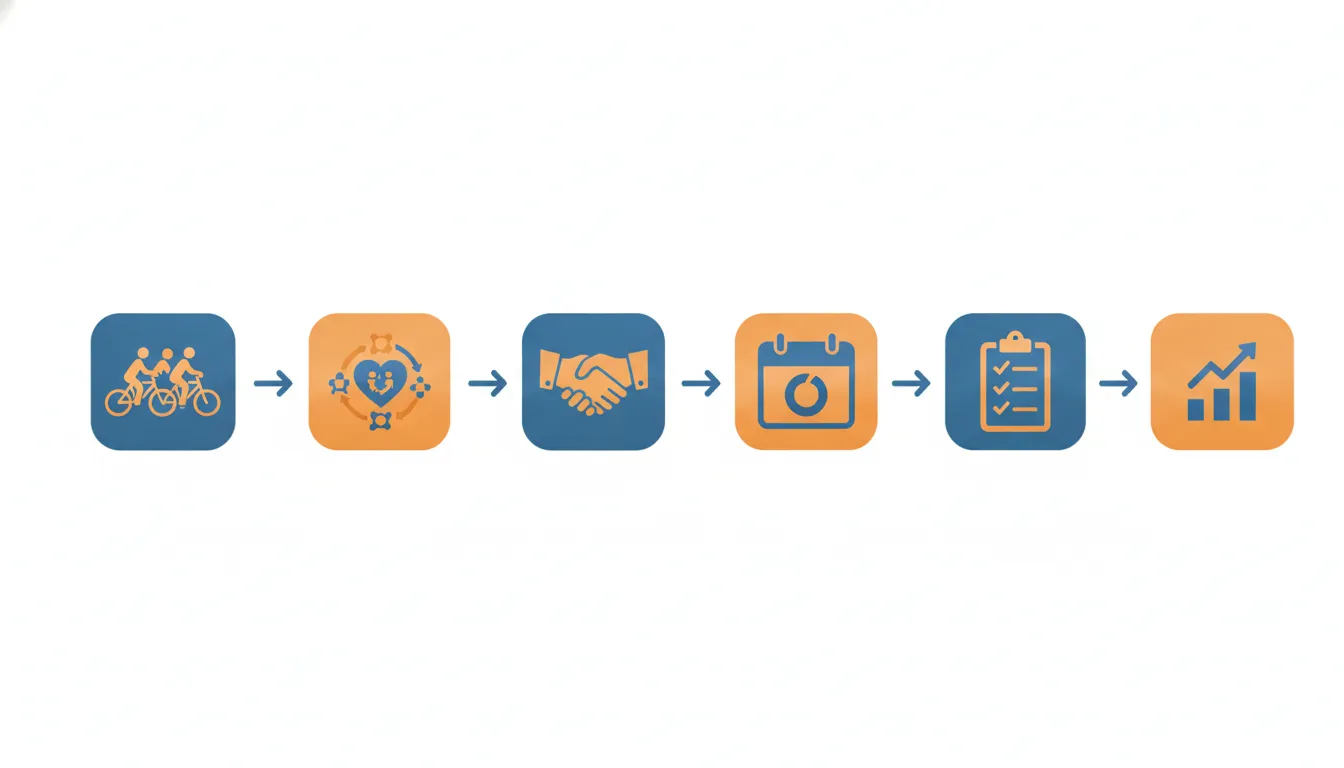
Keep the document short enough for a busy manager to forward. Eight parts are enough. Use the partner’s words where they shared a goal, and leave a blank where you are still guessing.
- Name the partner and the ride. Say which region you are inviting them into and why that community is the fit.
- State the mission in one paragraph. Riders, volunteers, and sponsors raise funds that stay with local autism and disability organizations.
- Reflect their goal. A team activity, a community presence, an in-kind role, or employee giving. If you have not heard it from them, ask.
- Propose one primary role. Add a second role only if they can staff it.
- List deliverables you control. A team signup path, an agreed recognition placement, a volunteer shift, or a post-event note. Do not promise views, sales, or a crowd size.
- Name owners and dates. Who sends logo files, who registers the team, and who is the day-of contact.
- Explain the review. What you will report, and what you will not guess.
- Give one next step. A call, a reply, or a request for the sponsor pack.
That order keeps the proposal about this ride. It is not a general nonprofit template. For readers who want a fill-in letter instead, the separate charity bike ride sponsorship proposal template covers that job. This guide stays on the decision a local partner has to make.
Describe benefits you can deliver
Separate a deliverable from an outcome. A deliverable is something the ride team agrees to do. An outcome is what might happen afterward, such as employees feeling proud or a neighbor noticing the company. Commit to the deliverable. Describe the outcome as a hope, not a guarantee.
Good deliverables sound like this:
- A workplace team can train, fundraise, and ride with route support, rest stops, and SAG support, including people who are new to cycling.
- Employees can volunteer, donate, or use a matching-gift option when the company offers one.
- An in-kind partner gets a defined job, a delivery window, and a named contact.
- After the ride, the partner receives a short recap of what was completed.
Weak lines sound like this: “Your brand will reach thousands,” or “This will grow your sales.” Bike to the Beach does not publish a guaranteed audience or a business result for sponsors. Do not invent one. If a partner wants public recognition, confirm the channel and the approval before you write it down.
The same rule applies to impact. You can say the organization has donated more than a million dollars to local partners over three years, because that fact is on the about Bike to the Beach page. You cannot say a new sponsor caused a share of that total.
Write the activation around a real ride day
Activation is the work that makes the partnership visible. On a Bike to the Beach ride, that usually means a team on the road, people at a rest stop, or a service delivered before riders roll out. It is not a trade-show booth copied from another event.
For each task, write the owner, the deadline, and the approval still needed:
- Logo files and the date they must be final.
- Team captain, registration path, and whether people ride, volunteer, or both.
- Delivery, storage, and pickup for any in-kind goods.
- A day-of phone contact for the partner and for the ride team.
- Any limit on photos, names, or participant information.
- What changes if a delivery or the event plan moves.
Leave route maps, start times, and fundraising minimums on the live ride page. Those details change, and the proposal should point to them instead of freezing an old number. Companies comparing regions can read why we bike and then open the Florida, DC/MD/VA, New England, or New York ride that matches their people.
Review the partnership without inventing a score
Agree on a short recap before the ride, not after. Pick measures that match the role. Skip anything you cannot count without collecting private participant data.
- Delivery: Did the agreed shift, goods, team, or recognition happen?
- Participation: How many employees registered, volunteered, or rode, if the partner’s coordinator can share that count?
- Experience: Did timing, contacts, and handoffs work?
- Next step: Repeat the same role, change it, or stop?
Do not turn the recap into a return-on-investment claim. A separate article covers how to measure event sponsorship ROI for charity bike rides. This proposal only needs an honest note about what was completed. If someone asks whether a gift is tax deductible, send them to their own adviser and to the IRS. Do not answer that question in the proposal.
A simple close works. Invite the partner to pick a role, suggest a different one, or book a short call. Offer a response date only when a real planning deadline depends on it. Then follow up once with a useful question, revise the scope if they name a constraint, and write down the final owners before ride week.
Review Bike to the Beach sponsorship options before you send the proposal.
Frequently asked questions
What belongs in a Bike to the Beach sponsorship proposal?
Name the region, the ride, the local autism and disability mission, the role you are asking for, the deliverables you can confirm, the owners, and one next step. Leave prices, dates, and routes off the page unless the live ride page confirms them.
Can a local company sponsor without fielding a cycling team?
Yes. Public options include sponsorship, in-kind donations, matching gifts, underwriting, and volunteering. A team is a strong fit for employee engagement, not a requirement for every partner.
How is a service provider partner different from a sponsor?
A sponsor or workplace team usually brings funding, goods, employee riders, or volunteers. A service provider partner, such as a school, clinic, or therapy program, joins to build a local presence with families. Use the service provider partner page when that is the better fit.
Should the proposal promise media reach or fundraising totals?
No. Promise only what the ride team controls, such as an agreed recognition placement, a volunteer shift, or a post-event recap. Treat audience response and business results as possibilities, not guarantees.
Which ride should a multi-office company pick?
Pick the region where the employees live and work. Bike to the Beach keeps funds raised in Florida, DC/MD/VA, New England, and New York with nonprofit partners in that community. A company can support more than one region, but each proposal should name its own ride.
Who can answer a custom proposal question?
Call or text Bike to the Beach at 202-860-3211. The team can talk through sponsorship, workplace teams, matching gifts, volunteering, or in-kind support and point you to the current sponsor pack.
Ready to shape a local ride partnership?
Call 202-860-3211 or get the Bike to the Beach sponsor pack. Bring the region, the role you can staff, and the goal your team cares about. We will help you turn that into a proposal a local partner can actually approve.