

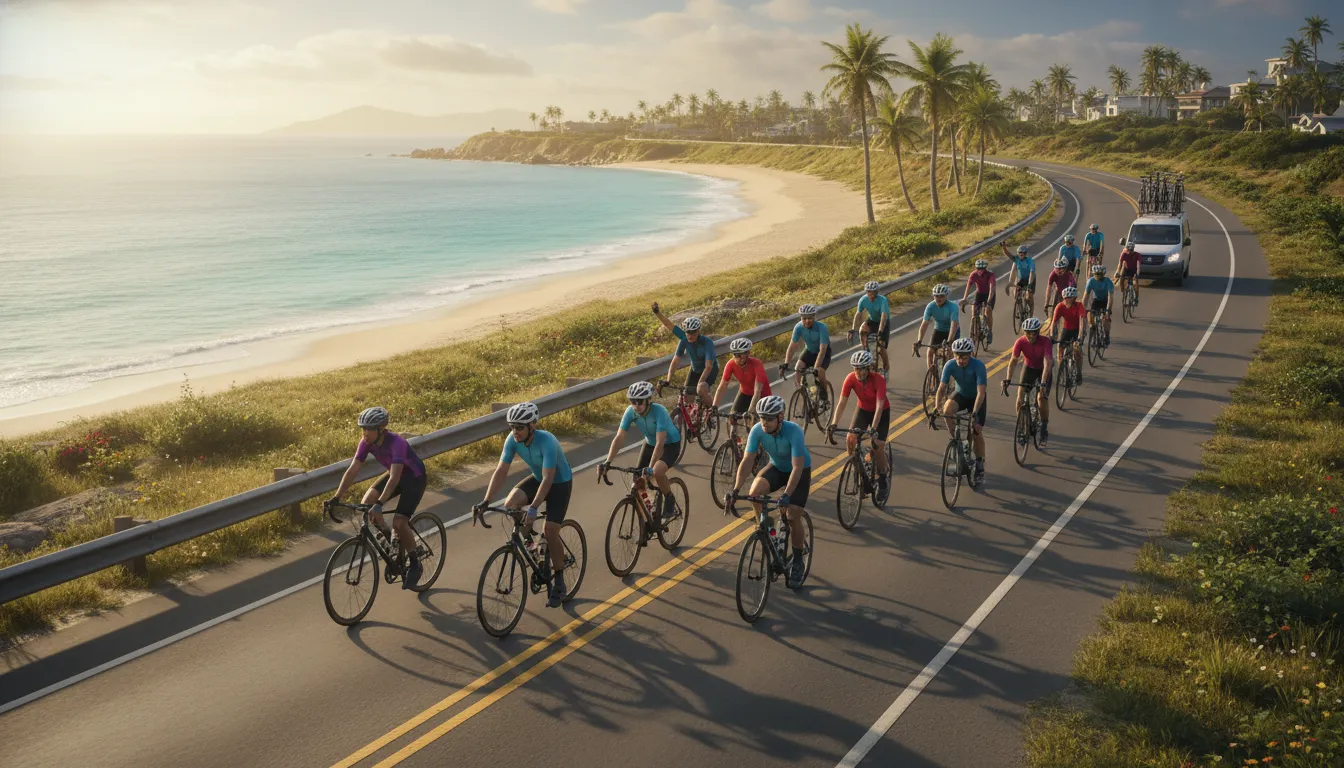
Charity Bike Ride: First-Timer Guide
Register for a charity bike ride with confidence. See what to expect before, during, and after your first Bike to the Beach event.

Your first charity ride should end at the beach, not at the registration screen. Bike to the Beach gives new riders a finish line worth training toward.
A charity bike ride with Bike to the Beach is a goal first-time riders can understand before they register. This guide follows the journey from sign-up and early preparation through ride day and the beach finish. It lays out questions to ask, ways to plan training and fundraising, and the gear and support a new rider may need. It also helps you set expectations for the commitment, so the event feels less unknown before registration begins. You will see how the cause, the ride, and your personal reason for participating fit together before you commit. By the registration step, you can picture the road ahead, plan with confidence, and decide whether this is your right first charity cycling goal.
The first question is simple: What makes a Bike to the Beach charity bike ride beginner-friendly? The answer starts with the parts of the experience that help a new rider prepare, participate, and reach the beach with purpose. Here’s how.
What makes a Bike to the Beach charity bike ride beginner-friendly?
A ride made for first-time cyclists
A charity bike ride can sound daunting when the finish line feels far away. Bike to the Beach welcomes people who care about the cause, including riders new to cycling. It is not only for fast riders or experienced road cyclists.
Beginners can choose a route option that fits their training and comfort. That choice helps a rider set a steady pace and take part with a realistic goal. The day is about moving together for the mission, not racing other cyclists.
A helmet is a key part of every rider’s ride-day gear. Emergency contact bracelets also keep needed information with riders on the course. For someone riding a first event, these details can make the plan feel clear and prepared.
Help at each stage of the route
A long ride is easier to approach when support is built into the route. Rest stops give riders a place to pause, drink water, eat, and reset before moving again. They are useful for beginners learning how their energy changes over many miles.
Support vehicles are part of the event plan when a rider needs help along the road. A cyclist who is tired or unable to continue is not left to sort it out alone. That backup takes pressure off riders who are still building confidence.
Mechanical support can help when a flat tire or bike issue interrupts the ride. Medical support is there if a rider needs care or a health concern must be checked. Beginners can focus on pacing and hydration, knowing there are people ready to help.
Community instead of competition
First-time riders often want to know whether they will fit in with the group. Bike to the Beach centers the experience on a shared purpose, with riders encouraging one another on the route. That community tone can make a new distance feel less intimidating.
No beginner has to approach the event as a solo challenge. Riders can use rest stops, accept route support, and keep a pace that works for them. Experienced cyclists and new riders share the same road and the same reason for riding.
This mix of choice and support is what makes the charity bike ride approachable. Route options help riders start well, while rest stops and support teams help them keep moving. Safety gear and a welcoming group add structure to a meaningful day on the bike.
What happens before ride day?
Choose your ride and register
A first charity bike ride starts with a simple choice: where do you want to ride? Bike to the Beach offers regional events, so start by reviewing the regional ride options. Compare the location, date, route choices, and travel needs before you register.
Next, choose a distance that fits your riding base and your available training time. A longer route can be a meaningful goal, but a shorter route can still create a strong day of community and purpose. Read the event details closely, then complete registration for the ride and route that fit you.
Registration also sets the stage for fundraising. Your event details will show the fundraising minimum and key deadlines for your ride. Read them early, since they shape your outreach plan and help prevent a last-minute rush.
Build your plan before the start line
Once you register, work through these steps in order. They keep preparation clear and make your first event easier to manage.
-
Set up your fundraising page and explain why you are riding. Use Bike to the Beach fundraising resources for ideas on sharing your story and asking for support.
-
Check the fundraising minimum, deadline, and event updates in your rider materials. Start outreach early, then follow up with people who want to help.
-
Make a training plan around your route distance and current comfort on a bike. Begin with rides you can finish well, then add time in the saddle.
-
Prepare your bike and basic gear. Plan for a helmet, water bottles, snacks, a spare tube, simple repair supplies, and clothing suited to the weather.
-
Map out ride-day logistics. Confirm transportation, parking or drop-off plans, check-in timing, overnight needs, and how your bike will reach the event.
Fundraising and training are easier when they are on your calendar. Pick days to ride, times to send updates, and a date to check your gear. Small actions give you room to solve problems before the event week begins.
Train for a steady, supported ride
Training is not only about distance. Regular riding helps you learn pacing, fueling, bike handling, and what gear feels comfortable. The CDC physical activity guidance covers weekly aerobic activity and muscle-strengthening activity for adults.
Use that broad guidance as a starting point, then match rides to your goal route and health needs. If you are new to cycling, focus on steady progress rather than speed. Practice drinking, eating, and handling minor gear issues before event day.
Plan a few rides with the items you expect to carry. You can check whether your bottles, snacks, tools, and layers are easy to reach. If the bike needs service, arrange it before your last training rides.
Bike to the Beach helps riders prepare through event details, rider communication, fundraising support, and a shared cause. Watch for ride-specific messages as the date gets closer. They are the place to confirm check-in instructions, route notes, support details, and final changes.
Ride morning: check-in, staging, and your first miles
Arrival and check-in
Ride morning begins before the pedals turn. Plan to arrive with time to park, find check-in, use the restroom, and adjust your bike. Keeping the first hour calm helps you focus on the reason you joined this charity bike ride.
At check-in, listen for the day’s route notes, rest stop details, and start instructions. Staff and volunteers may share weather needs or changes on the course. If something is unclear, ask before staging begins, not after your group starts to move.
Your start-line setup
Before you enter a start group, do a quick check of the basics. Make sure your helmet is secured, your tires feel ready, and your water is easy to reach. Set your phone aside unless you need it for directions or an urgent call.
- Carry water and the fuel you plan to use between stops.
- Keep your ID, phone, and any needed medicine with you.
- Bring a flat-repair kit if you know how to use one.
- Choose a start group that matches your expected pace.
Staging is not a race for position. It gives riders space to leave in order and hear final reminders. Pay attention to hand signals, passing guidance, route markings, and support contacts shared by the event team.
Settling into the first miles
The first miles can feel loud and busy. Riders are clipping in, finding friends, and adjusting speed after the start. Give others room, hold a steady line, and let faster riders move ahead without changing your plan.
Start at a pace that lets you settle in. A group may pull away, but you do not need to chase it. Your day is built around reaching the finish safely, supporting the cause, and sharing the route with other riders.
If nerves rise, return to simple tasks: breathe, drink when planned, watch the road, and notice your pace. The start soon becomes a ride. Once your legs find their rhythm, take in the community around you and the miles ahead.
How support vehicles and rest stops work
Help along the route
On a Bike to the Beach charity bike ride, riders do not have to solve every problem alone. Support vehicles, often called SAG vehicles, travel the route and help riders who need a safe pause. They may pick up a rider, carry a bike, or connect the rider with event staff.
Heat and effort can affect any rider, even one who trained well. The CDC guidance on heat and health explains warning signs, such as weakness, dizziness, and nausea. Tell a volunteer or ride leader early when you do not feel right.
What to find at a rest stop
Rest stops are planned about every 15 miles, so the route breaks into manageable pieces. At each stop, riders can step off the bike, refill fluids, eat a snack, and check how they feel. Use each stop before thirst or discomfort turns into a harder problem on the road.
Stops also give riders a clear place to ask for help. Volunteers can connect riders with mechanical help for a flat tire, loose chain, or other bike issue. If a rider needs care, staff can connect that person with medical support and the next safe step.
Before ride day, review Bike to the Beach event information and your route plan. Note the support options shared for your event, and bring the basic supplies listed for riders. Knowing the plan makes it easier to ask for help when you need it.
- Refill water or an event hydration drink at the stop.
- Choose a familiar snack that sits well while riding.
- Check tires, brakes, chain, and any sore spots before leaving.
- Speak with staff if pain, heat, or fatigue makes riding unsafe.
When a rider needs a break
A short break is a normal part of a long ride. Pull into a rest stop when possible, and park the bike away from moving riders. Tell a volunteer what is wrong. Staff can help decide if food, fluids, bike help, or medical care is needed.
If trouble starts between stops, move out of the path of bikes and traffic when it is safe. Use the event support contact shared before the ride. You can also ask another rider to alert staff. Do not ride through dizziness, severe pain, confusion, or a bike problem that affects control.
Some riders may choose not to continue the route. A SAG vehicle can help a rider and bike leave the course safely. Staff will follow event procedures. Stopping is a sound safety choice when a rider cannot continue with control and comfort.
Friends and teammates can help by staying calm and sharing the rider’s location with event staff. They should not attempt repairs beyond their skill. They also should not press an unwell rider to continue. Support helps the group put safety first while the ride moves forward.
Which route should you choose for your first charity bike ride?
Your first charity bike ride should feel meaningful and manageable. The right route leaves room to ride safely, take in the day, and finish with your team. An event may offer choices from about 25 to 100 miles. Start with your current riding routine, not a distance that sounds impressive.
Matching distance to your starting point
A shorter route, often around 25 miles, can suit riders who are new to longer group rides. It can also fit riders using a hybrid bike or returning after time away. A mid-distance choice may appeal if you already ride for an hour or two and want a larger goal.
A century-style option, close to 100 miles, calls for more time on the bike and a clear food plan. It is not the required first step for taking part. Check current Bike to the Beach ride information before choosing. Route lengths and options can vary by event.
| Route option | May fit riders who | Training focus | Day-of aim |
|---|---|---|---|
| Shorter route. | Newer riders building comfort. | Steady rides, bike fit, hydration. | Ride calmly and learn the event flow. |
| Mid-distance route. | Regular riders wanting a challenge. | Longer rides and food practice. | Hold a sustainable pace. |
Century-style route: This may fit riders with steady endurance training. Prepare with long rides, pacing, fueling, and rest. Manage effort from the first miles.
Questions before registering
Think about your longest recent ride, your schedule, and the people you hope to ride beside. Would training for this route add purpose to your week, or add stress? You may want to ride with family, friends, or coworkers. Choosing the same practical distance can make the day more shared.
- Can you train on several weekends before event day?
- Can your bike stay comfortable as the miles add up?
- Do you want a first finish, a long ride goal, or a team outing?
- Does the event page list rest stops and route details for your choice?
Building toward your route
After you pick a route, grow your ride time in small steps. Practice what you will use on event day. The CDC physical activity guidance advises adults to spread activity through the week. Regular rides can build a routine without making one weekend carry the full load.
Your route choice does not measure your commitment to the cause. Choose the distance that lets you prepare well, ride with care, and stay present for the mission. A later charity bike ride may call for a new distance. This first ride can give you a sound base.
How fundraising works without feeling overwhelming
Your fundraising goal
A Bike to the Beach charity bike ride includes a $250 fundraising minimum. Many riders go further, with an average of $1,000 raised. Your registration fee covers your entry, but it does not count toward that fundraising amount. Knowing those parts at the start makes planning simpler.
The funds support local autism and disability organizations in the communities connected to the ride. This focus treats people with disabilities as valued members of each community. The CDC overview of disability and health also stresses inclusion and access in community life.
A simple first-timer plan
You do not need a large network or a polished campaign. Begin with a short note about why you chose the ride. Then share your fundraising page with a small group of people who know you well. A clear, personal ask often feels easier than one broad post.
- Make your first gift, if you can, so supporters see your commitment.
- Ask family, friends, neighbors, and coworkers in small batches.
- Share a training update with your page link after a long ride.
- Thank each donor and ask if they would share your page.
- Try a small team event, such as a coffee meet-up or group ride.
Set a first milestone of $250, then decide if you want to keep going. Breaking the goal into smaller gifts can help: ten $25 gifts meet the minimum. If you aim for the rider average, build on the same steps over time instead of making every ask at once.
Tools and steady progress
Fundraising works best when it fits into your training plan. Pick two days each week to send notes, share an update, or thank donors. This keeps outreach steady and leaves room for riding, work, family, and rest.
If you get stuck, use Bike to the Beach fundraising resources for message ideas and practical support. You can also ask teammates what worked for them. Progress may come through many small gifts, one larger gift, or both.
The minimum is an expectation, not a test of how much you care. Start early, explain the cause with respect, and give people a clear way to help. Each gift helps fund local partners that serve autistic people and people with disabilities.
What to expect at the beach finish
The final approach
The last stretch of a charity bike ride brings a clear shift in mood. The miles are still real, but the beach finish is now in view. Riders can slow their pace, take in the scene, and get ready to cross with the people who helped make the day possible.
As you reach the finish line, expect a warm welcome from riders, volunteers, friends, and families. It is a shared moment, whether you arrive with a team or roll in after a long solo effort. Keep moving through the finish area as directed, then pause when it is safe to celebrate and reconnect.
A celebration by the beach
Crossing the line is not the end of the event. The finish area keeps the community together with food, live music, and time to share stories from the route. The beer garden offers an option for eligible guests who want to relax after the ride.
- Meet teammates and supporters at an agreed spot after you finish.
- Pick up food and water before settling into the celebration.
- Enjoy live music and give other riders the welcome you received.
- Use the beer garden with care, and plan a safe trip home.
Bring what you need for time off the bike, not just time in the saddle. A dry layer, sunscreen, and comfortable shoes can make the beach finish easier to enjoy. If family or friends are coming, share your meeting plan before ride day so the reunion stays simple.
Recovery and connection
After you cross, start with the basics. Move into the recovery zones, drink water, eat, and give yourself time to settle. If something does not feel right, tell an event volunteer rather than trying to push through the celebration.
This is also where the purpose of the ride becomes visible. Riders who trained, raised support, volunteered, or cheered along the route now gather in one place. Welcome those arriving behind you, thank the people who supported the day, and make room for every finish-line moment.
Plan to stay awhile if your schedule allows. A charity bike ride can continue long after the bike is parked, through music, conversation, photos, and a shared beach celebration. The finish is a place to recover, mark what you achieved, and celebrate the community that carried the ride forward.
Frequently Asked Questions
How do I get back after finishing my Bike to the Beach ride?
Finish-line travel depends on your regional event and the plan you arrange before ride day. Bike to the Beach provides ride-specific logistics, including available return transportation and bike transport details, in rider communications. Review your event information after registering, then reserve any needed option early. If your plan is unclear, use the Bike to the Beach contact page before making travel bookings.
Can I rent a bike for my first Bike to the Beach charity bike ride?
Bike rental may be available through Bike to the Beach partner arrangements for riders without a suitable bike. Rental choices can include road or hybrid bikes, fitting support, and delivery options tied to the event area. Availability may change by location and date. Before registering around a rental plan, confirm current choices through the Bike to the Beach team and reserve early.
Is a relay team an option if I am not ready to ride the full route?
Yes. A relay team can let riders share a route instead of each person completing the full distance. Each teammate should review registration and fundraising requirements, since participation terms may apply to every rider. Relay groups also need a clear plan for transitions and transportation. Check the details for your regional event, or ask Bike to the Beach before forming your team.
Does Bike to the Beach offer a virtual option if I cannot attend in person?
A virtual challenge may provide a way to participate without starting on the in-person route. This option is designed for riders completing their activity on a more flexible schedule while still fundraising for the cause. Registration rules, tracking steps, and available benefits can change by event year. Review the current regional registration page or contact Bike to the Beach before choosing the virtual format.
Ready to choose your ride and reach the beach?
Putting off registration can leave your first charity ride as an idea, while questions and uncertainty keep delaying a meaningful goal. Starting now gives you time to choose a regional event, map out fundraising, and prepare for ride day without rushing. A confirmed event on your calendar turns general interest into clear next steps toward the beach finish.
If questions are holding you back, contact Bike to the Beach before you put off your goal again. You can act today, then use the time ahead to train, fundraise, connect with fellow riders, and arrive prepared for your first event. Ready to commit? Choose your regional ride and register to start planning your journey to the beach today.