
Autism 5K vs Charity Bike Ride: Find Your Best Fit
Compare autism 5K and charity bike rides for access, training, fundraising, team building, and local impact. Choose the right event format for your community.

Choosing a fundraising event is not only a question of miles. It is a question of who you want to welcome, how long you want to engage them, and what kind of community you want to build around the cause.
Register for a Bike to the Beach charity ride and find a supported way to ride for local autism and disability organizations.
What Is an Autism 5K and Who Is It For?
An autism 5k can be an approachable run or walk for families, first-time participants, and supporters who want a shorter event-day commitment. Research describes 5K events as low-barrier entries to charity participation, but access still depends on the organizer’s accommodations and communication. A multi-distance charity bike ride can offer a different path, with varied mileage for casual and experienced riders, plus more time for teams to train, fundraise, and connect.
Both formats can raise awareness and bring people together. The better choice depends on the experience your participants need and the kind of ongoing involvement your organization hopes to encourage.
What Is an Autism 5K and Who Is It For?
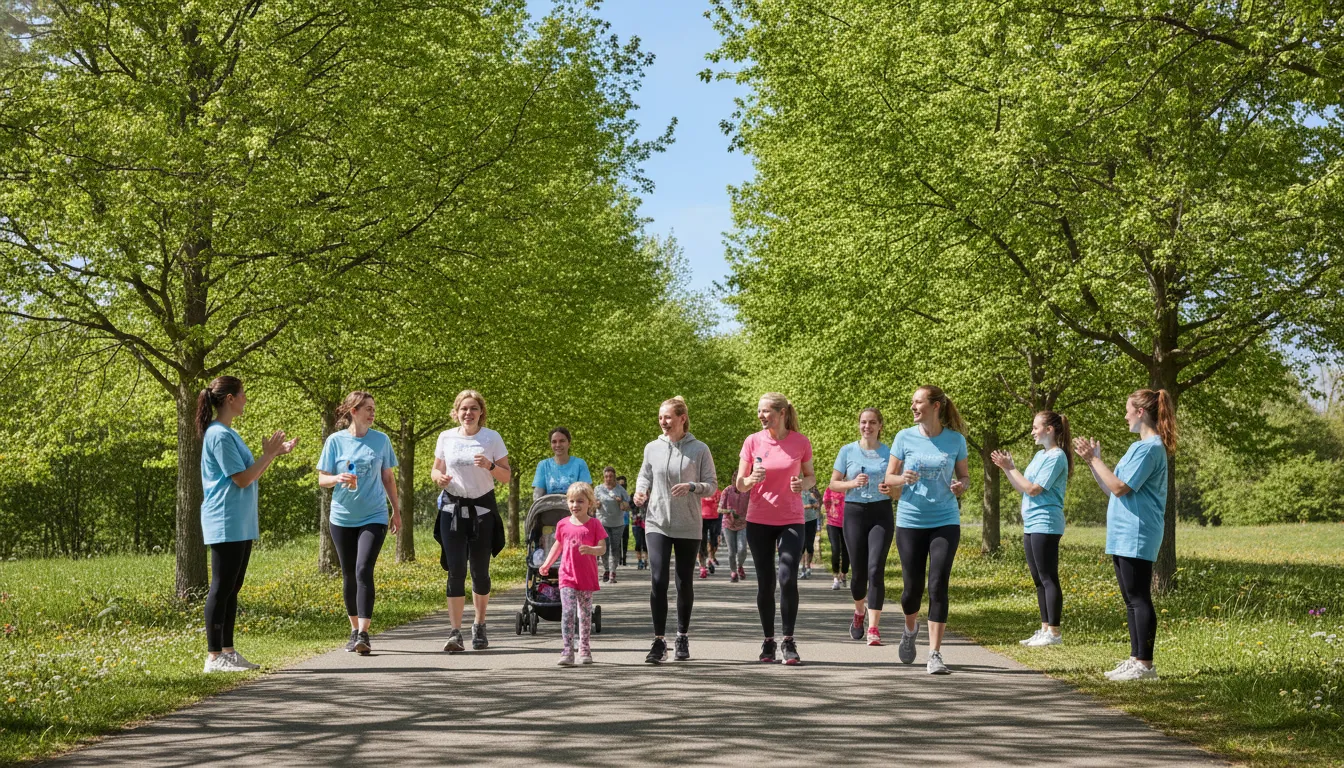
An autism 5K is a community fundraising event built around a 5-kilometer run, walk, or combination of both. Autism support organizations often use this format to bring neighbors together, raise awareness, and fund programs or services connected to the autism community. The distance is long enough to feel like a shared achievement, but familiar enough that people do not need to identify as experienced runners to participate. Community runs and walks are widely used by nonprofits to engage local supporters and advance autism awareness.
Most autism 5K events welcome a broad mix of participants. A person may run the course, walk it, use a mobility device, join a family group, or support the event as a volunteer or donor. Families often value a shared activity that includes parents, children, siblings, relatives, and friends. Family participation is common at autism-focused community 5K events. That family-centered structure can help turn a fundraising event into a visible local network of support.
The short format also lowers the preparation barrier for first-time charity participants. Compared with a longer endurance event, a 5K usually requires less training and can feel manageable for someone who is curious about fundraising but unsure about athletic ability. Research describes 5K runs as a low-barrier entry point for charity participation. The social environment matters, too: connection, encouragement, and the feeling of belonging can influence whether participants enjoy the experience and return.
What makes an autism 5K inclusive?
The label alone does not guarantee access. Inclusion depends on the organizer’s choices and communication before, during, and after the event. Participants should look for clear information about the route, surface, start, and finish areas. They should ask about timing expectations, sensory conditions, restrooms, parking, service animals, mobility access, and whether walking is explicitly welcome. Organizers should provide a straightforward way for families and individuals to request accommodations or ask questions without having to justify their participation.
A thoughtful autism 5K makes room for different ways to take part. The goal is not to reward one ideal pace or ability level. It is to create a predictable, respectful setting where people can contribute to a shared cause in the way that works for them.
Autism 5K vs Charity Bike Ride: What Changes?
Both formats can bring people together around autism and disability support, but they create different ways to participate. An autism 5K usually asks people to run or walk a short, defined course. That lower training barrier can make it a natural choice for families, first-time participants, and supporters who want a meaningful event without a long preparation cycle. Research on charity sport participation also suggests that the social environment matters alongside physical activity, including whether people feel satisfied enough to return.
A charity bike ride changes the scale of the challenge and the shape of the day. The goal is not to race. Riders prepare for a personal distance and spend more time moving through the community. They often build a team around fundraising and training. Studies of cause-related endurance events indicate that motivations can differ by sport type. The perceived challenge of endurance participation may also influence peer-to-peer giving. Those differences are useful when choosing an event for a family, nonprofit, workplace, or group of friends.
| Consideration | Autism 5K | Charity bike ride |
|---|---|---|
| Distance and training | Short run or walk with a relatively low training barrier. | Longer cycling challenge with distance choices for different experience levels. |
| Event-day structure | Usually a concentrated course experience with a shared start and finish. | More time on the route, with planned rest and rider-support points. |
| Fundraising story | Easy to explain as a visible community run or walk supporting autism-related work. | A personal endurance goal can give teams a longer story to share with donors. |
| Team experience | Strong for gathering a broad group for one shared day. | Creates more opportunities for team formation, preparation, fundraising, and shared accomplishment. |
Distance and preparation
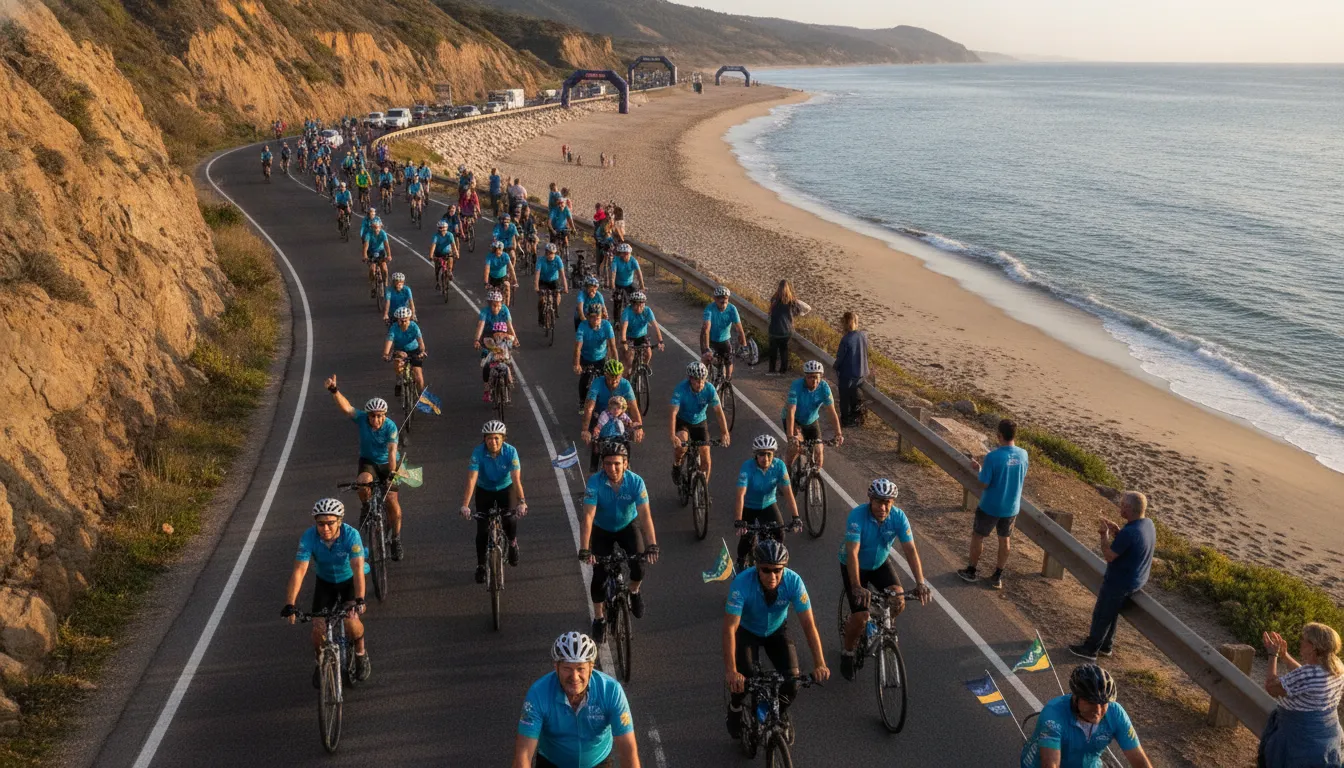
A 5K can be completed as a run, walk, or combination of both, depending on the event design and the participant. That simplicity helps organizers welcome a broad local audience. A ride requires more planning, but multiple distances can make the challenge more flexible. Bike to the Beach events include 25-, 50-, 62-, 70-, and 100-mile options, along with rest stops and SAG vehicles. Those features do not make every distance suitable for every rider, but they give participants a clearer way to select a goal and prepare with support.
Fundraising and team experience
The fundraising message also feels different. A 5K emphasizes an accessible community gathering. A ride gives each participant a specific achievement to explain: why they chose a distance, how they trained, and who they are riding for. Bike to the Beach directs participant fundraising to local autism and disability organizations rather than national research institutions. For donors, that local-partner model can make the intended impact more tangible. For teams, the longer preparation cycle can create more touchpoints before event day, from recruiting and training to sharing the cause with workplaces and personal networks.
Choose the 5K when broad access and a short shared experience are the priority. Consider a charity bike ride when your group wants distance options, a supported endurance goal, and a deeper team journey. Neither format is automatically better. The right choice depends on who you want to include, how much preparation your audience welcomes, and what kind of community engagement you want the event to create.
Which Format Builds the Right Fundraising Team?
The best event format is the one that fits the people you want to bring together and the relationship you want them to build with the cause. An autism 5K can be an excellent choice when your audience includes families, first-time participants, and neighbors who want a short, welcoming way to show support. Runs and walks also help nonprofits build visible local networks and create opportunities for autism awareness and education. The Centers for Disease Control and Prevention describes community events as useful platforms for connecting people with the needs of the autism community.
A charity bike ride may be a stronger fit when you want participants to form teams around a shared goal and stay engaged for weeks or months. Research on cause-related endurance events suggests that the challenge itself can strengthen community bonds, while participant motivations vary by sport and event type. That difference is not a reason to dismiss either format. It is a reason to choose intentionally.
Start with the audience and the cause connection
Ask who is most likely to participate because the mission matters to them. A 5K often makes it easy for a parent, child, coworker, or casual supporter to participate together. The lower training barrier can help a broad group take part, even if they do not identify as runners. If the event is designed around a local autism or disability organization, share exactly how the partnership supports people in the community. Clear, respectful storytelling gives families and participants agency without reducing anyone to a fundraising appeal.
A ride attracts a different kind of commitment. Some people are motivated by cycling, a personal connection to autism or disability, or the satisfaction of working toward a demanding shared objective. Bike to the Beach builds around this local-partner model: participant fundraising supports local autism and disability organizations and their direct services. The local focus can give teams a concrete story to carry into every training conversation and fundraising message. Bike to the Beach is not presenting this model as a substitute for national research; it is describing a direct local-partner approach.
Match the format to your capacity and sponsor goals
Consider the work your team can realistically support. A 5K may require fewer training touchpoints. Organizers still need a clear route, accessible participation options, volunteers, communications, and a plan for welcoming families. A ride generally creates more moving parts, yet it also creates more moments for team leaders, volunteers, community partners, and sponsors to contribute. Multiple distances can help a ride welcome different experience levels. Bike to the Beach events, for example, offer distances ranging from 25 to 100 miles, along with rest stops and SAG vehicle support.
Longer events can also give sponsors more sustained visibility than a brief event-day interaction. Sponsorship may connect to team formation, training communications, rest stops, volunteer roles, or community gatherings. For workplace organizers, these corporate fundraising events for autism can support a shared purpose across departments. If you are still comparing formats, review these charity event ideas and decide whether your goal is a single accessible gathering or a longer engagement cycle that turns participants into an ongoing community.
Finally, define success before choosing the event. If success means broad family participation and a simple first step, an autism 5K may be the right answer. If success means sustained team development, deeper peer-to-peer fundraising, meaningful sponsor involvement, and a visible connection to local partners, a supported multi-distance charity ride may better serve the mission.
How Do Training and Accessibility Compare?
An autism 5K usually has a lower training barrier than a multi-distance charity bike ride. A 5K can welcome people who want to walk, jog, or participate alongside family and friends without committing to months of cycling preparation. Research describes 5K runs as low-barrier charity events that can reach a broad audience, while family participation is often central to autism-focused community events. That can make a 5K a practical choice for first-time participants, younger athletes, and families who want a shorter event-day experience.
Accessibility still depends on the organizer. A shorter distance does not automatically mean that every participant’s needs are met. Before registering, review the route surface, start and finish areas, sensory conditions, restroom access, pacing expectations, mobility accommodations, and the process for requesting support. Ask specific questions rather than assuming that an event labeled inclusive offers universal access. For more ideas on evaluating participation options, explore inclusive charity cycling events.
What training does each format require?
For many people, the main advantage of a 5K is its flexibility. Participants may be able to prepare through regular walking or a gradual run-walk plan. The training period can be brief, and the event can fit into a family or workplace schedule with less planning. That does not make the experience less meaningful. Physical activity and sports participation can support quality of life for people with autism, according to a review published through the National Center for Biotechnology Information: physical activity and autism research.
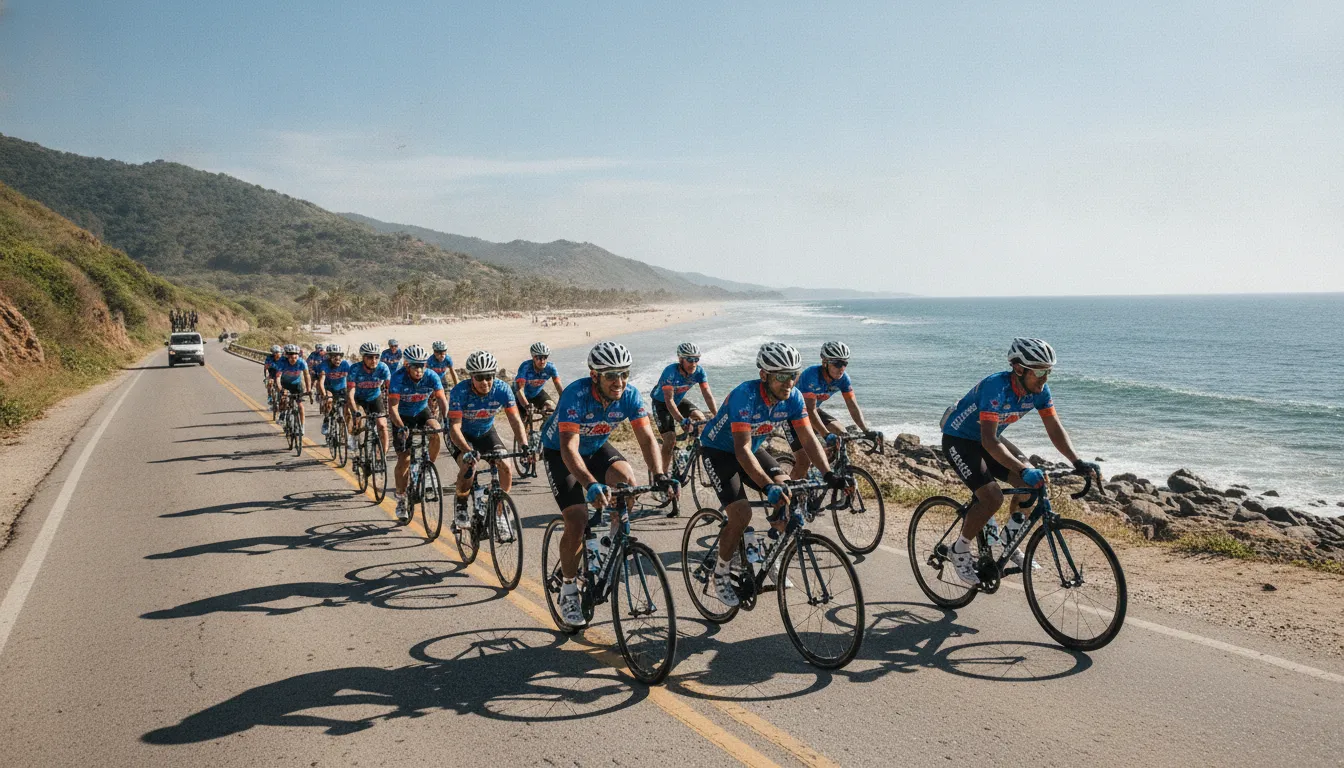
A bike ride requires a different kind of preparation. Riders need to build comfort on a bicycle, practice handling and fueling, and choose equipment that fits their needs. Cycling research has also examined potential executive-function benefits for children with autism, although those findings should not be treated as a promise about any individual participant’s outcome. The relevant study is available through PubMed.
How Bike to the Beach broadens participation
Bike to the Beach offers multiple ride distances, including 25, 50, 62, 70, and 100 miles. Participants can choose a goal that matches their experience, preparation, and comfort level. No rider is forced into one distance. Rest stops and SAG vehicles provide practical support along the route. They do not eliminate the need for training or guarantee access for every person. But they can make a supported charity ride more approachable for riders who want a longer challenge with clear options.
The best choice is the format that fits the participant’s body, schedule, support network, and preferred way to connect with the mission. A 5K may be the strongest entry point for a family or first-time participant. A supported, multi-distance ride may suit someone looking for a progressive training goal and a deeper cycling experience. In either case, organizers should publish accommodations clearly and invite participants to discuss individual needs before event day.
How Can an Event Build Community Beyond One Day?
The strongest autism fundraising events give people a reason to stay connected before, during, and after the main event. An autism 5K can create that connection through family participation and a shared local goal. A charity bike ride can extend the same idea through a longer preparation and fundraising cycle. The format matters less than the structure around it.
Start community-building before participants arrive
Begin with team formation, not just registration. Give families, coworkers, school communities, and local supporters simple ways to join a team, set a shared fundraising goal, and introduce themselves. A short team kickoff, online group, or recurring training and planning meetup can turn individual sign-ups into relationships. Participants in endurance charity events often bond through a shared challenge and common cause, but the same principle applies to a walk, run, or ride. The social environment influences satisfaction and whether people want to participate again, according to research published in a study of charity sports participation.
Peer-to-peer fundraising also creates useful touchpoints. Provide sample messages, story prompts, and progress updates, then encourage fundraisers to explain why the local mission matters to them. For additional planning ideas, review these cycling fundraiser ideas. The goal is not to pressure people to post constantly. It is to help each participant invite others into a specific, understandable act of support.
Local partner storytelling gives fundraising a clear human context without reducing people to a source of inspiration. With permission, introduce the autism and disability organizations benefiting from the event, explain the services they provide, and show how funds support their communities. Public events can serve as platforms for education and awareness about autism needs, while transparent communication about fund distribution helps build trust. Share partner updates before the event, feature them in team materials, and make space for their voices on event day.
Bike to the Beach uses a local-partner model: participant fundraising is directed to local autism and disability organizations that provide direct services. That local focus gives organizers a practical follow-up story to tell, such as what a partner does in the region and why continued community support matters.
Volunteering keeps the community wider than the participant list. Offer roles for route support, hospitality, welcoming teams, peer fundraising mentorship, partner outreach, and accessibility feedback. Not everyone needs to run or ride to contribute. Families and individuals connected to the autism community should be invited to shape the experience, not only attend it. Fundraising events can provide a sense of agency when people can actively contribute toward shared goals.
After the event, report the funds raised. Thank teams and volunteers by name where appropriate. Share a partner update when available. Invite participants to a short debrief, next-year interest list, or low-pressure community activity. Multi-distance charity rides naturally create a longer engagement cycle through team preparation and fundraising. But any autism charity event can build lasting community when follow-up is planned as carefully as event day.
Explore the ride format and register for a Bike to the Beach charity ride if your group wants a supported, team-based way to build local community around the cause.
How Should You Choose Between an Autism 5K and a Charity Ride?
Start with the people you want to welcome, then match the event format to their needs and your organization’s capacity. The decision should reflect access, preparation, fundraising, team goals, and the kind of local connection you want to build.
Use these questions to make the decision
- Who do you want to include, and what participation options will make the event realistic?
- How much training and event preparation can participants reasonably take on?
- Does your fundraising plan fit a concentrated event day or a longer peer-to-peer campaign?
- What roles can families, volunteers, partners, and sponsors play before and after the event?
- How will you explain the local impact and report funds raised to participants and donors?
An autism 5K may be the better fit for a broad family gathering and a concise, familiar event experience. A charity bike ride may be the better fit for people who want distance choices, a supported endurance goal, and a longer team journey. You can also use both formats over time, inviting people into the type of participation that suits them best.
Frequently Asked Questions
What is an autism 5K walk or run?
An autism 5K is a short community fundraising event that people typically complete by running, walking, or using another approved participation option. These events often welcome families and first-time participants, but accessibility depends on the organizer’s route, sensory supports, volunteer plan, and accommodation process. The social environment matters as much as the activity itself for participant satisfaction and future involvement. Research on charity sport participation supports that broader view.
How do charity bike rides compare with autism 5Ks for fundraising?
A 5K usually has a lower training barrier and a shorter event-day commitment. A charity bike ride can create a longer peer-to-peer fundraising runway and a stronger team challenge. Neither format is automatically better. Choose based on your audience, sponsor goals, volunteer capacity, and the kind of participation you want to encourage. Research suggests that sport type influences why people join cause-related events. A ride may reach supporters motivated by endurance cycling rather than running or walking.
What is the difference between a local autism 5K and a multi-distance charity bike ride?
The main differences are distance, preparation, event structure, and engagement cycle. A 5K can bring a broad local community together for one concise gathering. A multi-distance ride gives participants different mileage options, team training opportunities, and more time to fundraise and connect before the event. Bike to the Beach combines multiple distances with rest stops and SAG vehicle support, while directing fundraising to local autism and disability partners.
How can I choose the right autism fundraising event?
Start with the people you want to include. A 5K may fit families, casual participants, and supporters who want a low-barrier event. A supported charity ride may fit workplace teams, cyclists, and donors drawn to a shared endurance goal. Then confirm route access, accommodations, safety support, fundraising expectations, and how the organization reports the use of funds. The best choice is the event that makes meaningful participation realistic for your community.
Ready to Build Community Through a Charity Ride?
A multi-distance charity ride can give families, teams, and supporters more than one way to participate while creating shared momentum around local autism and disability partners. If this format fits your goals, take the next step and register for a Bike to the Beach charity ride. You can choose a meaningful way to contribute, connect with a wider community, and turn one event into an opportunity for lasting involvement.