
Adaptive Sports: Inclusive Ways to Build Community
Learn what adaptive sports are, how access barriers affect participation, and how events can create welcoming opportunities for people with disabilities.
Finding a welcoming way to be active can depend on more than motivation. Cost, transportation, equipment, communication, sensory environments, and uncertainty about an event can all shape participation. The right starting point respects each person’s goals, preferences, and access needs.
Adaptive sports are recreational or competitive activities designed or modified for people with physical, visual, or intellectual disabilities. They can include individual or team activities, and the best fit depends on the participant, not a one-size-fits-all model.
Connect with the Bike to the Beach community to explore ways to take part, support local programs, or find a welcoming entry point.
Understanding what makes an activity adaptive is the first step toward comparing options and asking useful questions of organizers.
What Are Adaptive Sports?
Adaptive sports are recreational or competitive sports designed or modified so people with disabilities can participate. An adaptation may change equipment, rules, technique, communication, the playing environment, or the way support is provided. Some activities are created specifically for disabled athletes, while others adjust an existing sport to fit a participant’s access needs, goals, and preferences.
The word adaptive does not describe one standard format or a single group of athletes. People with physical, visual, intellectual, and other disabilities may participate in different ways. And the same person may want different levels of support from one activity to the next. A welcoming program starts with the individual rather than assuming that a diagnosis determines what they can do.
Designed and modified for participation
In some cases, the sport itself is built around an adaptive format. In others, a familiar activity becomes more accessible through thoughtful changes. Examples can include using an adapted bicycle or adjusting the size or weight of equipment. Other changes may affect court or field rules, communication, or the way an activity is performed. The right approach depends on the sport and the participant. There is no universal adaptation that works for everyone.
Adaptive sports can include individual and team activities, indoor and outdoor recreation, and opportunities ranging from casual participation to organized competition. Examples may include adaptive cycling, skiing, mountain biking, swimming, wheelchair basketball, goalball, archery, and adapted yoga. This is not an exhaustive list. Programs vary by location, equipment, coaching, and the people they serve.
| Participation format | What it may offer | Questions to ask |
|---|---|---|
| Individual activity | Flexible pace, equipment, or instruction | What adjustments and support are available? |
| Team activity | Shared strategy, connection, and different roles | What is the pace and commitment level? |
| Community ride or challenge | Flexible distance, relay, team, or virtual options | What current event details and access information should I confirm? |
Choice and autonomy matter
Participation should be guided by the athlete’s interests, not by a well-meaning assumption about what would be inspiring or appropriate. One person may want to train for competition. Another may be looking for recreation, social connection, movement, or a chance to try something new with family and friends. A person may also choose not to participate in a particular sport, and that choice deserves the same respect.
- Ask what the participant wants to try before suggesting an activity.
- Discuss equipment, communication, sensory, and transportation needs directly.
- Offer more than one way to participate, when the program can support it.
- Let the athlete decide what support feels useful and when to adjust it.
That individual approach keeps the focus on the athlete’s goals and preferences rather than on assumptions. Before registering, contact the organizer to confirm current equipment, accommodations, and event details.
What Sports Can Be Adapted?
Almost any sport can have an adaptive version when organizers focus on access, participation, and the individual athlete’s goals. Adaptive sports may be recreational or competitive, and they can be played independently, with a team, or in a format that combines both. The right choice depends less on a person’s diagnosis and more on what they enjoy, how they want to participate, and what support the activity provides.
Individual sports offer room for personal choice
Individual activities can make it easier to adjust pace, equipment, communication, or the setting around one participant. Examples may include cycling, swimming, skiing, mountain biking, archery, tennis, equestrian activities, and adapted yoga. Some programs modify equipment, such as using a different bike configuration or adding positioning support. Others change the rules, court layout, timing, instructions, or sensory environment. A participant might also choose a recreational session focused on trying something new rather than measuring performance.
That flexibility does not mean every program offers every modification. Ask the organizer what equipment is available, whether participants may bring their own, and how instructors communicate directions. A program that welcomes questions can help an athlete identify a realistic starting point without assuming that one adaptation works for everyone.
Team sports build connection and shared strategy
Team-based adaptive sports can include wheelchair basketball, rugby, soccer, volleyball, goalball, and other group activities. Some sports are designed specifically around disability access. Others adapt an established game by changing equipment, boundaries, scoring, player roles, or the way information is delivered. A team format may also allow athletes to contribute in different ways, including strategy, communication, defense, or support during play.
Team participation can be recreational, developmental, or highly competitive. A beginner session may prioritize learning the game and meeting people, while a competitive club may train toward tournaments. Neither format is more valid. The important questions are whether the pace, expectations, and communication style fit the participant, and whether the organizers explain the level of commitment before registration.
Outdoor and indoor activities can both be strong entry points
Adaptive sports are not limited to one season, location, or level of athletic experience. Indoor options can offer a predictable environment for activities such as basketball, swimming, volleyball, or yoga. Outdoor options can include cycling, skiing, hiking, kayaking, or mountain biking, depending on local conditions and program resources. Some organizations encourage young athletes to sample multiple sports rather than choosing one immediately, which can help them discover what feels engaging and sustainable.
When comparing options, look beyond the sport’s name. Ask about transportation, surfaces, equipment, quiet spaces, communication, companions, and opportunities to take breaks. Then let the participant’s interests guide the decision. Adaptive sports work best when access expands the athlete’s choices, not when it places them into a predetermined role.
Which Barriers Keep People From Participating?
Interest in adaptive sports does not always translate into participation. The obstacle may be the cost of registration or equipment, transportation, unclear instructions, an unfamiliar setting, or uncertainty about whether newcomers are genuinely welcome. A person may want to try an activity and still need more information before deciding if the format fits their goals, energy, communication preferences, or support needs.
Organizers can make that decision easier by treating access as more than a physical question. Cost and transportation matter first. So do equipment options, parking, drop-off points, route details, and whether participants can observe before joining. Communication should explain what will happen, what a participant should bring, who to contact, and how to ask questions. Clear information can reduce the confidence barrier that comes with entering a new environment.
The setting itself deserves attention. Noise, crowds, lighting, waiting periods, unpredictable transitions, and sensory demands can affect whether an activity feels workable. That does not mean every event must offer the same solution for every person. It means organizers should share accurate details and invite direct questions rather than assuming one format suits everyone. For a broader look at movement and disability, explore charity rides supporting autism families.
Equipment can create another dividing line. Some activities require specialized gear, adaptive adjustments, or instruction that is not available at every venue. A welcoming entry point might be a beginner session, a loaner-equipment program, a shorter option, a team role, or a chance to participate without competing. These possibilities vary by organization, so they should be confirmed before someone registers. Confidence often grows when the first step is specific, low-pressure, and supported by people who know how to welcome new participants.
Questions to ask an organizer
- What are the total costs, and are there equipment, transportation, or participation-assistance options?
- What should I expect from arrival through the end of the activity, including waiting time and transitions?
- What equipment is provided, what can participants bring, and who can answer equipment questions?
- How are route, schedule, communication, noise, lighting, and other environmental details shared?
- Is there a beginner, shorter, team-based, virtual, volunteer, or observation-based way to take part?
- Who should I contact to discuss an individual access question before registering?
These questions are not a test for the participant. They are a practical way to decide whether an opportunity offers a comfortable and meaningful starting point.
How Can Community Events Create Welcoming Entry Points?
A welcoming community event does more than open registration. It helps people understand what participation can look like, identify the level of support they may need, and choose an option that fits their goals. That matters in adaptive sports, where access needs, interests, energy, communication preferences, and prior experience can vary widely.
Inclusive design is a way of reducing avoidable barriers. It is not a promise that every event can provide every accommodation, and it should never replace a direct conversation with organizers. Strong events make information easier to find, offer meaningful choices, and respect each participant’s authority over their own involvement.
- Offer more than one way to participate. A single course, pace, or team structure can make an event feel closed before someone ever arrives. Flexible formats may include individual participation, relay teams, traditional teams, corporate groups, or a virtual challenge. Bike to the Beach documents these kinds of options across its charity cycling events. Different formats can help people choose an entry point based on their time, energy, transportation, equipment, and comfort level. The choice should be presented as a legitimate form of participation, not as a lesser substitute for the main event.
- Make practical information easy to find. Participants should not have to guess about registration steps, route expectations, check-in, parking, rest areas, communication channels, or whom to contact with questions. Clear information lets people assess whether an event fits their needs before committing. It also gives families, caregivers, teammates, and support people a better basis for planning. When details vary by location or event year, organizers should say so and provide a current contact rather than relying on broad claims about accessibility.
- Build a prepared, respectful support team. Friendly volunteers and staff can make the first interaction less intimidating, especially for someone attending a new event. Documented Bike to the Beach ride infrastructure includes rest stops about every 15 miles, hydration, nutrition, first aid, mechanical assistance, SAG vehicles, and medical support. Those resources describe general ride support, not guaranteed adaptive accommodations. Organizers should train teams to listen, ask before helping, communicate clearly, and honor a participant’s answer when assistance is offered.
- Collaborate with local disability and community partners. Partnerships can connect an event to organizations that understand local priorities, recreation opportunities, family support, and communication needs. Bike to the Beach supports local autism and disability organizations, including programs related to adaptive recreation and specialized bike camps. This community-centered approach keeps the conversation connected to services and experiences beyond one event. Learn more about our disability-focused cycling mission and the local relationships behind it.
- Follow up and improve from participant feedback. A welcoming entry point is not finished when the event ends. Organizers can invite feedback about registration, communication, the physical environment, volunteer interactions, and the options people wished they had. They should make clear how feedback will be used and avoid asking participants to disclose more personal information than necessary. Listening over time helps an event replace assumptions with practical improvements while preserving participant choice and autonomy.
These steps do not make one event right for everyone. They create a clearer invitation, give people more control over their decision, and make it easier to ask specific questions before participating.
How Bike to the Beach Connects Sport and Local Impact
Bike to the Beach connects athletic participation with support for local autism and disability organizations. That model creates a practical bridge between people who want to ride, people who want to support disability-focused programs, and communities working to expand recreation and family services.
It is important to describe that role accurately. Bike to the Beach is a nonprofit social-impact organization that organizes charity cycling events. It is not an adaptive-sports clinic, medical provider, or clinical service. Its events and fundraising can help support local programs. Participation in a Bike to the Beach ride should not be understood as a guarantee that a specific adaptive bike. Accommodation, communication support, or medical service will be available. Riders and families should confirm current event details directly with organizers before registering.
Local partnerships turn miles into community support
Bike to the Beach directs fundraising toward local organizations that provide disability-focused services and community support. Supported programs include adaptive recreation and specialized bike camps, along with family support and respite services. Those investments connect a cycling event to ongoing work in the places where riders live, train, and ride.
This distinction matters for people exploring adaptive sports. A charity ride may not provide the same individualized guidance as an adaptive-sports program. But its fundraising can help strengthen organizations that create recreation opportunities and other direct services. Readers looking for more detail can explore this guide to autism-focused charity bike rides and use it as a starting point for questions about mission, participation, and local impact.
More than one way to take part
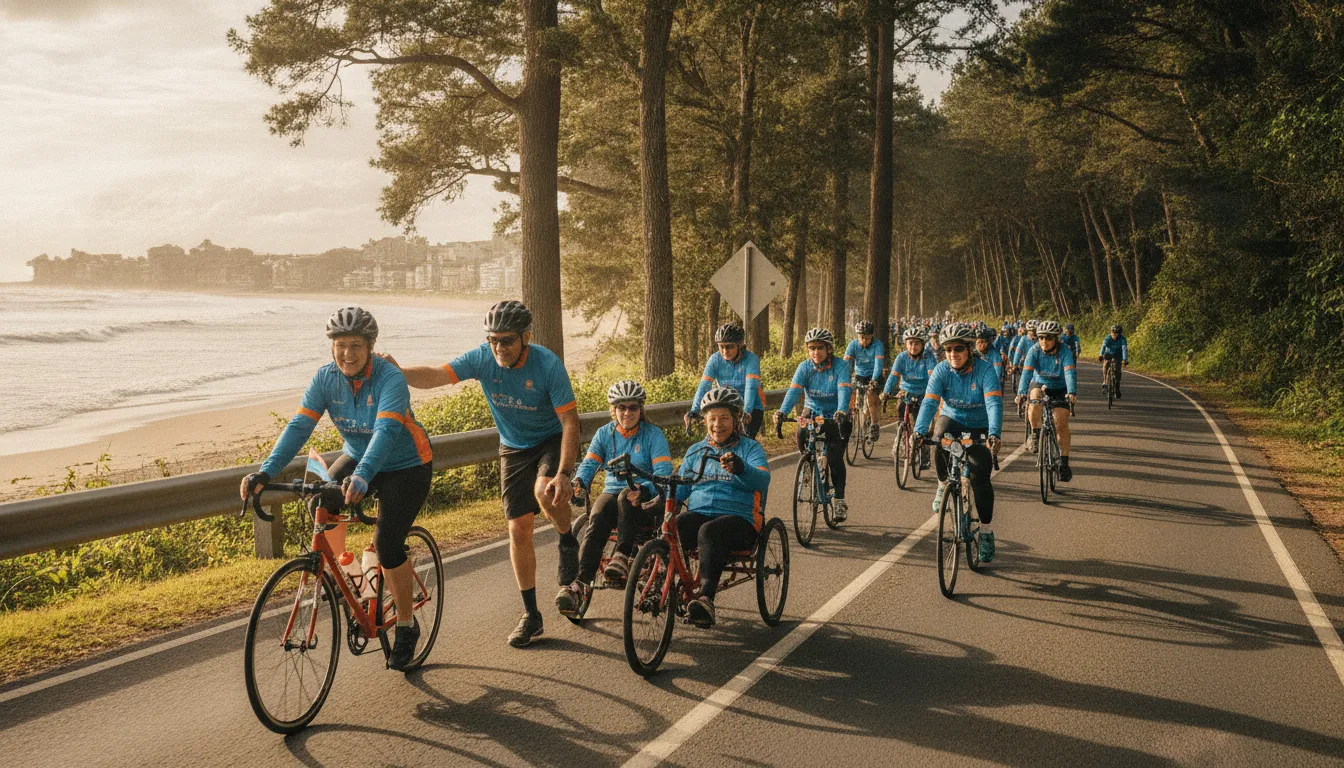
Bike to the Beach events are not limited to one type of rider or one event format. Documented options include multiple distances, relay teams, traditional teams, corporate teams, and a seven-day virtual challenge. These choices can give individuals, families, friends, workplaces, and community groups different ways to participate, depending on their interests, schedules, support networks, and comfort with cycling.
Ride operations also document rest stops about every 15 miles, hydration, nutrition, first aid, mechanical assistance, SAG vehicles, and medical support. These features describe general ride infrastructure, not a promise of adaptive accommodations. Before choosing a format, ask specific questions about route conditions, equipment, communication, sensory considerations, support-person policies, and what happens if a participant needs to change plans.
The strongest connection between sport and local impact is therefore choice. Someone may ride, join a relay, participate virtually, support a team, volunteer, or simply learn about organizations serving local disability communities. Adaptive sports include many experiences, and no single event needs to meet every participant’s needs to contribute to a broader culture of access, belonging, and shared action.
How Can Families and Allies Support Participation?
Support begins with listening. A person may want to try an adaptive sport, attend a community ride, volunteer, or simply learn more before deciding whether and how to participate. Their preferred activity, communication style, energy level, sensory needs, and goals should guide the conversation. Do not assume that a family member, diagnosis, or previous experience tells you what someone wants.
Ask what support would be useful
Use specific, open questions instead of making plans on someone else’s behalf. You might ask, “Would you like me to help research options?” or “What would make this event feel more comfortable?” Some people may want a companion nearby. Others may prefer to manage registration, equipment, or introductions independently. Respecting a person’s answer includes accepting “not now” or “no” without turning the invitation into pressure.
Share information without taking over
Families and allies can make participation easier by gathering clear details about the activity, location, schedule, cost, transportation, equipment, communication, and sensory environment. Share the information in the format the person prefers, then leave room for them to decide. If an event does not explain its accessibility or participation options, contact the organizer with questions rather than promising that a particular accommodation will be available.
It can also help to compare more than one pathway. Adaptive sports may be recreational or competitive, individual or team-based, and may involve equipment or rules designed around different access needs. A person might choose a short local activity, a relay, a virtual challenge, or a role away from the course. The most supportive option is the one that matches the participant’s interests and circumstances, not the one that looks most impressive to someone else.
Plan practical logistics together
Before the day, work with the participant to identify transportation, arrival time, clothing, equipment, food, breaks, communication plans, and who to contact if plans change. Build flexibility into the plan rather than treating it as a test that must be completed. On site, ask before assisting with mobility, equipment, or personal tasks. Offer help, wait for an answer, and follow the person’s instructions.
Allies can also support participation by making space for connection beyond the activity itself. That may mean introducing someone to a team, checking whether they want to join a conversation, or helping them find another way to contribute. Bike to the Beach connects charity cycling with local autism and disability organizations, and its documented formats include teams, relay participation, and a virtual challenge. To learn more about community opportunities, visit the Bike to the Beach community and confirm event-specific details directly with organizers.
Explore community ways to participate with Bike to the Beach
Contact organizers with questions about your participation options.
Frequently Asked Questions
What is an adaptive sport?
An adaptive sport is a recreational or competitive activity designed or modified to make participation more accessible for people with disabilities. The changes may involve equipment, rules, instruction, communication, or the environment. The right approach depends on the participant’s abilities, goals, interests, and preferences.
What are some popular adaptive sports?
Options vary widely and can include cycling, skiing, swimming, wheelchair basketball, tennis, archery, goalball, rugby, and soccer. Programs may offer individual or team activities, indoors or outdoors, for recreation or competition. Try more than one format when possible rather than assuming a single sport will be the best fit.
Can you give me an example of a disability sport?
Adaptive cycling is one example. A program might offer different bicycles, coaching, or volunteer assistance so participants can explore cycling in a way that fits their needs. Ask the organizer what equipment, support, surfaces, and participation formats are available before attending.
What sports can I put my autistic child in?
There is no universal best choice. Start with your child’s interests, communication preferences, sensory needs, comfort with groups, and desired level of competition. Ask programs about class size, noise, transitions, coaching style, breaks, equipment, and whether your child can observe or try a session before committing. Their input should guide the decision.
Ready to Explore Your Participation Options?
Finding a welcoming entry point can make it easier to choose an activity that reflects your interests, comfort, and goals. Get started by exploring the Bike to the Beach community, then reach out to the organizers to confirm current event details and discuss the participation option that best fits your needs.