
New York Charity Cycling Event Guide
Start planning your New York charity cycling event with Bike to the Beach, including route options, fundraising tips, local impact, and ways to join.

Every mile toward Smith Point can move support closer to a New York family. Bike to the Beach pairs that purpose with a supported route for first-time riders, experienced cyclists, and teams.
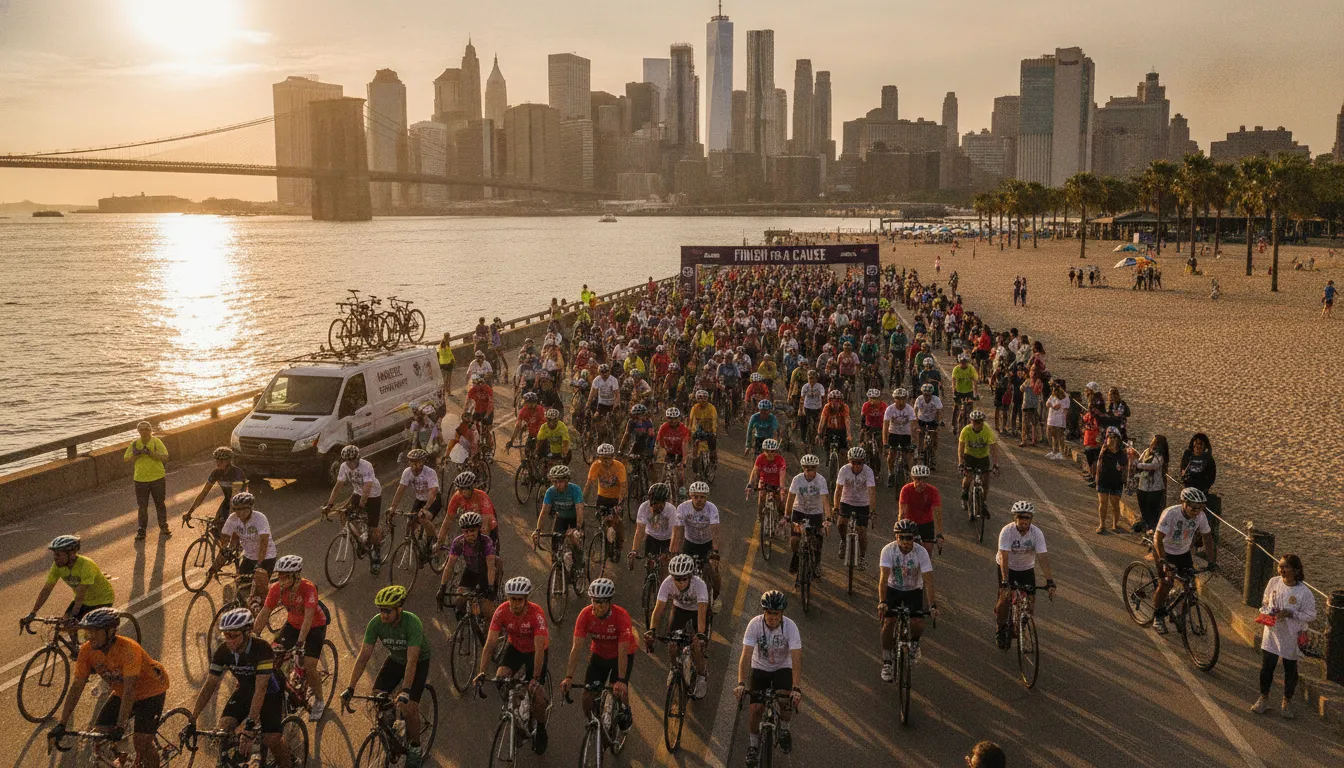
A New York charity cycling event should offer more than a finish line, and Bike to the Beach connects every rider’s effort to local impact. The New York ride brings the metropolitan cycling community together for a beach-bound challenge, with 25, 50, and 100-mile options plus relays. Riders choose a distance that fits their goals, then fundraise for nearby autism and disability nonprofit partners that serve New York communities. That local model turns fundraising into visible support for nearby community programs. On ride day, route guidance, rest stops, mechanical support, and SAG vehicles help the group keep moving toward a memorable destination finish. Supporters can also advance the mission by donating, volunteering, sponsoring the event, or building a corporate team around shared local action.
Whether you plan to ride, rally a team, volunteer, or give, each role can strengthen the same local mission in a practical way. The guide starts by answering, What makes Bike to the Beach a New York charity cycling event? Here’s how.
What makes Bike to the Beach a New York charity cycling event?
Bike to the Beach is a fully supported destination ride that pairs a cycling challenge with fundraising for autism and other disABILITIES. It brings New York riders together around local impact and a shared goal. Unlike a standard group ride, the event connects training and ride day with support for regional nonprofit partners.
A destination ride with a local purpose
The ride begins with a clear mission: raise funds and awareness while building an inclusive cycling community. Money raised in the region supports nearby autism and disability nonprofit partners. That local model helps riders see how their fundraising can support services, recreation, education, and community inclusion close to home.
The destination format also gives the day a clear sense of progress. Riders move from the New York metropolitan community toward a beach finish, sharing the route with people working toward the same purpose. The New York charity cycling event page provides current route, date, and registration details.
Full support from start to finish
Bike to the Beach is designed as a fully supported ride, not a self-guided trip. Riders can focus on the route and their fundraising mission while the event team manages key ride-day needs.
Support includes SAG vehicles, rest stops, mechanical support, and route guidance.
- SAG vehicles for riders who need help along the route.
- Rest stops for breaks, food, and water.
- Mechanical support for common bike issues.
- Route guidance to help riders stay on course.
Multiple distance options welcome experienced cyclists, casual riders, and people taking on their first charity ride. That range makes the event an approachable challenge without removing its athletic focus. Riders can plan their New York ride with route information, logistics, and event resources.
Shared action for autism and other disABILITIES
The event frames riders, donors, volunteers, and nonprofit partners as members of one community. Each person contributes in a different way, but the work centers on local support and inclusion. This approach avoids treating the ride as a one-day athletic feat with no tie to the people it serves.
The mission also reflects a wider link between movement and well-being. A published review of exercise interventions found benefits across several abilities in children with autism. Bike to the Beach turns a shared love of cycling into funds, awareness, and stronger ties among New York communities.
How the New York ride works
Route and distance options
The New York charity cycling event brings riders from the city toward a shared beach finish at Smith Point. The full route starts in Manhattan, while shorter options help more people take part. Riders can choose 100, 50, or 25 miles based on their goals, training, and preferred day on the bike.
Your start location and check-in plan depend on the distance or relay option you select. Relay teams divide the route among several riders instead of asking each person to complete one full distance. Review the current choices and registration information on the New York charity cycling event page before you commit.
Solo, team, and relay participation
You can take on the ride as a solo rider or join a team. Teams give friends, families, coworkers, and community groups a shared fundraising goal and ride-day experience. The relay format offers another way to participate when a full route does not fit every team member.
Choose a format that matches your group’s riding skill, available training time, and travel plan. A team can include riders with different route choices, but each person should confirm their own registration details. Set expectations early about training, transport, fundraising, and how the group will stay in touch.
- Solo riders manage their own training, registration, and fundraising plan.
- Teams share encouragement and a group identity while each rider prepares for a chosen distance.
- Relay teams split the route and must plan rider handoffs and transport with care.
Registration, fundraising, and ride-day support
Registration reserves your place in the selected ride format and starts the fundraising process. Fundraising minimums are part of participation, but amounts and deadlines may differ by route or registration type. Check the live event information before setting your personal goal or asking donors to support your ride.
Funds raised through Bike to the Beach support local autism and disability nonprofit partners. The event’s mission centers on people with autism and other disABILITIES. Separate research on exercise interventions found gains in several skills among children with Autism Spectrum Disorder.
The ride is fully supported, with SAG vehicles, rest stops, mechanical help, and route guidance built into event operations. That support helps riders focus on safe pacing and reaching the destination together. It does not replace training, route review, or a clear plan for getting to and from the event.
Use the official details to confirm check-in, route maps, rider resources, and other day-of logistics. The plan your New York ride page is the best starting point for current guidance. Recheck it as ride day nears, since schedules and instructions can change.
The fully supported route experience
A fully supported ride gives cyclists a clear plan for moving through the day. Bike to the Beach provides SAG vehicles, rest stops, mechanical support, and route guidance. These services help riders focus on steady progress, their fundraising purpose, and the beach ahead.
Support along the route
SAG vehicles support riders who cannot keep cycling because of fatigue, a bike issue, or another problem. Knowing that help is available can ease some common concerns for first-time charity riders. Experienced cyclists also gain a backup plan when an unexpected issue interrupts their ride.
Rest stops create clear points to pause, reset, and prepare for the next part of the route. Riders can use each stop to check how they feel and review what lies ahead. This simple rhythm helps turn a long ride into a series of more manageable sections.
Mechanical support adds another practical layer to the event. Riders should still arrive with a bike that is ready for the route. On-course support can help when a mechanical problem appears after the ride has begun.
Route guidance and ride-day planning
Route guidance helps cyclists stay focused without treating every turn as a solo navigation task. Before the event, riders can plan their New York ride by reviewing route information, logistics, and available webinars. A careful review makes ride morning less rushed.
First-time riders may want to note rest stops and key route points before starting. Experienced cyclists can use the same details to shape pacing and manage effort. Both groups benefit from following event guidance instead of relying only on their usual ride habits.
The New York charity cycling event offers multiple distance options for casual and experienced riders. That choice lets each cyclist select a challenge that fits their preparation. Full support does not replace training, but it creates a clearer structure around the chosen distance.
Volunteers and the destination finish
Volunteers are part of the community that makes the ride possible. Their hands-on service adds a human presence to the support system throughout the event. Riders share the route with people working toward the same local-impact mission.
The beach finish gives every distance a clear destination. It marks the end of the day’s physical effort and the shared fundraising journey. The finish also brings riders, volunteers, and supporters together around local autism and disABILITY nonprofit partners.
The mission connects cycling with a wider focus on active, inclusive communities. A recent review of exercise interventions found benefits across several skills in children with Autism Spectrum Disorder. Bike to the Beach pairs its athletic experience with fundraising and awareness for autism and other disABILITIES.
Fundraising and local nonprofit impact
Fundraising gives the New York charity cycling event a purpose beyond the finish line. Money raised in the region stays there, supporting nearby autism and disability nonprofit partners. This local model connects each rider’s effort with services used by people and families in their own communities. Riders, donors, partners, and volunteers all take part in that shared work.
Where local funds can help
Each rider raises money as part of taking part in the event. Bike to the Beach offers practical guidance to help participants fundraise for New York nonprofits. That guidance can help riders set a clear goal, explain the local purpose, and invite others to join the effort.
Local nonprofit partners may use support for sensory gyms, therapy programs, educational help, recreation, family support, and community inclusion. These services address different needs and create more ways for people with autism and other disABILITIES to take part. The range matters because each person and family has distinct goals.
Recreation can be one useful part of this broader support. A published review found that exercise programs improved several skills in children with autism, including motor, social, and thinking skills. The review also stressed that programs should fit each person’s age and needs.
Fundraising built on personal stories
A strong fundraising message explains both the ride and the reason behind it. Riders can share why they joined, describe the local impact model, and tell donors what their support may make possible. This approach keeps the focus on community action instead of pity or inflated promises.
Personal stories also help donors see the people and values behind the event. The impact of your ride page shares more context about the mission and why people take part. Riders can use that context while still speaking in their own voice.
- Explain why the local mission matters to you.
- Share your ride goal and progress in clear terms.
- Invite friends, family, and coworkers to donate or spread the word.
- Thank supporters and report back on the shared effort.
A partnership with the New York community
The local model gives nonprofit partners a fundraising platform and greater community visibility. It also gives riders and donors a direct link to work happening near them. That connection can bring new people into autism and disability support through cycling, giving, volunteering, or future partnerships.
Local impact is not a single service or one person’s achievement. It grows through the combined work of nonprofit teams, families, riders, donors, volunteers, and community partners. Clear fundraising messages help each group understand its role and choose a useful way to take part.
How Bike to the Beach compares with other New York cycling events
New York riders have many event options, including Bike New York, GFNY, Empire State Ride, and local club rides. The right choice depends on what you want from the day. Some riders value a new challenge, while others want their miles to support a clear cause.
Bike to the Beach stands apart as a community-first, fully supported destination ride for autism and other disABILITIES. Its New York charity cycling event pairs an athletic goal with local fundraising and a beach finish.
The main points to compare
Start with the event’s purpose, route format, support, and fundraising model. Then check whether its distance and pace fit your current training. These details matter more than choosing an event only because its name is familiar.
| Event | Lens | Confirm |
|---|---|---|
| Bike to the Beach. | Local autism impact. | Distance and fundraising. |
| Bike New York. | Personal ride goals. | Route and rules. |
| GFNY. | Pace challenge. | Course and entry. |
| Empire State Ride. | Cause and time. | Format and terms. |
| Other rides. | Local access. | Organizer details. |
The table is a starting point, not a ranking. Event formats and terms may change, so compare current organizer details side by side. A careful review helps you choose a ride that fits your goals, schedule, and preferred kind of impact.
Cause and local impact
Bike to the Beach directs funds raised in the region toward nearby autism and disability nonprofit partners. This local model gives riders a direct link between fundraising and community services. The event’s mission also reflects evidence that structured exercise can support several skills in children with ASD. A review of exercise interventions describes those findings.
That purpose may guide riders who want more than a finish time. Participants join a shared effort centered on inclusion, practical support, and respect. Riders can also learn about the impact of their ride before choosing their event.
Ride format and support
Bike to the Beach offers multiple distance options for casual riders, first-time participants, and experienced cyclists. Full ride support includes route guidance, rest stops, mechanical help, and SAG vehicles. The destination format adds a clear goal: reaching the beach together.
When comparing any event, read its current rules and route details before signing up. Ask what support is on course, what fundraising is required, and which distance suits you. Bike to the Beach is a strong fit when local impact, flexible distance, full support, and an inclusive mission matter most.
Who should ride, volunteer, sponsor, or donate?
A New York charity cycling event can bring together people with different skills, schedules, and comfort levels. Bike to the Beach offers ways to help both on and off the bike. The right path depends on how you want to take part and support local impact.
Riders of many experience levels
Experienced cyclists can take on a longer distance and make the destination finish part of their goal. Casual riders and first-time charity cyclists can choose a distance that fits their current training. Full route support, rest stops, SAG vehicles, and mechanical help make ride day easier to plan.
Riders also serve as fundraisers and advocates for people with autism and other disABILITIES. Their effort helps connect friends, family members, and coworkers with the mission. Research on exercise interventions has found benefits across several abilities in children with Autism Spectrum Disorder.
- Ride solo and build a personal fundraising campaign.
- Join with friends or family for a shared challenge.
- Start a workplace team that trains and raises funds together.
Ways to help without riding
You do not need to cycle to play a useful role. Volunteers can support event operations, welcome participants, help at rest stops, or assist with community outreach. Donors can back a rider, team, or local nonprofit partner. These options work well for people with limited time or no interest in cycling.
Community groups can also take part before and after ride day. Schools, clubs, and civic groups may organize volunteers or help share the event locally. Autism and disability organizations can explore the service provider partner program to build connections, raise awareness, and join a wider local network.
Businesses and corporate teams
Companies can turn the event into a clear employee engagement and community impact effort. A corporate team gives coworkers a shared training goal. Staff members can ride, volunteer, donate, or fundraise. This flexible setup lets more people join, including those who do not want to cycle.
Sponsors can support the event while connecting their brand with local riders, families, nonprofits, and advocates. The Bike to the Beach sponsor page outlines ways businesses can get involved. Community partners may also offer services, volunteers, or local knowledge that helps strengthen the event experience.
Choose the role that matches your time, interests, and resources. Then invite your workplace, family, or community group to take part alongside you.
How to prepare for your first charity bike ride
Your first charity ride should feel challenging, not confusing. A simple plan helps you build fitness, meet your fundraising goal, and arrive ready for the day.
A clear starting point
Begin by choosing an event that fits your current riding experience and schedule. Bike to the Beach welcomes experienced cyclists, casual riders, and first-time participants. It also offers several distance options, so you can select a goal that feels realistic.
The ride connects physical activity with local community impact. Research shows that exercise interventions can improve motor skills, coordination, and social skills in children with ASD. The published exercise review also supports plans tailored to different ages and needs.
Five preparation steps
Use these steps to prepare for the New York charity cycling event. Start early enough to make small gains each week, rather than trying to solve everything near ride day.
Before you begin, take an honest look at your calendar and current fitness. A workable plan should leave room for rest, bad weather, family needs, and other duties. Consistency matters more than one hard training day.
-
Choose your distance. Think about how far you ride now and how much training time you can give each week. Pick a route that stretches your ability without making the goal feel out of reach.
-
Review the event details. Check the route, start time, rider webinars, support services, and day-of schedule. Use the event guide to plan your New York ride and note each deadline on your calendar.
-
Set a fundraising plan. Break your fundraising goal into smaller weekly targets. Make a list of friends, relatives, coworkers, and local businesses to contact. Share why you ride, ask clearly, and thank every donor.
-
Train on a steady schedule. Ride two or three times during most weeks, with one longer ride when possible. Increase distance in small steps. Practice drinking, eating, shifting gears, and fixing a flat before event day.
-
Coordinate logistics and your team. Confirm transport, bike gear, lodging, clothing, and meeting points. If you ride with others, agree on pace and regroup spots. Decide who will carry shared tools and supplies.
Fundraising as part of the plan
Fundraising works best when it develops beside your training. Set time each week for outreach, updates, and donor thanks. Bike to the Beach provides guidance to help you fundraise for New York nonprofits while preparing for the ride.
Keep your message personal and clear. Explain your connection to the mission and share useful progress updates. Each training milestone gives you a fresh reason to contact your community without repeating the same request.
Frequently Asked Questions
How much does it cost to join the Bike to the Beach New York ride?
Registration fees and the fundraising minimum are separate costs. Both may vary by registration period, so review the current details before signing up. The New York fundraising page explains the fundraising requirement and offers guidance for reaching it. Riders can also ask friends, relatives, coworkers, and employers to support their campaign.
Can beginner cyclists join the New York charity cycling event?
Yes. Bike to the Beach welcomes first-time participants, casual riders, and experienced cyclists. Riders can select from multiple distance options based on their fitness and comfort level. The event is fully supported, but every participant should train for their chosen distance. Review the New York ride details before building a training plan.
What support is available during the Bike to the Beach New York ride?
Bike to the Beach is a fully supported ride with route guidance, rest stops, mechanical help, and SAG vehicles. SAG vehicles assist riders who cannot continue safely or need help between stops. Participants should still carry basic supplies, follow event instructions, and review the latest logistics before ride day.
How can someone support the New York event without riding?
Supporters can volunteer, donate to a rider or team, sponsor the event, or help a participant share their fundraising campaign. Businesses can also form corporate teams or explore sponsorship opportunities. These options allow families, community groups, and companies to take part even when cycling is not practical.
How are funds raised by New York riders used?
Funds raised through Bike to the Beach stay in the region where they are raised. They support local autism and disability nonprofit partners that provide services, programs, and community resources. The Bike to the Beach website explains this local-impact model and the organization’s broader mission.
Ready to Make Your New York Miles Matter?
Waiting to choose how you will participate can leave less time to train, organize fundraising, and invite friends or coworkers to join you. Starting now gives you a clearer runway to build confidence on the bike and rally your network around meaningful local impact. Early action also helps you explore ride options, plan logistics, and decide whether riding, donating, volunteering, or supporting a team fits you best.
Ready to take the next step? Register for the New York ride to learn how to participate and begin planning today. Whether you intend to ride or support someone else, starting now gives your effort more time to grow and reach the New York community.