

New England charity bike ride guide
Start your New England charity bike ride with confidence. See route options, ride support, local autism impact, and how to register with Bike to the Beach.

A New England charity bike ride should feel purposeful from the first mile to the finish. For many riders, the appeal is a mix of scenic roads, team energy, personal challenge, and the chance to turn a day on the bike into direct support for local families and nonprofit partners.
Ready to ride for local impact? Visit the Bike to the Beach New England ride page to see current registration details, route options, and event updates.
Bike to the Beach brings that experience together for Boston and New England riders through a fully supported ride community that raises funds and awareness for autism and other disABILITIES. This guide explains what makes the New England ride different, how to think about distance and preparation, and how participation supports local partner organizations.
New England charity bike ride basics
A New England charity bike ride is more than a recreational cycling event. It is a fundraising experience built around a cause, a route, and a community. Riders register, train, fundraise, and show up on event day knowing that their miles are connected to something larger than personal fitness.
For Bike to the Beach, the mission is specific. The organization raises funds and awareness for autism and other disABILITIES, with an emphasis on local partner impact. The New England ride connects the Boston and regional cycling community with nonprofit partners that support inclusion, family services, recreation, therapy, education, and community access.
The format is designed to be approachable. Experienced cyclists can treat the ride as a meaningful endurance challenge. Casual riders and first-time charity ride participants can choose a distance that fits their training plan, then rely on event support along the way. Corporate teams, families, volunteers, and donors can also take part without needing to be elite cyclists.
What riders are usually looking for
- A safe and organized ride with clear logistics.
- Flexible distance options for different fitness levels.
- Rest stops, route guidance, mechanical support, and SAG support.
- A cause that feels tangible and local.
- A finish that feels memorable, social, and worth training for.
That combination is why charity cycling works well in New England. The region has active cycling communities, strong nonprofit networks, and riders who value events that blend challenge with purpose.
Why Bike to the Beach New England is different
Many charity bike events ask riders to fundraise for a national cause. Bike to the Beach stands out by focusing on local impact. Funds raised through the event support regional autism and disability nonprofit partners, so riders can connect their effort to services and organizations closer to home.
That local partner model matters. It helps participants understand where their fundraising goes, gives nonprofit partners a platform for visibility, and turns the event into a regional community builder instead of a one-day athletic challenge. Riders are not positioned as rescuers. They are community members using movement, fundraising, and teamwork to support organizations already doing important work.
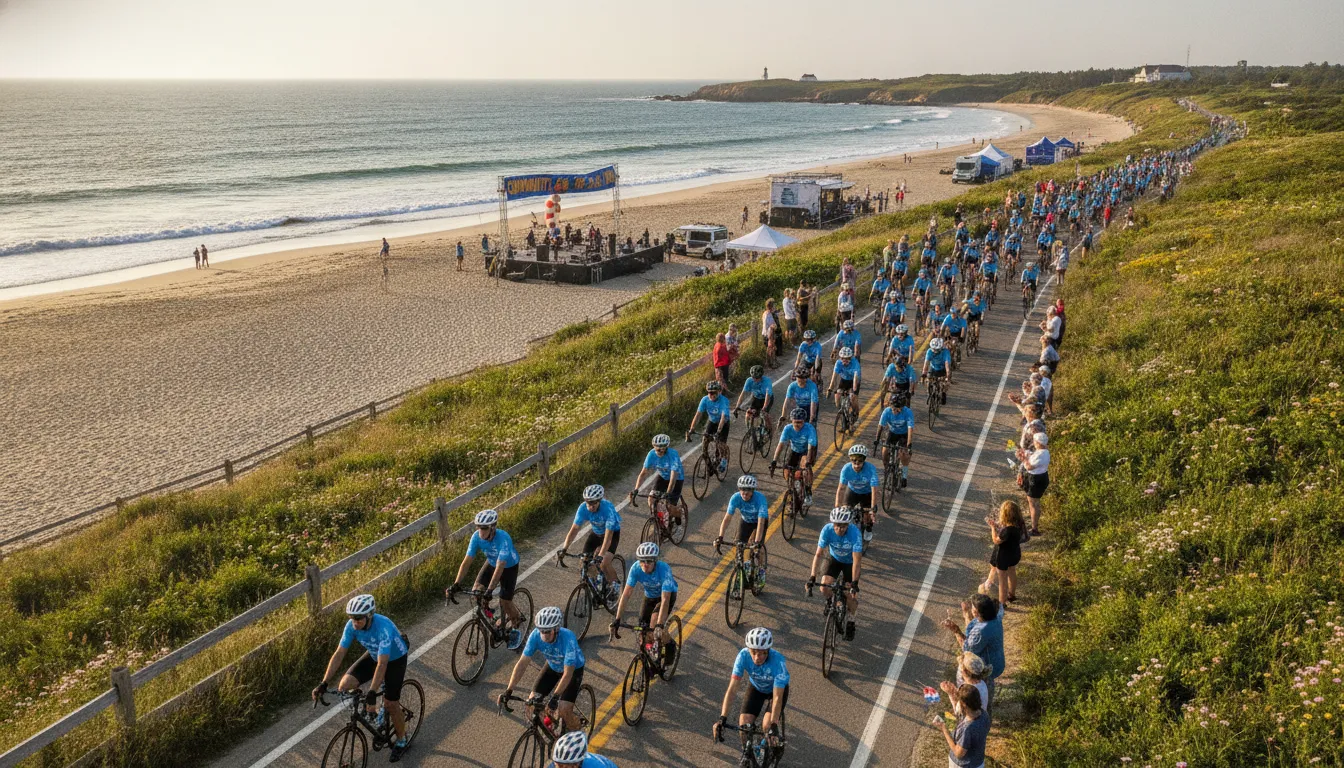
The New England ride also fits the brand’s destination ride model. Bike to the Beach is known for routes that move from major communities toward a beach finish, creating a clear emotional arc for the day. The ride begins with preparation and purpose, builds through shared miles and support stops, and ends with a finish that feels like a celebration of the community behind the cause.
Key differentiators
- Cause focus: autism and other disABILITIES.
- Regional impact: fundraising supports local partner organizations.
- Supported ride experience: rest stops, route support, mechanical help, and SAG vehicles are part of the event model.
- Flexible participation: riders, volunteers, donors, sponsors, and teams all have a role.
- Community-first tone: the event is energetic without using pity-based language.
If you are comparing options, that difference can help you choose the right ride. A listing site may show dozens of New England cycling events, but not every ride offers the same combination of local impact, disability inclusion, flexible support, and destination-event energy.
How far can you ride?
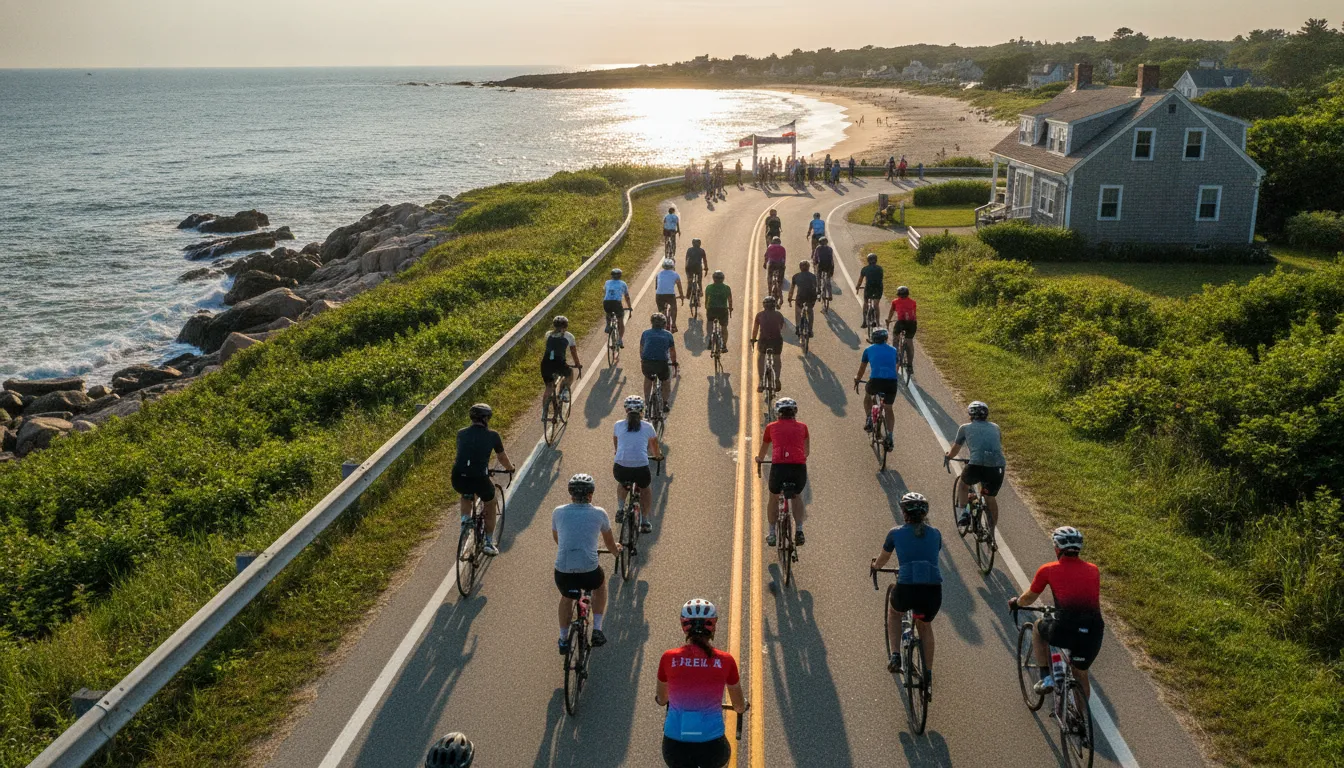
Distance is one of the first questions most riders ask. Bike to the Beach events are designed to include multiple route options, often ranging from shorter community-friendly distances to longer endurance rides. The exact New England options can change by year, so the best source for current details is the New England ride details page.
The right distance depends on your current fitness, available training time, comfort riding in a group, and fundraising goals. A long route can be an inspiring challenge for riders who already have a strong base. A shorter option can be a smart choice for first-time participants, returning riders with limited training time, or teams that want more people involved.
| Rider type | Best-fit approach | Preparation focus |
|---|---|---|
| First-time charity rider | Choose a manageable distance and build consistency. | Weekly rides, basic bike handling, hydration, and comfort. |
| Casual cyclist | Pick a route that stretches you without overwhelming you. | Longer weekend rides, group practice, and fueling. |
| Experienced rider | Use the event as a purposeful endurance goal. | Pacing, climbing, nutrition, and team leadership. |
| Corporate or community team | Offer several distance options so more people can participate. | Shared training rides, fundraising coordination, and event-day planning. |
Do not choose a distance only because it sounds impressive. Choose the route that lets you show up prepared, fundraise with confidence, and enjoy the day. A charity ride works best when the experience is challenging enough to feel meaningful and supported enough to feel achievable.
What support should riders expect?
Support is one of the biggest reasons to choose an organized charity ride instead of creating your own route. A fully supported event reduces uncertainty and helps riders focus on the ride, the cause, and the community around them.
Bike to the Beach’s event model includes practical ride support such as rest stops, mechanical support, and SAG vehicles. Rest stops give riders a chance to refuel, refill bottles, regroup, and reset. Mechanical support can help with common bike issues. SAG vehicles add an extra layer of reassurance for riders who need help getting to the next stop or finishing safely.
Support can include
- Planned rest stops along the route.
- Route guidance and event-day communication.
- Mechanical support for common bike problems.
- SAG vehicle support for riders who need assistance.
- Volunteer energy at check-in, rest stops, and the finish.
Riders should still prepare carefully. Event support does not replace training, a tuned bike, or smart fueling. It creates a structure that makes the experience safer, more organized, and more welcoming. Before event day, review the current ride guide, confirm start time and location details, and make sure your bike is ready for the distance you choose.
Good preparation also supports the volunteers and staff who make the day possible. When riders arrive on time, carry basic supplies, follow route guidance, and communicate if they need help, the whole event runs more smoothly.
How does the ride support autism and disability nonprofits?
The fundraising purpose is central to the Bike to the Beach experience. The New England charity bike ride raises funds and awareness for autism and other disABILITIES, with a focus on regional partner organizations and local community benefit.
That impact can take many forms depending on the partner organization. Funds may help support inclusive recreation, therapy programs, sensory-friendly spaces, education, family support, employment readiness, advocacy, or community programs. The common thread is local action. Riders, donors, and sponsors are helping strengthen resources that families and individuals can connect with in their own region.
This is also why the language around the cause matters. Bike to the Beach does not need pity-based storytelling to make the ride meaningful. The stronger message is shared action. Riders participate because they want communities to be more inclusive, because they believe local nonprofits deserve support, and because they want an active way to contribute.
For donors, that local connection makes fundraising easier to explain. Instead of asking people to support a vague cause, riders can talk about a specific regional ride. A clear mission, and a nonprofit partner model that keeps the focus close to the community.
For service providers, the service provider partner program offers another way to connect with families and community organizations. For companies, the same model creates a credible corporate social responsibility opportunity. Sponsors and corporate teams can support a visible regional event, engage employees, and connect with a mission that is both active and community-centered. The Bike to the Beach sponsor page is the best place to start for organizations that want to explore that path.
How to prepare for a New England charity bike ride
Preparation does not need to be complicated, but it should be consistent. Start with the distance you plan to ride, then work backward from event day. Your goal is to build comfort on the bike, confidence with fueling, and familiarity with riding around other people.
- Confirm the current event details. Check the official New England ride page for date, route, distance, fundraising, and logistics updates.
- Choose your distance early. Pick a route that matches your training window and gives you enough time to build gradually.
- Ride consistently. Two or three shorter rides during the week plus a longer weekend ride can build a strong base.
- Practice fueling. Test snacks, hydration, and timing before event day so your stomach is not guessing during the ride.
- Get your bike checked. A tune-up can prevent common problems with brakes, shifting, tires, and chain wear.
- Fundraise with a personal story. Explain why the cause matters to you, what the ride supports, and how donations help local partners.
- Invite others in. Ask friends, coworkers, or family to ride, donate, volunteer, or share your fundraising page.
Training also gives you more ways to connect with the community. Team rides, fundraising updates, volunteer conversations, and rider stories like those on the Why We Bike page all build momentum before event day. The more prepared you feel, the more space you have to enjoy the route and the people around you.
If you are not ready to ride this year, you can still support the event by donating, volunteering, or helping a team fundraise. Visit the contact page if you want help finding the right role.
Register for the Bike to the Beach New England ride and turn your next training goal into local community impact.
How do you choose between New England charity bike rides?
New England has a wide range of cycling events, from local recreational rides to major endurance fundraisers. The right choice depends on what you want from the day. Some riders want the longest distance available. Others want a welcoming first charity ride, a team-friendly event, or a cause they can explain easily to donors.
Start by comparing the purpose of the ride, not only the route. Ask who benefits, how local the impact is, what kind of support is included, and whether the event welcomes your level of experience. A ride with a strong mission and clear support may be a better fit than a longer or more competitive event that does not match your goals.
Questions to ask before registering
- Does the cause connect with your values or community?
- Are there route options that fit your current ability?
- Does the event provide rest stops, mechanical help, and SAG support?
- Can friends, family, coworkers, or volunteers participate too?
- Is there a clear next step after you register?
Bike to the Beach is a strong fit for riders who want a supported destination ride with a community-first disability and autism mission. It is also a strong fit for teams that want a positive, active, and locally relevant way to fundraise together.
Frequently asked questions
What is the New England charity bike ride experience like?
The experience combines a supported bike ride, fundraising, volunteer energy, and a destination finish. Riders train for a chosen distance, raise funds for autism and disability nonprofit partners, and ride with a community that values both challenge and local impact.
Who does Bike to the Beach New England support?
Bike to the Beach supports autism and other disABILITIES through local nonprofit partners. The goal is to keep the focus on regional impact, helping organizations that provide services, inclusion, recreation, education, and support for local communities.
Are there different distance options?
Yes. Bike to the Beach events are built with flexible distance options so riders with different experience levels can participate. Check the official New England ride page for the current year’s route choices and ride details.
Can I volunteer if I am not riding?
Yes. Volunteers are an important part of the event experience. Non-riders can help with check-in, rest stops, route support, finish-line energy, fundraising, and team coordination depending on current event needs.
How should I start fundraising?
Start with a short personal message. Explain why you are riding, describe Bike to the Beach’s local autism and disability mission, and share your fundraising page with friends, family, coworkers, and community groups.
Start your New England charity bike ride
If you are looking for a New England charity bike ride that combines scenic miles, strong event support and local impact for autism and other disABILITIES, Bike to the Beach is built for that purpose. Register as a rider, join a team, volunteer, donate, or invite your company to sponsor the ride. Every role helps build a stronger regional community around inclusion, action, and shared progress.
Start with the official Bike to the Beach New England ride page for the latest route, registration, and event details.