

Event Sponsorship: A Community-Focused Guide for Nonprofits
Learn how community events can build strong sponsor relationships, from finding a good fit and planning activation to fulfilling promises and follow-up.
Event sponsorship works best when it is treated as a relationship, not a logo sale. For a nonprofit or community event, the right sponsor contributes resources and receives a meaningful way to connect with participants, while the event team protects the mission and follows through on every promise. A clear lifecycle—from finding fit to post-event stewardship—makes that exchange practical and credible.
Explore sponsorship opportunities with Bike to the Beach
What does event sponsorship exchange?
Event sponsorship is a partnership in which an organization supports an event with funding, products, services, or expertise in return for agreed recognition or engagement opportunities. It is not simply a donation with a logo attached. Both sides should be able to explain what they contribute, what they receive, and how the partnership supports the event’s purpose.
For a community ride, a sponsor might provide financial support, participant resources, or useful event-day services. In return, the organizer may offer appropriate visibility, a chance to engage with attendees, or recognition in event communications. The exchange should fit the event and its audience. If a benefit does not help the sponsor connect meaningfully or does not serve the event, reconsider it.
Research on event sponsorship has examined the relationship between perceived fit and sponsor brand loyalty; the academic study titled How do companies benefit from sponsoring an event? explores that subject. The practical takeaway is to make fit and participant relevance central, rather than treating visibility as the only value.
How do you define a useful value exchange?
Start with the event’s real needs and the sponsor’s likely goals. A strong exchange is specific, deliverable, and proportionate. It does not promise guaranteed sales, media results, or audience behavior. Instead, it names actions the event team can control, such as including a sponsor in an agreed communication or providing a defined on-site presence.
| Event need or contribution | Possible sponsor contribution | Possible event benefit |
|---|---|---|
| Help cover event operations | Financial support | Recognition in agreed event materials |
| Support participant readiness | Useful products or services | Relevant participant-facing presence |
| Improve event experience | Staff time or expertise | Opportunity to demonstrate support in context |
| Build local connection | Community relationships or outreach | Recognition tied to the event’s local purpose |
Use the table as a starting point, not a menu of automatic promises. Confirm the event can provide each benefit and that it is suitable for the audience. A small, well-executed commitment is more valuable than a long list that the team cannot fulfill.
Translate needs into useful benefits
Make a short inventory before you talk about recognition. For example, if the event needs supplies for a rest area, consider whether a sponsor can contribute the items, the people to distribute them, or support for delivery. Then decide what acknowledgement is appropriate and feasible. Do not assume an in-kind contribution is automatically more useful than funding; compare it with the actual need, storage, staffing, and timing.
Separate benefits into what the organizer controls and what it cannot control. A team can control whether an approved logo appears in a specified email. It cannot control how many people notice it or whether anyone becomes a customer. This distinction helps both sides set realistic expectations and gives the post-event review a fair basis.
How can you find sponsors that fit?
Look for organizations whose interests overlap with the event, its participants, or its community. Fit can come from geography, audience, values, employee engagement, or a service that genuinely improves the event experience. A connection does not need to be perfect, but the reason for approaching a potential sponsor should be clear.
- Map the event: Define who participates, what the event does, where it takes place, and what support it needs.
- Build a focused prospect list: Consider local employers, suppliers, community-minded organizations, and businesses already connected to participants.
- Check alignment: Ask whether the sponsor’s presence will feel relevant and appropriate to participants.
- Offer a conversation: Learn the sponsor’s goals before proposing a specific exchange.
Bike to the Beach describes its rides as connecting cycling with charitable giving for local autism and disability organizations. Learn about the organization’s mission and local impact, and review its sponsorship opportunities to understand how partnerships connect to the rides.
Use a simple fit test
Before investing time in a proposal, write down the answers to four questions: Why this event? Why this audience? Why this potential partner? Why now? If the answers rely only on a company’s size or ability to pay, the connection may be too thin. A more considered approach identifies a shared community interest, a relevant participant need, or a credible way for the sponsor’s people to take part.
Also consider the participant’s perspective. Would the sponsor’s presence feel helpful, neutral, or intrusive? Could the organization explain the partnership without confusing its mission? If a relationship raises concerns, address those concerns with the appropriate decision-makers before making a commitment. A thoughtful fit decision protects trust on both sides.
How should you agree on the partnership?
Before announcing a sponsor, put the shared understanding in writing. A concise agreement or confirmation should identify the event, the sponsor’s contribution, the benefits the organizer will deliver, timing, points of contact, and any restrictions on logo or name use. Include practical details such as artwork deadlines, event access, product delivery, and what happens if plans change.
Be precise about what is included. Instead of saying a sponsor will receive broad promotion, specify the agreed channels or placements. Do not guarantee a particular number of impressions or a business outcome unless there is a reliable basis and the commitment is appropriate. If a benefit depends on attendance, weather, or another variable, explain that clearly.
Also agree on approval steps. Confirm who can approve copy and creative, when materials are due, and how each organization will handle changes. One named contact on each side reduces confusion as event day approaches.
Make the plan easy to use
A useful written plan is not necessarily long. It should be clear enough that a staff member or volunteer who was not part of the first conversation can understand what is due. List the sponsor’s contribution, each promised benefit, the owner responsible, the deadline, and the evidence that will show completion. Note dependencies, such as receiving approved artwork before a print deadline.
Review the plan together before it is final. Ask the sponsor to confirm names, logos, and contact details. Ask the event team to confirm that each benefit fits its calendar and capacity. If there is a conflict between a proposed benefit and event operations, revise the commitment before publicizing it, not after.
How do you activate a sponsor without distracting from the event?
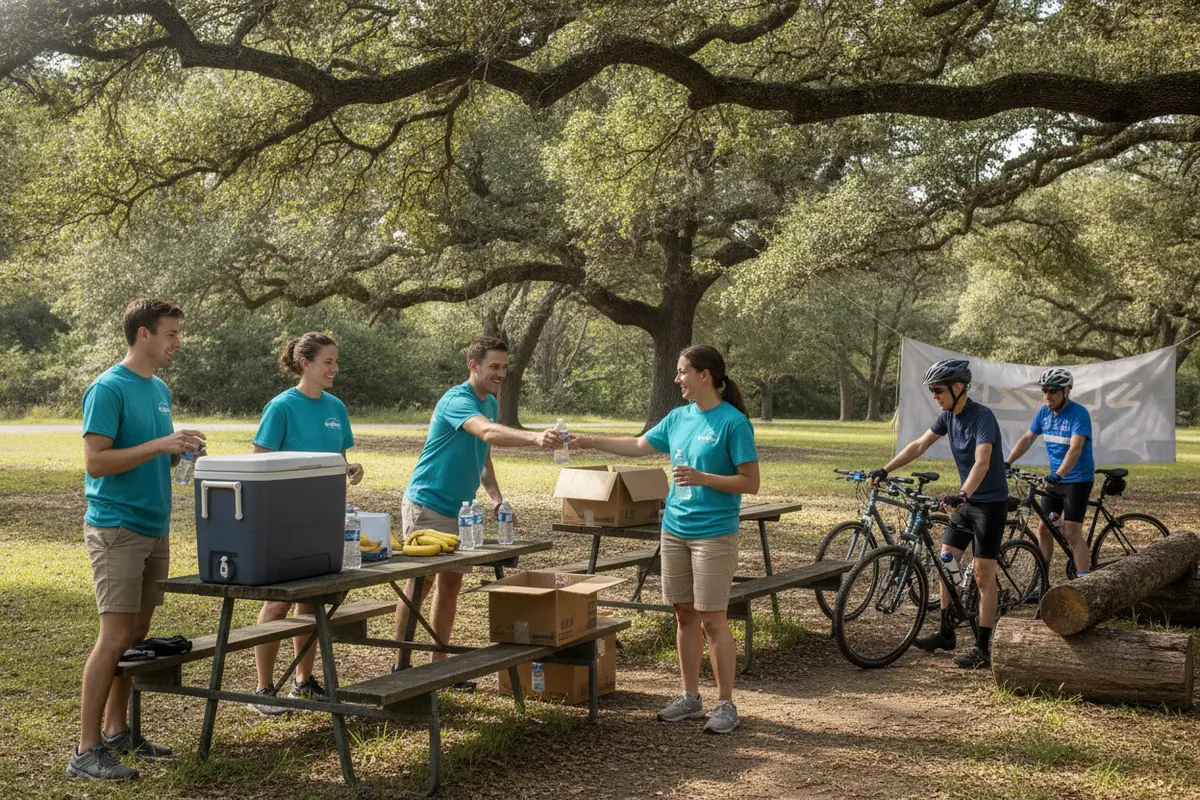
Activation is how a sponsor participates in the event experience, beyond being listed by name. Good activation feels useful and proportionate. It respects the event’s purpose, the participants’ attention, and any accessibility or safety needs.
- Provide a clearly marked, optional information area where it fits the site plan.
- Offer an event-relevant resource or service that participants can choose to use.
- Share a short sponsor story that explains the connection to the community.
- Invite employees to participate in a role that supports the event, if appropriate.
Keep the participant experience first. Avoid interrupting essential event instructions or placing sponsor activity where it creates congestion. For a ride, safety information and route guidance must remain easy to find. A sponsor’s presence should add something useful, not compete with the reason people came.
Walk through activation from the participant’s point of view
Imagine a rider arriving, checking in, listening to instructions, and heading toward the route. Where could a sponsor presence be noticed without delaying those steps? Does the setup leave enough space for people to move, ask for help, or take a break? Is participation optional and understandable? Sketching the sequence can expose a problem that a sponsorship document will not show.
Then confirm the operational details with the sponsor: arrival time, setup boundaries, who brings materials, who is staffing the activity, and who can make a day-of decision. Share only the information needed for the activation and ensure the activity does not interfere with event operations. A quick site check before event day can prevent last-minute confusion.
How can your team fulfill every commitment?
Turn the agreement into a simple fulfillment tracker. Assign one owner to each deliverable, set a due date, and record proof when it is complete. This matters even when a benefit seems small. A missed logo placement or unanswered question can undermine confidence in the whole partnership.
| When | Organizer action | Evidence to keep |
|---|---|---|
| After agreement | Confirm benefits, contacts, and deadlines | Written confirmation or agreement |
| Before promotion | Collect approved name and artwork | Approval record and final files |
| Event week | Check signage, access, and participant-facing details | Checklist and setup photos |
| After event | Share a concise recap and close open items | Recap, links, and delivery notes |
Use a shared checklist if multiple staff or volunteers are involved. Check the event site and communications before they go live. On event day, give the sponsor a contact who can resolve practical questions. If something cannot be delivered as planned, tell the sponsor promptly, explain the issue, and agree on a reasonable alternative rather than waiting for them to notice.
Bike to the Beach’s ride details show how event information can be organized for participants. For questions about rides and technology, its contact page offers a direct route to support.
Handle changes transparently
Events change. A schedule may shift, a site constraint may affect a display, or an agreed material may arrive late. When a deliverable is at risk, contact the sponsor as soon as you know. Describe the issue plainly, explain what remains possible, and ask what alternative would still be useful. Record the decision and update the tracker so everyone works from the same plan.
Do not quietly substitute a different benefit and assume it is equivalent. A sponsor might value a small on-site interaction more than an extra mention in an email, or the reverse. A short conversation gives both parties a chance to agree on a replacement that suits the event and respects the original intent.
How do you evaluate the partnership?
Review delivery against the commitments, not just the amount raised. A practical recap can report which benefits were completed, how participants used an activation, what the team learned, and what should change next time. Use only information you can substantiate. Separate observed outcomes from estimates, and do not imply that exposure automatically caused business results.
Ask the sponsor what was useful and what felt less relevant. Ask participants or volunteers for feedback when appropriate. Then compare that feedback with the event team’s notes. This makes the next conversation more informed and helps avoid repeating activations that added work without improving the experience.
For mission-driven events, include the charitable purpose accurately. Bike to the Beach’s model directs participant fundraising to local partner organizations; readers can learn more through its autism charity bike ride overview. Keep impact statements grounded in confirmed information and distinguish event fundraising from sponsor contributions.
Build a useful recap, not a sales claim
A recap can be brief but specific. State what was delivered, include agreed examples such as a final communication or a setup photo, and note any change from the original plan. If you collected comments, describe them as feedback rather than proof of a broad outcome. The sponsor can then assess the partnership against its stated goals without being handed claims the event cannot support.
Close with a few questions for the next cycle. Which activity was easiest to execute? Where did participants engage naturally? What required more staff time than expected? Would a different timing or format improve the experience? These questions turn evaluation into learning rather than a retrospective list of impressions.
How do you steward sponsors after event day?
Stewardship begins with a timely thank-you and a clear account of what happened. Send a brief recap while details are fresh. Include the promised documentation, acknowledge any shortfall openly, and share the next step if both sides want to continue the relationship.
Do not wait until the next sponsorship request to reconnect. A year-round relationship can include a mission update, an invitation to a community event, or a check-in about the sponsor’s goals. Keep communication relevant and respectful. The point is not to send frequent messages; it is to show that the organization values the relationship beyond the transaction.
Keep continuity from one event to the next
Record what the sponsor said mattered, the benefits they used, and any changes they requested. Keep approved assets and a short account of what was delivered where the next event team can find them. That institutional memory saves time and helps the next conversation begin with listening rather than assumptions.
When you reconnect, ask what has changed for the sponsor. Their priorities, staff contacts, or preferred way to participate may be different. Share the mission and event context in a concise update, then invite a conversation rather than treating renewal as automatic. A partnership is stronger when both sides can review the experience and choose a next step deliberately.
Bike to the Beach’s charity rides connect cycling with community impact, and its mission and partner stories provide additional context for that work.
Explore partnership opportunities
Frequently Asked Questions
Is event sponsorship the same as a donation?
Not necessarily. A donation is a gift, while sponsorship typically includes an agreed exchange of support for recognition or engagement opportunities. Clarify the arrangement and its expectations before making public claims about it.
What should a small community event offer a sponsor?
Offer only benefits the event can deliver, such as relevant recognition, a useful participant resource, or a suitable opportunity to connect with the community. Clear, modest commitments are better than benefits that cannot be measured or fulfilled.
How many sponsors should an event have?
There is no universal number. The right number depends on the event’s needs, its capacity to fulfill commitments, and whether each sponsor’s presence fits the participant experience.
What should happen if a promised benefit is missed?
Contact the sponsor promptly, explain what happened, and propose a practical alternative where appropriate. Document the resolution and use the experience to improve the fulfillment process.
Ready to build a community partnership?
Start with a clear purpose, a sponsor whose interests align with the event, and a realistic plan for delivery. When both sides understand the exchange and follow through, sponsorship can support a stronger event and a lasting community relationship.