
DC Charity Bike Ride Guide for the DMV
Register for a DC charity bike ride that supports local autism and disability partners through the fully supported Bike to the Beach DMV ride.

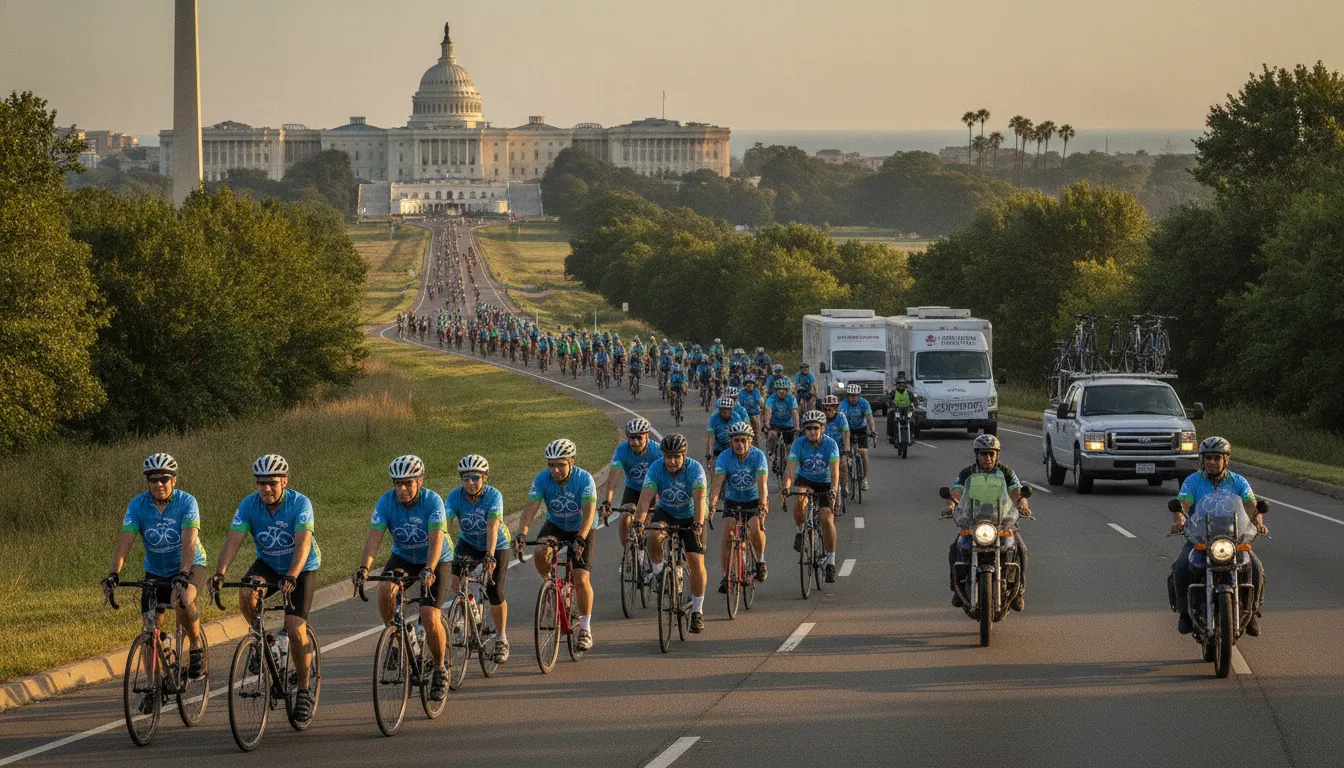
Five DMV start lines lead toward one shared finish at Dewey Beach. Along the way, every mile helps strengthen local autism and disability services across the region.
Register for the DMV Bike to the Beach ride to choose your route, join a team, volunteer, donate, or sponsor local autism and disABILITIES partners.
A DC charity bike ride with Bike to the Beach combines a supported cycling challenge with direct local impact across Washington, Maryland, and Virginia. Riders can choose among five start locations and distances from 25 to 100 miles, then follow their route toward a shared Dewey Beach finish. The DMV ride includes rest stops every 15 miles, professional mechanical support, and SAG vehicles for added help along the route. That full support makes the experience approachable for first-time charity riders and seasoned cyclists ready for a longer challenge. You can ride solo or with a team, volunteer, donate, or sponsor the event. Each path helps fund local autism and disABILITIES partners, including organizations that provide therapy, recreation, education, family support, and community inclusion.
Whether you want to choose a route, support a rider, or bring your company into the community, this guide explains where your effort goes. Start with “DC charity bike ride guide: what makes the DMV ride different” and see how each participation path connects to a bigger regional goal. Here’s how.
DC charity bike ride guide: what makes the DMV ride different
Bike to the Beach is a fully supported charity ride from the DC, Maryland, and Virginia region to Dewey Beach. It combines a point-to-point cycling challenge with fundraising for local autism and disABILITIES organizations.
What defines the DMV ride?
This DC charity bike ride is built around a shared destination, not a short loop through the city. Five start locations feed into routes that end at the beach, giving riders a clear goal and a memorable finish.
Distance options range from 25 to 100 miles, so the event can fit different levels of cycling experience. Riders can review the current DC charity bike ride page before choosing how they want to take part.
A destination ride with full support
A ride to Dewey Beach asks more of participants than a casual city fun ride. The longer format calls for planning, steady pacing, and a willingness to keep moving toward one shared finish.
That challenge comes with practical support along the way. Rest stops, professional mechanical help, and SAG vehicles help riders handle food, minor bike issues, fatigue, or an early exit. The event’s route options and support services explain what riders can expect on the road.
- Multiple start points let riders select a distance that fits their training.
- Rest stops create planned places to refuel and regroup.
- Mechanical support helps address common bike problems during the ride.
- SAG vehicles support riders who cannot finish their planned route.
These features do not remove the challenge. They give newer riders and experienced cyclists a clear framework for taking it on safely and with confidence.
Local impact and ways to participate
The DMV ride directs its fundraising focus toward autism and disABILITIES partners in the region. That local model connects each mile with services such as therapy, recreation, family support, and community inclusion.
Cycling also has a direct link to the communities served. A recent study of bike-riding skills training found benefits for communication skills and stereotyped behaviors among autistic adolescents. The event itself is a fundraiser, not a clinical program, but the research adds context to the shared activity.
Riding is only one participation path. People can also volunteer, donate, sponsor the event, or form a corporate or community team. Each role supports the same regional effort while allowing people to contribute through their time, network, funds, or cycling goals.
For riders, solo registration offers a personal challenge within a supported group setting. Teams add shared training and fundraising, while volunteers help create the structure that carries participants from the DMV to Dewey Beach.
Route options, start locations, and the Dewey Beach finish
The DC/MD/VA ride is not a single-distance event with one starting line. Five start locations feed into the route, and every option ends at Dewey Beach. This setup lets riders choose a challenge that fits their current fitness, time, and training plan.
Choosing your distance
Route options span about 25 to 100 miles, so the event can work for new riders and seasoned cyclists. A shorter route can be a meaningful first charity ride. The full distance offers a long day in the saddle and a clear training goal.
Start by choosing a distance you can prepare for with steady weekly rides. Then review the official route options and support services before registering. That page is the right source for current start details, since locations and event plans may change.
- Consider your longest recent ride and how you felt afterward.
- Leave enough time to build distance in small steps.
- Plan for food, water, weather, and time on the bike.
- Check the current ride details before making travel plans.
Solo riders, teams, and shared miles
You can take on the route as an individual or ride as part of a team. Teams give friends, coworkers, and community groups a shared goal. They can also make training and fundraising feel more social.
Ask the event team about relay possibilities if your group wants to share the day in stages. Do not assume a relay format or handoff point is available. Confirm the current rules before assigning miles or arranging transport between start locations.
The event is fully supported, with rest stops, professional mechanical help, and SAG vehicles along the route. That support matters when choosing a longer distance, but it does not replace training. Riders should still arrive ready for their selected mileage and follow event safety guidance.
A shared finish at Dewey Beach
Different starting points give riders different days on the road, but Dewey Beach brings them back together. The beach finish gives teams a natural place to meet and celebrate. It also brings attention back to the local cause behind the miles.
That cause connects cycling with support for autism and other disABILITIES. Research has examined how exercise can affect cognitive function and quality of life for people with Autism Spectrum Disorder. For riders, the event turns that broader link between movement and community into shared action.
Review the DC charity bike ride overview when planning your day. It provides the current event context while the ride-details page covers route logistics. Together, they can help you pick a start option and prepare for the Dewey Beach finish.
Are there fully supported charity bike rides in the DC area?
Yes. Bike to the Beach offers a fully supported DC charity bike ride for new riders and experienced cyclists. Its DC/MD/VA routes lead from several starting points toward Dewey Beach. Support is built into the day, so riders can focus on pacing, fueling, and the shared purpose behind each mile.
What supported means on ride day
A supported ride gives cyclists planned places to rest, refill bottles, eat, and check how they feel. Bike to the Beach provides rest stops about every 15 miles. Riders can review the event’s route options and support services before choosing a distance and making a training plan.
Professional mechanical support helps with common bike issues along the route. Route support also helps riders stay on course and understand where to turn. These services do not replace training or safe riding habits, but they reduce the need to solve every issue alone.
- Rest stops about every 15 miles for food, water, and a short break.
- SAG vehicles for riders who cannot safely finish a route segment.
- Professional mechanical help for bike problems during the ride.
- Route support that helps riders follow the planned course.
These support services help riders manage the route with more confidence.
A practical safety net
SAG stands for support and gear. A SAG vehicle can pick up a rider who is hurt, exhausted, or facing a bike issue that cannot be fixed roadside. That safety net matters on a long ride, since weather, fatigue, and equipment problems can change a rider’s plan.
First-time charity riders often gain confidence from knowing help is nearby. They can practice steady pacing without treating one flat tire or a difficult stretch as the end of the day. Experienced cyclists also benefit because support can limit delays and help them manage a longer route with less uncertainty.
Support for different ride goals
Full support does not mean every rider follows the same plan. Some riders want a first major distance goal, while others want a strong endurance day with a team. The DC charity bike ride welcomes a range of skill levels and offers several route lengths.
The ride also connects cycling with local action for autism and disABILITIES. Research has found that bike-riding skills training may support communication skills in autistic adolescents. That finding adds useful context to the event’s purpose, as described in a PubMed-listed study.
Before ride day, each cyclist should still train for the chosen distance, maintain the bike, and review event instructions. Riders should carry personal essentials and tell route staff when they need help. The support team is there to keep the event moving and help riders make sound choices.
How your ride supports local autism and disability partners
For this DC charity bike ride, fundraising is tied to the communities along the DMV route. Funds raised through the event support local autism and disability partners rather than national institutions.
That local focus gives each mile a clear purpose. Riders, donors, volunteers, and sponsors take shared action to strengthen services used by people with autism and other disABILITIES. The DC charity bike ride brings that community together around a ride to Dewey Beach.
Local funds, local services
Local nonprofit partners understand the needs of families and people in their own communities. They can use support for programs that match those needs. This may mean day-to-day help or welcoming places for connection.
Depending on each partner’s work, supported services may include family support, education, therapy, recreation, sensory gyms, and community inclusion programs. These services help people build skills, find support, and take part in community life.
- Family support and useful local resources
- Education, therapy, and sensory programs
- Recreation and inclusive community activities
Recreation can also have a clear role in a broader support network. A systematic review of exercise interventions studied cognitive function and quality of life for people with autism. Local partners turn broad ideas about wellness and inclusion into programs that fit their communities.
A wider circle of community support
The impact is not limited to the funds raised on ride day. A regional event also introduces riders, donors, and businesses to nearby organizations. Those partners do steady work throughout the year.
That added awareness can lead people to learn more, volunteer, donate, or share a partner’s work with others. It also helps local organizations build stronger ties with groups that care about inclusive services. Bike to the Beach is a community, not just an event.
Fundraising is one part of that shared effort. Riders can use the event’s fundraising minimums and goals to plan outreach and explain where support goes. A clear local story helps donors see how their gift connects with services in the region.
What each participant adds
Every participant has a different role, but each role supports the same local network. Riders invite friends and coworkers into the cause. Donors provide funds, volunteers help the event run, and sponsors bring teams and wider community reach.
This approach avoids framing any one person as a rescuer. Instead, the ride creates a place for neighbors, businesses, and nonprofit partners to act together. The result is a stronger base of support for autism and disability services across the DMV region.
Which participation path fits you best?
A DC charity bike ride can bring together far more than cyclists. Bike to the Beach offers ways to ride, give, serve, build a team, or support local partners. The best fit depends on how much time you have and how you want to take part.
Ways to join the community
Use this quick comparison to find a role that matches your interests and resources. Each path supports the same community-first effort, but the day-to-day commitment looks different.
| Participation path. | Best fit for. | What you can do. |
|---|---|---|
| Rider. | People ready for a cycling goal. | Choose a route, train, fundraise, and ride to Dewey Beach. |
| Volunteer. | People who prefer hands-on event support. | Help riders and event teams before or during ride day. |
| Donor. | Supporters with limited time. | Give to a rider, team, or the wider mission. |
| Sponsor. | Businesses seeking local community engagement. | Provide funds, services, or event support. |
| Corporate team. | Colleagues seeking a shared challenge. | Ride, fundraise, volunteer, and build team spirit. |
| Nonprofit or community partner. | Groups serving local families. | Build awareness, connect supporters, and share impact. |
The table shows the main ways people and organizations can join the DMV ride community.
Ride, volunteer, or give
Riding is a strong fit if you want a clear personal goal and an active event day. You can join on your own or with others. Review the DMV fundraising minimums and goals before choosing your route and setting a plan.
Volunteering may fit better if you want to help without training for a ride. Volunteers can support the people and operations that keep event day moving. Donating is the most flexible route because you can back a rider, a team, or the shared mission.
Build impact through an organization
A corporate team gives coworkers a common goal beyond the office. Team members can ride, raise funds, volunteer, or combine those roles. Businesses that want a broader relationship can review sponsorship and corporate team options for other ways to take part.
Nonprofit and community partners bring local knowledge to the effort. They can share the needs of families, connect with supporters, and show how local funds help. Their role keeps the event tied to the DMV communities it serves.
Every path supports shared action, and each one can start small. Cycling also has a meaningful link to the mission. A systematic review of exercise interventions examined effects on cognitive function and quality of life for autistic people.
Choose the role that matches your time, skills, and goals. You can also mix paths, such as donating now and volunteering later. The strongest fit is the one you can carry out with care and consistency.
How do you register and prepare for the DMV ride?
Preparing for a DC charity bike ride is easier when you break the work into clear stages. A simple plan helps you balance route choices, training, fundraising, and travel details. Start early enough to adjust your plan without adding stress.
Before you register
First, review the official DC charity bike ride page with your schedule and riding experience in mind. The DMV event offers several start locations and distances from 25 to 100 miles. Choose a route that feels challenging but realistic for the time you can train.
Think beyond mileage as you compare options. Consider how you will reach the start, get home from Dewey Beach, and move your bike. If you plan to ride with friends or coworkers, discuss pace and route choices before anyone registers.
Your seven-step preparation plan
- Review the ride details. Check the event date, start choices, route distance, support services, and finish location. Note any deadlines or items that need an early decision.
- Choose your distance and start. Match the route to your current fitness, available training time, and travel needs. Newer riders may prefer a shorter route with a steady training plan.
- Register online. Enter your contact details carefully and follow the prompts for your chosen route. Save the confirmation email and add key dates to your calendar.
- Set a fundraising plan. Review the event’s fundraising minimums and goals, then divide your target into smaller weekly goals. Draft a short message that explains your reason for riding and the local impact.
- Train with steady progress. Ride on a regular schedule and build distance in small steps. Include hills, longer rides, easy recovery days, and time to test your bike setup.
- Coordinate ride-day logistics. Confirm transport, lodging, gear, meals, and plans for the beach finish. Share the schedule with teammates and anyone helping you travel.
- Invite supporters. Ask friends, family, and coworkers to donate, share your page, volunteer, or follow your progress. Give them useful updates instead of sending the same request each time.
Training with purpose
Consistency matters more than one hard weekend. Your rides should help you build comfort, learn how your body responds, and spot gear problems before event day. Practice eating, drinking, and handling basic bike issues during training.
Fundraising can follow the same steady approach. Share why local autism and disABILITY services matter to you, then explain how others can take part. Research has also examined how exercise affects cognitive function and quality of life for people with Autism Spectrum Disorder.
Keep your supporters involved as the ride gets closer. Post a training milestone, thank donors by name when appropriate, and share one clear next step. This turns preparation into a community effort while keeping the focus on local impact.
What is the best DC charity bike ride for beginners?
The best DC charity bike ride for a beginner matches four things: distance, support, mission, and comfort level. A shorter route may suit a new rider better than an event built around one long course. For many beginners, finishing with energy left is a better goal than choosing the longest route. Clear aid options also make it easier to focus on steady progress instead of worrying about every possible setback.
Bike to the Beach can be a good fit because its DMV event welcomes a range of skill levels. Riders can choose among several distances and finish with a shared community goal. The event also supports local autism and disABILITIES partners, so the purpose stays close to the region.
Picking the right distance
Choose a route based on the distance you can ride now, not the distance you hope to ride later. Then allow enough training time to build up at a safe, steady pace. Bike to the Beach offers DMV routes from 25 to 100 miles, which gives newer riders room to choose a realistic challenge.
Before registering, review the event’s route options and support services. Look at the start point, total distance, rest stops, and available ride support. The DMV ride includes rest stops, professional mechanical help, and SAG vehicles for riders who cannot continue.
Riding with a team
A team can make a first charity ride feel more manageable. Teammates can train together, share tips, and help each other keep a steady pace. They can also make fundraising and event-day planning less stressful, since the work does not fall on one person.
Beginners should ask whether a team plans to stay together or split into pace groups. It also helps to find out how often the group trains. The DC charity bike ride allows people to join the event alone or as part of a team.
A mission that keeps training meaningful
The right cause can help riders stay engaged through weeks of practice. Bike to the Beach raises funds and awareness for local autism and disABILITIES organizations. That community focus gives each training ride a purpose beyond reaching the finish line.
Cycling also connects with the mission in a practical way. One study found that bike-riding skills training may improve communication skills among autistic adolescents. The published research on bike-riding skills adds useful context to a ride centered on shared action and local support.
New riders should still compare the details before choosing an event. A strong beginner fit offers a realistic route, clear support, welcoming teammates, and a cause that matters to the rider.
Frequently Asked Questions
What is the best DC charity bike ride for beginners?
Bike to the Beach can suit beginners because riders can choose shorter routes and receive support throughout the event. The DMV ride page lists distances from 25 to 100 miles for different skill levels. New riders should select a manageable distance, train gradually, and review current route details before registering. Those not ready to ride can participate as volunteers, donors, or sponsors.
How do I register for a charity bike ride in Washington, DC?
Registration for Bike to the Beach’s DC/MD/VA event is handled online through the DMV ride page. Before signing up, review the current distance options, fundraising expectations, schedule, and transportation details. Participants may register as individual riders or join a team. Anyone who prefers not to ride can use the same event site to explore volunteer, donation, and sponsorship options.
Is Bike to the Beach a fully supported DC charity bike ride?
Yes. Bike to the Beach’s DMV event is a fully supported DC charity bike ride. According to the ride details page, support includes rest stops about every 15 miles, professional mechanical help, and SAG vehicles. Riders should still bring required safety gear, prepare for their chosen distance, and review the latest event instructions before ride day.
What kind of local impact does the DC charity bike ride support?
Bike to the Beach directs funds raised through its DMV event to local autism and disability partners rather than national institutions. That regional focus can support services such as therapy programs, sensory gyms, education, recreation, family support, and community inclusion. The DMV ride page explains how the event connects riders, donors, volunteers, and sponsors with local impact.
Can I ride solo or as part of a team in a DC charity bike ride?
Yes. Bike to the Beach allows DMV participants to ride individually or as part of a team. Solo registration can fit riders pursuing a personal goal, while teams can bring together friends, families, coworkers, or community groups. Both paths support the same local mission and finish at Dewey Beach. Review the current event page before registering for team setup details.
Ready to Ride for Local Impact Across the DMV?
Waiting to choose your role can leave less time to prepare, fundraise, recruit teammates, or coordinate a volunteer or sponsor plan. Starting now gives you room to select a route, set a practical goal, and invite others to support local autism and disABILITIES partners. Early action also turns a good intention into a clear commitment, whether you plan to ride, volunteer, donate, or sponsor.
Ready to move forward? Register for the DMV Bike to the Beach ride today to choose your participation path and begin planning. Contact the Bike to the Beach team through the registration page if you need help deciding how to join. A clear plan today makes each next step easier to manage.