

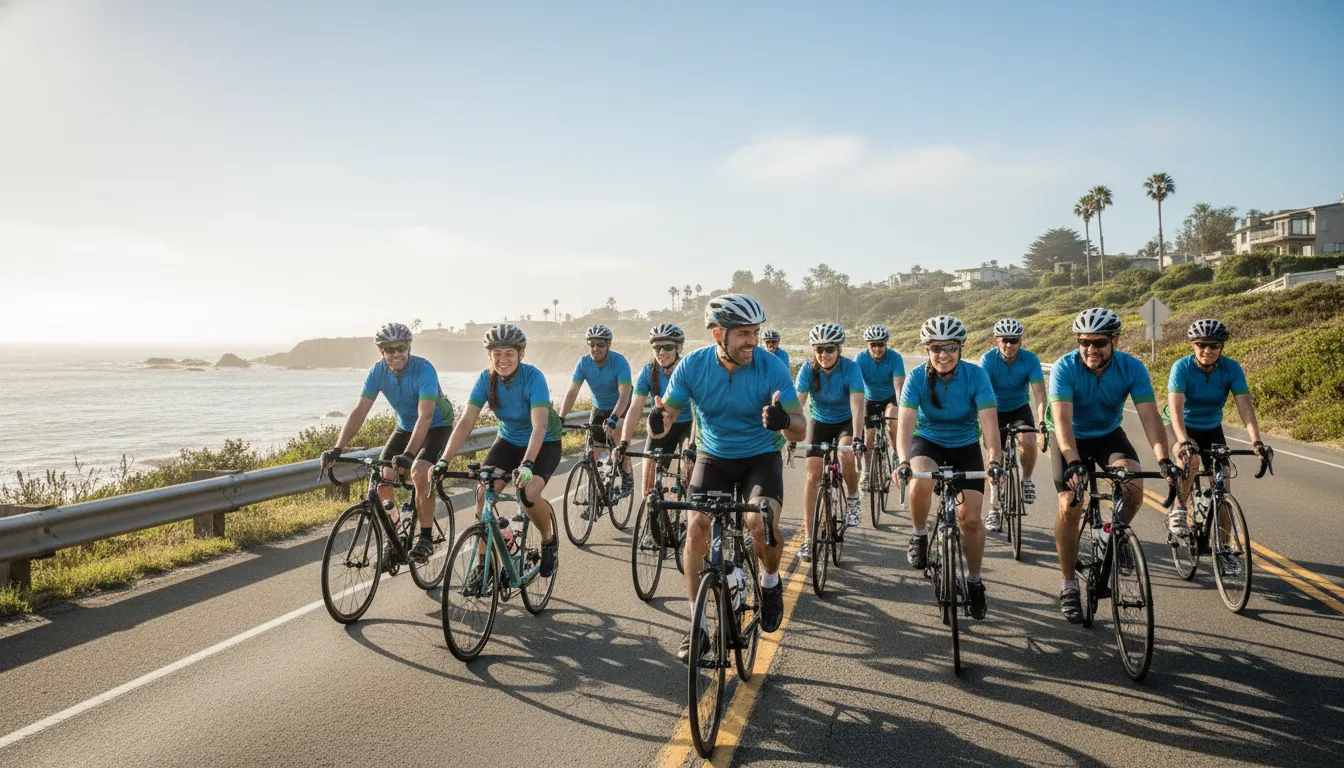
Cycling Training Plan for Charity Riders
Register for a Bike to the Beach ride with this cycling training plan for 12 weeks of century prep, safety habits, and event-day confidence.

Twelve weeks can turn a cautious first long ride into a supported 100-mile finish. That beach finish is earned through steady miles, recovery, and shared purpose.
Ready to make your training goal real? Register for a Bike to the Beach ride and put week one on your calendar.
Ready to ride with purpose? Register for a Bike to the Beach ride and use this plan to prepare for the miles ahead.
A cycling training plan for a first or returning charity rider builds century-ready endurance across 12 weeks through consistent riding, rest, and gradual distance gains. Begin with steady, conversational-pace rides, then build one weekly long ride while adding one focused effort and enough recovery to keep showing up. A beginner can aim to grow the longest training ride toward 70 miles, rather than trying 100 miles for the first time on event day. Bike to the Beach supports steady Zone 2 riding as the aerobic base in its training guidance. On event day, supported rest stops every 15 miles and on-course mechanical help add reassurance, while your training does the work.
The real question is how to build that distance without losing recovery, family time, or the reason you signed up. Next, Cycling training plan overview for a 12-week century ride sets the weekly structure for new riders and returning riders alike. Start here:
Cycling training plan overview for a 12-week century ride
Who this plan is for
This cycling training plan is for riders preparing to complete a 100-mile charity ride in 12 weeks. It fits a first-time century rider with regular bike time, or a returning rider ready for a longer goal. The focus is steady progress, not chasing speed on every ride.
Twelve weeks gives each ride a purpose. In one study of trained cyclists, both 12-week training patterns improved measured cycling performance. The study does not promise the same result for each rider. It does support a planned build in workload. See the published cycling training study for details.
A balanced training week
Plan to ride on several days each week, with one longer weekend ride as the anchor. Add comfortable Zone 2 rides, where conversation is possible. These rides build endurance without making every day hard. Short interval sessions prepare your legs for hills, wind, and changes in pace.
Rest belongs in the plan, too. Keep at least one day open for full rest. Ease back when fatigue or pain changes your form. Your weekly mix may include:
- One long, steady ride that grows across the plan.
- One focused interval ride, followed by easy recovery time.
- One or more relaxed endurance rides at a talkable pace.
- Rest days and simple mobility or strength work, as suitable.
Use the Bike to the Beach training resources resources for preparation, bike fit, and weekly habits. This 12-week guide supports the century goal. It is not a paid training product.
Training for a supported ride
A Bike to the Beach century is more than a finish-line distance. You train alongside a community riding for local autism and disability service organizations. Supported rest stops, mechanical support, and SAG tracking help riders stay focused on safe progress toward the beach.
Support does not replace preparation. Long rides help you practice hydration, fueling, pacing, and comfort before the event. Speak with a medical professional before you start if you have a health concern or past injury. Seek care if you have symptoms during exercise.
12-week century ride training plan table
A gradual build
Use this cycling training plan if you can already complete a comfortable short ride and can train on most weeks. It builds time in the saddle in clear stages: base, build, peak, and taper. For event support and bike fit basics, start with Bike to the Beach’s century ride training resources.
A 12-week schedule should raise distance in steps, not force a longer ride every weekend. In trained cyclists, two structured endurance approaches led to gains after 12 weeks. These results are reported in research indexed by PubMed. This schedule uses the same simple idea: apply stress, then allow recovery.
The 12-week schedule.
| Week. | Weekly focus. | Key rides. | Long ride target. | Strength or recovery. | Purpose. |
|---|---|---|---|---|---|
| 1. | Set your baseline. | 2 easy spins; 1 long ride. | 15 miles. | Core session; 2 rest days. | Start steady and check comfort. |
| 2. | Easy endurance. | 2 easy rides; 1 long ride. | 20 miles. | Light strength; stretch. | Build a regular routine. |
| 3. | Cadence and control. | Easy spin; cadence work; long ride. | 25 miles. | Core and hips; rest. | Ride smoothly for longer. |
| 4. | Recovery week. | 2 easy spins; relaxed long ride. | 20 miles. | Skip heavy strength. | Absorb the first build. |
| 5. | Steady build. | Easy ride; short hills; long ride. | 30 miles. | Light strength; rest. | Add durable saddle time. |
| 6. | Fueling practice. | Easy ride; tempo blocks; long ride. | 35 miles. | Core session; mobility. | Test food and fluids. |
| 7. | Endurance block. | Recovery spin; hills; long ride. | 45 miles. | Rest after long ride. | Get used to longer hours. |
| 8. | Step-back week. | 2 easy rides; social ride. | 35 miles. | Mobility; extra sleep. | Refresh legs and focus. |
| 9. | Event rehearsal. | Easy spin; tempo; supported long ride. | 55 miles. | Light core only. | Practice pacing and gear. |
| 10. | Peak endurance. | Recovery spin; brief effort; long ride. | 70 miles. | Rest; no heavy lifting. | Reach the key distance goal. |
| 11. | Begin taper. | 2 short spins; moderate long ride. | 40 miles. | Mobility; rest. | Keep fitness while freshening. |
| 12. | Ride week. | 2 easy spins; event ride. | Event day. | Rest; prepare kit. | Arrive rested and ready. |
Using the distance targets.
The long ride is the anchor, but it is not a test of toughness. Keep most miles at a pace that allows conversation. Use shorter sessions for cadence, hills, fueling, and safe group-riding habits. Each step prepares you to share a meaningful charity ride with the Bike to the Beach community.
The peak target is about 70 miles before the taper. A beginner guideline is to reach about 70 percent of event distance in one training ride. This century ride training guide explains the target. If a week leaves lasting fatigue or pain, repeat an easier week rather than adding distance.
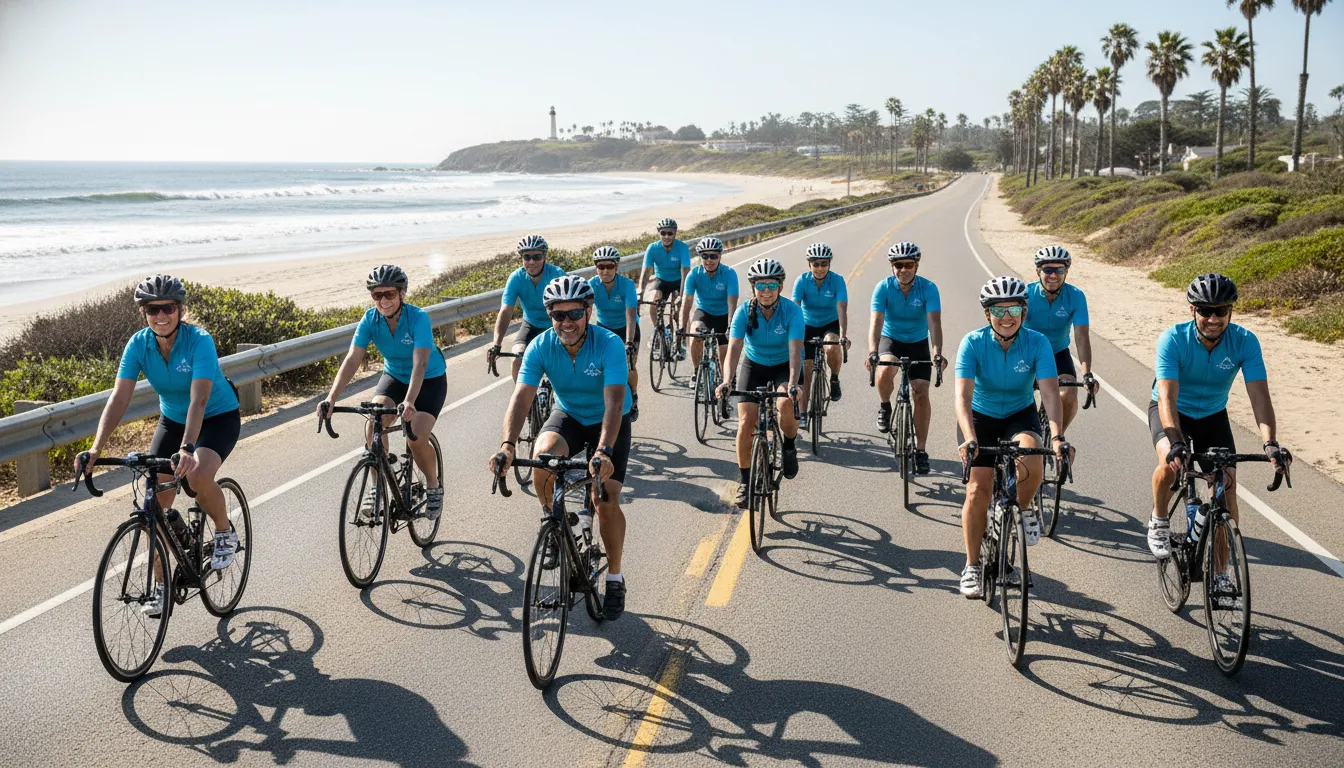
How should beginners use this cycling training plan?
A cycling training plan works best as a guide, not a test you must pass. Start with the ride you can manage now, then build toward your chosen event distance. Bike to the Beach’s event preparation guidance resources can help you check gear, bike fit, and weekly ride types.
Set your starting point
Before week one, note how long you can ride at an easy pace without strain. Also list the days when riding fits your schedule. A returning rider may begin farther along than a first-time rider, but both should start from current fitness.
-
Choose your event distance. Select the Bike to the Beach distance you plan to ride. Use that goal to shape long rides, rather than copying the mileage of a century rider.
-
Match the first week to today. If the opening long ride feels too hard, shorten it. Repeat that week or add distance in small steps once the effort feels steady.
-
Place rides on real calendar days. Reserve one day for your longest ride. Add one or two shorter rides when work, family, and daylight allow.
-
Keep most rides easy to judge. On steady rides, use a pace where you can speak in short sentences. Save harder efforts for days when you are rested and comfortable on the bike.
-
Protect recovery time. Put rest days after hard or long sessions when possible. If pain, illness, or heavy fatigue lingers, skip intensity and adjust the next week.
Build around your week
Consistency matters more than forcing a perfect schedule. If you miss a ride, do not cram two hard sessions into the next day. Resume with an easy ride, or shift the long ride to a day when you have time to eat, hydrate, and recover.
Riders who want a formal option can review the customized cycling training plan page. It can help you choose a structure that fits your available days and planned ride distance.
Review and adapt
Use each week’s long ride as feedback. If you finish tired but able to recover, keep building. If the effort leaves you unable to ride comfortably later in the week, reduce the next long ride or add rest.
Training does not have one required pattern. A study of trained cyclists found performance gains after 12 weeks with either of two periodized approaches. It did not study beginners, but it supports a simple point: an adaptable plan can still be structured.
The three core rides your week needs
A good cycling training plan does not need a crowded calendar. Each week needs three clear jobs: go long, add a small dose of effort, and ride easy. That rhythm helps you prepare for a charity century while leaving space for work, family, fundraising, and rest.
Bike to the Beach frames this as a long endurance ride, a focused interval session, and a recovery ride. Its training guidance is a useful starting point for riders building toward event day. Keep the pattern simple, then add time or hills as your legs and schedule allow.
The long ride and steady aerobic time
Your long ride is the anchor of the week. Set aside one day when you can ride without rushing, often on a weekend. The purpose is not to test your speed. It builds comfort with time in the saddle, fueling, bottles, clothing, and the steady effort that a long day asks for.
Ride most of this session at a pace where you can speak in short, easy sentences. That is the feel of easy aerobic work, often called Zone 2. On tired weeks, riding even more gently in Zone 1 is a smart choice. The long ride should leave you proud, not emptied out.
Add distance in small, manageable steps as the event draws closer. Practice what you will do on the road: eat early, drink often, and check how your bike feels. A beach finish becomes more real when each long ride builds calm confidence, one week at a time.
A little intensity, plenty of easy riding
Your focused ride gives the week a different job. After a warm-up, use a few short hill repeats or firm intervals, with easy spinning between efforts. You should finish knowing you worked, but still able to recover. This session is for controlled effort, not proving fitness every Tuesday.
A simple way to guide intensity is the 80/20 idea. Spend most of your riding time easy, in Zone 1 or Zone 2, and keep harder work to a smaller share. You do not need a lab or a complex chart. If most rides are conversational and one ride feels focused, your week is pointed in the right direction.
There is good reason to avoid making every ride hard. In trained cyclists, a 12-week endurance training study found performance gains with planned training loads and varied intensity patterns. For a charity rider, the practical lesson is simple: repeat steady weeks, rather than chase exhaustion.
Your third ride is the easy one. Spin gently for a short time in Zone 1 or light Zone 2. Choose flat roads or an indoor bike if needed. You may swap it for a rest day when fatigue lingers. Recovery is not missed training; it helps you return ready for the next long ride.
Arrange the rides so harder days do not stack together. For example, ride focused efforts midweek, pedal easily later in the week, then take the long ride on Saturday or Sunday. If weather, travel, or family plans shift the calendar, keep the three jobs in mind. The community will be waiting at the start line. Steady preparation helps you enjoy the miles there.
Use the plan with a real event in mind. Explore Bike to the Beach ride options so your weekly training connects to a route, a community, and a finish line.
Strength, recovery, and safety habits that keep you riding
Strength for steady miles
A cycling training plan is more than time in the saddle. Add short strength sessions that work your legs, hips, and core. Simple moves, such as squats, lunges, glute bridges, and planks, can support a steadier riding position. Start with sound form and modest effort, then build as your riding load grows.
Keep strength work beside your rides, not in a contest with them. A study of trained cyclists tested two ways to change training load across 12 weeks. Both improved riding performance measures, according to published cycling training research. Your goal is a routine you can repeat, while leaving energy for long rides.
Recovery, food, and water
Rest is part of training. Plan easy days and full rest days, especially after your longest ride or a hard session. If soreness changes your pedal stroke, or fatigue lingers, reduce the next workout. A missed hard ride is less disruptive than pushing through a warning sign.
Practice fueling and hydration during training, not for the first time on ride day. Carry water or an electrolyte drink, and bring foods that sit well while riding. On longer outings, use regular stops to drink, eat, and check how you feel. This habit makes your event routine familiar.
- Test your ride-day food on training rides.
- Refill bottles before you run low.
- Schedule rest after a demanding week.
Safety and supported ride planning
Wear a helmet on every ride and check your bike before leaving. Tires, brakes, chain, lights, and saddle height all shape comfort and control. A bike fit can help you address repeated discomfort before distance increases. Learn your route in advance, and keep navigation charged and easy to view.
Support also matters when choosing an event goal. Bike to the Beach requires helmets and supports navigation through Ride with GPS. Its rides have rest stops every 15 miles, mechanical support, and SAG vehicle tracking. Review these details in the Bike to the Beach training resources resources as you prepare for your chosen distance.
Before event day, know where stops are placed and how to seek support. Carry basic repair items, identification, and a phone, even on a supported course. If you feel unwell, stop riding and contact event staff or medical support rather than trying to push onward.
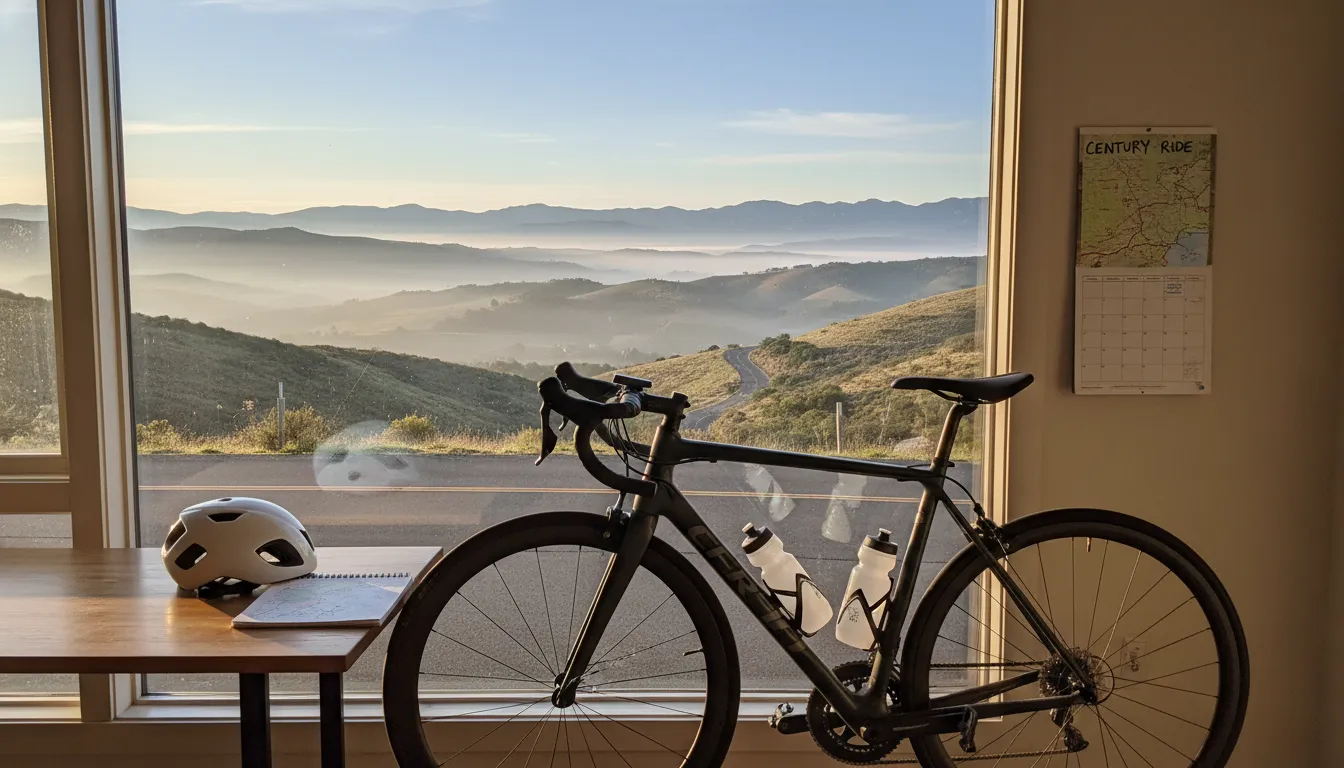
How do fueling and event-day support fit into training?
Training is not only about adding miles. On longer rides, practice the choices you will make when effort, weather, and time on the bike affect appetite and focus. Your cycling training plan should include drinking, eating, navigation, and brief stops as normal riding skills.
Regular training creates the fitness that support cannot supply. A published study of trained cyclists found performance gains after a structured 12-week endurance training period. Event-day support helps you use that fitness with less guesswork.
Fueling practice on long rides
Use long rides to learn what your stomach accepts and what fits in a jersey pocket or bike bag. Bring water and the snacks you plan to use on event day. Notice when you begin to feel hungry, thirsty, or low on focus.
Practice a simple rhythm rather than waiting until you feel depleted. Drink at regular points on the route, and eat small snacks during longer rides. Keep notes after each ride, so you can repeat what worked and change what did not.
Rest stops as part of the plan
Bike to the Beach rides include rest stops every 15 miles, plus on-course mechanical support and SAG vehicle tracking. Treat stops as part of training, not as a substitute for it. On a long training ride, pause at planned mileage points to refill bottles, eat, and check how your legs feel.
A stop should help you reset without making the next segment feel unfamiliar. Practice getting off the bike, handling food and bottles, then starting again with control. Riders choosing a regional event, such as the DC/MD/VA Region Ride, can pair route goals with the distance they are preparing to ride.
Navigation and supported confidence
Route tools are useful before event day. Plan longer rides with Ride with GPS or a similar tool, then follow the route on your phone or cycling computer. You will learn how cues appear, when to check a turn, and how to stay calm after a missed cue.
A supported ride can make an ambitious distance feel more approachable. It does not remove the need for steady training, safe bike handling, or tested fueling habits. The Bike to the Beach training support page offers added preparation guidance as your event distance grows.
Frequently Asked Questions
How long does it take to train for a century ride?
A 12-week cycling training plan can prepare many returning or active beginner riders for a supported 100-mile event. Riders starting with limited fitness may benefit from more time before selecting a century distance. The Best Buddies Challenge century training guide uses a moderate-mileage 12-week approach for riders with less preparation time. Start steadily and adjust if pain, illness, or excessive fatigue develops.
How many miles should I ride to train for a 100-mile century ride?
Your longest training ride does not need to match the full century distance. Build mileage gradually, practice fueling and hydration, and aim to complete a comfortable long ride before event day. A common beginner benchmark is at least 70 miles, according to the Best Buddies Challenge century guide. Consistent shorter rides still matter because they build endurance between long weekend sessions.
How often should I rest during a 12-week cycling training plan?
Plan one or two full rest days each week, especially after a demanding long ride or harder session. The Bike to the Beach training guidance recommends this recovery window so muscles can rebuild. An easy spin may fit some recovery weeks, but it should not replace rest when fatigue lingers. If soreness changes your pedal stroke or sleep, reduce training and recover first.
Do I need strength training in my cycling training plan?
Yes. Light strength and core work can support stability on the bike and complement endurance training. The Bike to the Beach training guidance recommends cross-training with core and strength exercises to improve stability and reduce injury risk. Keep sessions manageable during heavy riding weeks, use controlled form, and leave time for recovery before the week’s longest ride.
Ready to Ride for a Cause and Reach the Beach?
Putting off a century goal leaves less time to build steady mileage, practice your routine, and prepare for a long day in the saddle. Starting today gives you twelve weeks to build in manageable steps, adapt around missed rides, and approach event morning with calm confidence and focus. Taking your first training ride moves the plan from an idea to a commitment, with a beach finish and shared purpose ahead this season.
Choose a ride that makes your training goal real. Ready to book your ride? Register for a Bike to the Beach ride now to choose your event and put week one on your calendar. Start while time is yours.