
Corporate Social Responsibility Events That Unite Teams
Start corporate social responsibility events that unite teams, support local partners, and turn employee engagement into community action.

Corporate social responsibility events work best when employees can see, feel, and share the impact they are helping create. For many companies, that means moving beyond a passive donation or a single office activity. A supported charity bike ride gives teams a clear goal, a public commitment, and a practical way to raise funds for local nonprofit partners.
Ready to turn employee engagement into community action? Explore Bike to the Beach sponsorship and corporate team options.
Bike to the Beach brings that model to companies that want active team-building with a purpose. Employees can ride, fundraise, volunteer, support matching gifts, or sponsor the experience. Funds raised through each regional ride stay with local autism and disABILITY nonprofit partners, which helps the event feel connected to the communities where employees live and work.
This guide explains how a charity bike ride can fit into a broader CSR calendar. How it compares with other corporate volunteer event ideas, and how companies can plan a team experience that is inclusive, measurable, and meaningful.
Why corporate social responsibility events work better when teams move together
A donation can support a good cause, but it may feel distant to employees. A shared event asks people to act, prepare, and solve small challenges together. That direct role can make the purpose easier to understand and discuss. Research also links corporate social responsibility initiatives with employee engagement when people can bring more of themselves to work.
Shared effort turns intent into experience
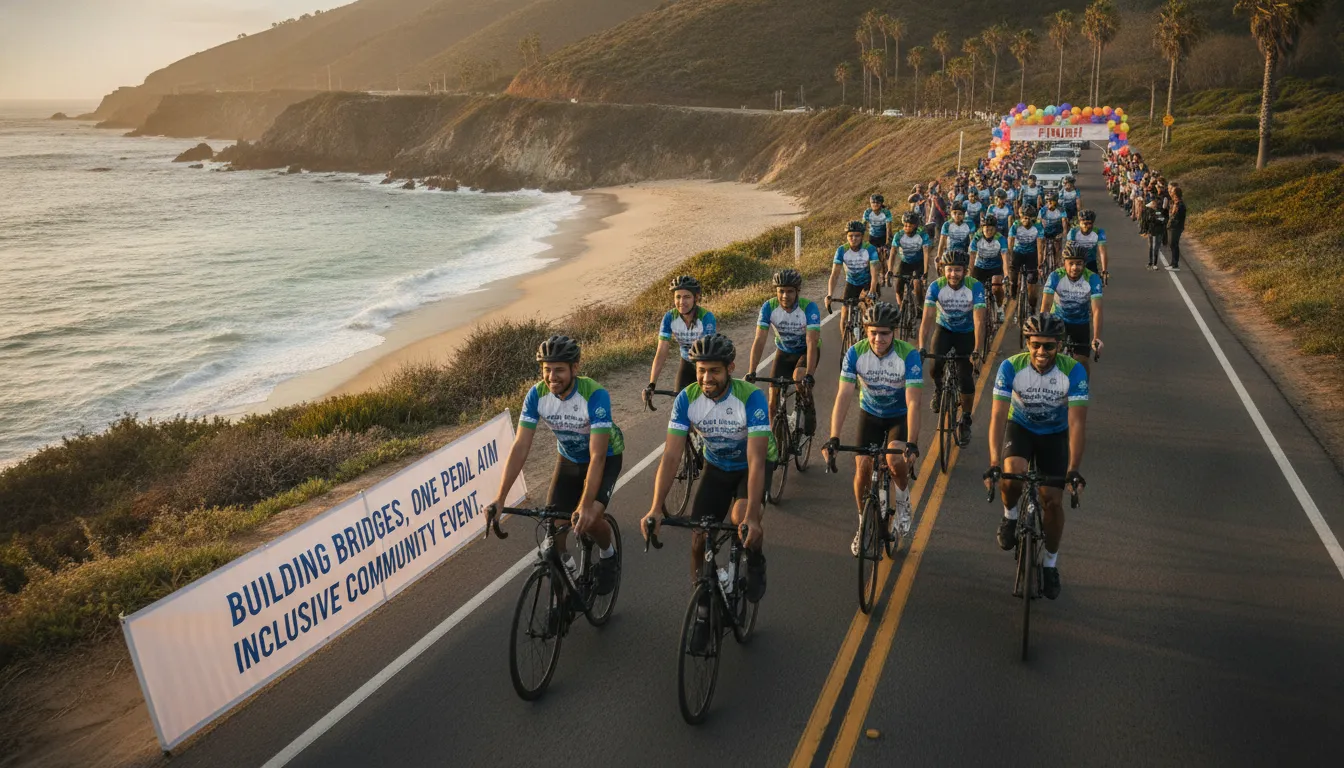
Active corporate social responsibility events give teams a clear goal and a common story. Colleagues train, fundraise, encourage one another, and cross the finish line as a group. Each person can see how their effort supports the wider mission. The experience lasts beyond a single volunteer shift because preparation and fundraising begin well before event day.
That shared effort can also connect people who rarely work together. A ride gives leaders, new hires, and teams from different units a reason to talk outside normal roles. The result is corporate team building built around a useful community goal, not a forced office exercise.
Several goals on one route
A charity bike ride brings wellness, service, fundraising, and public involvement into one plan. Employees get an active challenge while the company supports local services and builds community ties. The team can also share its progress with donors, customers, and neighbors. That visibility is tied to real participation rather than a logo alone.
- Wellness: Training gives employees a practical reason to move and support healthy habits.
- Teamwork: Riders share tips, track progress, and help each other through the route.
- Fundraising: Each rider can involve personal and work networks in the cause.
- Community visibility: The team shows up in public for a local mission.
Community-focused CSR can foster social responsibility among employees. It can also support company performance, according to research on community-oriented CSR activities. A team event makes that link clear because employees can see their role in the work.
Support makes participation more inclusive
An active event only works when more than experienced athletes can join. Bike to the Beach uses flexible ride options and a fully supported model. Mechanical help, SAG vehicles, rest stops, and medical partners reduce common barriers. Riders can focus on the shared goal while trained support teams manage needs along the route.
This structure helps companies invite employees with different cycling backgrounds. Some may ride, while others can fundraise, volunteer, or support teammates. Together, those roles create one visible effort for local autism and disABILITY partners. The team is not simply giving to a cause; it is moving with the community it supports.
What makes a charity bike ride a strong CSR event?
A charity bike ride makes corporate social responsibility visible, active, and easy to share. It connects a clear community cause with a physical challenge that employees can tackle together. Unlike a one-time donation, the ride creates roles for riders, donors, volunteers, and sponsors.
Local impact employees can see
The strongest corporate social responsibility events show employees where their time and fundraising go. Local nonprofit partners give teams a close link to the people, programs, and services they support. This clear connection helps the cause feel relevant before, during, and after the event.
Research suggests that community-oriented CSR activities can foster social responsibility among employees. Bike to the Beach directs all participant fundraising to nonprofit partners in the region where it was raised. Those funds support local services for people with autism and other disABILITIES.
Inclusive ways to take part
A ride gives employees a shared goal without asking everyone to contribute in the same way. Riders can train, fundraise, and complete a distance that suits their skill and fitness level. Bike to the Beach adds mechanical help, SAG vehicles, and medical partnerships to its fully supported destination rides.
The event can also include route volunteers, rest-stop crews, donors, team captains, and workplace fundraisers. Employees who do not ride can still take a useful, public-facing role in the team effort. This range of roles makes the event more inclusive and gives more departments a reason to join.
Shared pride and wider engagement
A physical challenge creates a story that employees can build and share as a team. Training days, fundraising goals, and the beach finish give colleagues clear moments to celebrate. These shared experiences can support corporate team building while keeping community impact at the center.
Donors also get a clear reason to follow the team, give, and share its progress. Sponsors can gain visibility through team gear, event materials, and local community engagement. A well-planned charity bike ride gives each group a defined role and a shared outcome.
The event should still produce results that a company can report with care. Teams can track employee participation, volunteer roles, funds raised, donor engagement, and the local programs supported. That mix of evidence and employee pride makes the ride useful within a broader CSR plan.
Corporate teams, sponsors, and volunteers can all take part
Companies do not need a single type of athlete or one large budget to join the effort. A good plan gives employees several ways to take part, from riding and fundraising to volunteering. Research also links corporate social responsibility initiatives with employee engagement when people can bring more of themselves to work.
Build a corporate team
A corporate team gives employees a shared goal while allowing each person to contribute in a practical way. Some may train and ride together, while others can help with outreach or peer fundraising. Companies can also support the team through matching gifts, internal updates, and time for group training.
Start by choosing a team lead and a regional ride. The lead can share registration details, set training dates, and explain how fundraising supports local nonprofit partners. Bike to the Beach provides fully supported rides with mechanical help and SAG vehicles, which can help make the event approachable.
- Invite employees from different offices, roles, and experience levels.
- Set a clear sign-up date and a simple internal communication plan.
- Explain the matching gift process before fundraising begins.
- Recognize riders, donors, fundraisers, and volunteers as one team.
Sponsor the ride
Sponsorship gives a company another way to support the event and connect with the local community. A business can pair sponsorship with a rider team, employee fundraising, or volunteer service. The Bike to the Beach sponsor page outlines ways companies can begin a partnership without relying on a single participation model.
Before choosing an option, define what the company wants employees and community partners to gain. Useful goals may include team participation, volunteer hours, local visibility, or funds raised. Ask the Bike to the Beach team which option fits those goals, rather than assuming a set package or price.
Create roles beyond riding
Not every employee will want to cycle, and that should not limit the team’s reach. Volunteers can support rest stops, welcome riders, or help at the finish line. Other employees can invite donors, share team updates, or organize a matching gift drive.
Keep each role clear so people know the time, place, and task before event day. For example, a company joining a DC/MD/VA ride can ask about route-specific rider and volunteer needs. This approach turns corporate social responsibility events into shared action, with useful roles for many interests and skill levels.
- Riders train, fundraise, and take part on event day.
- Fundraisers invite support and share the local impact story.
- Volunteers help create a welcoming, well-run ride experience.
- Sponsors provide company support and encourage broad employee involvement.
How charity rides compare with other CSR event ideas
Corporate social responsibility events work best when the format matches the goal, the people involved, and the community need. Research links community-focused CSR with stronger social responsibility among employees. Yet each event type offers a different path to that outcome.
A conference can build knowledge, while a volunteer day creates direct service. Donation drives make participation simple, and team offsites give coworkers time to connect. Charity rides bring service, fitness, fundraising, and team effort into one shared experience.
A practical side-by-side view
Conferences are useful when teams need new ideas, speakers, or peer contacts. Office volunteer days suit hands-on service with a clear task and time limit. Donation drives can reach a broad workforce, while offsites focus more on internal bonds.
| Comparison point | Charity bike ride | CSR conference | Office volunteer day | Donation drive | Team offsite |
|---|---|---|---|---|---|
| Employee engagement | Training, riding, fundraising, and volunteering | Learning and discussion | Hands-on group service | Simple, broad participation | Shared team activities |
| Local impact | Funds and awareness for local partners | Depends on agenda and follow-up | Direct service for one organization | Goods or funds for a chosen cause | Limited unless service is included |
| Wellness and team building | High physical activity and shared goal | Low physical activity | Varies by service task | Usually low | Varies by chosen activities |
| Visibility | Public route, fundraising, and sponsor presence | Industry and speaker visibility | Often local and partner-led | Mostly internal unless promoted | Usually internal |
| Planning needs | Training, fundraising, travel, and team support | Registration, travel, and agenda planning | Partner, supplies, and staff schedule | Collection plan and clear recipient | Venue, travel, and activity plan |
Where a charity ride fits
A charity ride asks for more preparation than a donation drive or short volunteer shift. In return, it gives employees several ways to take part over time. Those options can include riding, fundraising, volunteering, or supporting coworkers through training.
Bike to the Beach adds a structured community goal to corporate team building events. Its fully supported rides include mechanical help, SAG vehicles, and medical partners. These services help teams include riders with different levels of cycling experience.
The model also directs participant fundraising to local nonprofit partners that support people with autism and other disABILITIES. Companies seeking public visibility can explore ways to sponsor a charity bike ride. Companies focused on employee action can form a team and share the fundraising goal.
Choosing the right format
Start with the result your company and community partner need. Choose a conference for learning, a volunteer day for direct service, or a drive for easy access. An offsite fits a team that needs time together without a public-facing goal.
A charity ride fits when wellness, teamwork, local giving, and visibility should reinforce each other. It may not suit every employee, so include support roles and other ways to contribute. A blended plan can pair the ride with volunteer shifts or a donation drive.
How to plan a corporate volunteer event around a ride
A ride gives HR, CSR, and employee engagement leaders one clear event that joins service, wellness, fundraising, and team building. Good planning starts with local goals, clear roles, and enough lead time for riders, volunteers, donors, and managers. The steps below turn that goal into a practical plan.
Goals, roles, and measures
First, define what success should look like for employees and the local community. Research on workplace CSR links meaningful employee participation with stronger engagement. Use that insight to design an event with real choices, not a single task for everyone. This employee engagement research can also help leaders explain the plan to managers.
- Choose a region and date. Compare the regional ride pages for Florida, DC/MD/VA, New England, and New York. Then check the chosen date against major work deadlines and company events.
- Set one main goal and a few measures. Choose employee engagement, local service, fundraising, wellness, or a balanced mix. Track clear measures such as sign-ups, volunteer shifts, funds raised, matching gifts used, and employee feedback.
- Build a small planning group. Name one lead from HR or CSR, plus an executive sponsor, team captains, and communications staff. Give each owner a task, a deadline, and a simple way to report progress.
- Map several ways to join. Invite employees to ride, volunteer, fundraise, donate, or support event-day logistics. Offer roles for different schedules, interests, and fitness levels so more coworkers can take part.
- Launch the team message and fundraising plan. Explain the local purpose, participation choices, key dates, and expected time needs. Show employees how to use matching gifts, and give managers short messages they can share.
- Prepare people for ride week. Send a final schedule, travel details, packing guidance, emergency contacts, and volunteer instructions. Use check-ins and team captains to answer questions before event day.
- Share results and keep the connection going. Gather photos, employee quotes, fundraising results, volunteer hours, and stories about local impact. Thank every type of participant, then invite feedback and name the next chance to help.
Participation beyond the bike
A strong plan gives non-riders useful roles from the start. Some employees may prefer outreach, fundraising, volunteer support, or matching-gift promotion. That wider approach makes the ride a shared company effort instead of an activity for cyclists alone.
Before launch, ask employees what would help them join. Their answers may point to training groups, flexible volunteer shifts, transport support, or clear fundraising tips. Use the feedback to remove common barriers while keeping the event plan easy to manage.
Connect the event to broader corporate team building goals, but keep community impact at the center. After the ride, report both participation and local outcomes. Clear follow-up helps leaders assess the event and plan the next partnership with more confidence.
Frequently asked questions about corporate social responsibility events
What is a corporate social responsibility event?
A corporate social responsibility event is an organized activity that helps a company support a community, social, environmental, or nonprofit goal. Strong events give employees a clear role and connect company values with measurable action.
Why are charity bike rides effective corporate social responsibility events?
Charity bike rides combine fundraising, wellness, team-building, and public community support. Employees can train, ride, volunteer, donate, or fundraise, so the event creates several paths to participation instead of one narrow activity.
How can companies include employees who do not ride?
Companies can include non-riders through volunteer shifts, rest-stop support, donor outreach, matching gift promotion, team communications, and event-day logistics. Recognizing every role helps the event feel like a shared company effort.
What should a company measure after a CSR charity ride?
Useful measures include employee sign-ups, volunteer hours, funds raised, matching gifts used, donor participation, sponsor visibility, employee feedback, and the local nonprofit partners supported. Avoid vague claims; report the outcomes you can verify.
Ready to Build a Corporate Team With Purpose?
When employee engagement plans remain on the calendar, your team loses time that could build stronger connections around a shared goal. Starting now gives organizers room to choose the right participation path, invite employees, and prepare everyone without a last-minute rush. A clear plan also helps your company turn good intentions into a focused event that employees can support together.
Ready to create a team-building experience that connects your people with meaningful local action? Contact Bike to the Beach to start a corporate team or discuss sponsorship opportunities for your company. Include your goals, preferred region, and employee needs in your request to make the first conversation focused and useful. Request a conversation today so your team has time to plan, recruit participants, and build momentum before the ride.