
How a Company Charity Bike Ride Boosts Employee Wellness
Get your company team active with a company charity bike ride that boosts employee wellness, morale, and local impact for autism organizations. Start today.
When employees share a meaningful goal, wellness stops feeling like another item on a benefits checklist. A team ride can bring coworkers together across departments, create a reason to be active, and connect everyday effort to local impact for autism and disability organizations.
A company charity bike ride gives employers a practical way to support employee wellness, morale, and connection while demonstrating a genuine commitment to the community. Because participation can be adapted for different fitness levels, employees can contribute through riding, volunteering, fundraising, or team support. The result is more than a single event: it is a shared experience that can strengthen relationships and give people a reason to feel proud of where they work.
For employers considering a corporate cycling challenge, the first step is understanding what the experience includes and how it can welcome a whole team. From there, the wellness, culture, and business benefits become easier to evaluate.
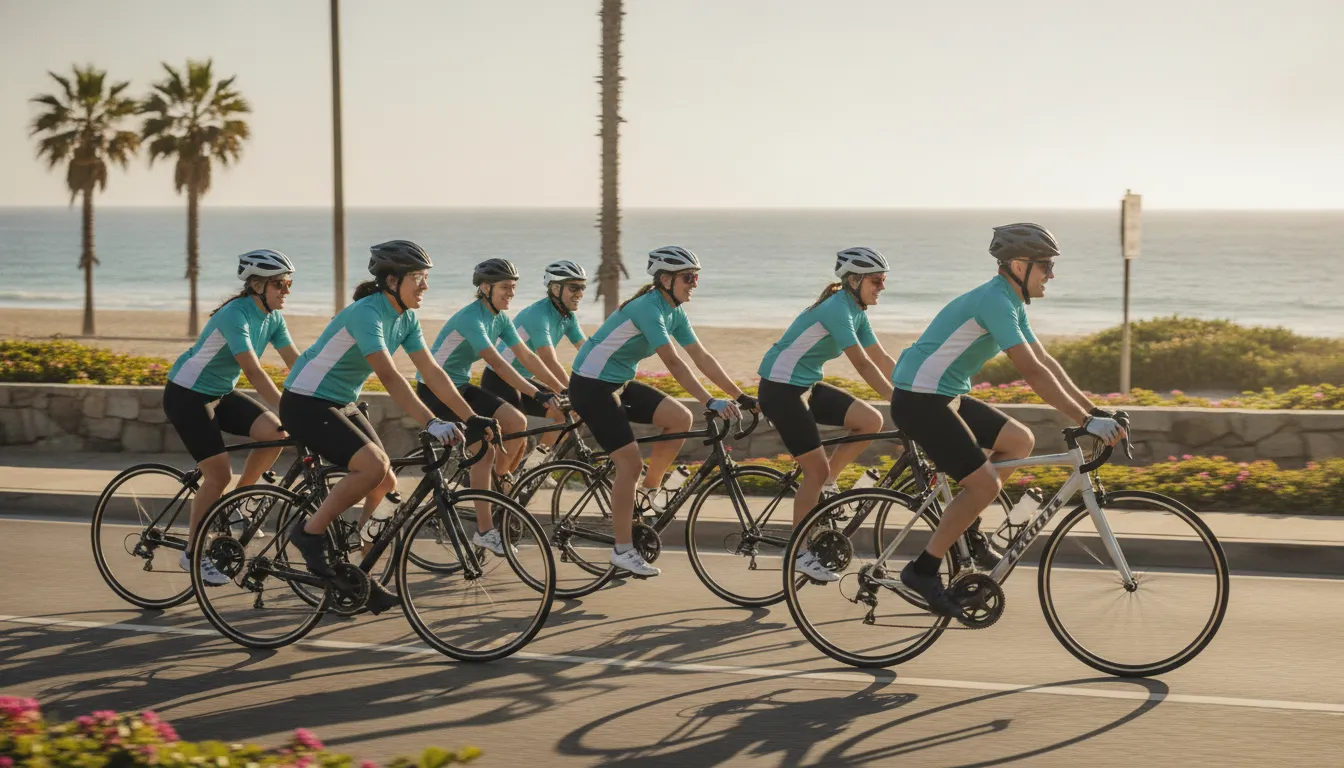
Build a wellness-driven company team for a Bike to the Beach charity ride
What Is a Company Charity Bike Ride?
A company charity bike ride is a group cycling event that brings employees together around a shared cause. An employer may sponsor a team, cover registration, invite staff and clients to participate, or support fundraising efforts for a nonprofit. The result is more than a day outside the office. It is a practical way to connect colleagues, encourage movement, and turn company values into visible community action.
Some employers describe this as a corporate cycling challenge. The challenge is not necessarily about speed or athletic performance. Teams can set a fundraising goal, prepare together, and complete a route as a group while supporting a cause that matters to them. At Bike to the Beach, rides raise funds for local autism and disability organizations, creating 100% local impact rather than directing support toward national research programs.
How does a corporate cycling challenge work?
A company typically forms a team, selects riders, and encourages employees to invite friends, family, clients, or business partners to contribute. Riders may train together, share fundraising ideas, and build excitement across departments before event day. Employees who prefer organizing, fundraising, volunteering, or cheering can also contribute to the team experience without riding the full route.
The shared goal gives people a natural reason to work together outside their usual roles. Research collected for this article describes charity cycling as a platform for collaborative activity and community engagement. It also notes that the event format can be adapted to different fitness levels and locations (source on community charity rides; source on adaptable cycling events).
Can employees of different fitness levels participate?
Yes. A well-supported company charity bike ride is designed to be inclusive, not exclusive. Bike to the Beach offers leader rides, rest stops every 15 miles, and SAG support so participants have guidance and practical help along the route. Employees can choose a pace that works for them, prepare at their own level, and focus on completing a meaningful experience with their team.
That low-barrier structure matters for workplace participation. People do not need to identify as cyclists or arrive with the same level of experience. They need a reason to join, a team that supports them, and an event environment that makes participation feel achievable. When a company invites employees to join a community, not just a ride, the experience can welcome more people into its wellness and social-impact efforts.
How a Company Charity Bike Ride Improves Employee Wellness
A company charity bike ride gives employees a practical way to make movement part of the work experience without turning wellness into another solitary task. Training can be adapted to different starting points, from leisurely rides and indoor cycling to longer-distance preparation. Employees can participate on the road, join a support role, or contribute through fundraising and event logistics. That flexibility makes the experience more welcoming than a one-size-fits-all fitness challenge.
The physical benefit is straightforward. Regular cycling supports cardiovascular conditioning and creates a reason to build consistent activity into the week. It can also reinforce everyday conversations about heart health, active transportation, and sustainable habits. One competitor, Race At Your Pace, reports that 97% of its participants say their physical wellbeing improved. That is competitor-reported evidence rather than a universal outcome, but it reflects the kind of positive change many participants associate with structured, goal-based activity.
For employers, the value is not limited to the event date. A systematic review of workplace prevention interventions found that 56.5% showed positive return on investment, giving HR leaders a credible basis for evaluating wellness initiatives beyond participation counts. A ride should not be presented as a guaranteed healthcare-cost reduction, but it can be part of a broader prevention strategy that supports healthier routines over time. Review the workplace prevention ROI evidence when building the business case.
There is also a mental wellness benefit. Shared active time creates a deliberate break from screens, meetings, and deadline pressure. Employees can talk while moving, encourage one another through difficult training sessions, and return to work with a different kind of energy. Group exercise associated with charity rides can help reduce workplace stress and burnout by combining physical activity with social connection and a meaningful cause.
That combination matters. An employee wellness charity challenge is more likely to feel motivating when people are not asked to improve in isolation. The shared purpose gives participation emotional context, while the flexible format respects different abilities and schedules. Over time, the company charity bike ride can become a visible, recurring signal that employee wellbeing includes physical health, mental recovery, and belonging.
Why Corporate Cycling Builds Team Cohesion and Morale
A company charity bike ride gives colleagues a reason to work toward something meaningful together. Instead of connecting only through job titles, departments, or day-to-day tasks, employees contribute to a shared charitable goal. That common purpose can turn a group of individual participants into a team with a visible sense of progress and achievement.
The effect is not limited to the ride itself. Teams may coordinate registration, invite colleagues to participate, share training ideas, organize fundraising, and celebrate milestones. Each activity creates another opportunity to communicate outside normal reporting lines. A research summary on charitable cycling describes these events as a platform for collaborative effort toward a common social goal. It also connects communal achievement with stronger team cohesion and productivity: read the source example.
A shared goal can break down departmental silos
Workplace silos often persist because people in different departments have few natural reasons to interact. A corporate cycling team creates a low-pressure setting where a finance analyst, salesperson, operations manager, and executive can all contribute in different ways. Some employees may ride, while others coordinate logistics, recruit teammates, raise awareness, or support the event on the day. The contribution does not have to look the same to be valuable.
That flexibility matters for inclusion. A strong team culture makes room for different fitness levels, schedules, and abilities rather than treating athletic performance as the measure of participation. The shared mission becomes the common ground. As employees get to know one another beyond their usual roles, cross-departmental interaction can feel more natural back at work, too.
Purpose can lift morale beyond a one-day event
People are more likely to feel invested when their effort produces a benefit they can see and explain. In a charity ride, the team is not simply completing a wellness activity. It is helping support local autism and disability organizations through Bike to the Beach. That purpose gives training, fundraising, and participation a human meaning, which can strengthen job satisfaction and morale.
For employers, this is an HR and wellness opportunity, not just a fundraising campaign. A well-supported team signals that the company values connection, employee wellbeing, and community involvement. Shared purpose can help employees feel part of a workplace they are proud to represent, supporting engagement and retention over time. This article focuses on that employee experience and culture lens. For a broader overview of the business benefits of forming a team, see the corporate charity cycling team benefit guide.
The CSR Value of Supporting a Company Charity Bike Ride
Corporate social responsibility is strongest when employees can see how a company’s values become action. Supporting a company charity bike ride gives a business a visible, shared way to invest in its people and its community. The team is not simply wearing a logo at an event. Employees are showing up together for a cause, inviting others into the mission, and creating a story the company can stand behind.
That visibility can strengthen public image and community relationships. Research on charitable events describes how a modest initiative can grow into a recognized community tradition when organizations consistently support it. A company that participates year after year demonstrates that its commitment is more than a one-time campaign. It is building a relationship with local riders, nonprofit partners, employees, families, and customers.
Turn company values into an experience employees can share
A written values statement may explain what a company believes, but a shared experience gives those values meaning. Sponsoring a team creates a practical way to demonstrate social responsibility while giving employees different ways to participate. Some may ride, while others volunteer, coordinate logistics, welcome teammates, share the mission, or support fundraising. That flexibility helps make the event accessible to people with different interests, schedules, and comfort levels.
Bike to the Beach adds a clear local connection to that experience. The organization creates 100% local impact for autism and disability organizations, helping direct support toward needs such as sensory gyms. Therapy programs, and recreational camps in the communities where employees live and work. Employees can connect the effort to tangible local outcomes rather than a distant, abstract cause. That direct connection often makes a company-supported social initiative more meaningful and easier to talk about with authentic pride.
Build community trust beyond the event
For business leaders, the CSR value extends beyond event-day visibility. A team charity ride can open conversations with local nonprofit organizations, customers, prospective employees, and community partners. It can also give employees a positive story to share internally and externally, helping the company show how it contributes to the places it calls home. To extend the impact, consider pairing team sponsorship with a workplace giving or corporate matching gifts program.
The result is a purpose-driven activity that connects employee engagement, company values, and local impact. A company charity bike ride becomes not just a sponsorship expense, but a community commitment employees can experience together and help carry forward.
Does an Employee Wellness Charity Challenge Deliver ROI?
A company charity bike ride can support more than a single day of fundraising. It can become a practical employee wellness initiative that connects movement, social connection, and a shared purpose. The return is not guaranteed, and employers should measure participation and outcomes rather than assume that every program will pay for itself. Still, the broader workplace wellness evidence is encouraging. A systematic review of workplace prevention interventions found that 56.5% demonstrated a positive return on investment, suggesting that well-designed programs can produce financial value alongside health benefits. Read the systematic review.
The strongest business case comes from treating the ride as a sustained team experience, not a one-off perk. Training options can encourage physical activity, while group participation can help employees manage stress and build relationships across departments. Employer support may also contribute to retention when employees see that their organization invests in their wellbeing and values. These outcomes should be tracked over time and interpreted alongside other wellness and engagement efforts.
| Investment | Employee outcome | Potential business return |
|---|---|---|
| Team registration, sponsorship, and preparation support | More opportunities for regular physical activity and health-focused participation | Stronger wellness engagement and a clearer way to evaluate program participation |
| Shared training sessions or flexible activity options | Lower barriers to social exercise, stress relief, and connection across teams | Improved morale and potentially stronger retention, especially when participation is inclusive |
| Communication, team captains, and a shared fundraising goal | A visible sense of progress and contribution to a meaningful local cause | Higher engagement with company values and stronger cross-department relationships |
Social-fitness providers often report engagement levels in the 80% to 90% range for well-supported team challenges, but that figure is qualitative competitor evidence rather than a universal benchmark. Your company should establish its own baseline, then review registration, completion, repeat participation, employee feedback, and retention indicators. That approach keeps the ROI conversation credible while recognizing the less easily monetized value of a healthier, more connected workplace.
How to Sponsor a Team for Your Company Charity Bike Ride
A successful company charity bike ride does not require every employee to be an experienced cyclist. It needs a clear plan, an inviting team culture, and a partner that makes the ride manageable from registration through the finish. Use these steps to turn an idea into an active corporate team.
- Choose a distance and route that fit your team. Start with the experience you want employees to have, then consider the distances and regional routes available through Bike to the Beach. If your group includes first-time riders, make room for different comfort levels rather than treating one pace as the standard. A well-matched route helps more employees see the ride as an achievable challenge.
- Set a fundraising goal per rider. Choose a target that feels meaningful and attainable, then multiply it by the number of riders you expect to field. A per-rider goal gives each participant a concrete starting point and gives your team a simple way to track momentum. Your company can also decide whether to provide a base contribution, match employee fundraising, or offer other incentives.
- Register your company team with Bike to the Beach. Visit the Bike to the Beach sponsorship page to begin the conversation about team packages and corporate support. Registering early gives your HR or wellness lead a central place to coordinate riders, fundraising, and event details.
- Recruit riders across fitness levels and departments. Invite people who want a physical challenge, a meaningful community experience, or a way to connect with colleagues. Ask managers to share the opportunity, use internal wellness channels, and welcome employees who prefer to help with planning or fundraising. If you are making the case internally, this guide can help you ask your employer to sponsor a charity bike ride.
- Build training rides and fundraising momentum. Schedule approachable group rides, share preparation resources, and celebrate progress before event day. Pair training updates with short fundraising stories so the team stays connected to the local autism and disability organizations its effort supports. The goal is not just mileage. It is a shared rhythm that makes participation social and sustainable.
- Plan for a supported ride day. Confirm arrival times, meeting points, transportation, clothing, hydration, and emergency contacts. Bike to the Beach helps reduce logistical friction with rest stops every 15 miles, mechanical support, and SAG vehicles. That on-route support lets your team focus on riding together and making a local difference, while knowing help is available when it is needed.
With the right distance, a welcoming invitation, and a practical support plan, your company can create a team experience that brings wellness and purpose together.
Sponsor your company team and make a local difference for autism and disability organizations
Frequently Asked Questions
What distances and fitness levels can employees expect?
Options vary by event, and a strong company team can include experienced cyclists, newer riders, and employees who contribute through training, volunteering, or event support. Ask the ride organizer about route choices, training guidance, and accessibility before registration. Bike to the Beach provides rest stops, mechanical support, and SAG vehicles, helping riders focus on the shared experience rather than handling every challenge alone.
What does a company team need to provide?
Start with an internal team captain, a clear communication plan, and time for employees to prepare. The company can also decide whether it will cover registration, provide matching gifts, organize training rides, or offer paid volunteer time. The most effective teams make participation welcoming while giving riders a shared goal and a practical way to stay connected.
How much should we ask each rider to fundraise?
There is no single number that fits every organization. Set a goal with the event team after considering your headcount, company contribution, matching-gift policy, and employees’ community networks. A clear team target can create accountability and momentum, while flexible individual goals keep the experience inclusive for employees with different circumstances.
How does sponsorship support autism and disability organizations?
Funds raised through Bike to the Beach support local autism and disability organizations, including needs such as sensory gyms, therapy programs, and recreational camps. That local focus lets employees connect their workplace effort to visible community impact. The result is more than a wellness activity: it is a shared way to support families and programs in the regions where teams live and work.
Build Your Company’s Wellness and Morale With a Bike to the Beach Team
Sponsoring a team for a Bike to the Beach charity ride is one of the most effective ways to invest in employee wellness. Team morale, and company culture at the same time. Your team rides toward a shared goal, raises money for local autism and disability organizations, and comes back with stronger relationships and a deeper sense of purpose.
Sponsor your company team for a Bike to the Beach charity ride today
Bike to the Beach handles the route, the rest stops, and the on-road support, so your team can focus on the ride and the mission. Whether you field a team of five or fifty, every mile and every dollar makes a direct, local impact. Reach out to start a conversation about corporate team packages and bring your people together for a cause that matters.