
Charity Auction Ideas for Autism & Disability Nonprofits
Use these charity auction ideas to engage local donors, businesses, and nonprofit partners alongside a community bike ride fundraiser.

A charity auction can give an autism or disability nonprofit another way to invite people into its mission. When it is planned alongside a community bike ride, the auction can connect local businesses, donors, riders, families, and volunteers around a shared goal without making the ride the only way to participate.
Talk with Bike to the Beach about a nonprofit ride partnership
The strongest auction is not necessarily the biggest or most elaborate. It is the one your team can manage well, your community can access, and your supporters can understand. This guide shares practical charity auction ideas for nonprofit partners, from sourcing items and setting up bidding to promoting the event, handling pickup, and thanking every participant.
What makes a charity auction a strong partner fundraiser?
A charity auction works best as a focused participation option within a larger fundraising campaign. It gives people who cannot ride, or who prefer to support in another way, a clear action: donate an item, place a bid, share the auction, volunteer, or make a direct gift. The auction should reinforce the nonprofit’s purpose, not compete with it.
Start by writing a short plan that answers four questions:
- What local program or community need will the fundraiser support?
- Who can participate as a donor, bidder, volunteer, rider, or business partner?
- Which auction format fits your staff, volunteers, timeline, and audience?
- What will happen after the auction closes, including payment, pickup, delivery, and thank-you messages?
For a Bike to the Beach partner, the auction can extend the reach of a ride campaign. A rider may invite a coworker to bid. A local business may donate an experience and form a team. A family member may share the auction with friends even if they do not attend the ride. That variety is valuable because community support does not have to look the same for everyone.
Which charity auction ideas can local nonprofits adapt?
The most useful charity auction ideas are specific enough to act on but flexible enough to fit a nonprofit’s region and relationships. Prioritize items and experiences that are local, easy to describe, appropriate for the audience, and realistic to fulfill. The following options can work as standalone lots or as themed packages.
- Local food and beverage package: Invite a restaurant, bakery, farm, coffee shop, or food provider to contribute a tasting, gift card, class, or curated basket. Confirm dietary details and redemption terms before listing it.
- Outdoor adventure package: Ask a local outfitter, guide, park partner, or recreation business to provide equipment, a lesson, or an experience. Include accessibility information so bidders know what participation involves.
- Bike-ready package: Combine a tune-up, fitting, safety equipment, lights, or a cycling gift card from local businesses. Do not promise a specific service until the provider confirms the details in writing.
- Community arts experience: Seek tickets, a workshop, a private demonstration, or a class from a museum, theater, gallery, or working artist. Provide the venue address, dates, age guidance, and access information.
- Behind-the-scenes local experience: A fire station tour, newsroom visit, farm tour, makerspace session, or stadium experience can feel special without relying on luxury goods.
- Family activity bundle: Pair admission, supplies, books, or a class into a low-pressure package that gives families several ways to enjoy the item.
- Professional skills session: Invite a photographer, designer, financial educator, chef, coach, or other professional to offer a defined session. Set a clear time limit and scope so both sides know what is included.
- Team or workplace challenge: A company can donate a lunch, team workshop, volunteer day, or matching-gift opportunity. Keep the description focused on the experience and avoid implying that every employee will receive a benefit.
- Ride-day add-on: With approval from the event organizer, package a non-operational ride experience such as a supporter shout-out, team celebration, or post-ride gathering. Keep event logistics and rider instructions on the official event page.
- Mission-centered art or craft: Feature work created or donated by local artists, schools, or community groups. Describe the maker with permission and avoid presenting a person’s disability or personal story as the product.
A themed bundle can make individual donations easier to understand. For example, a “Saturday in the neighborhood” package might combine a cafe gift card, a local class, and family admission to a community attraction. Name the bundle after the experience, not after a vague promise of value.
How can a nonprofit make auction participation more accessible?
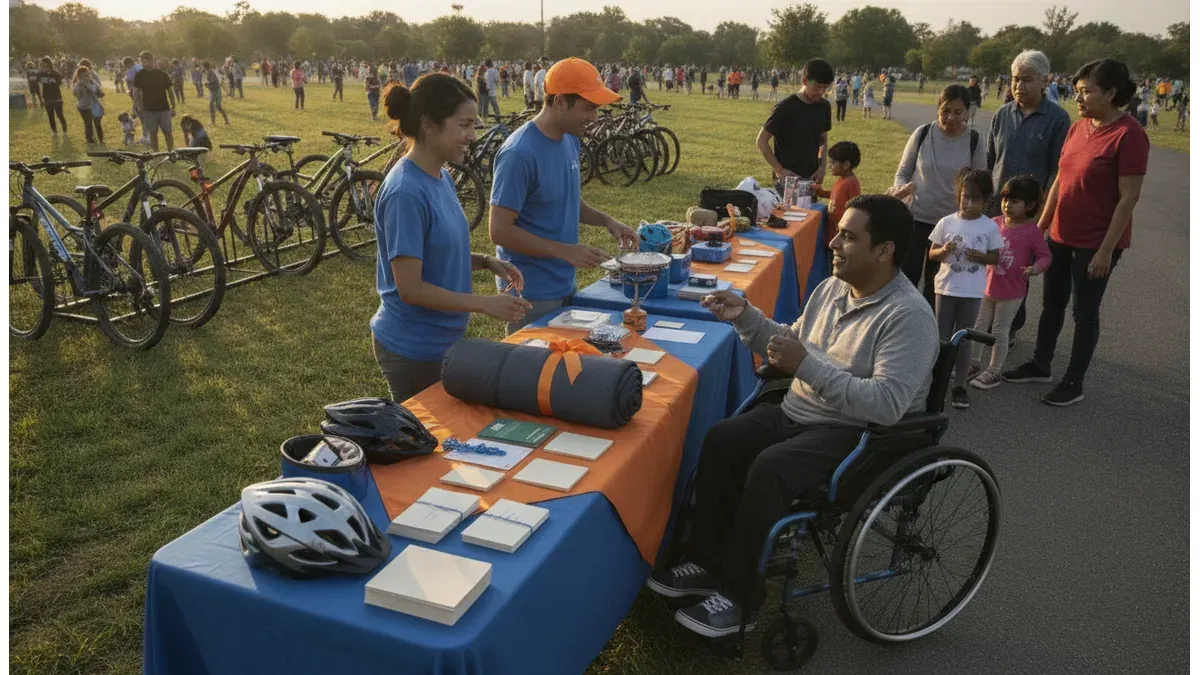
An accessible charity auction makes the choices, deadlines, and support options clear before anyone bids. Accessibility includes the digital bidding process, the physical event space, the item descriptions, and the ways people can participate. Offer help without making a bidder explain a disability or justify a request in public.
Make the bidding process clear
- Use plain language for item names, descriptions, restrictions, and closing times.
- Explain whether people can bid online, in person, by phone, or through a supported alternative.
- Provide a contact method for questions and identify who can help with registration or payment.
- Use readable type, strong contrast, descriptive labels, and a predictable page structure.
- Give people enough time to review items without creating unnecessary last-minute pressure.
Describe the experience, not just the item
Every listing should say what the winner receives, when it can be used, where it takes place, who can attend, and what limitations apply. Include parking, transit, seating, sensory considerations, service-animal policies, mobility details, communication supports, and advance-notice requirements when relevant. If you do not know an access detail, say so and identify who will confirm it.
Provide more than one way to join the larger fundraiser. Someone might bid, donate an item, volunteer at check-in, share the auction, join a ride team, or make a direct gift. A welcoming event treats those roles as meaningful contributions rather than ranking one form of participation above another.
How should autism and disability nonprofits approach ethical storytelling?
Ethical storytelling keeps the focus on agency, dignity, and community impact. A charity auction should explain what the nonprofit does and why local support matters without using fear, pity, or a person’s private experience as a fundraising shortcut. Ask permission, use the person’s preferred language, and let them review identifiable stories or images before publication.
Use concrete language such as:
- “Your support helps local partners create more opportunities for connection and participation.”
- “This fundraiser supports the programs and services our community uses year-round.”
- “Choose the way you want to take part, from bidding and donating to riding and volunteering.”
Avoid framing disabled people as inspirational simply for living their lives, or suggesting that a donation will “fix” autism or disability. Do not promise a specific outcome unless the nonprofit can document it. If funds support several programs, explain that clearly. Trust grows when supporters know what the organization can say, what it cannot promise, and how it will share updates.
When a nonprofit partner is connected to a Bike to the Beach ride, the story can show the relationship between athletic participation and local services. Keep that connection specific and respectful: riders and donors are joining an existing community of people who create and use those services, not saving people from a distance.
Connect with Bike to the Beach about building local fundraising momentum
How can local businesses contribute auction items responsibly?
Local businesses are often most helpful when the request is simple, specific, and connected to a community they already serve. Give a business a short overview of the nonprofit, the event, the audience, the requested item or experience, the deadline, and how the business will be recognized. Never guarantee exposure or a tax outcome that the nonprofit cannot confirm.
Build a practical donation request
- Identify businesses whose products or services fit your supporters and the event’s location.
- Ask for one defined item, package, or experience rather than an open-ended contribution.
- Confirm the item description, expiration date, restrictions, delivery method, and contact person.
- Agree on the business name and website link before publishing the listing or promotion.
- Send the business a final record of how its donation was presented and how the fundraiser closed.
Consider inviting businesses to participate in several ways. A shop might donate an auction lot, sponsor a volunteer station, create a workplace team, or share the event with customers. Let the business choose a level of involvement that fits its capacity. A small local donation can still create a meaningful connection when the experience is organized and the thank-you is personal.
How do you promote a charity auction without overwhelming supporters?
Promotion should make the auction easy to understand at every stage. Give supporters one primary action at a time, use a consistent closing date, and repeat the practical details in more than one channel. A short campaign is easier to manage when each message has a job: invite, explain, remind, or thank.
| Timing | Primary message | Useful content |
|---|---|---|
| Before launch | Invite donors and bidders | Purpose, dates, access details, and how to get help |
| Launch day | Show people how to participate | Featured lots, bidding steps, business partners, and clear link |
| Mid-campaign | Keep momentum useful | New items, item details, community reminders, and rider or team updates |
| Final day | Make the deadline unmistakable | Closing time, payment expectations, pickup or delivery information |
| After close | Confirm the next step | Winner instructions, thank-you message, and impact follow-up plan |
Use the nonprofit’s email list, social channels, partner newsletters, rider teams, local businesses, and community calendars where appropriate. Ask partners to share a prepared message rather than making them write from scratch. For Bike to the Beach partners, connect auction updates to the ride campaign without burying the auction’s own deadline or bidding instructions.
Promotion is also a chance to model inclusive communication. Add alt text to meaningful images, caption videos, avoid text-only graphics for essential information, and make sure the link is easy to find on a phone. If a message includes a personal story, confirm that the people named or shown approved the final version.
What should happen after the auction closes?
Fulfillment is part of the donor experience, not an administrative detail to solve later. Before launch, decide how winners will be contacted, how payment will be confirmed, how items will be picked up or delivered, and who handles questions. A clear process protects the nonprofit, the donor, the winning bidder, and the local business that contributed the item.
- Send winners a confirmation with the item, next step, deadline, and contact person.
- Give donors and bidders a way to correct an email address or request support.
- Record which items were collected, delivered, redeemed, or still outstanding.
- Thank every donor, not only the highest bidder or largest business partner.
- Share a timely update about the campaign’s progress without overstating results.
- Invite supporters to one relevant next action, such as joining a ride team, volunteering, or staying connected.
For an autism or disability nonprofit, follow-up can also show how the auction fits into year-round work. Share a verified update about the partner organization, a community program, or the next opportunity to participate. The goal is not to turn every thank-you into another ask. It is to help people see the relationship they joined and choose whether they want to remain involved.
How can a nonprofit choose the right auction format?
Choose the format that lowers unnecessary barriers and matches the team’s capacity. An online auction may help people participate from different locations. A live auction can create energy at a community gathering. A hybrid format can combine both, but it also requires clear coordination. The right choice is the one your team can explain, operate, and fulfill reliably.
| Format | Works well when | Plan carefully for |
|---|---|---|
| Online | Supporters are distributed or need flexible timing | Mobile usability, questions, payment, closing, and delivery |
| Live | The nonprofit already has a gathering with an engaged audience | Accessibility, auction pacing, item descriptions, and trained volunteers |
| Hybrid | Some supporters attend while others join remotely | Consistent bidding rules, technology support, and one source of truth |
| Small preview auction | The team wants to test demand with a focused set of items | A clear scope, simple fulfillment, and honest expectations |
Start with a manageable set of well-described items rather than collecting more donations than the team can track. If a ride is the anchor event, protect the ride’s operational planning and keep auction responsibilities assigned to a separate lead or small committee. The auction should add a path to participation, not create confusion around registration, routes, safety, or rider support.
Frequently asked questions about charity auctions
How does a charity auction work?
A nonprofit collects donated items or experiences, publishes clear descriptions, invites people to bid, closes bidding at a stated time, and coordinates payment and fulfillment for winning bidders. The organization then thanks participants and shares an accurate update about the fundraiser’s impact.
What are good charity auction items for a nonprofit?
Good items are relevant to the local audience and easy to describe and fulfill. Examples include local experiences, restaurant or activity gift cards, classes, bike services, family activities, artwork, and defined professional sessions. Confirm restrictions, dates, access details, and delivery before publishing.
How can a small nonprofit get auction donations?
Ask local businesses, community partners, vendors, artists, schools, and supporters for one specific item or experience. Explain the mission, audience, deadline, and fulfillment plan. A focused request is easier to evaluate than a general request for anything a business can offer.
How can a charity auction be accessible?
Provide plain-language listings, readable design, clear deadlines, accessible participation options, and a contact person who can help. Describe the physical and sensory details of experiences when known. Offer more than one way to support the campaign, including bidding, donating, volunteering, riding, and direct giving.
Can a charity auction complement a bike ride fundraiser?
Yes. An auction can give non-riders, local businesses, family members, and supporters who prefer another form of participation a role in the campaign. Keep the auction’s bidding and fulfillment instructions separate from the ride’s official operational information, and connect both activities through the nonprofit’s shared local-impact message.
Talk with Bike to the Beach about a nonprofit ride partnership
Ready to create an accessible auction plan for your community? Contact Bike to the Beach to discuss a nonprofit ride partnership.