

Cause Marketing for Nonprofits: A Practical Partnership Guide
Cause marketing for nonprofits can build useful partnerships. Learn how to align goals, clarify roles, involve communities, and measure impact.
Cause marketing for nonprofits works best when a business and a nonprofit connect a public-facing campaign to a real community purpose. The partnership should give each organization a clear role, explain what support will reach the cause, and respect the people represented in the campaign. A thoughtful plan starts with mission fit, not a catchy promotion.
Explore partnership opportunities with Bike to the Beach
What is cause marketing for nonprofits?
Cause marketing is a collaboration in which a business and a nonprofit work together to connect a product, service, event, or campaign with a social cause. The partners may seek to raise awareness, invite community participation, generate financial support, or do some combination of these. Each campaign differs, so the partners should state exactly what they are offering and what the nonprofit will receive.
Habitat for Humanity describes cause marketing as a mutually beneficial promotional partnership between a for-profit business and a nonprofit. That short definition is a useful starting point, but it is not a substitute for planning the actual exchange. “Mutually beneficial” should mean more than visibility for one side: the arrangement should be credible, useful to the cause, and understandable to the people asked to take part.
For a nonprofit, the right collaboration can introduce its work to new audiences or bring resources and skills to a community effort. For a business, it can offer a meaningful way to participate in a local issue. These possibilities are not automatic outcomes. They depend on the fit between the partners, the terms of the campaign, and how the work is carried out.
Why should a nonprofit consider a cause marketing partnership?
A partnership can bring complementary strengths together. A nonprofit may contribute subject-matter knowledge, community relationships, and a clear understanding of the need. A business may contribute funding, staff time, communications capacity, products, or access to customers. The actual contributions should be agreed in advance rather than assumed from a partner’s public profile.
- Reach: Partners may be able to introduce a cause to people who do not yet know the nonprofit.
- Resources: A campaign can provide agreed financial or in-kind support, staff participation, or other practical help.
- Participation: A shared activity can give supporters a concrete way to learn, contribute, or volunteer.
- Learning: Partners can hear how community members understand the issue and use that input to improve future work.
These are possible benefits, not promises. A nonprofit should compare the effort a campaign requires with the resources and community value it is likely to deliver. If the organization would need to devote substantial time to approvals, promotion, and reporting, those responsibilities belong in the plan too.
Cause-related marketing research also examines how the structure of a campaign relates to consumer awareness and opinions. For example, this study explores awareness and opinions of cause-related marketing and selected campaign structures. It is a reason to treat campaign design and clarity as important questions, not a guarantee that a particular format will produce a particular result.
How can a nonprofit choose a partner that fits?
Begin with the nonprofit’s mission and the community’s priorities. A business may have an appealing audience or a generous offer, but those factors alone do not establish a good fit. Ask whether the proposed campaign supports work the nonprofit already considers important and whether the partner is willing to respect the organization’s knowledge and boundaries.
- Describe the purpose. Write one or two sentences about the issue the campaign addresses and the intended community benefit. Keep the description specific enough to guide decisions.
- Check the partner’s connection. Ask why the business wants to participate, what it plans to contribute, and whether its proposed activity is consistent with the cause.
- Consider community perspectives. Invite relevant staff, partners, or community advisors to flag concerns. Do not use people’s stories or images without appropriate permission and a clear explanation of how they will be used.
- Review capacity and risk. Consider staff time, timing, accessibility, safety, privacy, reputational issues, and any approval work the campaign will create.
- Decide what would make the campaign worthwhile. Set a few practical measures before agreeing to launch, and identify who will collect and review them.
Due diligence should be proportionate to the partnership. A small one-day activity and a long-term, public campaign will not require identical review. In either case, it is reasonable to clarify decision-makers, confirm what each side can deliver, and identify a process for raising concerns.
A useful first conversation is exploratory rather than promotional. Ask the business to explain its idea in concrete terms: what would happen, who would take part, what resources are available, and what it hopes to communicate. Then share the nonprofit’s non-negotiables. These may include protecting participant privacy, using respectful language, keeping the activity accessible, or ensuring that public descriptions accurately reflect the nonprofit’s role. Naming boundaries early gives both sides a chance to adapt the proposal before time is spent on creative materials.
It can also help to separate a strong relationship from a strong campaign concept. A business may be aligned with the mission but suggest an activity that is too labor-intensive or poorly timed. Conversely, a simple concept may sound attractive but depend on a level of public endorsement the nonprofit is not comfortable providing. Evaluate the partner and the specific proposal as related, but distinct, decisions.
What should the partnership plan include?
A written plan helps prevent different assumptions from turning into problems. The level of formality can reflect the scope, but the essentials should be clear before either partner promotes the campaign. For a substantial initiative, the parties may need a written agreement reviewed through their normal organizational processes.
- Purpose and audience: State the cause, intended community benefit, campaign audience, and the action people are being asked to take.
- Contributions: Describe any financial support, products, services, staff time, space, promotion, or other agreed contributions. Say whether an amount is fixed, conditional, or still to be determined.
- Timing and responsibilities: Name the campaign dates, key milestones, points of contact, and who owns each task.
- Use of names and materials: Agree on how names, logos, photographs, quotes, and other materials can be used, who approves them, and when permissions end.
- Public explanations: Decide how the campaign will describe the relationship and where participants can find accurate details about what support is provided.
- Data and privacy: Specify whether either partner will collect personal information, why it is needed, who can access it, and how it will be handled.
- Changes and closeout: Set a way to address delays, unexpected concerns, cancellations, and final reporting.
These terms help the nonprofit and business stay aligned, while giving the public a clearer account of the campaign. Rutgers’ overview of cause-related marketing as cooperation between corporate identities, nonprofits, good causes, and social issues also points to the importance of understanding the relationship itself. A campaign should make the partnership and its purpose legible, rather than implying an endorsement or outcome that has not been agreed.
For clarity, build a simple responsibility map alongside the plan. For each task, write down one accountable owner, the people who need to review it, and the deadline. For instance, the business might draft its campaign announcement, while the nonprofit reviews factual descriptions of its work and approves use of its name. Both partners might review the final contribution statement. The map does not need to become an elaborate project system; it should help a team see what is waiting, who can approve it, and what is at risk if a deadline slips.
Define contribution language before designing a campaign. If an offer depends on customer purchases or another condition, describe that condition plainly and make it easy for participants to understand. If the amount or calculation has not been settled, do not let draft materials imply a definite contribution. A transparent description may feel less dramatic than a broad claim, but it gives supporters a fair basis for deciding whether to participate.
How should a nonprofit explain the campaign?
Use plain language that answers the reader’s basic questions. What is the campaign? Who is involved? What is the nonprofit’s role? What action can someone take? What support is being provided, and what conditions apply? If the campaign includes a purchase-based contribution, explain the terms in a way that a customer can readily understand. Avoid vague statements such as “proceeds benefit” unless the partners can explain exactly what that means.
Communications should reflect the people and communities the nonprofit serves with dignity. Avoid reducing people to a fundraising appeal or suggesting that one campaign solves a complex issue. When telling individual stories, obtain appropriate permission, respect a person’s preferences, and provide context. People should not be pressured to share personal experiences to make a partnership more persuasive.
Make the campaign accessible in its format and participation options where possible. Consider clear instructions, readable materials, accessible event arrangements, and alternatives for people who cannot take part in person. A campaign is more credible when inclusion is considered in the activity itself, not only in its promotional language.
Before launch, test the explanation with someone who was not involved in drafting it. Ask that person to describe, in their own words, what the campaign does and what the nonprofit receives. If they cannot tell whether support is guaranteed, conditional, or limited to a particular activity, revise the copy. The same test can reveal confusing calls to action, missing dates, or unclear eligibility details. A short review at this stage is often easier than correcting a misunderstanding after materials have circulated.
How can partners measure whether the campaign helped?
Choose a small set of measures that relates to the campaign’s stated purpose. Avoid treating attention or impressions as proof of community impact. A campaign may track both what it delivered and what participants learned, but partners should be precise about what each measure does and does not show.
| Area | Possible measure | What it can help clarify | What to decide in advance |
|---|---|---|---|
| Resources | Amount or type of support delivered | Whether the agreed contribution was provided | How support is calculated, when it is transferred, and how in-kind items are valued or described |
| Participation | Number of participants, volunteers, or completed actions | How many people engaged in the activity | What counts as participation and who will record it |
| Awareness | Participant feedback or responses to a short survey | What participants say they understood or noticed | Questions, timing, consent, and limits of the feedback |
| Community value | Feedback from relevant community members or partners | Whether the activity was useful, respectful, and accessible to those involved | Who is invited to give input and how concerns will be acted on |
| Delivery | Completion of agreed tasks and milestones | Whether each partner fulfilled its stated role | Owners, dates, documentation, and a process for changes |
Record a baseline or starting point only when it is useful and feasible. Then review findings with the partner and, where appropriate, the people affected by the campaign. A short closeout note can report what was delivered, what participants did, what the nonprofit learned, and what should change next time. Be careful not to claim that a campaign caused a broader social outcome unless the evidence supports that conclusion.
Make the measurement plan practical enough to complete. For a short campaign, the nonprofit might record the agreed contribution, note whether the planned activity happened, and invite a few participants to share feedback. A longer collaboration might need check-ins at several points, especially if the work or public message can change over time. In either case, decide who will maintain records and how they will be shared. Collecting information without a clear purpose adds work and can create privacy concerns.
It is also useful to distinguish outputs from outcomes. An output is what the campaign directly delivered, such as a completed event, materials distributed, or support transferred. An outcome is a change the partners hope to contribute to, such as improved understanding or access to an activity. One event may contribute to an outcome without proving that it caused the change. Reporting that distinction honestly helps partners learn without overstating what the evidence says.
What can a nonprofit learn from event-based partnerships?
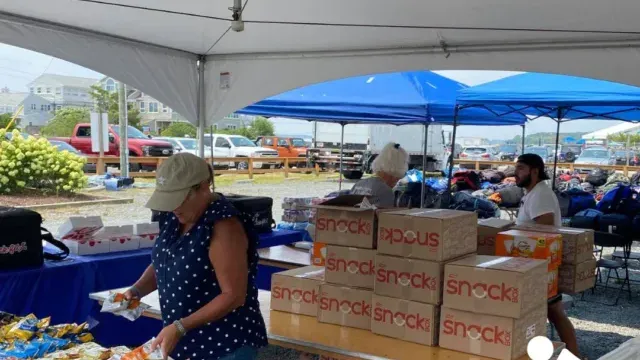
Events provide one practical setting for a business and nonprofit to work together. They can make participation visible and give partners defined tasks, such as helping with logistics or sharing information. They also require planning for safety, accessibility, staffing, and the participant experience. The event itself should serve the community purpose, rather than asking the cause to serve as a backdrop for promotion.
Bike to the Beach is a nonprofit that brings cycling, fitness, and charitable giving together through rides that support local autism and disability organizations. Its approach emphasizes a community that extends beyond a single event, with fundraising directed to local partner organizations. Readers can learn more about Bike to the Beach and its community approach, or explore its stories and local impact work.
This is one example of a cause-connected event model, not a template that every nonprofit should copy. An organization considering a similar collaboration can ask: Is the activity appropriate for the community? Are partner roles and fundraising terms clear? Can people participate in ways that work for them? Will the nonprofit have a meaningful voice in the campaign’s design and public description?
For organizations exploring charity cycling or a related community event, Bike to the Beach’s overview of bike fundraising events offers event-specific context. Nonprofits considering a service collaboration can also review service provider partnership opportunities. These pages describe Bike to the Beach pathways; they are not a promise that every partnership request will be a fit.
Event planning makes the division of labor especially visible. Before the day, agree who handles participant questions, venue or route logistics, information about the cause, and any accessibility requests. Decide what happens if weather, staffing, or another unexpected issue changes the plan. On the day, give each partner a clear contact person and a simple way to resolve questions. Afterward, schedule a closeout conversation rather than assuming that a successful event means every detail worked well. Record practical lessons, such as where instructions were unclear or whether participants had enough time to ask questions.
What common cause marketing mistakes should partners avoid?
- Starting with exposure alone: Public visibility is not a community outcome. Define the cause-related purpose and contribution first.
- Using unclear contribution language: State what the business will provide, how it is determined, and when. Do not leave readers to guess.
- Overstating what a campaign accomplishes: Describe delivered support and observed participation accurately. Do not present a short campaign as a solution to a larger issue.
- Leaving the nonprofit out of approvals: Agree on review rights for claims, stories, images, and descriptions of the nonprofit’s work.
- Ignoring the effort required: Include coordination, communications, accessibility, and reporting in the workload estimate.
- Assuming a shared cause means shared expectations: Discuss decision-making, limits, and potential concerns before the campaign is public.
- Failing to close the loop: Tell partners and participants what happened and what was learned, while protecting personal information.
A campaign can be adjusted or declined if the nonprofit cannot verify the claims, does not have capacity, or sees a conflict with its mission and community commitments. Saying no to a poor fit protects trust and leaves room for a better collaboration.
Some warning signs are also invitations to ask more questions, not automatic reasons to assume bad intent. A proposal may use broad language because its terms have not yet been worked out. Ask for a draft statement of the contribution, a clear timeline, and a named approval contact. If a partner is willing to make those details transparent, the proposal may be improved. If the partner resists basic accuracy, community input, or reasonable review, the nonprofit should pause before lending its name.
Keep a record of decisions and changes. If the campaign evolves after approval, check whether the new version changes the nonprofit’s role, the amount or form of support, the audience, or the way people are represented. A quick re-review can prevent an old approval from being treated as permission for a materially different campaign.
How can a nonprofit get started?
Follow this seven-step sequence to move from an idea to a decision:
- Write down the community purpose and the specific help being sought.
- Identify what the nonprofit can reasonably contribute and what it cannot offer.
- Discuss the idea with relevant staff, partners, and community advisors.
- Ask prospective businesses for a concrete proposal, including support, timing, audiences, and promotion plans.
- Compare the proposal with mission fit, organizational capacity, accessibility, risk, and expected value.
- Agree on terms, approvals, measures, and a closeout process before public promotion.
- Review the outcome together and use the learning to inform future decisions.
Nonprofits can also explore the wider Bike to the Beach sponsorship information when considering a collaboration connected to its rides and community work. The most useful first conversation is specific: share the purpose, explain the proposed contribution, and invite questions about fit.
To make the first conversation easier, prepare a one-page concept note rather than a polished campaign package. Include the need the partnership would address, the people or community involved, a proposed activity, the support sought, the nonprofit’s capacity and boundaries, and a few measures for reviewing whether it worked. Mark anything that is still undecided. This gives a prospective business enough information to respond without implying that the nonprofit has already endorsed a final campaign.
Then use the response to decide whether to proceed, revise, or stop. If the proposal is promising but the timing is unrealistic, ask whether a later date or smaller pilot would make it manageable. If the audience or activity does not match community priorities, suggest another way to contribute or explain why it is not a fit. A clear decision at this stage is more constructive than entering a campaign with unresolved expectations.
Review partnership opportunities with Bike to the Beach
Frequently Asked Questions
Is cause marketing the same as a donation?
Not necessarily. A donation is a contribution, while cause marketing usually describes a coordinated campaign that connects a business and a cause in public-facing activity. A campaign may include a donation, but the partners should state the actual terms and not imply a contribution that has not been agreed.
Does a nonprofit need a large audience to work with a business?
No single audience size determines whether a partnership is worthwhile. Fit, trust, capacity, community value, and the business’s actual contribution are also important. A smaller, clearly scoped activity may be more appropriate than a broad campaign that the nonprofit cannot support.
What should a nonprofit measure?
Measure what connects to the campaign’s stated purpose. Depending on the plan, that may include support delivered, participation, completed tasks, or feedback from participants and community partners. Explain the limits of the measures and avoid treating publicity alone as evidence of impact.
Should a cause marketing partnership be put in writing?
Written expectations are useful for any campaign, and more formal review may be appropriate as scope and risk increase. At minimum, clarify each partner’s responsibilities, contributions, approval process, permitted use of names and materials, data practices, timing, and how changes or concerns will be handled.
How can a nonprofit keep a campaign community-centered?
Ground the idea in community priorities, include relevant voices in planning, use respectful communications, and make participation accessible. Be clear about what the campaign can deliver and report back on what happened.
Build the partnership around the work
Cause marketing can help nonprofits and businesses collaborate when the purpose, contributions, communications, and measures are explicit. Start with the community need, agree on roles in writing, and make claims that match what the partnership can deliver.
Ready to discuss a community partnership?
Explore sponsorship and partnership opportunities
A strong campaign is not defined by its promotion alone; it is defined by whether the partners act transparently, respect the community, and follow through on what they agreed to do.