

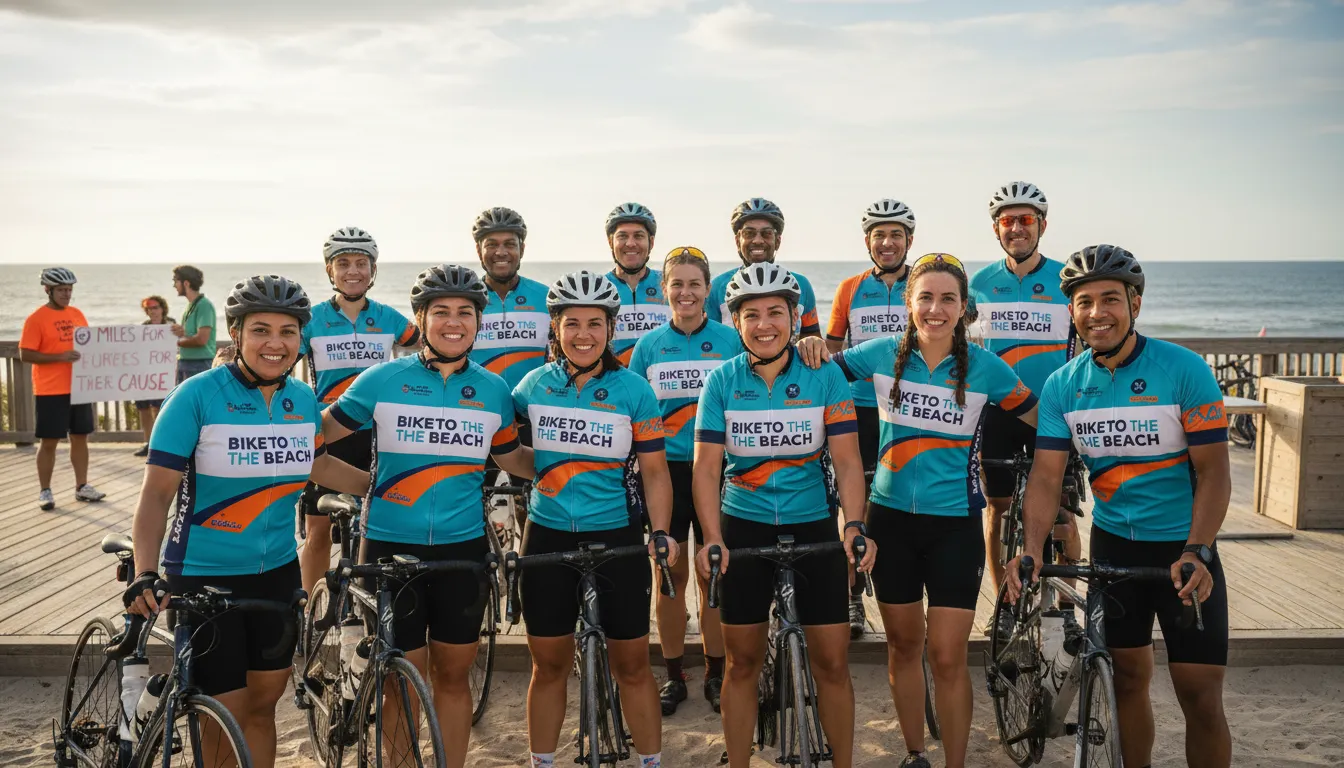
Bike fundraiser vol 20 Tips for First-Time Riders
Start bike fundraiser vol 20 with low-pressure tips, outreach examples, and local impact messaging for your first Bike to the Beach ride.

A first-time fundraising goal feels lighter when every ask has a clear local purpose. Start small today, share honestly, and let your community choose how to help.
Bike fundraiser vol 20 is a practical, low-pressure plan for first-time riders working toward the Bike to the Beach fundraising minimum. Begin with a short personal story about why local autism and disABILITIES programs matter to you. Then share a specific goal with friends, relatives, coworkers, and neighbors. Bike to the Beach reports that the average participant raises $1,000, four times the $250 minimum, and 100% of fundraising stays with local partner organizations. Those funds can support sensory gyms, therapy programs, educational support, and recreation. You do not need a large network or a perfect pitch. A few direct messages, one social post, a workplace request, and steady thank-you notes can turn small gifts into meaningful local support.
The question is not how to pressure people into giving. It is how to make participation easy and show what each contribution can do nearby. Next, “Bike fundraiser vol 20: Start with a clear goal and a simple story” lays out the first step. Here’s how.
Bike fundraiser vol 20: Start with a clear goal and a simple story
A first goal that feels doable
Your first fundraising page does not need a long pitch. Start with one clear goal, one reason for riding, and one simple request. Bike to the Beach has a mandatory $250 fundraising minimum. The average participant raises $1,000, but the minimum is a practical first milestone.
Keep the first step easy: set up your page, share it with a few people, and build from there. If you are ready to ride, choose your regional event and register. Riders can start with the Florida ride registration page or use the ride menu to find another region.
A story rooted in local impact
Explain what moved you to take part. Your story can be short: you care about local services, want a meaningful ride goal, or support a more inclusive community. The focus is shared action, not pressure. Riders are community members working alongside donors and local partners.
Bike to the Beach says 100% of fundraising stays with local partner groups. Those funds can support sensory gyms, therapy programs, educational support, and recreation. This gives your page a clear message: each gift supports autism and disABILITY programs in the region where funds are raised.
Awareness matters too. A published study of charity ride participants found that riders named awareness, fundraising, and social bonds as motives for joining. You do not need to write a dramatic appeal. Tell people why the ride matters locally, then invite them to take part.
A simple page outline
Use a short page that friends, relatives, and coworkers can scan quickly. Include:
- Your ride region and why you signed up.
- Your first target, starting with the $250 minimum.
- One local impact example, such as therapy programs or sensory gyms.
- A direct request to donate or share the page.
After the page is live, choose one low-pressure way to share it. A personal note works well because it gives people context. For more options, review these proven fundraising ideas for cyclists and pick the approach that feels natural.
What should first-time riders say when asking for donations?
Asking for support does not need to sound like a sales pitch. Start with your reason for riding, the local impact, and one clear request. Research on charity cycling participants found that awareness, fundraising, and social bonds were among their reasons for taking part.
For Bike to the Beach, the message can stay concrete. Fundraising stays with local partner organizations that support people with autism and other disABILITIES. You can mention sensory gyms, therapy programs, educational support, or recreation opportunities.
Personal texts and emails
Start with people who already know you. Use plain words and make room for a simple no. A short text works for friends and family, while an email gives you space to add context.
- Text: “Hi Maya, I’m riding with Bike to the Beach this season. Funds stay local and help partner nonprofits serving people with autism and other disABILITIES. If you’d like to support my ride, here’s my page: [link]. No pressure, and thanks for reading.”
- Email: “Subject: Why I’m riding to the beach. Hi Jordan, I signed up for Bike to the Beach this season. The ride raises funds for local nonprofit partners. Their work includes therapy, education, recreation, and community support. If you’d like to donate, my page is here: [link]. Sharing the page also helps. Thank you for considering it.”
Keep each note personal. Add one sentence about why the ride matters to you. If you want more ways to reach your goal, review these proven fundraising ideas for cyclists.
Social and workplace posts
Public posts should be easy to scan. Name the ride, explain the local impact, and include your page. In a work channel, give colleagues a choice to donate or share without putting anyone on the spot.
- Social media: “I’m training for Bike to the Beach. My fundraising supports local nonprofits serving people with autism and other disABILITIES. If you’d like to help, you can donate or share my page: [link].”
- Workplace Slack: “Hi team, I’m taking part in Bike to the Beach this season. The ride supports local nonprofit partners and programs such as sensory gyms, therapy, and education. If this cause speaks to you, my fundraising page is here: [link]. Shares are welcome too.”
Friendly follow-up notes
A follow-up is a reminder, not pressure. Send one after your first note has had time to land. Thank people who already gave, and let others know that sharing still helps.
Try this: “Quick update: I’m still training for Bike to the Beach and raising funds for local partners. Thank you to everyone who has donated or shared my page. If you’d like to take a look, here it is: [link].”
Use a real progress update when you have one. Keep the tone warm, and thank people whether they donate, share, or simply read your note.
Build a small donor list before you post publicly
A public post can help, but it should not be your first move. Start with people who already know you, your values, or your reason for riding. This makes the first round of outreach personal and low pressure.
Your warm-contact map
Write down names before you write a social post. Include family, friends, neighbors, coworkers, former classmates, and people from community groups. Think about people who asked about your training. Also include people who care about local services for people with autism and other disABILITIES.
This approach fits the reasons many riders take part in charity cycling. Research on charity ride participants found that social bonds and raising awareness were common motives, along with fundraising. Your first asks can build on those real connections.
A simple first-round plan
Start with 10 to 20 direct asks instead of sending a mass message. You do not need a long pitch. Use a short note that explains your ride, your reason for taking part, and the local impact you want to support.
- List your warm contacts in one place. A note app or simple spreadsheet is enough.
- Mark each person as a likely donor, a likely sharer, or someone who may want to learn more.
- Choose 10 to 20 people for your first round. Start with contacts who will welcome a personal note.
- Write a short message for each group. Ask donors to give and ask sharers to pass along your page. Offer details to curious contacts.
- Send the notes one at a time. Keep track of replies so follow-up stays thoughtful.
If you want more options for later outreach, review these proven fundraising ideas for cyclists. Save broader tactics for after your warm contacts have heard from you directly.
A share-ready message
Make sharing easy for anyone who wants to help. Give them a two-sentence summary, your fundraising link, and one clear reason the ride matters. Add a suggested sentence they can copy into a text, email, or social post.
Keep the focus on shared community action. Bike to the Beach states that funds raised stay with local partner organizations. That gives your contacts a concrete point to share without adding pressure or writing a new message from scratch.
Turn local impact into easy updates donors can understand
One concrete outcome
Donors should not have to decode a broad mission statement. Give each bike fundraiser update one local focus, such as a sensory gym, therapy program, educational support, recreation option, or family resource.
Use the outcome as the lead, then explain what shared action makes possible. The Why We Bike page can help riders connect each ask to the wider purpose without using pity-based language. Keep the message grounded: community members are working together to support access and inclusion close to home.
- Name one program area and explain why it matters in daily life.
- Share the local nonprofit partner when that detail is available.
- Invite donors to help with a clear, low-pressure ask.
A simple update pattern
An easy update can fit into four short lines. Start with the ride, add one local outcome, make a direct ask, and thank people for reading.
- What I am doing: Briefly name the ride or training milestone.
- Why I am riding: Point to one local program or need.
- What a gift helps: Explain the type of support donors help make possible.
- What happens next: Ask readers to donate, share the update, or follow your progress.
This structure keeps the ask clear and low-pressure. Research on charity cycling found that participants reported social bonds, awareness, and fundraising among their motives. That makes a share prompt useful alongside the donation request.
Ask supporters to give, share, or reply with a local organization they value. A helpful message leaves room for more than one kind of support.
A short series of updates
One long post can bury the reason for the fundraiser. Instead, rotate a few focused updates as your ride gets closer. The first can introduce your purpose. The next can spotlight a program area, share training progress, or thank early donors.
When discussing autism and disABILITIES, describe access, programs, and community inclusion in direct terms. Riders can link to this guide to participating in a charity bike ride for autism when donors want more context. Avoid framing the rider as a rescuer or the donor as a hero.
A simple series might cover a local program, rider progress, a partner spotlight, and a final thank-you. Change one part each time: the caption, the impact example, or the next milestone. Each update stays easy to scan and gives donors a clear reason to engage.
Use team fundraising to make the minimum feel smaller
A first bike fundraiser does not need to rest on one large ask. Invite a small circle to share the effort. Research on charity cycling found that participants value social bonds, awareness, and fundraising as reasons to take part. Those findings support a simple plan: make the goal a group project, not a solo test. See the charity cycling study for the reported rider motives.
Start with a shared goal
Ask a few friends, relatives, or coworkers to help with one clear target. Each person can choose a role. One may share your page, while another may plan a casual group ride. A teammate can also ask an employer whether it offers matching gifts.
Keep the first request specific and low-pressure. Explain that funds stay in the region and support local partner nonprofits. You can also share a short example, such as sensory gyms, therapy programs, educational support, or recreation. For more ways to ask, use these proven fundraising ideas for cyclists.
Choose the right kind of ask
Different people can help in different ways. A friend may give or share your page. An office team may run a simple challenge. A local shop may prefer a small sponsorship tied to a group ride. Use the table to match the request to the audience.
| Ask type. | Who to ask. | Simple request. | Good next step. |
|---|---|---|---|
| Individual ask. | Friends and family. | Give or share the ride page. | Send a personal note. |
| Team ask. | Riding buddies and neighbors. | Join a group ride or mini-challenge. | Set one shared target. |
| Workplace ask. | Coworkers and HR teams. | Check for matching gifts. | Invite an office team. |
| Local business ask. | Shops and service providers. | Offer a small ride sponsorship. | Share the event purpose. |
Build momentum with a group ride
A short group ride gives your team a useful reason to gather. Keep it open to new riders and pair it with one easy action. Teammates can share the fundraiser page, invite a coworker, or ask a nearby business for support.
If a company wants a larger role, point it to the sponsor page. The goal is not to make every person ask in the same way. It is to give each person a practical way to help.
How can you keep momentum after the first donations?
The first gifts are a strong start, but your bike fundraiser should not become a stream of repeated asks. Keep people involved with short updates that show the ride taking shape. A steady rhythm makes fundraising feel like a shared community effort.
Thank donors and widen the circle
Thank each donor soon after their gift. With permission, post a public thank-you and tag the person or group. Keep the note simple: name the support, share your gratitude, and connect the gift to the local mission.
Then invite donors to share your fundraiser with one person who may care about the cause. This is a low-pressure way to reach a wider circle. Research on charity cycling found that participants value social bonds, awareness, and fundraising as parts of the experience. That community link can help you move beyond direct requests. Read the charity cycling study for more context.
Share progress, not pressure
Post a short update when you complete a training ride, test your gear, or reach a fundraising milestone. A route photo, ride-prep note, or progress bar gives supporters a reason to follow along. These updates also help people see that each gift is part of an active effort.
- Celebrate a new milestone on your fundraising page.
- Share one lesson from a recent training ride.
- Post a route detail or a photo from ride prep.
- Thank donors as a group when you reach the next marker.
If you need fresh ways to keep posts useful, choose one or two proven fundraising ideas for cyclists. Rotate formats instead of posting the same request. One update can show training progress, while the next can spotlight the purpose behind the ride.
Keep the local impact visible
Bike to the Beach fundraising stays with local partner groups. Your updates can point to programs that benefit, such as sensory gyms, therapy programs, school support, and recreation. Do not claim that one gift funds a specific service. Show why steady support matters.
Close some updates with a gentle choice. Ask readers to donate, share the link, or follow your ride progress. On other days, offer a simple thank-you with no request at all. This mix keeps the tone warm and helps supporters stay linked to the community behind the ride.
Prepare for ride day while fundraising with confidence
Fundraising and ride prep do not have to compete for your attention. Treat them as two parts of the same plan. Each small training milestone gives you a simple update to share with donors. Each donation can remind you why your training matters.
Support along the route
First-time riders often worry about getting tired, missing a turn, or fixing a flat tire. Bike to the Beach is designed to make those concerns easier to manage. Fully supported routes include rest stops every 15 miles, professional mechanical support, and SAG vehicles. That support lets you focus on steady progress instead of solving every issue alone.
Use your training rides to practice a basic rhythm: ride, pause, drink water, eat a snack, and check your bike. You do not need to make every practice ride a major test. For a practical starting point, read this guide to preparing for your first charity bike ride.
A fundraising story with real progress
Your ride-day plan can also shape your bike fundraiser updates. Share a short note after a training ride, then explain what you learned. Mention the next distance you plan to try or one skill you want to improve. This approach gives friends, family, and coworkers a clear reason to follow your progress.
Research on charity cycling found that riders reported social bonds, fundraising, awareness, and lasting physical benefits as motives for taking part. The published study on charity cycling participation supports a useful point: the ride can connect personal goals with shared action. Your updates can be honest and low pressure. Invite people to take part by donating, sharing your page, or cheering you on.
A route that fits your next step
Choose a regional ride option that gives your training a clear target. Bike to the Beach offers options in DC/MD/VA, Florida, New England, and New York. For example, the DC/MD/VA ride page can help riders review a regional option before building a plan. Pick the ride that fits your location, schedule, and current comfort level.
As ride day gets closer, make a short checklist. Confirm your bike is ready, pack the gear you practiced with, and plan for rest stops. Keep your last fundraising notes simple. Thank your supporters, share your next milestone, and let them know their support is tied to local impact.
Frequently Asked Questions
How can I raise money for charity by cycling?
Start with a simple fundraising page and share why the ride matters to your local community. Send personal messages to a small group before posting publicly. Then follow up with progress updates and a clear request. Bike to the Beach says 100% of fundraising stays with local partner organizations, giving donors a concrete reason to contribute.
How do I explain the impact of my bike fundraiser to donors?
Tell donors what their gift supports and where the money goes. Bike to the Beach fundraising supports local autism and disABILITIES nonprofits. Programs can include sensory gyms, therapy programs, educational support, and recreation. Keep the message brief, personal, and specific. Invite donors to join a shared community effort rather than framing the rider as a rescuer.
How can I maximize my bike fundraising impact?
Set a clear target, start with people most likely to respond, and make several small asks instead of one large request. According to Bike to the Beach, average participant fundraising is $1,000, four times the $250 minimum. Treat that figure as context, not pressure. Thank donors and share progress so supporters can see the local effort grow.
What are the best tips for first-time charity ride participants?
Keep fundraising manageable by making a short contact list, sending personal messages, and setting weekly outreach goals. Prepare for ride day by checking your bike, carrying basic essentials, and reviewing the event details. Bike to the Beach provides rest stops every 15 miles, professional mechanical support, and SAG vehicles, which can help first-time riders plan with confidence.
Ready to Start Your Bike to the Beach Ride?
Waiting until the final weeks can make your fundraising goal feel harder than it needs to be. Starting now gives you time to make small, low-pressure asks, thank early donors, and share steady updates without rushing. Each contribution moves you closer to the minimum while building support for local autism and disABILITIES programs.
Ready to begin? Register for a Bike to the Beach ride, then schedule your first fundraising message today and invite your community to take part. A few early conversations can help you build momentum, keep each ask personal, and make the process more manageable as ride day approaches. Start with one message, one conversation, and one clear reason to ride.