
Autism Charity Bike Ride Guide
Contact Bike to the Beach to join an autism charity bike ride, support local autism and disABILITY nonprofits, volunteer, donate, or sponsor.

An autism charity bike ride turns a day on the road into practical support for families, schools, service providers, and local nonprofit partners. Bike to the Beach brings riders, volunteers, donors, sponsors, and advocates together for fully supported destination rides that raise funds and awareness for individuals with autism and other disABILITIES. The ride matters because the impact stays close to home: participant fundraising supports local organizations that provide therapy programs, sensory spaces, educational support, recreation, and community connection.
Quick answer: An autism charity bike ride is a cycling fundraiser that supports autism and disability organizations through rider fundraising, donations, volunteer support, and sponsorships. Bike to the Beach adds a local-impact model, multiple regional rides, flexible distances, and full route support so participants can challenge themselves while strengthening services in their own communities.
What an autism charity bike ride makes possible
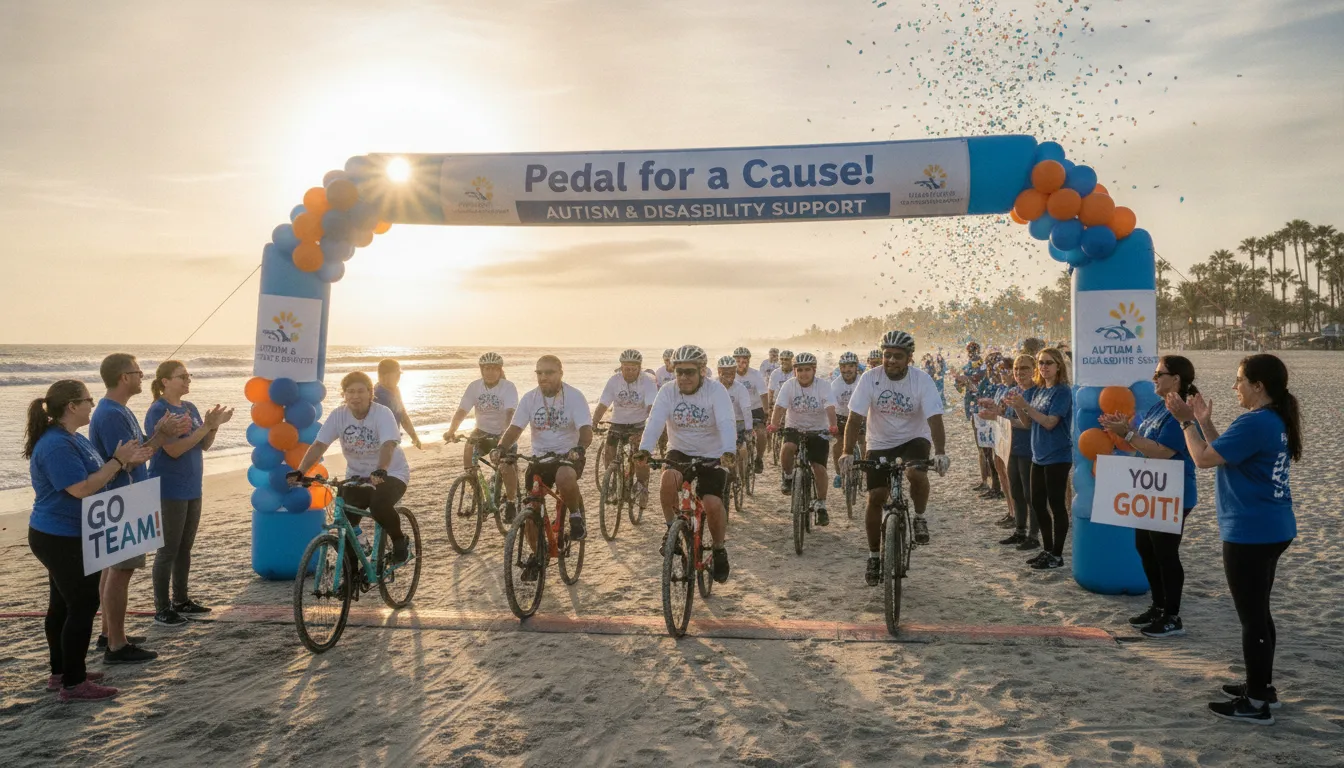
A strong charity bike ride does more than collect donations. It gives people a clear way to act together. Riders commit to training and fundraising. Volunteers turn intersections, rest stops, and finish areas into a safer experience. Donors connect their giving to a visible community moment. Sponsors and corporate teams build engagement around a cause that affects families in every region.
For Bike to the Beach, the purpose is specific: raise funds and awareness for local autism and disABILITY organizations. That local focus changes the story. Instead of treating the ride as a one-day event, Bike to the Beach uses the event as a platform for ongoing community support. The people who ride in Florida, the DC/MD/VA region, New England, or New York can see how their fundraising connects to local partners and local needs.
Local impact is the central promise
Many people want to give, but they also want to understand where their dollars go. Bike to the Beach answers that concern with a regional partner model. Funds raised in a region support organizations serving that same region. That can include autism society chapters, specialized schools, recreation programs, therapy centers, family support providers, and other community-based nonprofits.
This model is especially valuable because families often need help that is practical and nearby. Support can look like sensory gyms, social skills programs, inclusive recreation, educational resources, respite-style support, or service-provider visibility. The exact mix varies by partner, but the goal is consistent: help local organizations expand access, strengthen programs, and reach more families.
A ride format that welcomes more people
Bike to the Beach is built for a range of riders, not only elite cyclists. Regional events include multiple distance options and team formats, so participants can choose a challenge that fits their experience. Some riders take on a full century. Others choose a shorter distance, join a relay, ride with a corporate team, or support virtually through a flexible challenge.
That flexibility matters for SEO and for real participation. A charity bike ride grows when the entry point feels possible. The more people who can see themselves in the event, the more fundraising energy the community can build.
How Bike to the Beach supports riders from start to finish
A meaningful mission does not remove the need for strong event operations. Riders want to know that the route is organized, the rest stops are useful, and help is available if something goes wrong. Bike to the Beach emphasizes fully supported rides so participants can focus on the experience, the cause, and the community around them.
Support typically includes planned routes, rest stops, hydration, nutrition, SAG vehicles, mechanical help, medical coordination, and volunteer teams along the course. Riders also receive practical guidance before the event, including route information and safety expectations. That support structure is one reason the event can welcome both serious cyclists and newer riders.
Rest stops, SAG vehicles, and route support
Rest stops are more than snack tables. They are the checkpoints that keep a long ride moving. Bike to the Beach plans rest-stop support around hydration, food, encouragement, and course coordination. For many riders, these stops become part of the community experience because volunteers, nonprofit partners, and corporate teams often help make them happen.
SAG support adds another layer of safety. If a rider has a mechanical issue, needs to stop, or cannot finish the distance, support vehicles can help with transport and communication. Mechanical partners and local bike resources can also help riders manage flats, adjustments, and other common problems. This kind of infrastructure is what separates a well-run charity ride from an informal group ride.
Practical preparation still matters
Even with support, riders should prepare. A safe bike, a properly fitted helmet, hydration habits, and basic training all make the day better. First-time riders can start with shorter weekly rides, practice fueling, learn how rest stops work, and ask team captains or experienced riders for guidance. The goal is not perfection. The goal is to arrive ready, safe, and connected to the mission.
Need inspiration before you commit? Read Why We Bike stories from the Bike to the Beach community.
Where can you join an autism bike ride with Bike to the Beach?
Bike to the Beach is multi-regional, which gives riders and supporters several ways to participate. Each regional event has its own route context, local partners, and community energy, but the shared model remains the same: ride to the beach, raise funds, and support autism and disABILITY organizations close to the communities where participants live and work.
| Region | Route context | Typical participation options |
|---|---|---|
| Florida | South Florida ride from Deerfield Beach to Jupiter | Century, mid-distance, shorter-distance, relay, and virtual options |
| DC/MD/VA | Multiple start locations leading toward Dewey Beach | 100, 70, 50, and 25-mile options with team and relay formats |
| New England | Boston/New England corridor with a beach finish | Multiple distances for riders at different experience levels |
| New York | Metro New York ride community with an urban-to-beach feel | Regional ride, team participation, and community support options |
Florida
The Florida Bike to the Beach ride serves the South Florida community, with a route context that connects Deerfield Beach and Jupiter. Distance options have included century, mid-distance, shorter-distance, relay, and virtual formats. For riders who want a scenic coastal challenge tied to local autism and disability support, Florida offers a clear regional entry point.
DC, Maryland, and Virginia
The DC/MD/VA ride is one of Bike to the Beach’s most distinctive regional events because it uses multiple start locations and distance options that lead riders toward Dewey Beach. The format can support experienced century riders and people choosing a shorter distance, which makes it useful for individual riders, friend groups, and corporate teams.
New England and New York
The New England ride and New York ride extend the same mission into additional regional communities. These rides help Bike to the Beach reach more supporters while keeping fundraising tied to local partners and local services. That combination of scale and regional relevance is one of the organization’s strongest differentiators.
Why local fundraising matters for autism and disABILITY services
Autism and disability support is often experienced locally. Families look for services near home, schools need resources in their own buildings, and community programs need funding to serve people who live nearby. National awareness is important, but local capacity is what families often feel most directly.
That is why Bike to the Beach emphasizes funds staying in the region where they are raised. Riders are not only supporting a broad cause. They are helping local partners expand the services, programs, and community spaces that make daily life more connected and inclusive.
Examples of tangible community outcomes
Local funding can help partner organizations create or strengthen programs that are practical and visible. A specialized school may build a sensory room. A recreation program may serve more children and adults. A therapy provider may reach more families. A nonprofit partner may gain both funding and community visibility through the event platform.
These outcomes are easier for riders and donors to understand than abstract promises. People can point to a local partner, a local program, or a local family network and see why the ride matters. That clarity strengthens fundraising because participants can tell a more specific story when they ask friends, family, and colleagues to support them.
Inclusive language and shared action
The right framing matters. Bike to the Beach does not need pity-based language to motivate people. The stronger message is shared action: riders, donors, volunteers, sponsors, service providers, and nonprofit partners working together to improve local access and inclusion. Participants are not rescuers. They are community members using a ride as a platform for support.
How to take part in a charity bike ride
There is no single right way to support Bike to the Beach. The best option depends on your goals, schedule, riding experience, workplace, and connection to the autism and disability community. Some people want the athletic challenge. Others want to volunteer, sponsor, donate, or help build a team. Each role strengthens the larger event.
- Choose your region. Start with the ride market closest to you or the community you want to support.
- Select a distance or format. Pick a route, relay, team, or virtual option that fits your experience and availability.
- Set a fundraising goal. Bike to the Beach uses participant fundraising to support local partners, so your fundraising page is part of the mission.
- Invite your network. Explain why the ride matters and how local organizations benefit.
- Prepare for ride day. Train consistently, check your bike, review the route, and use the support resources available.
- Stay involved after the finish. Follow partner stories, volunteer again, or bring a team next year.
Riders and teams
Riders can participate individually, with friends, through a relay, or as part of a corporate team. Team participation can make fundraising easier because people share training, encouragement, and donor outreach. Corporate teams also give businesses a concrete way to connect employee engagement with local social impact.
Donors and volunteers
Donors help riders meet their goals and fund local services even if they never get on a bike. Volunteers help make the event possible by supporting rest stops, check-in, logistics, cheering, and other ride-day needs. These roles are especially helpful for families, civic groups, schools, and companies that want hands-on participation.
How sponsors and service providers can expand the impact
Bike to the Beach is also a platform for organizations. Sponsors, employers, and service providers can support the ride while building meaningful relationships in the autism and disability community. The strongest partnerships are not just logo placements. They connect people, resources, volunteers, and local visibility.
Corporate sponsorship and employee engagement
Companies can use the sponsor program to support the event, activate employees, build teams, and align their brand with local community impact. Sponsorship can also help companies create a shared employee experience around wellness, volunteerism, and purpose. For CSR-focused businesses, this is a practical way to support local families while giving employees a clear way to participate.
Service provider partnerships
Autism and disability service providers can use Bike to the Beach to build trust, meet families, and connect with nonprofit partners. The service provider partner program gives relevant organizations a pathway into the Bike to the Beach community. That can include providers in therapy, education, family support, recreation, health, wellness, and related fields.
These partnerships work best when they focus on service, not sales. Families and riders respond to organizations that show up with useful information, respectful language, and a genuine commitment to the community.
What to expect before, during, and after ride day
A successful charity ride is built in phases. Before ride day, participants register, select a distance, begin fundraising, train, and communicate with supporters. During the event, they rely on route support, volunteers, rest stops, SAG vehicles, and team encouragement. After the finish, the community can continue following partner stories, thanking donors, and staying connected to future events.
Before the ride
Use the weeks before the event to build confidence. Ride regularly, practice eating and drinking on the bike, make sure your helmet and bike are in safe condition, and learn the basics of the route. Fundraising also deserves planning. The strongest rider pages explain why the cause matters, what local impact means, and how donations support regional partners.
During the ride
On ride day, use the support available. Stop for water and food. Ask for mechanical help when needed. Follow safety instructions. Encourage other riders. Charity rides are not only about speed. They are about completing the route in a way that supports the full community around the event.
After the finish
The beach finish is a memorable milestone, but the impact continues after the ride. Thank donors, share partner updates, invite friends to join next year, or explore another role as a volunteer, sponsor, or team captain. When participants stay connected, the event becomes a year-round community instead of a single date on the calendar.
Frequently asked questions about an autism charity bike ride
What is an autism charity bike ride?
An autism charity bike ride is a cycling fundraiser that raises money and awareness for autism and disability organizations. Bike to the Beach combines this format with fully supported destination rides and a local-impact model, so fundraising supports nonprofit partners in the region where it is raised.
Do I need to be an experienced cyclist?
No. Bike to the Beach offers multiple distances and support systems that help riders at different levels participate. Experienced cyclists can choose a longer route, while newer riders can choose shorter options, relay formats, team support, or virtual participation when available.
Where does the fundraising go?
Bike to the Beach fundraising supports local autism and disABILITY nonprofit partners. Depending on the region and partner, funds may help support sensory spaces, therapy programs, educational resources, recreation, family services, and community inclusion.
Can I support the event without riding?
Yes. You can donate to a rider, volunteer on ride day, sponsor the event, start a corporate team, or connect as a service provider partner. Non-riding support is essential because it helps the event operate safely and expands the fundraising reach.
Join Bike to the Beach
An autism charity bike ride gives you a clear, active way to support people with autism and other disABILITIES in your region. Whether you ride 25 miles, take on a century, volunteer at a rest stop, sponsor a team, or donate to a rider, your action helps local partners serve more families.