
Autism Bike Ride: How Local Fundraising Helps
Get autism bike ride guidance on how fundraising supports local therapy, sensory gyms, education, recreation, and disability programs.

An autism bike ride does more than bring cyclists to a start line. It gives riders, donors, volunteers, and local partners one clear way to support programs that families can use close to home.
An autism bike ride supports local autism and disability programs by turning participant fundraising into regional grants, services, and community partnerships. For Bike to the Beach, the model is intentionally local: rider-raised funds help partner organizations that provide sensory gyms. Therapy programs, recreation, education support, family resources, and inclusive community spaces. The ride itself also builds awareness. Teams train together, donors learn about local needs, sponsors connect with credible nonprofit partners, and volunteers help make the event accessible for more people. That combination of fundraising, shared action, and local accountability is what makes a charity bike ride different from a one-time donation.
This guide explains how the model works, where fundraising can go. And why a fully supported ride can welcome experienced cyclists, first-time riders, companies, families, and advocates into the same community effort.
Why an autism bike ride creates local impact
An autism bike ride connects a clear personal challenge with a shared community goal. Riders choose a supported route, ask people they know to give, and bring local needs into everyday talks. Each donation becomes part of a larger regional effort rather than a stand-alone gift.
The local fundraising cycle
The model begins with riders and their own networks. Friends, relatives, coworkers, and neighbors often give because they know the person riding. That personal tie helps people learn about autism and disABILITIES while supporting work close to home.
Bike to the Beach directs 100% of participant-raised funds to local partner groups. This approach keeps fundraising tied to direct services instead of sending it to a national research fund. The organization’s why we bike for autism story explains the mission behind that choice.
From donations to direct services
Regional nonprofit partners know which programs their communities use and where gaps remain. Funds raised through the ride can support therapy, sensory gyms, education, recreation, family support, and inclusive community programs. These services give families practical resources while helping people build skills and take part in community life.
- Therapy and sensory programs can meet day-to-day needs.
- Education and family support can help people find useful resources.
- Recreation can create welcoming ways to move, connect, and belong.
The ride also makes the link between movement and inclusion easy to see. A systematic review of exercise interventions found benefits for social skills, behavior, motor skills, and coordination in children with ASD. The event itself does not replace those programs. It helps local partners fund the settings and support that make them possible.
Shared action across the region
Local impact comes from many people doing a manageable part. Riders train and fundraise, donors give, volunteers support the route, and nonprofit partners deliver programs. No one person is framed as a rescuer. The result comes from a community choosing to act together.
A supported ride also gives that shared work a visible gathering point. People from different towns meet on one route, hear about regional partners, and see where their effort can lead. Bike to the Beach’s local partner fundraising model links that event-day energy to ongoing support after the finish.
This cycle can deepen local ties over time. A rider may return, a donor may volunteer, or a company may form a team. Each next step grows the network around programs serving people with autism and other disABILITIES in that region.
Where charity bike ride fundraising goes
An autism bike ride connects each rider’s effort with support for people and families in the same region. Bike to the Beach directs 100% of participant fundraising to local partner organizations instead of a national research fund. That model helps regional nonprofits put resources toward services their communities use.
How local partners put funds to work
Regional nonprofit partners know which needs are most pressing in their communities. They can direct support toward sensory gyms, therapy, education, recreation, family services, and spaces that welcome people with disABILITIES. Examples may include Camp Open S.E.A.S., Autism Society chapters, and other programs led by local organizations.
These services can support daily skills, social connection, movement, and quality of life. A systematic review of exercise interventions found that exercise can improve cognitive function and quality of life for people with autism.
| Support area |
|---|
- Sensory support: sensory gyms and adapted spaces that offer room for movement and sensory needs.
- Therapy: local therapy programs that build skills through direct support.
- Education: learning resources and workshops for people, families, and educators.
- Recreation: Camp Open S.E.A.S. and adapted activities that create chances to play and connect.
- Family support: Autism Society chapters and local groups that link families with guidance and peers.
- Community inclusion: inclusive events and shared spaces that build belonging close to home.
From a donation to a practical program
A rider first asks friends, relatives, coworkers, and neighbors to support the ride. Bike to the Beach then sends participant-raised funds to regional nonprofit partners. Those partners use the support for programs that meet local needs, from a therapy session to an inclusive recreation event.
This path gives donors a clear view of the mission behind why we bike for autism. It also lets riders talk about more than a finish line. They can explain how shared action helps local organizations serve people with autism and other disABILITIES.
Why regional control matters
Needs differ across Florida, DC/MD/VA, New England, and New York. A local partner can respond to gaps it sees firsthand and choose programs that fit its community. Funds raised through the ride can support several partners, rather than one type of service alone.
The result is a flexible network of local impact. One partner may focus on family guidance, while another offers recreation, therapy, or education. This partner-led approach keeps the fundraising model focused on direct community services and gives each region room to respond.
How riders turn miles into program support
An autism bike ride connects a personal challenge with clear local action. Each rider follows a path from registration to the beach finish. Along the way, fundraising helps local partners offer therapy, sensory gyms, education, recreation, family support, and more.
From sign-up to supported ride
The journey gives riders clear milestones while keeping the focus on shared community impact. It also makes room for different cycling backgrounds, goals, and regions.
-
Register for the ride. Registration turns interest into a firm commitment. Riders join a community working toward the same goal: stronger local support for people with autism and other disABILITIES.
-
Choose a region and distance. Riders select the event and route that fit their goals. This choice helps each person set a practical training plan and prepare for ride day.
-
Fundraise with a local purpose. Riders invite friends, relatives, and coworkers to support their effort. The money raised goes to local partner organizations that provide direct programs and services. The why we bike for autism story explains the mission behind each mile.
-
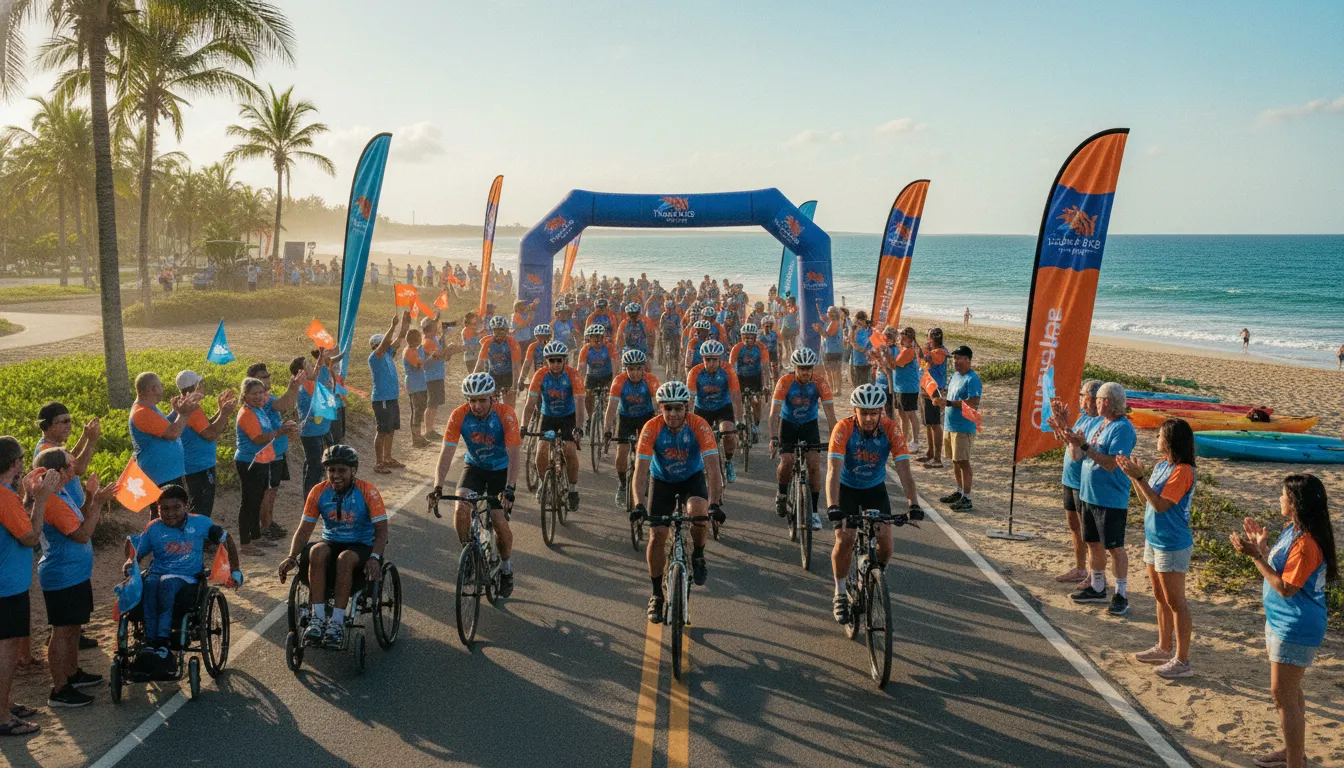
Ride with support. On event day, riders follow a fully supported route toward the beach. Rest stops, SAG vehicles, mechanical help, and volunteers help riders stay safe and keep moving.
-
Celebrate the impact. The beach finish marks more than a completed route. It brings riders, volunteers, partners, and supporters together around the local programs their fundraising helps fund.
What the miles make possible
The ride is the visible part of a longer chain. A rider trains and fundraises, donors give, and local partners put those funds to work. That support can help fund therapy, educational support, recreation, sensory spaces, family services, and community inclusion.
Physical activity also has value beyond the event itself. A systematic review of exercise for children with autism found links with gains in social skills, behavior, motor skills, and coordination. The rider journey brings movement and community action into one shared experience.
A team effort at every stage
Riders do not create impact alone. Donors help each fundraiser move forward, while volunteers make the route welcoming and well supported. Local nonprofit partners then connect the funds with programs that meet needs in their own communities.
This model gives every role a clear purpose. Riders bring the miles, supporters build the fundraising total, and partners deliver services close to home. Together, those actions turn one day on a bike into steady support for local people and families.
What makes a fully supported ride accessible
A fully supported autism bike ride removes many practical barriers between a rider and the beach finish. It does not make the route effortless. Instead, it gives experienced cyclists, casual riders, and first-time charity riders help when they need it.
Flexible routes and clear expectations
Riders can select a distance that fits their current fitness, goals, and available training time. Shorter options give newer riders a more approachable start. Longer routes still offer experienced cyclists a meaningful test of endurance.
Before choosing, riders should review the route, start point, elevation, and expected time on the bike. Regional event pages help riders understand local options and plan ahead. Start by checking the autism bike ride in your community.
- Choose a distance that matches your recent riding, not your future goal.
- Ask the event team what gear, training, and transport the route may require.
- Confirm where rest stops and support points will be located.
Help along the route
A marked route and active volunteers reduce the mental load of navigating an unfamiliar course. Volunteers can point riders in the right direction, share updates, and offer encouragement at key points.
Rest stops create planned chances to refill water, eat, stretch, and check how the body feels. Bike to the Beach events include rest stops every 15 miles. Mechanical support is also available for riders across skill levels.
Mechanical support helps address common bike issues that could otherwise end a rider’s day. SAG vehicles offer another safety option when a rider cannot continue. Fatigue, weather, or a bike problem can all change the plan.
These support layers let riders focus on steady progress instead of solving every problem alone. They also make it easier to stop safely and ask for help.
An encouraging team culture
Support is social as well as practical. Team members encourage one another, share training advice, and help maintain a steady pace. This matters for first-time participants who may feel unsure about joining a large cycling event.
Research on exercise interventions for children with autism links physical activity with gains in social skills and motor coordination. During the ride, shared effort gives participants a clear way to act together for local autism and disABILITY programs.
The event’s purpose can keep hard miles in perspective without placing pressure on any one rider. Learning why we bike for autism helps teams connect route support with the local services their fundraising supports.
How teams, sponsors, and volunteers expand the impact
A shared goal for teams
An autism bike ride gives corporate teams, schools, and civic groups a clear goal they can work toward together. Riders train and raise funds, while coworkers, families, and friends can donate or help on event day. Each role adds energy to the same local effort.
This shared work can support stronger ties across a company or community group. It also gives people a direct way to learn why we bike for autism and other disABILITIES. The focus stays on local action, not on any one participant.
Donors give teams a way to invite broad support from people who cannot attend the ride. A team page can connect each gift to a shared goal and keep the cause visible throughout training. When employers match gifts or celebrate staff fundraising, employee engagement can extend well beyond event day.
Local partners with practical roles
Sponsors do more than place a name beside an event. They can form employee teams, match gifts, provide useful supplies, or help fund ride support. Service providers can share local knowledge and connect families with programs that fit their needs.
That broad partnership matters because physical activity can support social skills, behavior, and motor coordination for children with autism. A systematic review of exercise programs found gains across these areas. Local partners help turn awareness into access to therapy, recreation, education, and family support.
- Corporate teams can ride, fundraise, match gifts, and invite coworkers to volunteer.
- Schools and civic groups can organize service days, cheer stations, or community fundraisers.
- Service providers can share resources and help local families find ongoing support.
- Sponsors can provide funds, equipment, food, transport, or skilled event-day help.
Volunteer work that strengthens the ride
Volunteers make the event welcoming and help riders stay focused on the route and mission. Groups can staff rest stops, guide riders, support check-in, or celebrate at the finish. These roles offer a hands-on option for people who do not plan to cycle.
The result is a wider circle of support around each autism bike ride. Funds raised through Bike to the Beach go to local partner organizations and direct community services. People can explore the corporate partner options to find a role that matches their team, skills, and resources.
What should you look for in an autism charities near me search?
Searching for autism charities near me usually means you want your support to feel close and useful. A national mission can be meaningful, but many donors, riders, and volunteers also want to know which local programs benefit.
Local partner transparency
Look for a clear explanation of where funds go. Strong charity ride programs name the regions they serve, explain the partner model, and connect fundraising to services people can understand.
For Bike to the Beach, that local focus is central. The organization raises funds and awareness for autism and disABILITY organizations in the same ride regions where participants build their teams and donor networks.
Practical services, not vague impact
A helpful charity should make impact feel concrete. Examples may include sensory gyms, therapy programs, education support, recreation, family resources, and community inclusion programs.
That detail matters because it helps donors see the link between a gift and a real community resource. It also helps riders explain the cause when they ask friends, family, and coworkers to support their fundraising page.
Ways to take part
The best fit may offer more than one path. Some people want to ride. Others want to volunteer, donate, sponsor a team, start a workplace group, or connect as a service provider partner.
If you want an event-based way to support autism and disability programs, an autism bike ride with a local mission can make that next step clear.
Which Bike to the Beach region fits your community?
Bike to the Beach offers regional rides in Florida, DC/MD/VA, New England, and New York. Each option connects riders with a local community and nearby nonprofit partners. The right autism bike ride often starts with a simple question: where can your team build the strongest local ties?
Four regional choices
Florida serves riders and supporters across South Florida. Its route connects Deerfield Beach and Jupiter while keeping the event rooted in the region. The charity bike ride for autism page provides current event details for riders, teams, and local supporters.
The DC/MD/VA ride brings together communities across the greater Washington, Maryland, and Virginia area. Riders can review the autism bike ride in your community page for regional event information. New England and New York offer the same community-first model within their own local networks.
- Choose Florida if your strongest ties are in South Florida.
- Choose DC/MD/VA if your team spans the capital region and nearby communities.
- Choose New England if your network is based around Boston or the wider region.
- Choose New York if your riders, donors, or partners are based in the metro area.
Geography and team goals
Start with the people you hope to bring together. A nearby ride may make it easier for coworkers, friends, and family to take part. It can also help a team build lasting ties with regional autism and disability organizations.
Then consider your team’s goals. Some groups want a shared cycling challenge, while others focus on fundraising, volunteering, or community awareness. A regional event gives each person a clear way to contribute without losing sight of the local mission.
Local impact beyond the route
Each region turns a day of cycling into shared action for local autism and disABILITY programs. Funds support partner services such as therapy, education, recreation, sensory gyms, and family support. The event is not only about completing the route; it also strengthens the network around those services.
Cycling also gives people a practical way to connect physical activity with community support. A systematic review of exercise interventions found benefits across several outcomes for children with autism. Choosing a nearby region helps riders connect that broader value with programs serving their own communities.
Frequently Asked Questions
How do autism bike rides support local disability programs?
Autism bike rides turn participant fundraising into grants or direct support for regional nonprofit partners. Those partners may fund therapy, sensory gyms, education, recreation, family services, and community inclusion programs. Bike to the Beach directs 100% of participant-raised funds to local partner organizations, according to its organization overview. This model keeps locally raised funds connected to services in that region.
Are there different distance options for autism charity rides?
Yes, many autism charity rides offer several route distances for different experience levels. Shorter routes can suit casual or first-time riders, while longer routes serve cyclists seeking a greater challenge. Distance choices, age rules, pace requirements, and support services vary by event. Riders should review the route details before registering and choose an option that matches their current fitness and training.
Can I participate in an autism bike ride virtually?
Some autism bike rides offer virtual participation, but availability depends on the event. A virtual rider usually completes a chosen distance independently while fundraising online for the same cause. This option can help people participate when travel, scheduling, or route distance makes an in-person ride difficult. Check the event’s registration page for virtual rules, tracking requirements, fundraising expectations, and completion deadlines.
Are registration fees for autism charity rides tax-deductible?
Registration fees are not always tax-deductible because riders may receive event benefits, such as route support, food, or merchandise. Separate donations may qualify, but rules vary by event and the donor’s tax situation. Review the event’s registration terms and donation receipt before claiming a deduction. For advice about a specific contribution, consult a qualified tax professional.
Ready to ride, volunteer, or support local impact?
If you want your miles, donations, or team effort to support local autism and disability programs, Bike to the Beach gives you a clear next step. Choose the ride region that fits your community, invite your team, and help turn a day on the bike into support for regional nonprofit partners.
Contact Bike to the Beach to register, sponsor, volunteer, or learn how your organization can get involved.