
Autism Awareness Month Activities for Community Action
Explore autism awareness month activities that center autistic voices, support inclusive events, and turn April learning into local action.

April is a useful time to turn good intentions into practical support for autistic people, families, and local organizations. The best autism awareness month activities do more than display a symbol for a month. They create space for learning, inclusion, self-advocacy, and meaningful community participation.
Register for a Bike to the Beach charity ride and make your Autism Acceptance Month plans part of a regional community effort.
Useful autism awareness month activities can include sharing reliable educational resources, listening to autistic voices, hosting accessible community events, and fundraising through a charity bike ride. Choose actions with the people and organizations you hope to support, and make participation flexible rather than assuming one approach fits everyone.
For individuals, schools, workplaces, and teams, the most meaningful plan pairs education with a concrete way to contribute. Bike to the Beach brings cycling, charitable giving, and local impact together through regional rides that support autism and disability organizations. The ideas below can help you choose an action for April and build a follow-up plan that continues throughout the year.
Why Should Autism Awareness Month Activities Center Acceptance?
April offers a visible moment to learn, listen, and strengthen community support. The Centers for Disease Control and Prevention recognizes April as Autism Acceptance Month and provides resources for sharing information, promoting inclusion, and connecting people with support. That framing matters because visibility is most valuable when it leads to understanding and practical welcome.
Awareness can help more people recognize autism and find reliable information. Acceptance asks communities to go further. It means respecting autistic people as full participants, making room for different communication and sensory needs, and supporting self-advocacy. A seasonal message should not treat autism as a problem to solve or assume that one event, donation, or story represents everyone.
Let autistic people shape the conversation
Education should remain grounded in trustworthy, community-informed perspectives. The Autism Society explains that autism is not one single experience. People have different strengths, needs, preferences, relationships, and goals. That range is a reason to avoid language that speaks for every autistic person or reduces people to a diagnosis.
Before planning an activity, ask whose perspective is missing. Invite autistic speakers, writers, artists, or local advocates to contribute when they want to do so. Compensate people for substantial expertise, respect privacy, and do not expect one person to represent an entire community. A thoughtful plan offers genuine choices and creates opportunities for participation without measuring commitment by visibility, athletic ability, or enthusiasm for a particular format.
Make April a starting point, not an endpoint
An acceptance-centered activity has a next step. A school may review sensory considerations for future gatherings. A workplace may make communication and event planning more accessible. A community group may maintain a resource list and build a relationship with a local partner. These actions turn a seasonal message into a durable practice.
At Bike to the Beach, that approach reflects a simple principle: community, not just an event. April can open the door, but inclusion and advocacy belong in every season. When an activity honors individual experiences and connects people to meaningful local action, acceptance becomes something a community practices together.
What Autism Awareness Month Activities Work Well for Individuals and Schools?
The most useful activities start with listening and give people more than one way to participate. A school, family, library, or neighborhood group can choose one focused project instead of trying to produce a large campaign. The goal is to create a welcoming opportunity that is accurate, practical, and shaped by the people it is intended to support.
- Learn from autistic voices. Build a discussion, reading list, classroom lesson, or professional development session around autistic writers, speakers, artists, and advocates. Pair personal perspectives with reliable resources so participants understand that autism includes varied life experiences.
- Create a respectful resource share. Curate a short list of disability-led resources, local support organizations, books, and practical guides. Share the CDC’s Autism Acceptance Month resources, then add contacts that families and neighbors can use after April.
- Choose interactive learning without simulation. A class might discuss neurodivergent characters, create sensory-considerate art, or explore different communication styles. Avoid activities that ask students to imitate autistic traits or simulate another person’s daily experience. Use writing, drawing, small-group discussion, and quiet independent work as equally valid options.
- Offer flexible participation. Explain what will happen before an assembly, fundraiser, or gathering. Someone may prefer to attend briefly, watch from a quiet area, join online, help behind the scenes, or opt out. Choice is part of belonging, not a lack of enthusiasm.
- Plan for sensory access. Review lighting, sound, crowding, transitions, food smells, and unstructured waiting. Share a clear schedule, identify a calm area, and allow headphones, movement, breaks, and different seating options.
- Turn one project into ongoing practice. Set a follow-up date, ask participants what worked, and keep the resource list current. A strong April activity points toward learning, access, or local action rather than ending when the calendar changes.
These choices shift awareness from a theme on a calendar to a shared responsibility. The goal is not to create a perfect activity. It is to make room for autistic people to shape the conversation, participate on their own terms, and see inclusion continue after April ends.
- Listen to autistic people and local partners before choosing an activity.
- Offer flexible participation options and publish access details in advance.
- Explain the local impact, protect privacy, and ask for consent before sharing stories or images.
- Set a follow-up date so the relationship and support continue beyond April.
How Can Workplaces and Teams Turn Awareness Into Action?
Workplace participation is strongest when it gives people more than a themed message for April. Start by choosing an action that supports learning, inclusion, and local community impact. Then make participation voluntary and flexible so employees can contribute in ways that fit their roles, schedules, and access needs.
Build a shared learning foundation
Invite a knowledgeable speaker, share educational resources, or set aside time for a team conversation about autism acceptance and neurodiversity. The CDC lists sharing digital content, web features, and educational materials as ways to participate. Keep the discussion practical by asking what the workplace can improve, such as clearer communication, quieter participation options, and more inclusive planning for team events.
If an organization has autistic employees or community partners willing to advise, invite their input without expecting anyone to educate the entire team or disclose personal information. A learning session should create better practices, not put a single person on display.
Choose an accessible way to raise funds
A team can host a small fundraiser, organize a service activity, support a local partner, or join a charity ride. Matching gifts may be another option if an employer already offers that program. Confirm workplace rules before promoting a matching opportunity, and do not present it as a requirement for participation.
For a structured option, explore corporate fundraising events for autism. A workplace does not need an elaborate production to make a difference. Set a clear purpose, name the beneficiary, explain where funds go, and offer several ways to contribute, including donating, volunteering, sharing resources, or joining a team.
Turn one event into a team habit
Use April to begin a year-round rhythm. A team might learn together in April, fundraise or volunteer in summer, review workplace accessibility in fall, and share progress before the year ends. Explore charity event ideas for work to compare formats, then select the one that matches your team’s capacity and community relationships.
The goal is not to create a perfect awareness campaign. It is to move from attention to consistent, respectful action, with employees, autistic people, families, and local organizations treated as partners. That is the difference between a one-month message and a community that keeps showing up.
How Do Charity Bike Rides Create Local Impact?
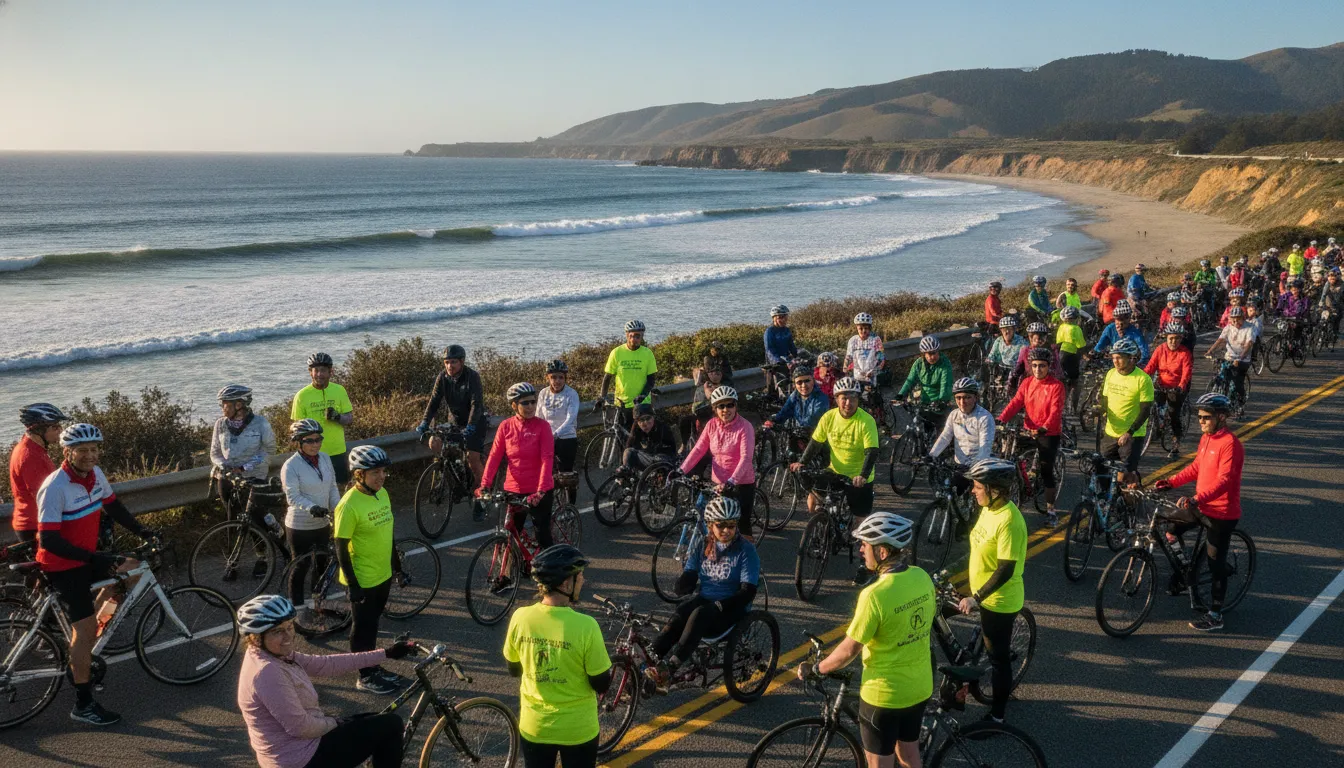
A charity bike ride turns a personal challenge into a shared investment in the community. Riders bring movement, commitment, and energy. Friends, family members, coworkers, and neighbors can add support through peer-to-peer fundraising. Together, those efforts create a practical way to participate in autism acceptance beyond sharing a message for a single month.
Bike to the Beach directs 100% of participant fundraising to local partner organizations. This model keeps the connection between a rider’s effort and community support close and visible. It connects participants with organizations serving people and families in the places where the rides take place. Learn more about the mission behind this work on the why we bike page.
Movement and fundraising reinforce each other
The ride creates a shared experience for people with different backgrounds and cycling experience. Some participants may be experienced cyclists. Others may be motivated by a personal connection, a desire to try something new, or a commitment to an inclusive community. The fundraising component gives every rider another way to contribute. A person can train, tell the story of the cause, invite others to give, and celebrate the collective result.
Supporters do not have to be on the road to be part of the effort. They can donate, share a fundraising page, volunteer, encourage a rider, or help a team prepare. That range of roles matters because meaningful community participation should not depend on one athletic ability or one form of involvement.
Local partners turn generosity into opportunities
Bike to the Beach community impact guidance identifies support such as sensory gyms, therapy programs, and recreational opportunities. These resources can create more welcoming ways for people on the autism spectrum and their families to connect, learn, play, and pursue their goals. The needs of each community are different, so local partner organizations remain important in deciding where support can do the most good.
| Ways to participate. | What it can contribute. |
|---|---|
| Ride or join a team. | Movement, peer support, and fundraising reach. |
| Donate or share a fundraiser. | Flexible support for local partner work. |
| Volunteer or help plan. | Event capacity and community connection. |
Regional rides extend that local focus across Florida, DC/MD/VA, New England, and New York. Explore the DC, Maryland, and Virginia ride or the New England ride. You can find a community close to you while staying connected to the broader mission.
Impact continues after the ride
The strongest charity rides are communities, not just events. Training may happen for weeks, but advocacy and fundraising can continue throughout the year. A ride can open the door to ongoing support for local organizations, thoughtful conversations about inclusion, and new relationships among autistic people, families, allies, volunteers, and donors. That makes a charity bike ride a meaningful option among autism awareness month activities, with a path from seasonal awareness to sustained local action.
How Can You Make an Activity Accessible, Respectful, and Sustainable?
The strongest autism awareness month activities are shaped with autistic people and local partners, not simply created for them. Autism is not one universal experience. As the Autism Society explains, it includes a wide range of talents, relationships, victories, and challenges. Build in room for people to define what meaningful participation looks like for them.
- Listen before you plan. Invite autistic people, families, advocates, and community organizations into the planning process early. Ask what would make the activity useful, welcoming, and worth their time. Compensate community contributors when they provide substantial expertise.
- Offer more than one way to participate. Someone may want to ride, volunteer, attend briefly, join online, share resources, fundraise, or simply receive information. Do not treat one level of visibility or energy as the measure of commitment.
- Publish access details clearly. Explain the schedule, location, sensory conditions, noise level, lighting, crowd expectations, parking, restrooms, quiet spaces, and transportation options. Identify a contact who can answer access questions before the event.
- Protect privacy and consent. Ask before photographing, filming, naming, or sharing someone’s story. Never make a diagnosis, personal disclosure, or family experience the price of participation.
- Replace tokenism with partnership. Explain which local organizations benefit, what support they provide, and how people can stay involved. Awareness language should not substitute for investment or invite one person to speak for an entire community.
- Measure follow-through. Track funds raised, partner feedback, access improvements, volunteer retention, and commitments kept after April. Share results honestly, including what needs to improve.
Bike to the Beach treats advocacy and fundraising as year-round community work, not a single April moment. Set a next check-in with partners, keep resources available, and turn one successful activity into an ongoing relationship. Sustainable action might mean recurring volunteer support, continued fundraising, or making accessibility part of every event plan.
Register for the DMV charity ride and turn your commitment into a community-powered day of action.
Frequently Asked Questions
What are some inclusive activities for schools and community groups?
Invite students and neighbors to share acceptance-focused resources, read books featuring neurodivergent characters, create sensory-considerate art, or organize a fundraiser. Ask autistic people and local organizations what support would be useful. Offer different ways to participate, including quiet, movement-based, creative, and remote options.
How can businesses participate in Autism Acceptance Month?
Teams can host a fundraiser, support a charity ride, share educational resources, or back a neurodiversity-affirming initiative. Set a clear goal, make participation voluntary, and explain where funds go. A workplace activity has more value when it builds ongoing inclusion rather than treating April as a one-time campaign.
When is Autism Acceptance Month observed?
It is observed every April. The CDC describes April as Autism Acceptance Month and offers ideas such as sharing acceptance messages, educational materials, and community resources. Use the month as a starting point for listening and action that continues throughout the year.
How can a charity bike ride support the autism community?
A ride can turn personal effort and team fundraising into local support. Bike to the Beach directs 100% of participant fundraising to local partner organizations, where funds may help support sensory gyms, therapy programs, and recreational opportunities. Regional rides give participants a way to connect their miles to community impact.
Ready to turn awareness into action?
A charity ride offers a practical way to bring friends, coworkers, and community members together around inclusion and lasting support. By participating, you can carry the message beyond April while contributing to Bike to the Beach’s community-focused mission.
Join a Bike to the Beach charity ride today and take the next step toward local action.