

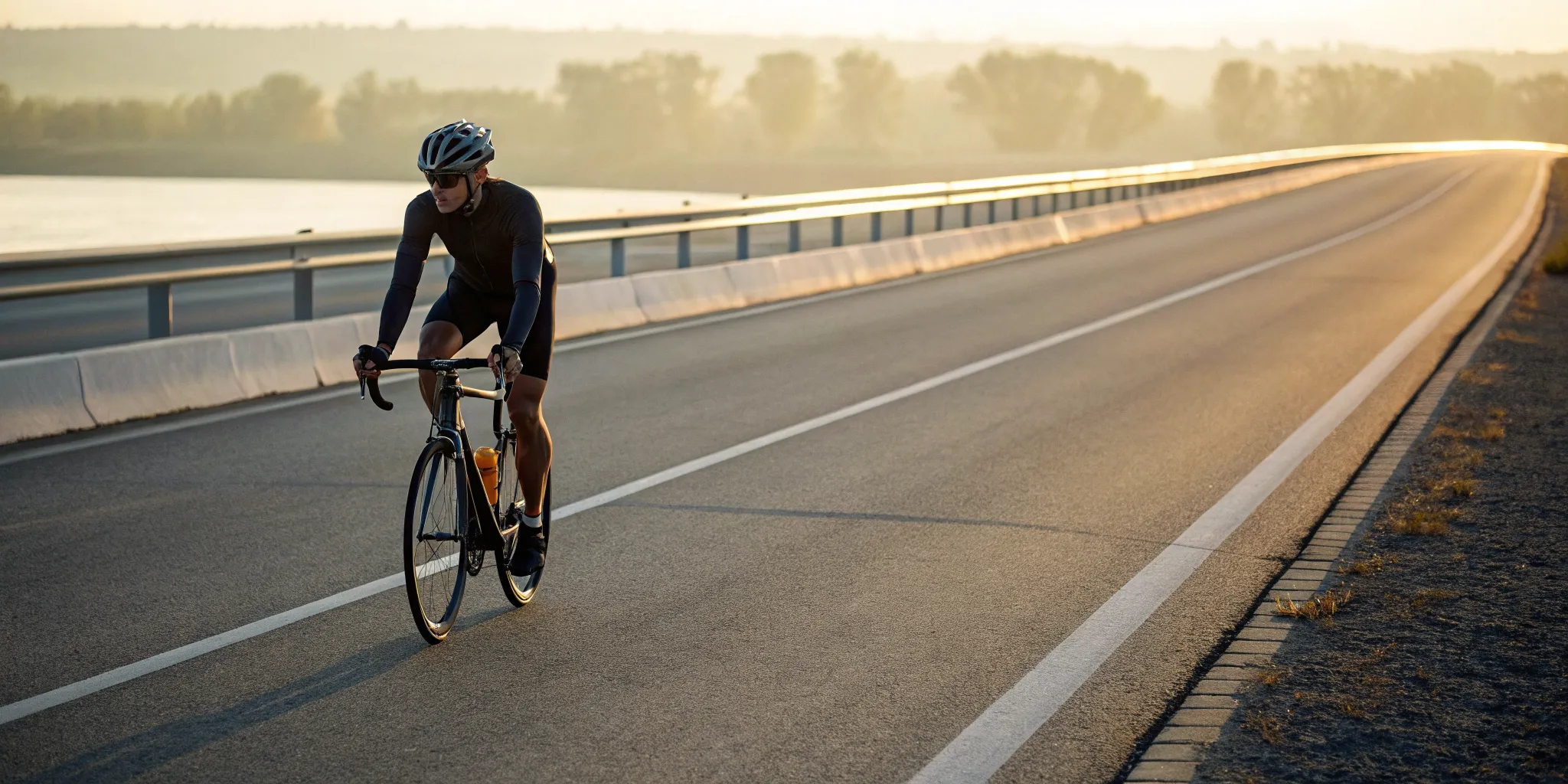
25 Mile Bike Ride Calories: How Many Will You Burn?
Find out how many 25 mile bike ride calories you’ll burn, what factors affect your total, and get practical tips to personalize your cycling nutrition.
Ever finish a ride with a friend and wonder why your stats look so different? It’s because the calories you burn on a bike ride are unique to you. Factors like your body weight, speed, intensity, and even the weather all play a part. This means your final 25 mile bike ride calories count is a personal benchmark of your effort that day. This isn’t about competition. It’s about understanding the incredible work your body does and using that knowledge to train smarter for your goals, whether you’re a seasoned cyclist or just clipping in.
Key Takeaways
- Your calorie burn is unique: The energy you use on a 25-mile ride is personal and depends on your body, speed, and the route you take. Use this knowledge to understand your body’s needs rather than focusing on a single, universal number.
- Challenge yourself with terrain and intervals: You can make your training more effective by adding variety to your rides. Incorporate short bursts of speed or choose a route with hills to naturally increase your effort, build strength, and make your workout more engaging.
- Fuel for a strong finish, not just for the numbers: Proper nutrition is your key to feeling great on the bike. Focus on eating carbs before you ride, staying hydrated during, and refueling with protein and carbs afterward to support your performance and recovery.
So, How Many Calories Does a 25-Mile Bike Ride Burn?
So, you’re gearing up for a 25-mile ride and wondering what kind of workout you’re in for. It’s a great question! The short answer is that for a 25-mile bike ride, you can expect to burn anywhere from 750 to over 1,500 calories. That’s a pretty wide range, right? That’s because the exact number is unique to you and your ride. Think of it less like a fixed number and more like a personal achievement.
Several key things influence your final calorie count, and understanding them can help you set realistic goals for your training and nutrition. The biggest players are your body weight, your average speed, and the terrain you’re tackling. A faster, more intense ride up rolling hills will naturally burn more calories than a leisurely cruise on a flat bike path. You can get a personalized estimate using a calories burned biking calculator to see how these variables affect your numbers.
While it’s fun to track the data, remember that every mile you pedal is about more than just calories. It’s about building strength, pushing your limits, and riding for a cause. Whether you’re training for your first charity ride or you’re a seasoned cyclist, that 25-mile finish line is a huge accomplishment. In the sections below, we’ll break down exactly how factors like speed, terrain, and even the weather impact your calorie burn, so you can feel prepared and empowered for every ride.
What Factors Change Your Calorie Burn?
Ever finish a ride and wonder exactly how much work you put in? It’s a common question, but the answer isn’t one-size-fits-all. The number of calories you burn on a bike ride is incredibly personal, changing based on a mix of factors that are unique to you and your environment. Think of it less like a fixed number and more like a dynamic result of your effort.
The truth is, two people riding the exact same 25-mile route can have completely different calorie burns. Your body weight, your speed, the intensity of your effort, and even the weather all play a significant role. Understanding these variables isn’t about getting obsessed with numbers. It’s about appreciating the work your body is doing and learning how to train smarter for your goals. Whether you’re a seasoned cyclist or clipping in for the first time, knowing what influences your energy output helps you connect more deeply with your ride and the powerful reason why we bike in the first place.
How Your Weight Impacts the Numbers
One of the biggest factors in your calorie burn is your own body weight. In the simplest terms, it takes more energy to move more mass. A heavier rider will burn more calories than a lighter rider over the same distance and speed because their body has to work harder to propel itself forward. It’s pure physics. This isn’t a judgment or a metric of fitness; it’s just a key variable in the energy equation. So, as you pedal, you can appreciate that every stroke is a direct reflection of the powerful work your unique body is capable of accomplishing.
Why Speed and Intensity Matter Most
It probably comes as no surprise that the faster you go, the more calories you’ll burn. Speed is a direct measure of your intensity and effort. Cruising along a flat path at a leisurely 10 mph requires far less energy than pushing your pace to 18 mph. Increasing your speed demands more power from your legs, a higher heart rate, and greater fuel consumption from your body. At our Bike to the Beach events, you’ll see riders of all paces. Some are there for a steady, scenic journey, while others are pushing for a personal best. Both are putting in incredible effort, but their intensity directly shapes their calorie expenditure.
Your Route: Tackling Terrain and Conditions
Where you ride matters just as much as how you ride. A flat, smooth bike path is a completely different workout than a route with rolling hills or a rough, unpaved surface. Every time you climb a hill, you’re working against gravity, which forces your muscles to engage more deeply and your body to burn more calories. Think of hills as nature’s version of resistance training. Even small, rolling hills add up over a 25-mile ride, creating a much greater energy demand than a completely flat course. The varied terrain is part of what makes an outdoor ride so engaging and effective.
The Impact of Altitude
Here’s a factor you might not think about unless you’re riding in the mountains: altitude. When you cycle at higher elevations, the air has less oxygen. This means your body has to work harder to deliver that essential oxygen to your muscles. To compensate, your heart rate and breathing rate increase, which in turn burns more calories compared to riding at sea level. It’s a fascinating physiological response, and it’s the same reason many elite athletes incorporate altitude training into their routines to improve performance. While the effect can vary from person to person based on fitness and how acclimated you are, understanding the science of altitude training can give you a new appreciation for your body’s incredible ability to adapt.
Riding Against the Wind: How Weather Affects Your Ride
When you ride outdoors, you’re not just battling hills; you’re also battling the elements. Wind resistance is one of the most significant forces you have to overcome on a bike. Riding into a headwind can feel like you’re climbing a gradual, invisible hill, forcing you to put out more power just to maintain your speed. This extra effort translates directly into more calories burned. This is one reason why riding outdoors often requires more energy than riding a stationary bike inside. It’s an added challenge that makes the finish line of a charity ride feel that much more rewarding. For more ways to prepare for ride day, check out our Bike to the Beach Blog.
Outdoor vs. Indoor Cycling: Is There a Difference?
You might be wondering if your indoor training sessions translate directly to the road, and the answer is yes—and no. While any time on the bike is beneficial, outdoor cycling often burns more calories. When you’re outside, you’re constantly adapting to real-world challenges like wind resistance and changing terrain. Riding into a headwind can feel like climbing an invisible hill, forcing you to put out more power just to maintain your speed. Unlike the controlled environment of a stationary bike, every outdoor ride brings new variables. The varied terrain and unexpected challenges are part of what makes an outdoor ride so engaging and effective, preparing you for the dynamic experience of a Bike to the Beach ride.
How Your Pace Affects Your 25-Mile Calorie Burn
One of the biggest factors determining your calorie burn is how fast you ride. It’s a simple equation: the more power you put into the pedals to increase your speed, the more energy your body uses. But it’s not just about going fast. It’s about finding the right pace for your body, your training, and your goals for the ride. Whether you’re aiming for a relaxed journey to the beach or pushing for a new personal record, understanding how your speed impacts your energy needs is crucial for effective training and fueling.
At Bike to the Beach, we celebrate every pace. Our community is made up of first-time riders, seasoned cyclists, and everyone in between. Some ride to soak in the scenery and camaraderie, while others are driven by the physical challenge. No matter your speed, you are part of a collective movement toward a shared goal. Knowing your numbers can help you prepare for the big day, ensuring you have the energy to cross the finish line feeling strong and accomplished. Let’s look at what you can expect to burn over 25 miles at a few different paces.
A Leisurely Ride (10-12 mph)
This is the perfect pace for enjoying the journey. At 10-12 mph, you’re moving at a comfortable, conversational speed. You can easily chat with fellow riders, take in the views, and fully experience the ride without feeling overworked. This pace is ideal for beginners, families, or anyone who wants to make their 25-mile ride a fun and social outing. Over this distance, you can expect to burn approximately 600 to 750 calories. It’s a fantastic way to get active and be part of the community, proving that you don’t have to be a speed demon to make a huge impact. This pace is perfect for our scenic Florida ride.
A Moderate Pace (12-16 mph)
If you’re looking for a solid workout, the moderate 12-16 mph range is your sweet spot. At this speed, your heart rate is elevated and you’re definitely working, but you aren’t pushing into an uncomfortable zone. You might be breathing a bit heavier, but you can still hold a conversation. This is a popular pace for many charity riders who have trained for the event and want to challenge themselves. In this zone, you’ll burn roughly 750 to 1,000 calories over 25 miles. It’s an efficient way to build endurance and fitness while still being part of the incredible energy of the group, all while remembering why we bike.
A Fast Pace (16-20 mph)
Welcome to the fast lane. Riding between 16-20 mph requires a good fitness base and a focused effort. You’re likely riding in a paceline or pushing yourself solo, and conversation takes a backseat to concentration and steady breathing. This is a true performance pace, often maintained by experienced cyclists who love the physical challenge of riding hard. The energy demand is significant, burning between 1,000 and 1,250 calories for a 25-mile effort. This intensity is a great way to test your limits and see what you’re capable of, and you can use a cycling calorie calculator to get a more personalized estimate for your training rides.
Full-On Race Pace (20+ mph)
For competitive cyclists and highly trained athletes, pushing beyond 20 mph is where the real work happens. This is an all-out effort that demands peak physical conditioning and mental toughness. At this intensity, you’re burning a tremendous amount of energy, often in the range of 1,200 to 1,500 calories or more over 25 miles. While Bike to the Beach is a ride, not a race, we have many dedicated riders who love to push their performance for a cause. These fast-moving groups are a testament to dedication and teamwork, and they rely on the incredible support from every volunteer on the course to keep them safe and fueled.
What’s the Average Calorie Burn Per Mile on a Bike?
It’s natural to wonder about the numbers behind your effort on the bike. While every rider is different, a good rule of thumb is that a moderate-paced ride (around 12-14 mph) burns roughly 30 to 40 calories per mile. For a 25-mile ride, that adds up to an impressive 750 to 1,000 calories. That’s a lot of fuel powering you toward the finish line!
Of course, this is just an average. Your personal calorie burn depends on several key factors, including your body weight, your speed, the terrain you’re riding on, and even the weather. A heavier rider will use more energy than a lighter one to cover the same distance, and climbing a hill requires a lot more effort than cruising on a flat road. Think of it this way: your body is the engine, and calories are the fuel it needs to overcome resistance and keep moving forward.
Instead of getting hung up on a specific number, it’s more helpful to see calorie burn as a way to understand the energy your body is using. To get a more personalized picture of your effort, you can look at the science behind exercise intensity. The key concept here is the Metabolic Equivalent of Task, or MET. Understanding METs can help you see how different levels of effort on the bike translate into calories burned, giving you a clearer picture of how you’re fueling your ride and your fundraising goals. It’s a great tool for training and making sure you’re ready for event day.
What Are METs and What Do They Mean for Cyclists?
So, what exactly are METs? Think of a MET, or Metabolic Equivalent of Task, as a way to measure the intensity of an activity. One MET is the amount of energy you use when you’re sitting quietly at rest. All other activities can be measured against this baseline. For example, a leisurely bike ride might be around 4 METs, meaning you’re working four times harder than you would be sitting still.
As your intensity increases, so does the MET value. The Compendium of Physical Activities provides standardized MET values for hundreds of activities. For cycling, riding at a moderate speed of 15 mph is about 10 METs, which means you’re using ten times more energy than you would be at rest. This simple metric helps you quantify your effort and understand how a change in pace directly impacts your energy output.
Understanding Kilocalories (kcal)
You’ve probably heard the terms “calories” and “kilocalories” used interchangeably, and for good reason. When we talk about the calories we burn during exercise, we’re actually referring to kilocalories (kcal). It’s a small distinction, but it helps make sense of the numbers. The formula for estimating your energy expenditure is a great example of why your calorie burn is so unique: it’s a calculation based on your effort (METs), your specific body weight, and the time you spend riding. This is why a generic chart will never be as accurate as an estimate that considers your personal data. It’s all about your body doing its own powerful work.
Average MET Values for Cycling
So, how do METs translate to your actual ride? The value changes based on how hard you’re working. For example, a very casual ride at a leisurely pace is about 4 METs. If you increase your speed to a moderate 15 mph, your effort jumps to around 10 METs, meaning you’re expending ten times the energy you would be at rest. For cyclists in a competitive setting, that number can soar to 16 METs or more. Understanding these values helps you connect how you feel with how much energy you’re actually using. Tools like the Calories Burned Biking Calculator use these MET values to help you see how a change in pace directly impacts your workout.
How to Calculate Your Personal Calorie Burn
Ready to do a little math? You can get a more personalized calorie estimate using a simple formula that incorporates METs. Here’s the breakdown:
Calories burned per hour = METs x Your Body Weight (in kg) x Time (in hours)
First, find your weight in kilograms by dividing your weight in pounds by 2.2. Next, estimate the MET value for your ride’s intensity (e.g., 8 METs for a moderate pace). For a 25-mile ride that takes you 1.5 hours, the formula would look like this for a 150-pound (68 kg) person: 8 METs x 68 kg x 1.5 hours = 816 calories. If you’d rather skip the manual calculation, you can use an online calories burned biking calculator to do the work for you.
Simple Formula Using METs
If you want to get a solid estimate of your personal calorie burn, you can use a straightforward formula based on METs. It’s a great way to connect your effort to a real number without needing fancy equipment. The formula is: Calories burned per hour = METs x Your Body Weight (in kg) x Time (in hours). This simple equation allows you to personalize your calorie count based on your own body and the intensity of your ride. It’s a fantastic tool to use as you follow a 100-mile bike ride training plan, helping you understand how much fuel you need for those longer training sessions.
Detailed Calorie Calculation
Let’s put that formula into practice. Imagine a 150-pound person is getting ready for our DC ride and goes out for a 1.5-hour training ride at a moderate pace, which is about 8 METs. First, they’d convert their weight to kilograms (150 lbs / 2.2 = 68 kg). Then, they’d plug the numbers into the formula: 8 METs x 68 kg x 1.5 hours = 816 calories. Seeing the numbers laid out like this makes it clear how your personal stats directly influence your energy needs. It’s a practical way to plan your nutrition and hydration, ensuring you’re powered up and ready for ride day.
The Power Meter Formula: Kilojoules to Calories
For cyclists who love data and use a power meter, there’s an even more precise way to measure your work. A power meter measures your output in watts, giving you a direct look at the energy you’re transferring to the pedals. You can convert this data into calories using a simple conversion. The formula is: (average power in watts x ride time in seconds) / 1,000 = kilojoules. The great thing about cycling is that the human body’s efficiency on a bike means that one kilojoule of work is almost exactly equal to one calorie burned. This method gives you a highly accurate picture of your energy expenditure, which is perfect for fine-tuning your power meter data analysis and performance.
Why Hills and Terrain Torch More Calories
The route you choose for your 25-mile ride has a huge impact on your effort and, consequently, your calorie burn. Think of it this way: your body is the engine, and the terrain is the workload. A flat, smooth path requires steady, consistent power, while a route with rolling hills or gusty winds demands that your engine work much harder at different intervals. This is why no two rides are ever the same, even if the distance is identical.
Understanding how the landscape affects your ride is key to setting realistic expectations and even using the terrain to your advantage. Our Bike to the Beach rides are designed with scenic and varied routes, giving you a chance to experience this firsthand. Embracing the challenges of the road, whether it’s a tough climb or a persistent headwind, not only makes you a stronger cyclist but also turns up the dial on your workout. Let’s break down how these two major factors, hills and wind, change the game for your calorie burn.
Flat Roads vs. Rolling Hills: The Calorie Difference
Riding on a flat road is a great way to find your rhythm and maintain a consistent pace. However, when you introduce hills into the equation, your body has to work against gravity. Every incline forces your muscles, especially your glutes and quads, to generate significantly more power to propel you forward and upward. This increased output requires more oxygen and energy, which directly translates to a higher calorie burn.
Even small, rolling hills create a natural form of interval training. You push harder on the way up and recover on the way down, which is a proven method for improving cardiovascular fitness. So, if your goal is to maximize your workout, choosing a route with some elevation is one of the most effective strategies you can use to increase your power and burn more calories.
Understanding the Climb and Descent Cycle
Every time you climb a hill, you’re working against gravity, which forces your muscles to engage more deeply and your body to burn more calories. It’s a full-body effort that recruits your core for stability and demands more power from your legs with every pedal stroke. But the work doesn’t stop there. The descent is your reward—a chance to recover, catch your breath, and prepare for the next effort. This up-and-down rhythm creates a natural form of interval training. You push harder on the way up and recover on the way down, which is a proven method for improving cardiovascular fitness and making you a stronger, more efficient cyclist over time.
Calorie Burn on a Steep Climb: An Example
Let’s put this into perspective. Imagine two riders tackling a steep hill. A heavier rider will burn more calories than a lighter rider because their body has to work harder to move more mass against gravity. Now, let’s consider the route. A 25-mile ride on a flat path might burn around 750 calories. But if you take on a 25-mile route with a few challenging climbs, your calorie burn could easily jump to over 1,000, even if your average speed is lower. This is because your body expends a massive amount of energy during those intense bursts of climbing. It’s a powerful reminder that the terrain you choose is one of the best tools you have for shaping your workout.
How Headwinds and Crosswinds Change Your Workout
Fighting against the wind is like climbing an invisible hill. When you ride into a headwind, you have to overcome significant air resistance to maintain your speed. This extra effort requires more power from your legs and core, causing your heart rate to rise and your body to burn more fuel. A strong headwind can easily increase your calorie burn by 10-20% or more compared to riding in calm conditions, even on a perfectly flat road.
Crosswinds present a different kind of challenge. They can push you from the side, forcing you to engage your core and upper body to keep the bike stable and straight. This constant need for micro-adjustments and stabilization also adds to your overall energy expenditure. Embracing the wind is part of the adventure of outdoor cycling and a great reminder that you’re getting a full-body workout.
How to Accurately Track Your Cycling Calories
If you’re curious about how many calories you’re burning on your rides, you have a few options for tracking your effort. While no method is perfect, some tools can give you a much clearer picture than others. The key is to find the right tool for your goals and budget, whether you’re training for your first charity ride or you’re a seasoned cyclist aiming for a personal best.
Remember, tracking calories is just one way to measure your progress. The real win is showing up, putting in the work, and riding for a cause you believe in. Every pedal stroke on a Bike to the Beach ride makes a difference for local autism and disability communities, and that’s a metric you can always feel great about.
Use a Heart Rate Monitor or Fitness Tracker
A heart rate monitor or a fitness tracker is a popular and accessible way to get a better handle on your calorie burn. These devices measure how hard your heart is working and use that data, along with your personal stats like age, weight, and gender, to estimate your energy expenditure. Many cyclists find that using a heart rate monitor provides a more realistic calorie count than a simple app-based estimate.
While they are a big step up from online calculators, they aren’t foolproof. Your heart rate can be influenced by things other than effort, like caffeine, heat, or stress. So, while it’s a fantastic tool for gauging intensity, think of the calorie number as a well-informed estimate rather than an exact figure.
Why Heart Rate Data is More Realistic
Heart rate data gives you a window into how your body is actually responding to your ride. Unlike a basic calculator that only considers speed and distance, a heart rate monitor measures your physiological effort in real time. When you tackle a steep hill or push against a strong headwind, your heart rate climbs to meet the demand. This data, combined with your personal stats like age and weight, creates a much more personalized and dynamic picture of your calorie burn. It reflects your unique effort on that specific day, which is why so many cyclists find it to be a more realistic tool for understanding their performance and fueling needs as they prepare for a big ride.
Get Pinpoint Data with a Power Meter
If you’re looking for the most accurate way to track your calorie expenditure on the bike, a power meter is the gold standard. Instead of estimating effort based on heart rate, a power meter directly measures the work you’re doing by tracking your power output in watts. Since this measures your actual energy output, it provides a much more precise calculation of the calories you burn. For example, holding an average of 180 watts for 45 minutes burns approximately 486 calories. This level of precision is why serious cyclists and racers rely on them for training. They are an investment, but if you love data, a power meter can be a game-changer.
Try Cycling Apps and Online Calculators
For many riders, cycling apps and online calculators are the first stop for tracking calories. They are convenient and easy to use; you just input your ride details and personal information, and it gives you a number. However, it’s important to take these figures with a grain of salt. Most apps and online tools tend to guess higher than the actual calories you burn, with some estimates being off by a wide margin. These tools are a great starting point for getting a general idea of your effort, but they don’t account for all the real-world variables that impact your ride. Use them for motivation, but don’t get too attached to the numbers.
Always Check Your Weight Setting
Whether you’re using a fitness tracker or a cycling app, there’s one simple step that can make your calorie estimate much more reliable: always check your weight setting. The number of calories you burn is incredibly personal, and your body weight is one of the biggest factors in that calculation. It simply takes more energy to move more mass, so trackers use your weight as a foundational piece of data. If that number is outdated or incorrect, every estimate that follows will be skewed. It’s one of the most common reasons why calorie counts can feel off. Taking a few seconds to ensure your profile is up-to-date is an easy way to get a more accurate picture of the amazing work you’re putting in on every ride.
A Reality Check: Why Calorie Counts Are Estimates
At the end of the day, almost all calorie counts are estimates. It’s incredibly difficult to get a perfectly accurate number without being in a lab. So many factors can change how much energy you use on a ride. Think about the hills you climb, the wind you fight against, the weight of your bike, and even how often you stop at intersections. The condition of your bike and the texture of the road surface play a role, too. All these variables make a simple calculation tricky. So, use your tracker as a guide, but focus more on how you feel, the miles you cover, and the fun you’re having along the way.
How Much Do Apps Overestimate?
It’s tempting to treat the number on your cycling app as gospel, but it’s important to know that most apps and online tools tend to guess high. How high? Some reports show that fitness trackers can overestimate your calorie burn by a significant amount—sometimes by 25% to as much as 90%. These apps are making an educated guess based on limited data and can’t feel the headwind you’re fighting or know you’re climbing a steep grade. So, while they are great for tracking your miles and motivating you to get on the bike, it’s best to view their calorie counts with a healthy dose of skepticism.
A Practical Rule of Thumb for Estimates
So, if you can’t fully trust your app, what can you do? Here are two simple ways to get a more realistic number. First, take the calorie count from your app and assume you’ve burned about 70% of what it says. This simple adjustment accounts for the common overestimation and gives you a more conservative figure. Another approach is to use a general guideline. A good rule of thumb is that a moderate-paced ride burns about 30 to 40 calories per mile. For your 25-mile ride, that’s a solid 750 to 1,000 calories. Using these estimates helps you better understand your body’s fuel needs for training and recovery.
Want to Burn More Calories? Try These Strategies
Every mile you pedal is a win for your health and our community. But if you’re looking to get the most out of your training rides from a fitness perspective, a few simple adjustments can make a big difference. It’s not about turning every ride into a race; it’s about working smarter to meet your personal goals. By being intentional with your intensity, route, and even your equipment, you can make your workout more effective and engaging. Here are a few strategies our community members use to prepare for their big ride.
Add Interval Training to Your Ride
Ready to add a little spice to your ride? Interval training is a fantastic way to do just that. It simply means alternating between short bursts of high-intensity effort and periods of easier, recovery-paced riding. Pushing your speed for even a minute or two requires a lot more energy, which leads to a higher calorie burn over the course of your ride. You don’t need a fancy watch or a formal plan to do it. Just pick a landmark up the road, like a mailbox or a big tree, and pedal hard until you reach it. Then, ease up and catch your breath until you feel ready for the next push. This approach keeps your body guessing and makes your training rides more dynamic and fun.
Choose a Route That Pushes Your Limits
Your route is more than just scenery; it’s a built-in training partner. Choosing a path with varied terrain is one of the easiest ways to increase your workout’s effectiveness. Riding up hills or even into a steady headwind forces your muscles to work harder to maintain momentum, which naturally increases the energy you expend. Think of it as free resistance training! Our Bike to the Beach routes are designed to be both beautiful and engaging, often including a mix of flat stretches and rolling hills. Embracing these challenges not only prepares you for event day but also makes your training rides more memorable and rewarding. Look for a local loop with a few climbs to add to your weekly routine.
Tune Up Your Bike for a Better Burn
The bike you ride and how it’s set up can also influence your workout. While you can get a great ride on any bike, it’s helpful to know that some types require more effort than others. For example, a mountain or hybrid bike will generally demand more work to maintain speed compared to a lightweight road bike. Even outdoor cycling itself typically burns more calories than riding a stationary bike because you’re dealing with real-world factors like wind and changing terrain. But you don’t need to buy a new bike. Simply making sure your tires are properly inflated and your chain is clean can make your ride smoother and more efficient. Getting your bike ready with some basic cycling gear ensures you can focus on putting in a solid effort.
How Does Cycling Compare to Other Workouts?
So, you’re curious how your time on the bike measures up to other popular workouts. It’s a great question! Every form of movement has its own unique benefits, and understanding the differences can help you appreciate what cycling brings to the table. It’s less about finding the “best” workout and more about finding the best one for you and your goals. Cycling offers a powerful combination of cardiovascular conditioning, muscle strengthening, and mental health benefits. It’s an incredibly sustainable choice, allowing you to build fitness and endurance for years to come without being too hard on your body.
Plus, there’s the adventure aspect. Cycling gets you outside, exploring new roads and connecting with your surroundings in a way that a treadmill just can’t match. In the next sections, we’ll look at how cycling compares to other activities like mountain biking, running, and swimming. This isn’t about creating a competition; it’s about celebrating the different ways we can move our bodies and showing you why so many people in our community have fallen in love with life on two wheels. It’s a sport that builds strength, stamina, and connection all at once.
Road vs. Mountain Biking: Which Burns More?
Think of road cycling and mountain biking as two different languages of the same sport. Road cycling, which is what our Bike to the Beach rides are all about, is focused on rhythm, endurance, and speed over paved surfaces. It’s a fantastic way to build cardiovascular fitness and leg strength through steady, consistent effort. Mountain biking, on the other hand, is more of a full-body workout that demands explosive power to conquer steep climbs and technical terrain. It engages your core, arms, and back as you navigate roots and rocks. While both are incredible forms of exercise, road cycling is often more accessible for beginners and perfect for the kind of long-distance, community-focused rides we love.
Cycling vs. Running vs. Swimming: The Calorie Showdown
When you line up cycling, running, and swimming, you’re looking at three of the best cardiovascular workouts available. The biggest difference comes down to impact. Running is a high-impact activity, which is great for building bone density but can be tough on your joints over time. Swimming is the opposite, a zero-impact workout that’s incredibly gentle on the body. Cycling sits in a sweet spot right in the middle. It’s a low-impact exercise that lets you push your heart rate and build serious endurance without the pounding stress of running. While running may burn slightly more calories per mile, cycling allows you to cover greater distances and exercise for longer periods, leading to a massive calorie burn and incredible fitness gains.
Cycling vs. Walking: A Calorie Comparison
When it comes to burning calories, how does a bike ride stack up against a long walk? While both are fantastic low-impact activities, cycling is a more efficient way to burn calories in a shorter amount of time. In fact, biking generally burns at least twice as many calories per hour as walking. The main reason is intensity. Cycling allows you to reach higher speeds and sustain a greater level of effort, which elevates your heart rate and energy expenditure. While you might burn more calories *per mile* while walking, you can cover many more miles on a bike in the same amount of time, leading to a much larger overall calorie burn. This efficiency is what makes cycling such a powerful tool for fitness and a perfect choice for a charity challenge, allowing you to take on a significant distance and get a fantastic workout.
How to Fuel Your 25-Mile Ride
Thinking about what you eat is just as important as your training plan. Proper fueling ensures you have the energy to pedal strong from start to finish and, most importantly, enjoy the experience. It’s not about complicated diets or strict calorie counting. It’s about giving your body what it needs to perform well and recover effectively. A 25-mile ride is a fantastic achievement, and having the right fuel in your tank helps you cross that finish line feeling accomplished and strong, not depleted. When you’re riding for a cause, you want to be present for the moment, the community, and the beautiful scenery, not worrying about a rumbling stomach or hitting a wall.
Your nutrition strategy is a form of self-care that supports your physical effort. It helps prevent the dreaded “bonk,” where your body runs out of accessible energy, and it speeds up your recovery so you can feel great the next day. Whether you’re a seasoned cyclist or clipping in for your first charity ride, a smart nutrition plan can make all the difference between a tough grind and a joyful ride. It’s a key piece of the puzzle that allows you to fully embrace the challenge and celebrate with your community at the beach. Let’s break down the simple, actionable steps for what to eat before, during, and after your ride to help you feel your best and get the most out of every mile.
What to Eat Before You Head Out
Your pre-ride meal is all about stocking your energy stores. Aim to eat a balanced meal rich in complex carbohydrates about two to three hours before you get on the bike. This gives your body time to digest and convert that food into usable fuel. Good options include oatmeal with fruit, whole-wheat toast with avocado or peanut butter, or a bowl of yogurt with granola. Avoid heavy, fatty, or overly fibrous foods that can sit in your stomach and cause discomfort. The goal is to start your ride feeling energized and light, not weighed down. Understanding your personal energy needs is key to feeling great on the bike.
Fueling for Longer vs. Shorter Rides
For a 25-mile ride, you might be wondering if you need to pack a full snack bag. The answer depends on your pace and how you feel. A good general guideline is that for rides under about 90 minutes, if you’ve had a solid pre-ride meal, you can often get by with just water. However, since a 25-mile ride can easily take longer, it’s a smart idea to have a small, easy-to-digest snack on hand just in case. This is very different from the detailed nutrition plan needed for a century ride, where consistent fueling is essential to avoid hitting the wall. For this distance, think of on-bike fuel as your insurance policy to keep you feeling strong and enjoying the ride. A simple banana, a gel, or a small energy bar is perfect to tuck into your jersey pocket. And remember, our events have fully stocked rest stops, so you’ll always have support along the way.
How to Fuel and Hydrate During Your Ride
For a 25-mile ride, you might not need a full meal, but you shouldn’t ride on empty either. A ride of this length can burn a significant number of calories, so having a small, easily digestible snack on hand is a great idea. Think about bringing a pack of energy chews, a gel, or a small bar. The most important thing is hydration. Be sure to have at least one full water bottle, and consider adding an electrolyte mix to help replace the salts you lose through sweat. Staying hydrated keeps your muscles working efficiently and helps you feel strong, reminding you of the powerful reason why we bike in the first place.
Post-Ride Recovery: How to Refuel the Right Way
What you do after your ride is crucial for recovery. Your muscles need to repair, and your energy stores need to be replenished. Aim to have a snack or meal containing both protein and carbohydrates within an hour of finishing your ride. This combination is perfect for muscle repair and refueling. A glass of chocolate milk, a protein shake with a banana, or a simple meal like chicken and rice are all excellent choices. While it’s tempting to reward yourself with a huge meal, try to refuel mindfully. The goal is to replace what you used, not to overcompensate, so you’re ready for your next adventure. For more tips, check out The Bike to the Beach Blog.
Using Calorie Data to Reach Your Fitness Goals
Understanding the numbers behind your ride can be a powerful motivator, but remember that calorie data is a tool, not a rulebook. It’s one piece of the puzzle that can help you train smarter, fuel properly, and feel your best when you cross that finish line. The real goal is to feel strong, have fun, and make a difference for our community. Think of this data as your personal guide to help you prepare for an amazing and impactful ride, whether you’re cycling through New England or along the Florida coast. Let’s look at how you can use these insights to support your training journey.
Start by Setting Realistic Expectations
Knowing what to expect is the first step to building a great training plan. For a 25-mile bike ride, your calorie burn can vary quite a bit, usually falling somewhere between 600 and 1,500 calories. Why the big range? It comes down to your personal stats like body weight, your average speed, and the terrain you’re tackling. For a steady, moderate ride around 12 to 14 mph, you can figure you’ll burn about 30 to 40 calories per mile. This gives you a solid baseline to understand your energy needs. You can get a more personalized estimate by using a calories burned biking calculator to see how your numbers stack up.
How to Balance Performance with Your Goals
Calorie tracking can be a great way to align your cycling with your broader wellness goals. If weight management is on your mind, the basic idea is to create a small calorie deficit, where you burn a bit more energy than you consume. A 25-mile ride is a fantastic way to contribute to that! But performance isn’t just about burning calories; it’s about feeling energized and capable. Remember that the ultimate goal is to complete the ride safely and celebrate the incredible impact we’re making together. Focusing on how strong you feel and the reasons why we bike will always be more rewarding than focusing only on the numbers on your watch.
Understanding Calories and Weight Management
If one of your goals is weight management, cycling is an incredible tool. The key is understanding the relationship between the energy you use and the fuel you consume. For a 25-mile bike ride, you can expect to burn anywhere from 750 to over 1,500 calories, but the exact number is unique to you. A heavier rider will burn more calories than a lighter rider over the same distance because their body works harder to move its mass. It’s all about understanding your personal energy equation. Instead of getting fixated on a single number, use this knowledge to better fuel your body for the work it’s doing, ensuring you have the power to not only complete your ride but to feel amazing doing it.
Patience for New Cyclists: Building Muscle and Losing Fat
If you’re new to cycling, it’s important to be patient with your body and the scale. When you start a new exercise routine, you might be building lean muscle while also losing fat. Since muscle is denser than fat, the number on the scale might not drop quickly, but you are still making incredible progress. This is a sign that your body composition is changing for the better! Understanding these variables isn’t about getting obsessed with numbers. It’s about appreciating the work your body is doing and learning how to train smarter for your goals. Focus on how your clothes fit, how much stronger you feel on hills, and the amazing journey you’re on as you prepare for your charity ride.
Personalizing Your Calorie Tracking Over Time
As you get more into cycling, you might want a more accurate picture of your calorie burn. It’s good to know that most apps and online tools tend to guess higher than the actual calories you burn, sometimes by a lot. To get a more personalized estimate, you can look at the science behind exercise intensity, using concepts like the Metabolic Equivalent of Task, or MET, which we touched on earlier. As you become fitter, your body gets more efficient, and you may burn fewer calories on the same ride. This is a sign of progress! Use tracking tools as a guide, but always listen to your body and focus on how you feel. For more training insights, you can always explore The Bike to the Beach Blog.
Related Articles
- What’s a Good 100 Mile Bike Ride Average Time?
- 8 Steps to Prepare for a 100 Mile Bike Ride
- How to Crush Your First 100 Mile Bike Ride
- The Ultimate 100-Mile Bike Ride for a Cause Guide
Frequently Asked Questions
Why is my calorie count so different from my friend’s on the same ride? This is a great question, and it highlights how personal exercise really is. The biggest reason for the difference is likely body weight, since it simply takes more energy to move a larger body over the same distance. Beyond that, individual fitness levels play a huge role. A pace that feels easy for you might require a much higher effort from your friend, causing their heart rate to be higher and their body to burn more fuel. Everyone’s body is a unique engine, so your calorie burn will always be your own personal number.
Do I really need to eat and drink during a 25-mile ride? Hydration is the most important thing, so yes, you should definitely plan to drink water throughout your ride. For a 25-mile effort, which can take well over an hour, bringing a small snack is also a very smart move. You don’t need a huge meal, but having some easily digestible energy like a few gummies or a small bar can prevent you from feeling an energy crash. Proper fueling makes the ride more enjoyable and helps you finish feeling strong instead of depleted.
Is it better to ride faster or find a hilly route to burn more calories? Both are fantastic ways to make your workout more effective, and they offer slightly different benefits. Pushing your speed on a flat road is a great way to improve your cardiovascular fitness and power. Tackling hills, on the other hand, acts like natural resistance training that builds serious leg strength. The best training plans often include a mix of both, so you can try a speedy ride one day and a hilly one the next to become a more well-rounded and powerful cyclist.
How accurate are the calorie estimates from my fitness watch or app? You should think of those numbers as helpful estimates rather than exact figures. Fitness trackers and apps use your heart rate, age, and weight to make an educated guess about your energy use, which is much better than a generic online calculator. However, they can’t account for all the real-world factors like wind resistance, road conditions, or your personal metabolism. They are excellent tools for tracking your effort and progress over time, but try not to get too focused on the specific number.
Is a 25-mile bike ride considered a good workout? Absolutely! Completing a 25-mile ride is a significant physical achievement that requires both endurance and strength. It’s a fantastic cardiovascular workout that improves your heart health and builds muscle in your legs and core. More than that, it’s a goal that requires commitment to train for, making the accomplishment of crossing the finish line feel that much more rewarding. It’s a perfect distance for challenging yourself while still being an accessible goal for many riders.